

Key takeaways
- Mineral scale: Hard-water deposits can slow heating and reduce flow. Descale according to the manual and use the recommended descaling solution rather than assuming vinegar is approved.
- Needle or piercing area: Loose grounds and foil fragments can clog the puncture points in pod machines. Turn the machine off, follow its cleaning instructions, and never force a sharp object into an energized brewer.
- Reservoir and lid seals: These collect dust, coffee splashes, and mineral residue. Wash removable parts regularly and let them dry before reassembly.
- Drip tray: Small trays overflow quickly when multiple users leave cups beneath the outlet. Empty it before the indicator reaches its limit.
- Reusable filters: Fine mesh baskets can retain oils and stale grounds. Rinse immediately, then periodically wash with mild dish soap if the manufacturer permits.
The best single serve coffee makers depend on whether you prioritize broad cup sizes and convenience, espresso-style coffee, or the ability to brew fresh grounds without disposable pods: for most households, a Keurig K-Supreme Plus is the most flexible pod brewer, a Nespresso Vertuo Pop is the better choice for crema-style coffee, and a Ninja DualBrew Pro is the strongest option for both grounds and pods.
Our top picks


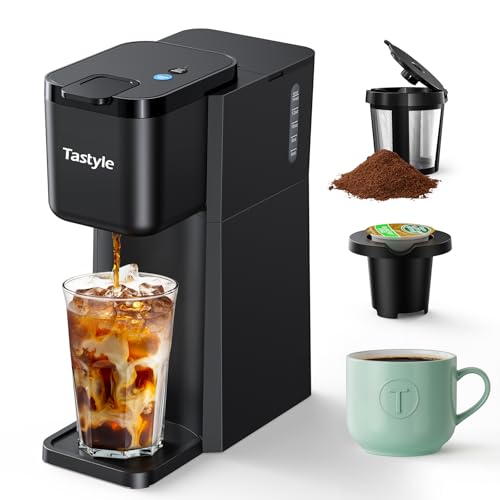
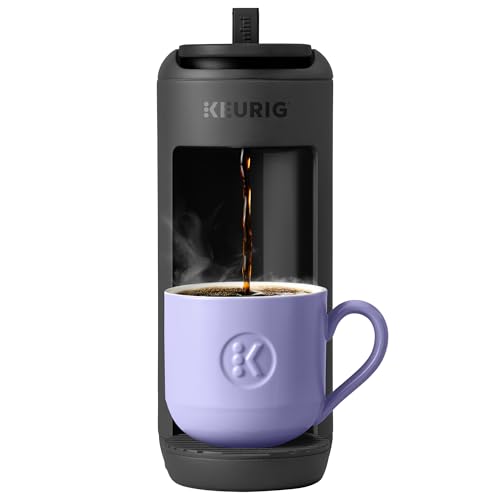
As an Amazon Associate we earn from qualifying purchases at no extra cost to you. Ratings are shown as listed on Amazon.
Quick picks by situation
| Situation | Best fit | Why it stands out | Main compromise |
|---|---|---|---|
| Mostly standard coffee with minimal effort | Keurig K-Supreme Plus | K-Cup pod compatibility, multiple brew sizes, strong-brew setting, 78-ounce reservoir | Primarily a pod system; fresh grounds require a reusable filter |
| Espresso-style coffee and milk drinks | Nespresso Vertuo Pop | Vertuo capsules produce brewed coffee and espresso-style servings with a crema-like layer | Uses proprietary Vertuo capsules and has fewer grounds-brewing options |
| Pods and freshly ground coffee in one machine | Ninja DualBrew Pro | Accepts ground coffee and K-Cup pods, with multiple brew sizes and a built-in milk frother | Larger footprint and more parts to clean |
| Small kitchen or occasional use | Nespresso Essenza Mini | Compact OriginalLine design with fast espresso and lungo brewing | Only espresso-sized drinks and a small water tank |
| Lowest ongoing packaging waste | Ground-coffee single-serve brewer | Uses a paper filter or reusable basket instead of capsules | More measuring and cleanup than a pod machine |
What to compare before buying
Pod and ground-coffee compatibility
“Single serve” does not mean every machine accepts every type of coffee. Keurig brewers use K-Cup pods and can usually brew loose grounds only with a compatible reusable filter. Nespresso Original machines use small Original capsules, while Vertuo machines use a different barcode-based Vertuo capsule system. The two Nespresso formats are not interchangeable.
The Ninja DualBrew Pro is a useful middle ground because it accepts K-Cup pods and ground coffee, but dual compatibility adds components: a pod adapter, brew basket, and sometimes a separate permanent filter. If you regularly buy whole beans or freshly ground coffee, this flexibility can justify the extra counter space. If you almost always use pods, a simpler pod-only brewer is easier to operate and clean.
Reusable pod filters reduce single-use waste, but they are not always a perfect substitute. A grind that is too fine can slow the flow and produce a bitter cup; too coarse a grind can make weak coffee. They also require rinsing immediately after use to prevent wet grounds from sticking inside the basket.
Cup-size range and coffee style
For a standard mug, look for at least an 8-, 10-, and 12-ounce setting. Larger settings are convenient, but brewing more water through one small pod can dilute the coffee. A strong or concentrated setting helps, although it cannot fully compensate for a capsule designed for a smaller serving.
Keurig’s flexible systems are generally better for American-style coffee in several mug sizes. The Keurig K-Supreme Plus offers 4-, 6-, 8-, 10-, and 12-ounce settings, while the K-Elite adds a similar range and includes an iced-coffee setting. The Nespresso Vertuo Pop typically supports several capsule-dependent serving sizes, from espresso through larger coffee servings, but the available size depends on the capsule you buy.
Nespresso Original machines such as the Essenza Mini are designed mainly for espresso and lungo servings. They are a good match for concentrated coffee, cappuccinos, and lattes, but not for filling a large travel mug in one cycle.
Reservoir capacity and refill frequency
A larger tank matters most in offices, shared kitchens, or homes where several people make coffee each morning. It also reduces the temptation to leave old water sitting for days. A smaller tank makes a compact machine possible but may require refilling after two or three large drinks.
| Machine or type | Water capacity | Typical serving range | Best space requirement |
|---|---|---|---|
| Keurig K-Supreme Plus | 78 oz / about 2.3 L | 4 to 12 oz | Medium to large counter |
| Keurig K-Elite | 75 oz / about 2.2 L | 4 to 12 oz | Medium counter |
| Ninja DualBrew Pro | 60 oz / about 1.8 L | Several single-cup sizes, plus specialty settings | Medium to large counter |
| Nespresso Vertuo Pop | About 25 oz / 0.75 L | Capsule-dependent espresso to coffee servings | Small to medium counter |
| Nespresso Essenza Mini | About 20 oz / 0.6 L | Espresso and lungo | Small counter |
| Compact ground-coffee brewer | Commonly 14 to 30 oz | About 6 to 16 oz | Small counter or dorm room |
These figures are useful for planning rather than promising identical output from every regional model. Check the exact model number before purchase, particularly when comparing a standard and “Plus” version.
Brew speed and morning workflow
Most pod machines heat water in roughly 30 seconds to two minutes, then brew a cup in another minute or so. A larger drink, stronger setting, or cold-water reservoir can extend the cycle. Nespresso machines are often quick for espresso-sized servings, while a full mug takes longer simply because more water must be heated and dispensed.
Speed claims matter less than the complete workflow. A machine with a removable reservoir and accessible pod bin may be faster over a week than a theoretically quicker model that is awkward to refill. If several people use the brewer consecutively, choose a tank that covers the entire morning and a drip tray that can accommodate travel mugs.
Pod waste: what “recyclable” really means
Pod recyclability depends on the material, local collection rules, and whether the pod is prepared correctly. Many K-Cup pods use polypropylene plastic, which is recyclable in some areas but not accepted in all curbside programs. The lid and used coffee grounds generally need to be removed according to the manufacturer’s instructions, and local facilities may reject small items even when they accept the same plastic type in larger containers.
Nespresso capsules are aluminum and are collected through Nespresso’s capsule-recycling program in participating regions. They still need to be returned through an available collection route rather than placed automatically in household recycling. Vertuo and Original capsules also remain format-specific, so recycling convenience should not be confused with universal compatibility.
If minimizing waste is your priority, compare the number of capsules used per week, not just the recycling label. A reusable basket with bulk coffee can reduce packaging, but it creates more grounds cleanup and may not deliver the same convenience.
Ownership realities: what wears out first
- Mineral scale: Hard-water deposits can slow heating and reduce flow. Descale according to the manual and use the recommended descaling solution rather than assuming vinegar is approved.
- Needle or piercing area: Loose grounds and foil fragments can clog the puncture points in pod machines. Turn the machine off, follow its cleaning instructions, and never force a sharp object into an energized brewer.
- Reservoir and lid seals: These collect dust, coffee splashes, and mineral residue. Wash removable parts regularly and let them dry before reassembly.
- Drip tray: Small trays overflow quickly when multiple users leave cups beneath the outlet. Empty it before the indicator reaches its limit.
- Reusable filters: Fine mesh baskets can retain oils and stale grounds. Rinse immediately, then periodically wash with mild dish soap if the manufacturer permits.
A practical cleaning rhythm is to wipe the outlet and pod area every few days, wash the reservoir and drip tray weekly, and descale when the machine signals it or when flow becomes noticeably slower. Do not leave brewed coffee or wet grounds inside overnight; that creates odors and makes the next cleaning harder.
A simple cost-per-use calculation
Suppose a pod costs approximately $0.50 to $1.00 and you drink two cups per day. That is about $1 to $2 daily, or roughly $365 to $730 per year before buying the machine. A ground-coffee setup using 12 grams per cup from a $14-per-pound bag costs about $0.37 per serving: 453 grams per pound divided by 12 grams equals approximately 38 servings, and $14 divided by 38 is about $0.37.
Actual costs vary by brand, roast, drink size, shipping, and whether you use milk or flavorings. The calculation shows why a grounds-capable brewer can pay for its higher purchase price over time, while a pod machine may be worth the premium for speed and less mess.
Our buying recommendation
Choose the Keurig K-Supreme Plus if your priority is ordinary coffee in several mug sizes, a large reservoir, and broad pod availability. Choose the Nespresso Vertuo Pop if you prefer capsule-controlled espresso-style drinks and accept the Vertuo capsule ecosystem. Choose the Ninja DualBrew Pro when you want one machine for K-Cup pods and ground coffee and have room for a larger appliance. For a tiny kitchen and espresso-sized servings, the Nespresso Essenza Mini is the more sensible fit.
Before ordering, measure the counter depth with the reservoir lid open, confirm the cup height for your travel mug, check local pod-recycling options, and decide whether you will actually use ground coffee. Those four checks usually matter more than an extra brew setting.





Write Your Review
No reviews yet. Be the first to share your experience!