

Key takeaways
- The best thermal carafe coffee makers for all-day coffee are the Technivorm Moccamaster KBT for simple, consistently hot brewing; the OXO Brew 8-Cup Coffee Maker for a compact, easy-to-use option; the Breville Precision Brewer Thermal for control and larger batches;…
The best thermal carafe coffee makers for all-day coffee are the Technivorm Moccamaster KBT for simple, consistently hot brewing; the OXO Brew 8-Cup Coffee Maker for a compact, easy-to-use option; the Breville Precision Brewer Thermal for control and larger batches; and the Zojirushi Fresh Brew Plus for programmable convenience and strong heat retention.
Our top picks
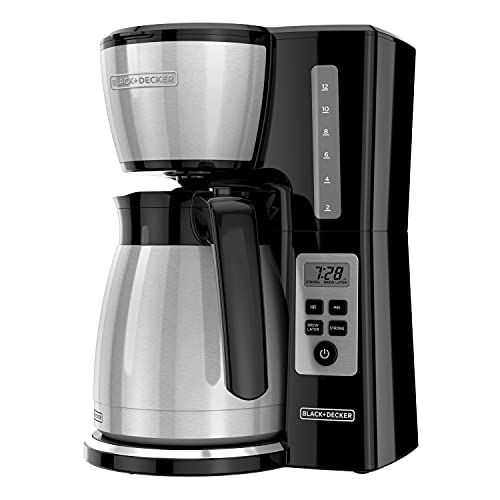

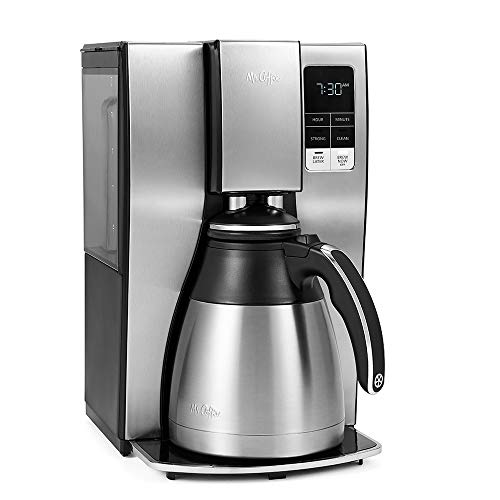
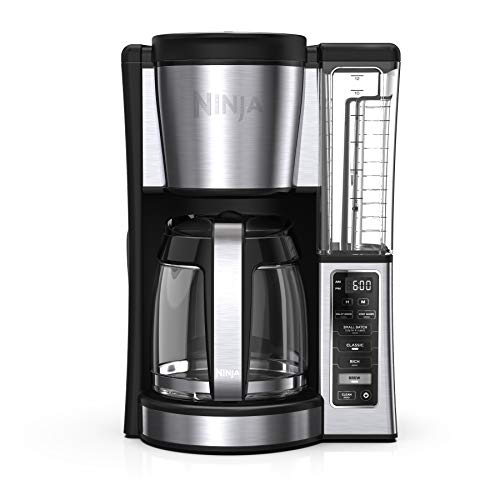
As an Amazon Associate we earn from qualifying purchases at no extra cost to you. Ratings are shown as listed on Amazon.
Best thermal carafe coffee makers at a glance
| Model | Carafe and capacity | Brewing temperature or control | Programmability | Best for | Typical price range |
|---|---|---|---|---|---|
| Technivorm Moccamaster KBT | Stainless steel thermal; 40 oz / 1.25 L | Approximately 196–205°F water; manual-adjust brew basket | None | Simple, durable batch brewing | $330–$380 |
| OXO Brew 8-Cup Coffee Maker | Double-wall stainless steel; 40 oz / 1.18 L | SCA-oriented temperature range; single-serve or batch | Programmable wake-up timer on some versions; no extensive profile controls | Small kitchens and mixed serving sizes | $200–$250 |
| Breville Precision Brewer Thermal | Stainless steel thermal; 60 oz / 1.77 L | Adjustable temperature, bloom, flow rate, and brew modes | Clock and auto-start | Experienced coffee drinkers and large households | $280–$330 |
| Zojirushi Fresh Brew Plus EC-YTC100 | Stainless steel thermal; 10 “cups” / approximately 50 oz usable output | Hot plate-free thermal serving; fixed automatic brew program | 24-hour clock and delayed brewing | Early-morning scheduling and long holding times | $150–$220 |
Coffee-maker “cups” are usually 5 ounces rather than the 8-ounce kitchen measure. A listed 10-cup machine may therefore produce about 50 ounces, while a 12-cup model may produce about 60 ounces. Check the actual carafe volume before matching a machine to a household or travel mug.
Our picks by situation
| Your priority | Best fit | Why | Main compromise |
|---|---|---|---|
| Maximum simplicity | Moccamaster KBT | Few controls, fast brewing, repairable design, and a manually adjustable basket | No timer or programmable start |
| One or two drinkers | OXO Brew 8-Cup | Smaller footprint and useful single-cup capability | Smaller batch than large-capacity brewers |
| Different beans and recipes | Breville Precision Brewer | Temperature and brew-profile adjustments support experimentation | More settings to learn and more parts to clean |
| Scheduled coffee before work | Zojirushi Fresh Brew Plus | Delayed start and a well-sealing serving carafe | Less manual control over extraction |
| Lowest reasonable ownership cost | OXO or Zojirushi, depending on size | Usually lower purchase prices than premium specialty brewers | Some seals and replacement parts may be less readily available over many years |
Head-to-head: what matters for all-day coffee
Heat retention and carafe seal design
A thermal carafe does not keep coffee at its brewing temperature indefinitely. A well-made, preheated, double-wall stainless carafe often keeps coffee acceptably hot for four to six hours, but the coffee usually tastes fresher during the first two to three hours. Opening the lid repeatedly, pouring small amounts, or leaving the stopper partly open accelerates heat loss.
The seal matters as much as the insulation. A screw-in or twist-lock stopper generally loses less heat than a loose hinged lid, provided it is closed completely. The best designs also include a one-way or spring-loaded pour mechanism that opens when the carafe is pressed against the brewer’s serving lever. This reduces the need to remove the lid and helps prevent spills. The Moccamaster KBT and Zojirushi models are particularly oriented toward closed-carafe holding, while the OXO emphasizes convenient pouring and serving.
Do not compare an insulated carafe with a glass carafe sitting on a hot plate as if they serve the same purpose. A hot plate can keep coffee warm, but extended heating can produce a flatter, more bitter flavor. A thermal carafe stops active heating after brewing, so it is generally better for coffee that will be served gradually.
Brew temperature and flavor consistency
For drip coffee, the relevant question is the temperature of the water reaching the grounds, not the temperature displayed on the finished coffee. A useful target is approximately 195–205°F during brewing. Moccamaster brewers are designed around that range, and the Breville gives the most direct temperature adjustment.
Temperature alone does not guarantee good coffee. Contact time, water flow, grind size, and the amount of coffee all affect extraction. A brewer with a precise showerhead and a flat-bottom filter can make a balanced batch without requiring complicated controls. Conversely, a machine with many settings can still produce weak coffee if the grind is too coarse or the coffee-to-water ratio is too low.
Batch size and minimum brew volume
Large capacity is useful only if you regularly brew enough coffee. Some brewers produce their most even results near a full batch; others are designed to handle smaller amounts. The OXO 8-Cup is attractive for one to four drinkers because it can brew a single mug as well as a carafe. The Breville’s approximately 60-ounce capacity suits offices or households that refill several times a day.
As a starting point, use 60 grams of coffee per liter of water. For a 40-ounce batch, which is about 1.18 liters, that works out to approximately 71 grams of coffee. For a 60-ounce batch, about 1.77 liters, use roughly 106 grams. Adjust to taste after changing only one variable at a time.
Programmability and daily routine
A timer is useful when the machine is filled the night before, but it adds little value if you prefer freshly ground coffee each morning. Scheduled brewing is most convenient with a machine that has a removable water tank, a clearly marked reservoir, and a filter basket that cannot be installed incorrectly.
Zojirushi’s delayed-start approach favors routine: set the clock, prepare water and grounds, and wake to a completed batch. Breville also offers scheduled operation while adding more control. The Moccamaster KBT is intentionally manual, which reduces electronic complexity but requires a person to start the brew.
Pourability and countertop fit
A carafe can retain heat well and still be annoying to use. Look for a handle with enough clearance for your knuckles, a spout that does not dribble, and a lid that can be washed thoroughly. A narrow opening may improve heat retention but make cleaning difficult.
Measure the space beneath cabinets, not just the countertop width. The Breville is relatively tall and deep, while the OXO is easier to place in a compact kitchen. Leave room to remove the water reservoir or open the filter basket; a brewer that fits only when pulled forward can become inconvenient enough that it is used incorrectly.
Durability and ownership costs
The heating element and electronic controls are the components most likely to determine a brewer’s long-term life, but daily-use parts often wear first. Carafe lids, silicone gaskets, filter-basket valves, and plastic water-reservoir fittings can become brittle, stained, or leaky. Before buying, check whether the manufacturer lists replacement carafes and lids separately.
Premium brewers commonly cost more at purchase but may make sense for frequent use. For example, a $350 machine used five days per week for five years costs about $0.27 per brewing day before coffee, filters, water, and electricity. A $180 machine used just twice per week over the same period costs about $0.35 per use. Frequency, repairability, and replacement-part availability matter more than the initial price alone.
Paper filters are a continuing cost. A typical 100-filter pack may cost roughly $5–$12, depending on size and brand. Reusable filters reduce paper use but can allow more sediment and oils into the cup and require careful washing.
How to get better all-day results
- Rinse the thermal carafe with hot water, then empty it immediately before brewing. This reduces the initial heat loss into cold stainless steel.
- Use fresh, suitably ground coffee. Start with medium grind and about 60 grams per liter; adjust grind before changing the dose dramatically.
- Confirm that the carafe lid is fully closed and correctly seated. A partially engaged stopper can cause both heat loss and slow pouring.
- Transfer the finished coffee to a clean, preheated carafe if the brewer’s serving design leaves the lid open during brewing.
- Keep the carafe closed between pours. Do not leave the stopper open while the coffee sits.
- Rinse the carafe after every use and wash the lid, basket, and removable reservoir regularly. Coffee oils accumulate fastest in narrow lid channels.
- Descale when the manufacturer recommends it, or sooner if brewing slows, the machine becomes noisy, or the coffee temperature changes. Mineral buildup can restrict water flow and alter extraction.
Which one should you buy?
Choose the Technivorm Moccamaster KBT if you want a durable, uncomplicated brewer and do not need a timer. Choose the OXO Brew 8-Cup when countertop space, smaller batches, and straightforward operation matter most. Choose the Breville Precision Brewer Thermal if you will use temperature and brew-profile controls rather than leaving them untouched. Choose the Zojirushi Fresh Brew Plus if scheduled brewing and extended closed-carafe storage are more important than manual extraction adjustments.
For all-day coffee, the best choice is not necessarily the largest or most programmable machine. Prioritize a genuinely insulated carafe with a reliable seal, a brewing system that reaches the appropriate temperature, a batch size you will use regularly, and replacement parts you can obtain when the first gasket or lid eventually wears out.




Write Your Review
No reviews yet. Be the first to share your experience!