

Key takeaways
- Stated brew capacity: 24 fluid ounces.
- Stated format: 8-cup stovetop siphon.
- Primary glass material: heat-resistant borosilicate glass.
- Heat source: stovetop, so cooktop compatibility and burner control matter.
- Brewing method: vacuum or siphon brewing through an upper-chamber filter.
- Best household size: one to several small servings, depending on serving size.
The best vacuum coffee maker for most households is the Yama Glass 8-Cup Stovetop Siphon Coffee Maker because its 24-ounce capacity, heat-resistant borosilicate glass, and stovetop heat source balance distinctive flavor with relatively simple ownership. Choose the Yama 5-Cup if you usually brew for one or two people, the Hario 3-Cup Moca when counter space matters most, or the Bodum ePebo if you want an electric setup without a separate burner. The Bodum Pebo is the better choice for a larger glass-focused brew, while the Queen Sense and Amarine Made models are sensible budget entries for shoppers willing to verify replacement parts before buying. The Nispira Belgium Royal Family Balance Syphon is the decorative premium option for buyers who value presentation as much as capacity. One important exception is the BLACK+DECKER 12-Cup Drip Coffee Maker: it is not a vacuum brewer, but it is the practical alternative when speed, automatic brewing, and a larger batch matter more than siphon theater and flavor experimentation.
Vacuum brewing rewards careful matching between capacity, heat source, counter space, and maintenance habits. These brewers can produce a clean, aromatic cup, but they also have more glassware, seals, filters, and steps than a conventional drip machine. The right pick therefore depends less on the most impressive design and more on how often you will brew, how many people you serve, where the brewer will sit, and whether you can obtain replacement cloth, paper, gasket, and glass components.
Top 3 Picks
Best overall: Yama Glass 8-Cup Stovetop Siphon Coffee Maker
The Yama Glass 8-Cup is the strongest all-around choice for a household that wants a true vacuum brewer without committing to an electric appliance. Its stated 24-ounce brew volume is large enough for several small servings, while borosilicate glass provides the visual clarity and heat resistance associated with siphon brewing. It suits users who already have a compatible stovetop heat source and do not mind hand washing the upper and lower vessels.
Best compact option: Hario 3-Cup Coffee Siphon
The Hario 3-Cup Moca is the logical pick for a solo drinker, couple, office nook, or small kitchen. A smaller chamber means less coffee waste when you brew one or two portions, and the compact format generally demands less storage space than larger siphons. Its limitation is equally clear: it is not the right size for a household that wants a large morning batch.
Best electric option: Bodum 34oz ePebo
The Bodum ePebo is designed for shoppers who want vacuum-style brewing with an electric heat source rather than a separate burner. Its listing identifies a 34-ounce BPA-free Tritan plastic jug and a high-heat borosilicate glass funnel, giving it a different ownership profile from an all-glass stovetop brewer. It is especially appealing when repeatable placement, reduced open-flame concerns, and a larger batch matter more than the classic manual setup.
Quick Comparison
| Product | Best for | Key specs | Heat source | Construction and ownership notes | Price tier |
|---|---|---|---|---|---|
| Yama Glass 8-Cup | Best overall | 24 fl oz; 8-cup class; borosilicate glass | Stovetop | Manual brewing; more capacity than the Yama 5-Cup; glass parts need careful handling | Mid-range |
| Bodum Pebo | Large glass stovetop batches | 34 fl oz; high-heat borosilicate glass | Stovetop | Large manual siphon; replacement seals and filters should be confirmed | Premium |
| Bodum ePebo | Electric vacuum brewing | 34 fl oz; BPA-free Tritan plastic jug; high-heat borosilicate glass funnel | Electric | Dedicated appliance; less dependence on a cooktop; plastic lower vessel changes the look and handling | Premium |
| Queen Sense CM0601 | Budget electric siphon setup | Electric siphon coffee-pot class; model CM0601 | Electric | Verify included filters, seals, voltage, and replacement components before purchase | Budget |
| Yama Glass 5-Cup | Small stovetop batches | 15 fl oz; 5-cup class; borosilicate glass | Stovetop | Uses less coffee for small servings; compact relative to larger Yama models | Mid-range |
| Hario 3-Cup Moca | One or two drinkers | 3-cup class; compact siphon format | Stovetop or compatible external heat source | Smallest listed vacuum brewer; capacity is its main trade-off | Mid-range |
| Nispira Belgium Royal Family Balance Syphon | Decorative presentation | 5-cup class; balance-syphon design; copper finish | Balance-syphon heat source | More display-oriented design; moving parts and finish require careful cleaning | Premium |
| Amarine Made Siphon Coffee Maker | Budget manual siphon brewing | Japanese siphon brewer class | External heat source | Check capacity, filter style, and spare-part availability for the exact listing | Budget |
| BLACK+DECKER 12-Cup Drip Coffee Maker | Large automatic batches | 12-cup drip class; Vortex Brewing | Electric hot plate and automatic drip system | Not a vacuum brewer; easier routine and larger stated capacity than every siphon listed | Budget |
How We Chose
This roundup separates true vacuum or siphon brewers from the BLACK+DECKER drip machine, which is included as a practical category alternative rather than a siphon pick. The selection criteria are based on the stated product names, established brand and category characteristics, and the ownership questions that matter after the first few brews: capacity, construction, heat source, cleanup, replacement parts, and the amount of counter and storage space required.
Capacity received particular attention because “cup” labels are not always equivalent to a large household mug. The listed Yama capacities of 24 ounces and 15 ounces, the Bodum 34-ounce formats, and the Nispira 5-cup class are more useful for planning than a cup label alone. We also considered whether a product is stovetop, electric, balance-style, or conventional drip, since those categories change setup time and safety considerations.
Finally, the choices reflect different upgrade paths. A compact manual siphon can be a good first step for a curious one- or two-person household; a larger Bodum or Yama can serve multiple drinkers; an electric model may suit users who want fewer heat-source decisions; and a drip machine remains the sensible fallback for people who prioritize volume and routine over the vacuum-brewing process.
1. Yama Glass 8-Cup – Best for most households
As an Amazon Associate we earn from qualifying purchases at no extra cost to you.
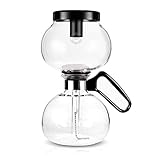
The Yama Glass 8-Cup Stovetop Siphon Coffee Maker is the best vacuum coffee maker here for a buyer who wants a recognizable siphon experience, useful household capacity, and a manual process that does not require a dedicated electric base. The listing identifies a 24-ounce vacuum brew and heat-resistant borosilicate glass. That combination gives this model a practical middle position: it is substantially more useful for shared coffee than a compact 3-cup brewer, but it does not move into the very large size class represented by the 34-ounce Bodum models.
A stovetop siphon uses two chambers. Water begins in the lower vessel, heat creates pressure that moves the water into the upper vessel, and removing or reducing the heat allows brewed coffee to return through a filter. The process gives the coffee a distinctive clarity and aroma, but it also means the user must manage heat, timing, assembly, and cleaning. The Yama is best for someone who sees those steps as part of the appeal rather than as an inconvenience.
Key specifications and fit
- Stated brew capacity: 24 fluid ounces.
- Stated format: 8-cup stovetop siphon.
- Primary glass material: heat-resistant borosilicate glass.
- Heat source: stovetop, so cooktop compatibility and burner control matter.
- Brewing method: vacuum or siphon brewing through an upper-chamber filter.
- Best household size: one to several small servings, depending on serving size.
Borosilicate glass is valued in cookware and coffee equipment for its resistance to thermal shock compared with ordinary glass, though it is not unbreakable. Avoid placing a hot vessel on a cold, wet, or very hard surface, and inspect the glass before every brew. The lower and upper chambers also need to be aligned correctly; forcing a connection or lifting the upper chamber while it is under pressure can create a dangerous situation.
Strengths
- The 24-ounce capacity is a useful compromise between single-serving and large-batch brewing.
- Transparent glass lets you see the water rise, brewing stage, and drawdown.
- A stovetop heat source avoids adding another powered appliance to the counter.
- The manual format gives the user control over grind, dose, contact time, and heat reduction.
Pros
- Good fit for households that want more than a compact siphon can produce.
- Heat-resistant borosilicate glass suits the visual and sensory character of vacuum brewing.
- Mid-range positioning leaves room in the budget for a grinder, scale, or spare filter.
- Can be stored away rather than permanently occupying a dedicated electrical footprint.
Cons
- It needs a suitable stovetop or compatible external burner.
- Glass chambers, seals, and filters require more care than a basic drip machine.
- The stated 24-ounce capacity may still be modest for a large family or office.
- Replacement parts should be confirmed before purchase, especially gaskets and filter components.
How it compares with the nearest alternative
The nearest alternative is the Yama Glass 5-Cup, which uses the same general borosilicate-glass stovetop concept but lists a 15-ounce brew. Choose the 8-Cup when several people may drink coffee or when you prefer to brew fewer, larger batches. Choose the 5-Cup when reducing waste, storage space, and coffee usage matters more than serving flexibility. The Bodum Pebo is another close comparison, but its 34-ounce capacity is larger and its premium positioning makes it more attractive to shoppers who specifically want a bigger glass siphon rather than the Yama’s middle capacity.
2. Bodum Pebo – Best for large glass stovetop batches

The Bodum Pebo is the strongest choice among these products for a buyer who wants a larger, classic-looking glass vacuum brewer and is comfortable with stovetop preparation. Its listing identifies a 34-ounce capacity, high-heat borosilicate glass, and a black finish. That capacity is meaningfully larger than the 24-ounce Yama 8-Cup and more than twice the listed 15-ounce Yama 5-Cup, although the amount of finished coffee still depends on dose, retained water, and serving size.
The Pebo is suited to weekend breakfasts, entertaining, and households in which several people want coffee at roughly the same time. It is less compelling for a person who drinks one mug alone, because heating and cleaning a larger brewer for a small dose can be inefficient. It is also not the simplest option for a novice who wants automatic operation: the user still controls the heat source and must learn how the upper and lower chambers behave during brewing.
Key specifications and fit
- Stated capacity: 34 fluid ounces.
- Construction named in the listing: high-heat borosilicate glass.
- Finish named in the listing: black.
- Heat source: stovetop or another compatible external heat source.
- Brewing category: manual vacuum or siphon brewing.
- Best use: multiple small servings or a larger shared pot.
The all-glass character is a strength for visibility and presentation, but it also increases the importance of handling and storage. Give the chambers enough room that they will not knock against cookware, faucets, or cabinet doors. A large siphon can occupy more vertical space than its footprint suggests, so measure the area between the cooktop and the underside of a cabinet before committing to a permanent brewing location.
Strengths
- 34 ounces provides the largest stated capacity among the manual glass-focused choices listed here.
- High-heat borosilicate glass supports a clear view of the brewing process.
- Bodum is an established coffee and kitchenware brand with a recognizable vacuum-brewing design language.
- Its larger batch is useful when several people want similar coffee at once.
Pros
- Best manual choice for households that regularly outgrow compact siphons.
- Glass construction preserves the classic visual identity of a vacuum brewer.
- Stovetop operation does not require a dedicated electrical base.
- Premium positioning may appeal to buyers seeking a long-term centerpiece rather than an occasional experiment.
Cons
- The larger format takes more storage and washing space.
- It may waste water and coffee for a single drinker.
- Manual heat control and chamber handling still require practice.
- Replacement filters, seals, and glass components should be checked for availability before purchase.
How it compares with the nearest alternative
The nearest alternative is the Bodum ePebo, which also lists a 34-ounce capacity but uses an electric design with a BPA-free Tritan plastic jug and high-heat borosilicate glass funnel. The Pebo is the better fit if you want a more traditional glass stovetop presentation and already have a suitable burner. The ePebo is more convenient when you want a dedicated electric heat source and prefer not to position a large glass lower vessel directly over a cooktop. Against the Yama 8-Cup, the Pebo offers more capacity but demands more counter, cabinet, and cleanup space.
3. Bodum ePebo – Best for electric vacuum brewing

The Bodum ePebo is the most appropriate pick for shoppers who want vacuum-style coffee but would rather use a dedicated electric appliance than manage a stovetop flame or burner. The listing identifies a 34-ounce capacity, a BPA-free Tritan plastic jug, and a high-heat borosilicate glass funnel. Those materials distinguish it from an all-glass stovetop siphon: the lower vessel is designed around durable plastic handling, while the funnel retains the high-heat glass component associated with the brewing process.
Electric operation can simplify placement. Instead of finding a burner with the right diameter and heat control, you need a dry, level counter near a suitable outlet. That does not make the ePebo maintenance-free. The user still needs to assemble the chambers, add coffee, monitor the brew cycle or its stages as directed, separate the components after brewing, and clean residue from the funnel and filter. Electric convenience changes the heat source; it does not turn siphon coffee into a push-button drip routine.
Key specifications and fit
- Stated capacity: 34 fluid ounces.
- Lower vessel material named in the listing: BPA-free Tritan plastic jug.
- Upper component material named in the listing: high-heat borosilicate glass funnel.
- Heat source: electric.
- Brewing category: electric vacuum or siphon coffee maker.
- Best use: larger batches where dedicated counter space and an outlet are available.
Tritan and borosilicate glass have different care implications. The plastic jug is less vulnerable to ordinary impact than a glass lower bowl, but it should still be washed according to the manufacturer’s guidance and kept away from unsuitable heat or abrasive treatment. The glass funnel remains the part that deserves careful handling. Do not assume that every component can go in a dishwasher simply because the jug is plastic; the exact care instructions and filter design control that decision.
Strengths
- A 34-ounce capacity suits shared brewing and reduces the need for successive small batches.
- Electric heating makes placement more predictable than a stovetop model.
- The Tritan jug offers a different durability profile from an all-glass lower chamber.
- The high-heat borosilicate funnel preserves an important part of the traditional siphon format.
Pros
- Good fit for users who do not want to choose or supervise a stovetop burner.
- Large capacity is practical for families and entertaining.
- Plastic lower-vessel construction can be less stressful during everyday handling.
- Established Bodum branding may make the product and support ecosystem easier to identify.
Cons
- It requires permanent or semi-permanent counter space and an electrical outlet.
- The electric base adds another component that can eventually need service or replacement.
- The plastic jug does not provide the same all-glass appearance as the Bodum Pebo.
- Filters, seals, and the glass funnel remain consumable or breakable ownership concerns.
How it compares with the nearest alternative
The nearest alternative is the Bodum Pebo because both list 34 ounces and use Bodum’s vacuum-brewing format. Choose the ePebo when a dedicated electric heat source is the deciding feature, especially if your cooktop is crowded or you want a consistent setup location. Choose the Pebo when you prefer a stovetop brewer with high-heat glass throughout and want to avoid adding an electrical appliance. The Queen Sense CM0601 is a cheaper electric category alternative, but the ePebo has a clearer stated material and capacity profile in the listed name.
4. Queen Sense CM0601 – Best budget electric siphon
![[Factory Store] QUEEN SENSE Patented Siphon/Syphon Coffee Maker Electric Vacuum Coffee Pot CM0601 (Siphon Coffee Maker)](https://m.media-amazon.com/images/I/31r6O4KlRQL._SL160_.jpg)
The [Factory Store] QUEEN SENSE CM0601 is a budget-oriented electric siphon or syphon coffee-pot option for shoppers who want to explore vacuum brewing without moving into a premium brand’s price tier. Its listing identifies the patented siphon/syphon coffee-maker concept and the CM0601 model, but it does not provide enough information in the product name to responsibly assign an exact capacity, material mix, electrical rating, or included filter type. Those details should be verified before purchase rather than inferred from the general category.
The main reason to consider this model is the electric format. A dedicated heating base can be useful in a kitchen where a stovetop burner is unavailable, crowded, or inconvenient. It can also be appealing to a beginner who wants the visual movement of siphon brewing without separately sourcing a burner. At the budget end, however, the ownership path matters as much as the initial purchase: confirm whether the seller can supply replacement gaskets, filters, upper or lower vessels, and any specialized electrical components.
Key specifications and fit
- Model named in the listing: CM0601.
- Brewing method named in the listing: electric siphon or vacuum brewing.
- Heat source: electric.
- Exact capacity: verify the current listing before purchase.
- Exact vessel materials: verify the current listing before purchase.
- Best use: entry-level experimentation where replacement-part research is acceptable.
With an electric siphon, inspect the base, cord, controls, and vessel connection before the first brew. Use the appliance only on a stable, dry counter with the clearance specified by its instructions. Because budget models may have less standardized accessory availability than established coffee-equipment lines, it is wise to identify the correct filter and sealing parts before the original set becomes worn.
Strengths
- Budget positioning lowers the cost of trying vacuum coffee.
- Electric operation avoids the need for a separate stovetop burner.
- The siphon format provides a more distinctive brewing process than ordinary drip equipment.
- The model designation makes it easier to search for exact compatibility information than an unnamed generic device.
Pros
- Useful for beginners who prioritize a low entry price.
- Suitable for kitchens where open or direct stovetop heating is undesirable.
- Can serve as a learning platform for grind, dose, and drawdown technique.
- Electric placement may be convenient in an office or beverage station with a safe outlet.
Cons
- The product name does not establish an exact capacity or material specification.
- Replacement-part availability may be less predictable than for major coffee brands.
- A budget electric base can be a weak point if it is difficult to service.
- It still requires careful cleaning of filters, seals, and upper and lower vessels.
How it compares with the nearest alternative
The closest listed alternative is the Amarine Made Siphon Coffee Maker, another budget siphon brewer, but the Amarine is described as a Japanese siphon format rather than explicitly as an electric CM0601 unit. Choose Queen Sense when an electric base is the priority and you are willing to verify the technical details. Choose Amarine Made when you prefer a manual siphon setup or want to compare a traditional external-heat arrangement. If long-term replacement support is more important than the lowest price, the Yama 5-Cup offers a clearer stated capacity and material profile.
5. Yama Glass 5-Cup – Best for small stovetop servings

The Yama Glass 5-Cup Stovetop Siphon Coffee Maker is the most sensible Yama choice for a one- or two-person household that wants fresh vacuum-brewed coffee without preparing the 24-ounce capacity of the larger model. Its listing states a 15-ounce vacuum brew and heat-resistant borosilicate glass. That makes it a compact manual brewer with a clearly defined smaller output, not simply a scaled-down version whose capacity is left to guesswork.
Small siphons solve two common problems. First, they reduce the amount of coffee and water needed when only one or two people are drinking. Second, they are easier to fit into a compact kitchen, provided the vertical clearance is sufficient. The trade-off is that a 15-ounce brew can disappear quickly if two people prefer large mugs. Before buying, translate the stated volume into your actual serving habit: two 8-ounce cups already exceed 15 ounces before allowing for coffee grounds and water retained in the brewing system.
Key specifications and fit
- Stated brew capacity: 15 fluid ounces.
- Stated format: 5-cup stovetop siphon.
- Primary material named in the listing: heat-resistant borosilicate glass.
- Heat source: stovetop.
- Brewing method: vacuum or siphon brewing.
- Best household size: one generous serving or two smaller servings.
The small format does not eliminate the need for careful handling. The upper chamber still needs a filter, the seal still needs inspection, and the lower vessel still experiences heating and cooling. Small glass components can also be easier to misplace, so keep the filter, gasket, and support pieces together in a tray or container between uses.
Strengths
- The 15-ounce capacity is well matched to modest daily brewing.
- Borosilicate glass provides visibility into the siphon process.
- Its smaller scale can reduce coffee waste and storage demands.
- Stovetop operation avoids a dedicated electric base.
Pros
- Good for solo drinkers and couples who do not need a large pot.
- Clear capacity makes recipe planning easier.
- Mid-range positioning leaves room for accessories such as a scale and spare filter.
- Smaller batches can be easier to dial in when learning the method.
Cons
- 15 ounces may be too little for two large mugs.
- It still requires manual heat control and glass handling.
- Stovetop compatibility and vertical clearance must be checked.
- A small siphon does not necessarily clean faster if the filter and seals are neglected.
How it compares with the nearest alternative
The nearest alternative is the Hario 3-Cup Moca, which is an even smaller siphon format and may suit an individual drinker or highly space-constrained setup. Choose the Yama 5-Cup when 15 ounces gives you useful headroom for two smaller servings. Choose Hario when the smallest possible footprint and modest single-batch size are more important. The Yama 8-Cup is the upgrade for households that routinely need more than 15 ounces and do not want to brew a second cycle.
6. Hario 3-Cup Moca – Best for compact kitchens

The Hario 3-Cup Coffee Siphon, identified in the listing as the Moca, is the best choice here when compactness and small-batch control outweigh maximum output. Hario is a well-established Japanese coffee-equipment brand, and the product belongs to the classic siphon category: an upper and lower chamber, a filter, and an external heat source move water through the brewing system. The listing does not state an ounce capacity or exact dimensions, so buyers should use the 3-cup class as a relative size indicator and confirm the current specifications before ordering.
A compact siphon can be easier to justify in a small apartment, office, studio, or coffee corner that cannot accommodate a large 34-ounce brewer. It is also a good training platform because a small dose lets you change one variable at a time without wasting a large quantity of coffee. The limiting factor is serving size. “Three cups” in coffee equipment usually refers to small coffee servings rather than three large travel mugs, so measure your normal drink before deciding that the label is sufficient.
Key specifications and fit
- Product format: 3-cup coffee siphon.
- Model name in the listing: Moca.
- Brand: HARIO, a Japanese coffee-equipment manufacturer.
- Heat source: external heat source appropriate to the model and instructions.
- Exact ounce capacity and materials: verify the current product details.
- Best use: one drinker, two small servings, or limited counter space.
Space planning should include more than the base footprint. Siphons need vertical clearance for the upper vessel, room to remove the top section, and a safe place to set hot glass during service. If the brewer will be used on a stovetop beneath cabinets, measure with the upper chamber attached. Storage also matters: a compact brewer is only a space saver if its parts can be kept together without crowding other glassware.
Strengths
- Small format is appropriate for limited counters and modest consumption.
- Hario’s category reputation makes it an appealing entry point for coffee-focused buyers.
- Small recipes can help beginners learn heat and timing without a large coffee commitment.
- Manual brewing allows adjustment of grind, dose, and contact time.
Pros
- Best listed option when storage and counter space are the primary constraints.
- Efficient for a solo drinker who does not want leftover coffee.
- Classic siphon format delivers the visual process many buyers seek.
- Likely easier to fill and wash than a large shared-batch brewer, though exact care depends on the model.
Cons
- Three-cup capacity may not satisfy large-mug drinkers.
- The listing does not establish an exact ounce capacity in its name.
- It requires an external heat source and careful handling of hot glass.
- Small filters, seals, and accessories can be easy to misplace.
How it compares with the nearest alternative
The closest match is the Yama Glass 5-Cup, which lists a concrete 15-ounce capacity and borosilicate-glass construction. Choose Hario for the most compact footprint and a smaller daily brew; choose Yama when you want more capacity and clearer published volume information. The Amarine Made is a budget alternative in the Japanese siphon category, but Hario is the better fit when established brand familiarity and compact manual brewing matter more than minimizing purchase cost.
7. Nispira Balance Syphon – Best for decorative presentation

The Nispira Belgium Royal Family Balance Syphon is the choice for buyers who want a balance-style siphon that can function as a coffee-making centerpiece. Its listing names a unique gravity vintage coffee maker, vacuum brewing system, copper finish, and a 5-cup class. The balance design differs visually from a straightforward stovetop siphon: rather than looking like two stacked glass chambers alone, it emphasizes a frame, gravity movement, and decorative presentation.
This product suits an occasional host, collector of coffee equipment, or person who wants the brewing ritual visible on a serving counter. It is less appropriate for someone whose only goal is the fastest possible cup. Balance-style brewers have more visible structure and may include decorative metal components that require separate attention from the glass vessels. A copper finish can be attractive, but it should not be treated as a guarantee of solid copper construction; the listing’s finish description is not enough to establish the underlying material.
Key specifications and fit
- Stated size class: 5-cup.
- Design: balance syphon or gravity vacuum brewer.
- Finish named in the listing: copper.
- Style named in the listing: Belgium Royal Family and vintage-inspired.
- Brewing method: vacuum brewing through a balance mechanism.
- Best use: presentation, entertaining, and users who accept more involved care.
Before buying, check how the current version handles heat, what fuel or heating element is included, and which filters fit it. Decorative models can have less interchangeable hardware than standardized coffee makers. The frame should be placed on a stable, level surface, and the user should not move the apparatus while hot. Metal polish, abrasive pads, or harsh cleaners may damage a decorative finish, so cleaning should follow the manufacturer’s material guidance.
Strengths
- Distinctive balance-syphon appearance makes it a strong presentation piece.
- The 5-cup class offers more output than the smallest compact siphons.
- Gravity-based brewing creates a visually engaging process for guests.
- Premium positioning suits buyers who value design as well as coffee preparation.
Pros
- Most visually distinctive option in the listed vacuum-brewer group.
- Good for hosting and occasional tableside brewing.
- Offers a different mechanical experience from ordinary stovetop siphons.
- Could serve as both functional equipment and display décor.
Cons
- More frame and mechanism surfaces can make cleanup slower.
- The copper finish requires care and does not by itself establish solid-copper construction.
- Replacement parts may be less universal than for common Yama or Hario formats.
- Its presentation-first design may be unnecessary for an everyday solo brewer.
How it compares with the nearest alternative
The nearest alternative is the Yama Glass 5-Cup, which is also in a small-to-medium capacity class but uses a simpler stovetop siphon structure and explicitly lists 15 ounces of borosilicate glass. Choose Nispira when the balance mechanism, vintage look, and copper finish are central to the purchase. Choose Yama when you want fewer decorative components, easier capacity planning, and a more conventional manual workflow. The Bodum Pebo is the better premium alternative for a larger, glass-focused batch rather than a decorative balance display.
8. Amarine Made Siphon – Best budget manual siphon

The Amarine Made Siphon Coffee Maker is a budget manual option for shoppers who want to try Japanese-style siphon brewing without selecting an electric model. Its listing calls it a siphon coffee maker, siphon coffee brewer, and Japanese siphon. Because the name does not state an exact capacity, glass specification, or complete accessory list, those details should be confirmed from the current product information rather than assumed from the category.
This type of brewer is best for someone who already has, or is willing to obtain, a compatible external heat source and who wants direct control over the brewing process. Manual siphons can be rewarding because the user can see the water movement and adjust technique. They are also less forgiving of rushed assembly, unstable placement, poor filter cleaning, or incorrect heat. At the budget level, check the parts path before purchase: a low initial cost is less useful if a damaged upper globe or worn seal makes the brewer unusable.
Key specifications and fit
- Brewing category: manual siphon or vacuum coffee brewer.
- Style named in the listing: Japanese siphon.
- Heat source: external heat source; exact included equipment should be verified.
- Capacity: verify the current listing rather than relying on the product title.
- Materials: verify the exact glass, frame, filter, and seal specifications.
- Best use: budget experimentation and manual brewing practice.
For a first setup, place the brewer on a level, heat-resistant surface and confirm that the heat source is appropriate for the vessel. Do not improvise with a fuel or burner that the instructions do not support. After brewing, let the glass cool gradually, remove grounds before they dry, and rinse the filter promptly. Those habits reduce odor and make a budget brewer more pleasant to own.
Strengths
- Budget tier makes manual siphon brewing more accessible.
- Japanese siphon styling appeals to buyers seeking the traditional visual process.
- Manual operation avoids electrical components and a dedicated appliance base.
- Offers a low-cost way to learn the importance of grind, dose, and temperature control.
Pros
- Good for curious beginners who prefer manual equipment.
- Potentially compact when compared with larger electric vacuum machines.
- No need to reserve a permanent outlet on the counter.
- Can be upgraded later with a better scale, grinder, or compatible filter if the parts fit.
Cons
- Exact capacity and material details are not established by the product name.
- External heat-source requirements add setup decisions.
- Budget replacement-part support must be investigated before purchase.
- Manual glass handling and cleanup remain necessary after every brew.
How it compares with the nearest alternative
The Queen Sense CM0601 is the nearest listed budget alternative, but it is described as an electric siphon model. Choose Amarine Made if manual brewing and avoiding a dedicated electrical base are your priorities. Choose Queen Sense if you want electric heating and are willing to verify its capacity, voltage, and spare parts. The Yama 5-Cup is the more clearly specified upgrade for a buyer who wants a stated 15-ounce capacity and borosilicate glass while remaining in a manual stovetop format.
9. BLACK+DECKER 12-Cup Drip Coffee Maker – Best non-siphon alternative for volume

The BLACK+DECKER 12-Cup Drip Coffee Maker with Vortex Brewing is not a vacuum coffee maker, but it deserves a place in this comparison because it answers the same morning question from a different direction: how can a household make a larger amount of coffee with less hands-on work? Its listing states a 12-cup drip format and Vortex Brewing. If your priority is automatic preparation, a large batch, and routine cleanup rather than the distinctive vacuum-brewing process, this is the practical alternative.
Drip brewing sends heated water through a bed of grounds and into a carafe, usually with fewer separate glass chambers, seals, and specialty filters than a siphon. That makes it easier to use frequently, particularly when several people need coffee at different times. It does not reproduce the same immersion, filtration, visual movement, or serving ritual of a siphon. The product should therefore be judged by convenience and capacity, not by whether it creates the exact same cup profile.
Key specifications and fit
- Stated capacity: 12-cup drip class.
- Brewing technology named in the listing: Vortex Brewing.
- Heat source: electric.
- Brewing method: conventional automatic drip, not vacuum or siphon brewing.
- Best use: frequent large batches and low-intervention coffee preparation.
- Maintenance focus: grounds basket, carafe, water reservoir, and brewing path.
A 12-cup label should still be translated into real servings. Coffee-machine cups are commonly smaller than a large mug, so a household that pours generous travel-cup portions may obtain fewer servings than the number suggests. The machine will also occupy counter space continuously if you use it every morning, whereas a manual siphon can be stored between brews. On the other hand, the drip machine generally requires less vertical clearance during brewing and less handling of hot glass chambers.
Strengths
- The 12-cup class is substantially larger than the listed 15-, 24-, and 34-ounce siphons in practical batch planning.
- Automatic electric operation suits busy mornings and repeated daily use.
- Drip equipment is familiar and generally easier to integrate into a household routine.
- Vortex Brewing gives the product a named distribution feature without making it a siphon brewer.
Pros
- Best listed option for high-frequency, low-effort coffee preparation.
- More suitable than a siphon for a household serving many people quickly.
- Usually easier to teach to other users than a manual vacuum process.
- Budget positioning leaves money available for fresh coffee, a grinder, or filters.
Cons
- It does not produce vacuum-brewed coffee.
- It lacks the visual brewing ritual and control associated with a siphon.
- The permanent counter footprint may exceed that of a stored manual brewer.
- Regular descaling and cleaning of the reservoir, basket, and carafe remain necessary.
How it compares with the nearest alternative
The closest comparison is the Bodum Pebo, the largest glass-focused stovetop vacuum brewer listed here at 34 ounces. Choose BLACK+DECKER when you need an automatic, high-volume morning routine and are comfortable with drip coffee. Choose Pebo when the vacuum method, transparent chambers, and hands-on preparation are the point of the purchase. If you want vacuum brewing but need electric operation, the Bodum ePebo is the more direct category match.
How to Choose
Choosing among the best vacuum coffee makers starts with a capacity decision, but capacity alone is not enough. A siphon can be a beautiful and satisfying tool when its size, heat source, and maintenance match your habits. It can also become an unused cabinet object when the setup is too elaborate for weekday mornings or when the batch is too small for the household. Work through the following criteria before choosing a model.
1. Convert the listed capacity into actual drinks
Product labels use “cups” inconsistently, so ounce measurements are more useful where they are available. The Yama Glass 5-Cup lists 15 ounces, and the Yama Glass 8-Cup lists 24 ounces. The Bodum Pebo and Bodum ePebo each list 34 ounces. A 15-ounce brewer is comfortable for one large coffee or two smaller servings, but it will not reliably cover two large travel mugs. A 24-ounce model is more flexible for two people and can provide several small cups for tasting or dessert service. A 34-ounce brewer is the better fit for a larger shared batch.
Use this simple planning calculation:
- One 10-ounce drink plus one 10-ounce drink requires about 20 ounces in the cups, before accounting for water retained by grounds and equipment.
- Three 8-ounce servings require about 24 ounces served, so a listed 24-ounce brewer may be close to its practical limit.
- Four 8-ounce servings require about 32 ounces served, making the Bodum 34-ounce class the more appropriate starting point.
These are planning figures, not guarantees of finished beverage volume. Grounds absorb water, some water remains in the coffee bed, and the brewer’s stated capacity may refer to the water charge rather than the final poured amount. If your normal drink is a 14-ounce mug, count mugs rather than machine cups and choose a larger brewer than the label initially suggests.
2. Choose stovetop, electric, or balance-style heating
Stovetop models such as the Yama Glass 5-Cup, Yama Glass 8-Cup, and Bodum Pebo use an external heat source. Their main advantage is flexibility: you do not add a dedicated electrical base, and you can store the brewer after use. Their main disadvantage is that heat control becomes part of the brewing technique. You need a stable burner, enough clearance, and a place to set hot glass.
Electric models such as the Bodum ePebo and Queen Sense CM0601 simplify the heat-source question. They are useful when the cooktop is crowded or when you want one repeatable brewing location. In exchange, they occupy counter space, require an outlet, and introduce an electrical base that may eventually need service. Keep the electrical section dry and follow the product’s instructions for cleaning around the base.
A balance syphon, represented here by the Nispira model, is a different decision. Its gravity mechanism and decorative frame can make brewing more engaging for guests, but the structure may require more careful positioning and cleaning. Select it for presentation and ritual, not because a decorative frame automatically makes a better cup.
3. Understand glass, plastic, and metal construction
Heat-resistant borosilicate glass is a defining material in several listed siphons. It provides a clear view of the brew and is designed for heat-related kitchen use, but it can still break from impact, sudden temperature changes, or being knocked against a sink. Let hot glass cool gradually, never pour cold water into a hot chamber unless the instructions specifically permit it, and store the pieces where they cannot collide.
The Bodum ePebo specifically lists a BPA-free Tritan plastic jug paired with a high-heat borosilicate glass funnel. This can make the lower vessel less stressful to handle than an all-glass bowl, while the upper glass remains a breakable component. Plastic can also retain odors or develop surface marks if cleaned with unsuitable products, so use the care instructions rather than assuming that every plastic component is dishwasher-safe.
The Nispira product lists a copper finish. Treat this as a finish description rather than proof that the frame or body is solid copper. Decorative metal parts should be cleaned gently, dried thoroughly, and protected from abrasive pads that can dull or scratch the surface. Metal may improve visual appeal and structural support, but the filter, seal, glass, and heat system still determine daily function.
4. Budget for the parts that wear first
Vacuum brewers have more replaceable or vulnerable parts than a basic pour-over cone. The filter is the first item to investigate. Depending on the design, it may be cloth, mesh, paper, or a proprietary assembly. Cloth filters need immediate rinsing and hygienic storage; mesh filters need careful brushing; paper filters require a continuing supply and may not fit every holder.
Rubber or silicone gaskets can flatten, stiffen, or develop coffee odors. A seal that no longer holds pressure can cause poor water movement and frustrating brewing. Glass upper and lower chambers are not consumables in the same way, but accidents happen, so a product with identifiable replacement glass is easier to own over several years. Electric models add a cord, switch, heating element, and base to the possible service list.
Before choosing a budget model, search for the exact model number together with terms such as replacement gasket, filter, upper bowl, lower bowl, and spare parts. For the Queen Sense CM0601 and Amarine Made, do not assume that a generic part will fit simply because another siphon looks similar. For Yama, Hario, and Bodum, identify the exact model and capacity, since parts can differ between sizes and generations.
5. Match counter space to the complete brewing footprint
Measure height as well as width. Siphons often require vertical clearance for the assembled upper chamber, and a cabinet above the cooktop may interfere with safe operation. Include room beside the brewer for a scale, coffee container, spoon, and a heat-resistant place to set the upper vessel. A 34-ounce model may have a larger or taller presence than a compact 3-cup unit even when the lower base does not look enormous.
Also consider storage. A manual siphon can appear space-efficient because it has no permanent electrical base, but its separate glass chambers, stand, filter, and accessories need a safe home. Do not stack heavy cookware on top of the glass. If you brew every day, leaving the setup assembled may be convenient; if you brew on weekends, a padded or divided storage area is safer.
6. Decide how much control you want
Vacuum coffee is not a single recipe. Grind size, coffee dose, water temperature, contact time, agitation, and drawdown all affect the result. A medium grind is a common starting point for siphon brewing, but the correct setting depends on the filter and coffee. If the cup tastes thin or finishes too quickly, a finer grind or longer contact may help; if drawdown stalls or the cup tastes harsh, a coarser grind, less agitation, or lower heat may be more appropriate.
Use a scale if repeatability matters. A practical starting ratio is often somewhere around 1 gram of coffee to 15–17 grams of water, but the ideal ratio varies by coffee, roast, and taste. For a 24-ounce water charge, which is roughly 710 grams of water, that broad range would imply approximately 42–47 grams of coffee. Treat that as a calculation for a starting experiment, not a fixed prescription: the stated capacity may not equal the exact water charge, and the final beverage volume will be lower.
A thermometer is optional but useful for learning. You can otherwise observe the movement of water and adjust heat by timing and visual behavior. The goal is not to chase a particular number at all costs; it is to create a repeatable process that can be changed one variable at a time.
7. Plan a sensible cleaning routine
Clean the brewer soon after it cools enough to handle. Remove spent grounds before they dry onto the filter or vessel. Rinse the upper chamber, lower chamber, filter holder, and gasket with warm water, then wash with a mild unscented detergent when needed. Coffee oils accumulate even when the glass looks clean, and those oils can make later brews taste stale.
Cloth filters deserve special attention. Rinse them thoroughly after brewing and store them as directed; leaving coffee residue trapped in a damp cloth can create odors and shorten its useful life. For mesh filters, clear fine particles without bending the screen. For paper systems, discard the paper promptly and rinse the holder.
Descale electric models and drip machines according to their instructions. Mineral buildup can reduce heating performance and change water flow. Do not immerse an electrical base unless the manufacturer explicitly permits it. The BLACK+DECKER drip machine is simpler than a siphon in daily assembly, but its water path, carafe, grounds basket, and hot plate still need regular cleaning.
8. Choose based on frequency of use
For occasional ritual brewing, the Nispira Balance Syphon or Bodum Pebo may be worth the extra visual presence and manual involvement. For daily brewing by one person, the Hario 3-Cup or Yama 5-Cup reduces the amount of water and coffee involved. For a couple or small family, the Yama 8-Cup is a balanced starting point. For larger shared batches, the 34-ounce Bodum models are more appropriate, while the 12-cup BLACK+DECKER is the clear choice if automatic volume outranks vacuum brewing.
Frequency also affects the value of spare parts. A weekend brewer may replace a filter infrequently but should still store it clean and dry. A daily brewer should keep at least one backup filter or gasket if the model uses a specialized component. A broken part can turn a premium brewer into an expensive display item if the replacement path was never checked.
9. Use this decision matrix
| Your situation | First choice | Why | What to accept |
|---|---|---|---|
| One drinker, very little counter space | Hario 3-Cup Moca | Smallest listed siphon class | Limited output and external heat-source setup |
| One or two drinkers, want a stated volume | Yama Glass 5-Cup | 15-ounce stovetop brew and borosilicate glass | May not cover two large mugs |
| Small household seeking the best balance | Yama Glass 8-Cup | 24-ounce capacity without moving to the largest class | Manual heat and glass cleanup |
| Several coffee drinkers and traditional glass preference | Bodum Pebo | 34-ounce high-heat borosilicate-glass format | More storage, washing, and heat management |
| Several drinkers, want electric heating | Bodum ePebo | 34-ounce electric format with Tritan jug | Dedicated counter and outlet required |
| Lowest-cost electric experiment | Queen Sense CM0601 | Budget electric siphon category | Verify exact capacity, voltage, and replacement parts |
| Lowest-cost manual experiment | Amarine Made Siphon | Budget Japanese siphon category | Verify specifications and external heat-source requirements |
| Decorative centerpiece for occasional brewing | Nispira Balance Syphon | 5-cup balance design and copper finish | More involved cleaning and care |
| Large automatic daily batch | BLACK+DECKER 12-Cup | 12-cup drip class and electric convenience | Not vacuum-brewed coffee |
Frequently Asked Questions
What makes a vacuum coffee maker different from a drip machine?
A vacuum or siphon brewer moves water between chambers using heat-created pressure and subsequent cooling or pressure change. It generally involves more visible stages and more manual control than a drip machine. A drip brewer is usually easier for large, automatic batches but does not provide the same siphon process.
Which of these is best for two people?
The Yama Glass 8-Cup is the best general fit when two people want comfortable servings or when you occasionally serve more guests. The Yama 5-Cup can work for two smaller cups, while the Hario 3-Cup is better for modest portions. If both people regularly use large mugs, consider the 34-ounce Bodum Pebo or ePebo.
Is borosilicate glass unbreakable?
No. Borosilicate glass is designed for good heat resistance, but it can still break from impact, thermal shock, or rough handling. Let hot parts cool gradually, avoid placing them on cold or wet surfaces, and inspect them for chips or cracks before brewing.
Is an electric siphon easier than a stovetop siphon?
An electric siphon removes much of the burner-selection and heat-source management, so it can be easier to position and repeat. It still requires assembly, filter care, cleaning, and attention to hot components. It also adds an electrical base that occupies counter space and may eventually need service.
How much counter space does a siphon need?
Plan for the brewer’s base, its full assembled height, space for coffee and a scale, and a safe location for hot components. The 34-ounce Bodum models generally require more room than the compact Hario 3-Cup or Yama 5-Cup class. Measure under-cabinet clearance with the upper chamber attached, not just the empty base.
What usually needs replacing first?
Filters and gaskets are the most routine replacement concerns. Cloth or mesh filters can wear, retain oils, or become difficult to clean, while gaskets can flatten or lose their seal. Glass vessels and electric bases are less routine but more consequential, so confirm their availability before buying a specialized model.
Can I use any coffee grind in a siphon brewer?
You can experiment, but a medium grind is a common starting point for many siphon recipes. Too fine a grind can slow drawdown or make filtration difficult, while too coarse a grind can produce a weak cup. Change one variable at a time—grind, dose, agitation, or contact time—so you can identify what improved the result.
Should I buy a siphon or the BLACK+DECKER 12-Cup drip maker?
Buy a siphon if the vacuum process, distinctive presentation, and hands-on control are central to your interest. Choose the BLACK+DECKER if you need an automatic large batch with a simpler daily routine. They serve different priorities, so the better product depends on whether brewing experience or convenience comes first.
Final Recommendations by Reader Situation
Choose the Yama Glass 8-Cup for the best overall balance of capacity, classic borosilicate-glass construction, stovetop flexibility, and manageable ownership. Choose the Yama Glass 5-Cup or Hario 3-Cup Moca for a small household, with Hario favored when space is extremely limited. Choose the Bodum Pebo for a larger traditional glass batch, or the Bodum ePebo when electric heating and a Tritan jug are more useful than a stovetop setup. The Nispira Balance Syphon is the presentation-led premium choice, while the Queen Sense CM0601 and Amarine Made are budget experiments that deserve careful parts and specification checks. If all you need is a dependable large batch with minimal involvement, choose the BLACK+DECKER 12-Cup and skip vacuum brewing altogether.




Write Your Review
No reviews yet. Be the first to share your experience!