

Key takeaways
- Best Overall: Nomsters 9 inch Teak Board: solid, thick teak that is easy to wipe and store
- Best Easy Care: KitchenAid Classic Rubberwood 8 x 10 in: reversible with a perimeter trench
- Best Budget Pair: Lipper International Two-Tone Bamboo Set of 2 (7.75 x 6 in): thin, light and inexpensive
- Best Design: Totally Bamboo Barbados 9 x 6.5 in: end-grain inlay for style
- Best Two-Pack: Socisen Small Teak 2-Pack (8.6 x 6 in): one board for fruit, one for savory items
- Best With Hanging Hole: Gtencemen Small Acacia 9 x 6.5 in: mini acacia with a hanging loop
- Best Slightly Larger: Qukemax Small Acacia With Handle (13 x 7 in): for bread, cheese and small roasts
The best small wooden chopping board for most kitchens is the Nomsters 9 inch teak board for sturdy daily use, with the KitchenAid 8 x 10 inch rubberwood board as the easy-care alternative. Both fit beside a sink, hold a lemon, an avocado or a handful of herbs, and leave your big board free for dinner prep.
A wooden chopping board small enough to leave out on the counter is a different tool from a full-size prep board. It is for the quick jobs: slicing fruit for breakfast, mincing garlic, trimming scallions, cutting a sandwich, or cutting cheese and snacks. Many people who cook mostly fresh produce keep one small wooden board just for fruit and vegetables, which also helps keep strong onion and garlic smells off the board you use for fruit. This guide compares small wooden chopping boards by wood, size, thickness and care. We did not personally use these products; specs come from listings and maker descriptions, and anything a listing does not state is marked as not listed.
Seven main picks cover teak, rubberwood, bamboo and acacia from about 8 to 13 inches, with four more in the Also Consider section.
Our top picks


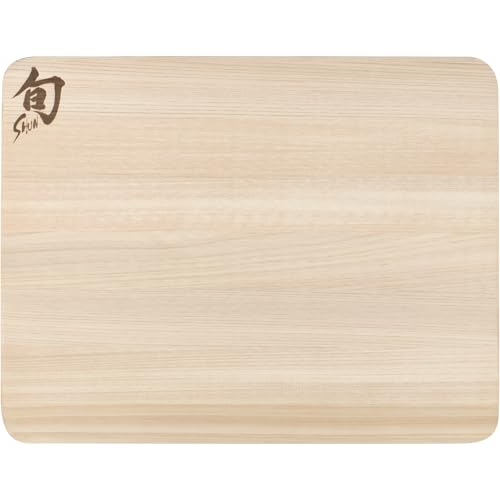
As an Amazon Associate we earn from qualifying purchases at no extra cost to you.
Top Picks at a Glance
- Best Overall: Nomsters 9 inch Teak Board: solid, thick teak that is easy to wipe and store
- Best Easy Care: KitchenAid Classic Rubberwood 8 x 10 in: reversible with a perimeter trench
- Best Budget Pair: Lipper International Two-Tone Bamboo Set of 2 (7.75 x 6 in): thin, light and inexpensive
- Best Design: Totally Bamboo Barbados 9 x 6.5 in: end-grain inlay for style
- Best Two-Pack: Socisen Small Teak 2-Pack (8.6 x 6 in): one board for fruit, one for savory items
- Best With Hanging Hole: Gtencemen Small Acacia 9 x 6.5 in: mini acacia with a hanging loop
- Best Slightly Larger: Qukemax Small Acacia With Handle (13 x 7 in): for bread, cheese and small roasts
Comparison Table
| Product | Best for | Key specs | Watch for | Price tier |
|---|---|---|---|---|
| Nomsters Teak 9 in | Daily fruit and herb prep | 9 in; natural teak; solid thick construction; non-toxic per listing | Square footage is small | Mid-range |
| KitchenAid Rubberwood 8 x 10 | Easy cleaning | 8 x 10 in; reversible; perimeter trench; natural rubberwood | Light, can slide | Budget to Mid-range |
| Totally Bamboo Barbados | Garnishes, sandwiches | 9 x 6.5 in; bamboo with end-grain inlay | Bamboo is hard on edges | Budget |
| Socisen Teak 2-Pack | Separate boards for fruit and savory | 2 boards; 8.6 x 6 in; teak | Boards are very small | Budget to Mid-range |
| Gtencemen Acacia | Hanging storage | 9 x 6.5 in; acacia; hanging hole; BPA free per listing | Thickness not listed | Budget |
| Lipper Bamboo Set of 2 | Light prep, serving | 7.75 x 6 x 0.25 in; set of 2; two-tone bamboo | Very thin | Budget |
| Qukemax Small Acacia 13 x 7 | Bread, cheese, long items | 13 x 7 in; acacia; handle; serving tray use | Narrow | Mid-range |
1. Nomsters 9 Inch Teak Cutting Board: Best overall small wooden board
- Size: 9 inches (width not listed)
- Wood: natural teak, solid and thick per listing
- Described as non-toxic and easy to clean
- Usable as a serving board
- Weight: not listed
Best for: People who want a small wooden board for fruit, herbs and a sandwich and plan to use it daily.
Skip if: You need a larger area for chopping whole heads of lettuce or cabbage.
Teak is an oily hardwood that tends to hold up well on a wet counter, which is a plus for a board that sees fruit juice, lemon and herbs. Small boards are especially suited to teak: the wood is dense enough that even a thin piece resists warping better than many softer woods. The listing describes the board as solid and thick, which is what you want at a small size.
A 9 inch board has about 60 to 80 square inches of cutting area, depending on shape. That is enough for two apples, a few strawberries or a bunch of parsley. It is not enough for a whole cucumber lying flat plus the sliced pieces, which is where a larger board makes life easier.
Hand wash with mild soap, dry on edge and refresh with food-grade mineral oil or board cream when it looks pale. Because it is small, it is simple to wash at the sink and to store in a drawer.
Pros
- Teak holds up well in damp conditions
- Thick for a small board
- Easy to wash and store
- Doubles as a small serving board
Cons
- Small cutting area
- Weight and width not listed
- Needs occasional oiling
2. KitchenAid Classic Rubberwood Cutting Board 8 x 10: Best easy-care small board
- Size: 8 x 10 inches
- Wood: natural rubberwood
- Reversible with perimeter trench
- Brand: KitchenAid
- Thickness and weight: not listed
Best for: Cooks who want a light, reversible, simple wooden board from a well-known kitchen brand.
Skip if: You need a heavy, non-slip board for strong chopping.
Rubberwood is the timber of the rubber tree, harvested after it stops producing latex. It is a hardwood that is widely used for kitchenware because it is dense, light in color and relatively affordable. This board is reversible, and the perimeter trench catches juice from fruit or tomatoes.
At 8 x 10 inches it is a step up in area from the tiniest boards: roughly 80 square inches of surface. That is enough for a pear and a handful of berries without crowding. The weight is low, so on a smooth counter you will want a damp towel under it.
Because it is wood, it should not go in the dishwasher. Wash by hand and dry. If you have allergies, note that rubberwood is related to latex sources; people with latex allergies should check with their doctor or the manufacturer before use.
Pros
- Reversible
- Trench for juices
- Known brand
- Light and easy to store
Cons
- May slide
- Thickness not listed
- Not dishwasher safe
3. Totally Bamboo Barbados Small Cutting Board: Best design on a budget
- Size: 9 x 6.5 inches
- Material: bamboo with end-grain inlay
- Intended for fruit, vegetables, garnishes and sandwiches
- Brand: Totally Bamboo
- Thickness: not listed
Best for: Garnishes, lemon slices, sandwiches and bar prep.
Skip if: You want a board that is gentle on high-end knife edges.
Totally Bamboo markets this small board for fruit, vegetables, garnishes and sandwiches, which is the right role for it. The end-grain inlay adds a decorative stripe and gives a bit of extra durability in the center.
Bamboo is a grass rather than a tree, and boards are made by laminating strips. This makes it a fast-renewing material, though the glues and hardness mean it can dull knives faster than softer woods. For fruit and soft herbs that is not an issue.
At 9 x 6.5 inches it is a compact board that fits in a drawer. As always, wash by hand and dry fully; do not soak.
Pros
- Attractive
- Inexpensive
- Compact
- Bamboo is renewable
Cons
- Hard on knives
- Thickness not listed
- Small
4. Socisen 2 Pack Small Teak Cutting Boards: Best two-board set
- Count: 2 boards
- Size: 8.6 x 6 inches each
- Wood: teak
- Lightweight, mini boards for fruit, lemon, sandwich and cheese
- Weight and thickness: not listed
Best for: Households that want one board for sweet items and one for savory items.
Skip if: You prefer a single larger board.
Two boards solve a common problem: onion and garlic scents end up on a fruit board. With two boards, you can dedicate one to fruit and snacks and the other to alliums and herbs. The pair also doubles as individual serving boards at a small gathering.
At 8.6 x 6 inches each, they are truly small. Think apples, limes, a block of cheese or a roll. They will not handle large vegetables, and thin pieces may be less stable on a slick counter.
The wood is teak, so oils are naturally present, but like all wood, it benefits from periodic conditioning.
Pros
- Two boards
- Teak
- Cheap per board
- Great for gifting
Cons
- Very small
- Thickness unknown
- Can slide
5. Gtencemen Small Acacia Cutting Board With Hanging Hole: Best for hanging storage
- Size: 9 x 6.5 inches
- Wood: acacia
- Hanging hole or loop for storage
- BPA free per listing
- Thickness: not listed
Best for: Small kitchens that hang tools on hooks.
Skip if: You need a thick board for heavy chopping.
Acacia is a hardwood with a lively grain that often costs less than teak or maple. This Gtencemen board is a straightforward small chopping board with a hanging hole, so it can live on a wall hook instead of in a drawer.
The listing mentions use for vegetables, fruit, bread and meat. For raw meat, though, you should use a dedicated board; for a small wooden board, fruit, vegetables and bread are the right fit.
Check thickness on the product page. A thin acacia board may bow after repeated washing.
Pros
- Hang to store
- Acacia grain
- Inexpensive
Cons
- Thickness not listed
- Small
- Needs hand washing
6. Lipper International Two-Tone Bamboo Board Set of 2: Best ultra-light pair
- Size: 7.75 x 6 x 0.25 inches each
- Set of 2
- Material: bamboo, two-tone
- Cutting and serving use
- Brand: Lipper International
Best for: Light tasks such as slicing a lemon, cutting a muffin or serving cheese.
Skip if: You want any real chopping stability.
At a quarter inch thick, these boards are closer to cutting trays than chopping blocks. They are light, easy to store and cheap. For a bar cart, a lunch bag or an office kitchen, they are exactly right.
They are not designed for heavy chopping and will flex under pressure. Use them for soft foods and always put them on a stable surface.
Clean by hand and dry promptly. Replace when cracks or deep cuts appear.
Pros
- Very light
- Two-pack
- Good for serving
- Low cost
Cons
- Thin
- Not for heavy chopping
- Bamboo can dull knives
7. Qukemax Small Acacia Board With Handle (13 x 7): Best slightly larger board for bread and cheese
- Size: 13 x 7 inches
- Wood: natural acacia
- Handle for serving
- Charcuterie and cheese tray use
- Thickness and weight: not listed
Best for: Slicing a baguette, cheese or sausage and bringing it to the table.
Skip if: You want a square, fruit-sized board.
This board is longer than most small boards, with a narrow 7 inch width. That shape is good for bread, sausages and cheese, and the handle turns it into a serving board.
It is less suited to wide vegetables, so pair it with a squarer small board.
Wood grain varies, so each board looks a little different.
Pros
- Good for long items
- Handle
- Attractive
Cons
- Narrow
- Thickness not listed
- Not for large vegetables
Also Consider
Epicurean Kitchen Series 8 x 6 Board
A wood-fiber composite rather than solid wood; dishwasher safe and heat resistant per the listing. A good non-wood alternative.
LorisArm Small Bamboo Cutting Board 8 inch
A very compact bamboo board for camping or lunch boxes.
Farberware Reversible Plastic Board 8 x 10
A dishwasher-safe plastic board that suits raw meat when you need a separate surface.
Donxote Small Cutting Board Set of 2
A pair of compact boards with juice grooves, suited to cheese, fruit and sandwiches.
How We Chose
This guide is research-based. We compared product listings, maker descriptions and independent explainers on wood species and cutting board care from sources such as the Wood Database and university extension food-safety pages. We did not personally use these products, and we do not quote ratings, review counts or prices.
We limited the list to wooden or wood-like boards under about 13 inches on the long side, weighed species, thickness, shape and care needs, and marked unstated specs as not listed. Health-related statements are limited to general food-handling advice.
Buying Guide
Size: how small is too small?
Measure the biggest thing you cut regularly. A board should be at least a few inches longer than the item. An apple needs about 6 inches of board; a lemon needs less; a cucumber needs 8 inches or more. For most small-board tasks, 8 x 10 inches is a comfortable minimum, 6 x 9 is the tight limit and anything smaller is for garnish.
Thickness matters even on small boards
Look for at least half an inch for small boards you will actually chop on, and a quarter inch only for serving. Thin boards slide, flex and crack faster. If the listing does not give thickness, assume the board is thin.
Wood types for small boards
Teak is dense and oily and tends to tolerate damp conditions. Acacia is hard and attractive. Rubberwood is light and inexpensive. Bamboo is hard and glued from strips. All are acceptable if you keep them clean, and none should be soaked or put in the dishwasher.
Hygiene and separate boards
A small wooden board is ideal for produce, bread and cheese. Use a separate board for raw meat, poultry and fish, and wash after each use with hot soapy water. If you are preparing food for people with allergies, use a board that has not touched the allergen. This is general food-handling advice; check local food-safety guidance for details.
Care and storage
Wash by hand, dry on edge, oil occasionally with food-grade mineral oil, and keep away from heat. Small boards can warp if you leave them wet on one side, so do not leave them in the sink. A hanging hole or a narrow shelf slot helps them dry.
Square inches compared
Area gives a better idea of usefulness than the length alone. The KitchenAid 8 x 10 inch board has about 80 square inches. The Totally Bamboo 9 x 6.5 board has about 58 square inches. The Socisen 8.6 x 6 board has about 52 square inches. The Lipper 7.75 x 6 board has about 46 square inches. The Qukemax 13 x 7 board has about 91 square inches, though a long thin shape. As a reference, a standard full-size 16 x 12 board has 192 square inches. If you want a small board that still feels useful, aim for at least 70 square inches.
What to do with a small board day to day
Keep one small wooden board by the sink for whatever you are handling right now: slicing lemon for water, mincing herbs, cutting up fruit for a snack. A second small board in the fridge-door drawer or on the shelf can be reserved for items like cheese and cold cuts. Because small boards dry quickly, there is little reason to leave one wet; wipe and prop it against a backsplash or hang it. When a small board develops deep grooves, sand lightly with fine grit sandpaper and re-oil, or replace it, since small boards are inexpensive.
Matching a small board to a task
For breakfast fruit, an 8 x 10 inch board is comfortable: you can slice a banana, quarter strawberries and keep the peel off to one side. For herbs, a 9 x 6.5 inch board works well, because a chef’s knife needs a clear rocking arc but not a lot of width. For lemon and lime wedges for drinks, the smallest 7 to 8 inch boards are ideal and double as a tray on a bar cart. For sandwiches, you need roughly the length of a loaf slice plus an inch or two, so 9 inches is a practical minimum. For cheese and cured meats, the long and narrow 13 x 7 inch shape is better than a square. For kids’ snack prep, a light, small board that a child can lift is safer than a big heavy one, though an adult should supervise any knife use.
Small boards and healthy meal prep
People who cook mostly with fresh produce often find a small board encourages quick, frequent prep: a salad base in the morning, a fruit plate in the afternoon. Keeping a board dedicated to produce also reduces the chance of mixing flavors and cross-contact with raw animal foods. This is a food-handling habit rather than a health claim. If anyone in your household has a food allergy, talk with their doctor about how to manage shared kitchen tools, and consider a separate, clearly marked board.
When a small wooden board is the wrong tool
Small wooden boards are not good for raw chicken, large roasts, big cabbages or bulk meal prep. They will also not catch much juice. If you regularly cook for four or more, a single small board will feel like a constant limitation, and you should plan on a large board as your main surface and keep the small board as a helper.
Common Mistakes to Avoid
- Choosing a board that is too small for the food you cut.
- Leaving a wooden board in the sink.
- Using a thin serving tray as a chopping board.
- Washing wood in the dishwasher.
- Using the same board for raw meat and fruit.
- Buying a very thin board and expecting it to behave like a thick chopping block.
Frequently Asked Questions
What is the best small wooden chopping board?
The Nomsters 9 inch teak board is the best all-round pick for daily use. The KitchenAid rubberwood board is a great low-fuss alternative.
How small is a small cutting board?
Usually 6 to 10 inches on the long side. Under 8 inches is best for garnishes and fruit.
Is a small wooden cutting board good for fruit?
Yes. A wooden board is gentle on knives and can be kept just for fruit and vegetables.
Can I cut meat on a small wooden board?
It is better to use a dedicated board for raw meat. Wash after each use, and replace when deep cuts form.
How do I clean a small wooden board?
Wash by hand with mild soap and hot water, dry on edge and oil occasionally.
Is bamboo or teak better for a small board?
Teak is gentler on knives and holds up in damp conditions. Bamboo is cheaper but harder on edges.
How thick should a small wooden board be?
At least half an inch for chopping. A quarter inch is fine for serving only.
Should I oil a small wooden board?
Yes. A light coat of food-grade mineral oil every month or two keeps wood from drying and cracking. Wipe off any excess.
Which One Should You Buy?
If you want a sturdy, long-lived small board, buy the Nomsters teak. If you want easy care and a reversible design, choose the KitchenAid rubberwood. If you want two boards at a low cost, take the Socisen teak pair, and use the Lipper bamboo set for serving.
If you cook with a lot of bread and cheese, add the Qukemax for its long format.
For a first small board, buy only one and live with it for a week. If you keep wishing it were bigger, step up to 8 x 10 inches or larger; if you keep reaching for it for tiny jobs, add a second one so you have a clean board ready for each type of food. Small boards are inexpensive enough that owning two or three is reasonable, and they take almost no storage space.
Sources
- Manufacturer product pages and listing details for Nomsters, KitchenAid, Totally Bamboo, Socisen, Gtencemen, Lipper International and Qukemax
- The Wood Database
- USDA food safety guidance on cutting boards
- University extension resources on kitchen hygiene
Last updated: October 2026

Write Your Review
No reviews yet. Be the first to share your experience!