

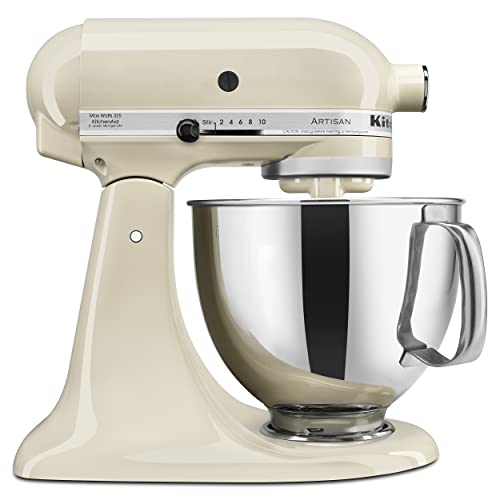
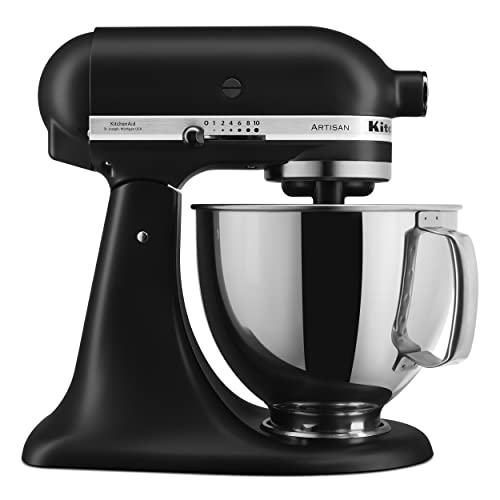
The KitchenAid Artisan 5-quart tilt-head is the best stand mixer for most home bakers, because it balances a 5-quart bowl, a wide attachment range and a counter-friendly footprint. If you bake bread weekly, step up to a bowl-lift model such as the KitchenAid Pro 600 or a bowl-drive machine like the Bosch Universal Plus. If you want solid power for less, the Cuisinart 5.5-quart is the value pick.
Our top picks


As an Amazon Associate we earn from qualifying purchases at no extra cost to you.
Quick comparison of the best stand mixers
| Pick | Best for | Bowl | Motor (per maker) | Price range |
|---|---|---|---|---|
| KitchenAid Artisan 5-Qt | Best overall | 5 qt, tilt-head | 325 W, 10 speeds | Mid-range |
| KitchenAid Pro 600 | Best for bread | 6 qt, bowl-lift | 575 W, 10 speeds | Upper-mid |
| Bosch Universal Plus | Heavy whole-grain dough | 6.5 qt, bowl-drive | Roughly 500-800 W depending on source | Upper-mid |
| Cuisinart 5.5-Qt (SM-50) | Best value | 5.5 qt, tilt-head | 500 W, 12 speeds | Budget to mid |
| KitchenAid Classic 4.5-Qt | Entry level | 4.5 qt, tilt-head | Lower-wattage motor | Budget to mid |
| KitchenAid Mini | Small kitchens | 3.5 qt, tilt-head | Compact motor | Mid-range |
Best overall: KitchenAid Artisan 5-Quart Tilt-Head
The Artisan is the default recommendation in most 2026 roundups for a reason. A 5-quart stainless bowl handles a double batch of cookie dough or a single loaf of bread dough, and the tilt-head design makes it easy to scrape the bowl and swap beaters. The power hub on the front accepts the largest family of attachments in the category, including pasta rollers, meat grinders and ice cream bowls.
Trade-off: the 325 W motor rated by the maker is fine for cakes and cookies but works harder on stiff dough. Keep bread batches to roughly 8 cups of flour or less and the machine runs comfortably. Most of the cost is the name and the attachment ecosystem, not extra power.
Best for bread: KitchenAid Pro 600 Bowl-Lift
The Pro 600 uses a 6-quart bowl that locks on a lifting arm, which keeps the bowl stable under heavy kneading. A 575 W motor and a wider spiral dough hook make it the natural upgrade if you regularly make two loaves at once. The bowl-lift lever is sturdier than a tilt-head hinge, which matters over years of use.
Trade-off: it is taller and heavier than the Artisan, so check under-cabinet clearance. Many models need roughly 16-17 inches of vertical space, and the machine weighs in the mid-20-pound range.
Best for stiff dough: Bosch Universal Plus
The Bosch works differently. The motor sits in the base and drives the bowl through a center post, so the dough hooks do the kneading with less strain. It handles whole-wheat and high-hydration doughs well and has a large 6.5-quart capacity. Published wattage varies by source, so treat the maker’s spec sheet as the reference.
Trade-off: it is less suited to small whipping jobs such as one egg white, and its attachment range is narrower than KitchenAid’s.
Best value: Cuisinart 5.5-Quart
This die-cast metal mixer offers a 500 W motor, 12 speeds and a splash guard at a lower price than comparable KitchenAid machines. It is a good fit if you mostly bake cakes, cookies and the occasional bread. It is also a strong pick if you do not plan to buy many attachments.
Trade-off: fewer attachments and accessories, so expand-later flexibility is limited.
Best for small kitchens: KitchenAid Mini or Classic
The Mini (3.5 quart) and Classic (4.5 quart) save counter space. A Mini suits one or two people and half batches, while the Classic is a step up in bowl size for the same footprint family. Both are lighter, which makes them easier to store in a cabinet.
How to choose: decision matrix
| Your situation | Choose | Why |
|---|---|---|
| Bake cookies and cakes 1-3 times a month | Artisan 5-Qt or Cuisinart | 5-5.5 qt covers a double batch |
| Bread every week, 2 loaves | Pro 600 or Bosch | Stronger motor, 6+ qt bowl |
| Small apartment, under 18 in. of cabinet clearance | Tilt-head or Mini | Lower profile |
| Want pasta, grinding and ice cream add-ons | KitchenAid | Widest attachment range |
| Tight budget | Cuisinart or KitchenAid Classic | Lowest cost of entry |
A worked capacity check
A standard bread recipe uses about 4 cups (500 g) of flour per loaf. Most 5-quart bowls handle up to 8-9 cups of flour before dough climbs the hook, so two loaves is the practical ceiling. For three or more loaves, move up to 6 quarts or more.
Durability and ownership realities
- Plastic or nylon gears wear faster under heavy dough; all-metal drive trains last longer.
- Tilt-head hinges loosen with age, so use lower speeds for stiff dough.
- Coated beaters are often not dishwasher safe; check the manual before cleaning.
- Re-grease and bowl-height adjustment, if needed, should follow the maker’s instructions.
Frequently Asked Questions
Is a tilt-head or bowl-lift stand mixer better?
Tilt-head mixers are easier to use for everyday baking and tend to be smaller. Bowl-lift mixers are sturdier and better for large or stiff batches. Choose based on how often you knead bread.
How many watts does a stand mixer need?
Wattage alone is a poor guide because gear design matters. For occasional baking, 300-500 W is enough. For frequent bread, look for 500 W or more with a bowl-lift or bowl-drive design.
What size stand mixer should I buy?
Five quarts suits most households. Choose 4.5 quarts or smaller if space is tight, and 6 quarts or more if you bake in large batches or make multiple loaves.
Are KitchenAid attachments compatible across models?
Most power-hub attachments fit tilt-head and bowl-lift KitchenAid models, but check the maker’s compatibility list before buying, since some newer or specialty models differ.
Is a stand mixer worth it over a hand mixer?
If you bake once a month or less, a hand mixer is enough. A stand mixer pays off when you knead dough, whip large batches or want hands-free mixing.
Write Your Review
No reviews yet. Be the first to share your experience!