

Key takeaways
- Choose 5–8 nominal cups for one or two regular coffee drinkers.
- Choose 10–12 cups for families, shared offices, or repeated morning refills.
- Choose a model with a single-serve option if you regularly alternate between one mug and a full pot.
- Do not buy a very large brewer for occasional use: brewing a tiny batch in an oversized basket can reduce evenness.
The best drip coffee makers in 2026 are the ones that hold brewing water near 92–96°C (198–205°F), distribute it evenly across the grounds, keep coffee hot without excessive cooking, and match your normal batch size and cleaning tolerance.
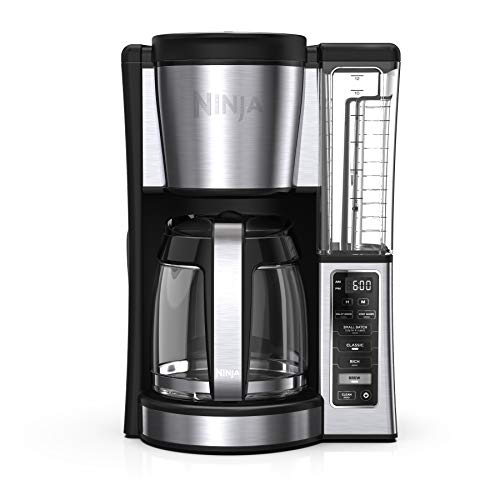
For most households, the OXO Brew 8-Cup Coffee Maker is the most balanced choice: it is compact, simple to program, and suitable for both a full carafe and a single mug. Choose the Technivorm Moccamaster KBGV Select for long-term repairability and consistently fast brewing, the Breville Precision Brewer for control and experimentation, or a thermal-carafe model such as the Bonavita Connoisseur when heat retention matters more than extra features.
Our top picks



As an Amazon Associate we earn from qualifying purchases at no extra cost to you. Ratings are shown as listed on Amazon.
What separates a good drip coffee maker from an ordinary one?
Brew temperature and contact time
Temperature is important, but a high number on the box does not guarantee better coffee. A capable brewer should bring water into the broadly accepted brewing range of 92–96°C (198–205°F) and maintain it through most of the brew. Water that is too cool can produce thin, sour-tasting coffee; water that is excessively hot or held on the grounds too long can produce harshness.
Look for independent certification or detailed technical specifications rather than relying only on “hot coffee” marketing. The brewer should also finish a typical full batch in roughly 4–8 minutes, depending on capacity and dose. If it takes much longer, the grind may be too fine, the filter may be clogged, or the machine may be struggling to heat and pump water consistently.
Showerhead design matters more than it looks
The showerhead is the part that wets the coffee bed. A narrow outlet can create channels through the grounds, allowing water to bypass much of the coffee. A wider multi-hole showerhead, pulsed water delivery, or a rotating spray pattern usually provides more even saturation.
This feature is difficult to judge from a product listing. Check whether the showerhead is removable for descaling and whether the basket has enough depth for a full dose. A shallow basket can encourage uneven extraction when brewing a large batch, even if the machine reaches the correct temperature.
Best drip coffee makers by situation
| Situation | Best fit | Why it makes sense | Trade-off |
|---|---|---|---|
| Most people, limited counter space | OXO Brew 8-Cup Coffee Maker | 8-cup capacity, single-serve option, simple controls, thermal carafe | Less recipe control than a specialty-focused brewer |
| Long-term ownership and repairability | Technivorm Moccamaster KBGV Select | 1.25 L batch size, metal housing, strong temperature performance, replaceable parts | Premium price and a relatively tall footprint |
| Dialing in different coffees | Breville Precision Brewer | 12-cup capacity, adjustable modes, programmable brewing, compatibility with cone and flat-bottom baskets | More settings mean a steeper learning curve and more cleaning |
| Large household or mixed serving sizes | Braun MultiServe Plus | Multiple volume choices, including single-cup and carafe brewing | More internal parts and controls to maintain |
| Simple thermal-carafe brewing | Bonavita Connoisseur | Minimal controls, pre-infusion, 8-cup thermal brewing | Fewer programmable and customization features |
Head-to-head: which style is right for you?
OXO Brew 8-Cup versus Technivorm Moccamaster KBGV Select
The OXO is the easier recommendation for a mixed household. Its 8-cup design can brew into a thermal carafe or directly into a compatible travel mug, so it avoids making a full pot when only one person wants coffee. The controls are approachable, and its footprint is generally easier to accommodate.
The Moccamaster is the more ownership-oriented choice. Its 1.25-liter capacity is approximately ten 4-ounce cups, though a typical modern mug means fewer servings. The machine uses a metal-bodied construction and has a reputation for serviceable, replaceable components. Its selector lets you adjust the brew rate for a half or full carafe, but it is intentionally less feature-heavy than the OXO or Breville.
Choose the OXO for flexibility and convenience. Choose the Moccamaster if you brew frequently, prefer physical simplicity, and expect to keep the machine for many years.
Breville Precision Brewer versus Braun MultiServe Plus
These machines suit households that do not always brew the same amount. Both can handle more than one serving format, but the Breville is the stronger choice for coffee experimentation. It offers modes intended for standard, strong, iced, cold, and specialty-style brewing, along with temperature and timing control. Its large 12-cup capacity is useful for several drinkers.
The Braun is more appealing when convenience and volume presets are the priority. It can serve a single cup, a travel mug, or a larger carafe without requiring a separate small brewer. Its interface is easier for routine use, while the Breville rewards owners who want to adjust recipes.
Carafe heat retention: thermal or glass?
A thermal carafe is usually the better choice if coffee will sit for more than 20–30 minutes. It reduces the need for a hot plate, preserves flavor better than continuous heating, and often keeps coffee pleasantly hot for several hours. The exact result depends on how full the carafe is, how often its lid is opened, and whether it was preheated.
Glass carafes are lighter, easier to inspect, and often cheaper to replace. However, the hot plate can gradually flatten or overcook coffee if the pot remains on it. A glass model works well for people who drink the batch soon after brewing or who value immediate visual feedback.
To improve thermal retention, rinse the carafe with hot water before brewing, fill it reasonably close to its intended capacity, and keep the lid closed. Do not assume a thermal carafe is dishwasher-safe: seals, lids, and vacuum insulation can require hand washing.
Capacity is not the same as mug count
Coffee makers commonly define one “cup” as 5 ounces, not the 8–12 ounces found in many mugs. An 8-cup machine therefore holds about 40 fluid ounces, or roughly four large 10-ounce servings before allowing for coffee grounds and headroom. A 12-cup machine holds about 60 fluid ounces, equivalent to six 10-ounce servings.
As a practical rule:
- Choose 5–8 nominal cups for one or two regular coffee drinkers.
- Choose 10–12 cups for families, shared offices, or repeated morning refills.
- Choose a model with a single-serve option if you regularly alternate between one mug and a full pot.
- Do not buy a very large brewer for occasional use: brewing a tiny batch in an oversized basket can reduce evenness.
Filters, grind, and the cost of convenience
Flat-bottom baskets are forgiving and easy to load. Cone filters can produce excellent results but are more sensitive to grind size and pouring pattern. Paper filters provide the cleanest cup and capture much of the coffee sediment and oil. Reusable metal filters reduce ongoing waste and cost, but they allow more oils and fine particles through and require careful washing.
For a starting recipe, use about 55–60 grams of coffee per liter of water. A 1.25-liter full batch therefore needs approximately 69–75 grams of coffee. If a 340-gram bag costs $18, that batch uses about $3.65–$3.97 of coffee before water, filters, and electricity:
Calculation: 72 grams ÷ 340 grams × $18 = approximately $3.81 per full batch.
Adjust the grind before making large changes to the dose. Slow, bitter coffee usually needs a slightly coarser grind or shorter contact time; weak, sour coffee may need a finer grind or a larger dose.
Programmable controls worth paying for
- Auto-start: useful if you prepare the basket and water the night before.
- Small-batch mode: helps maintain contact time when brewing two or three cups.
- Strength control: can alter flow or timing, but it is not a substitute for fresh coffee and a correct grind.
- Pre-infusion or bloom: briefly wets the grounds before the main brew, allowing trapped gas to escape.
- Temperature adjustment: valuable for experienced users, but unnecessary if you mainly want consistent everyday coffee.
A clock and delayed start do not automatically make a brewer better. Water sitting overnight in the reservoir can collect dust or absorb odors, so empty the reservoir after use rather than leaving stagnant water for days.
Cleaning and durability: the ownership details listings omit
Rinse the basket and carafe after every use, wipe spilled coffee from the hot plate, and leave removable parts open to dry. Wash the carafe lid and brew basket regularly because coffee oils accumulate in hidden channels. If the machine has a removable showerhead, inspect it whenever flow becomes uneven.
Descale when the manual recommends it or when brewing becomes noticeably slower. Hard-water households may need descaling every one to three months; soft-water households may go longer. Use the manufacturer-approved descaling product and run the required rinse cycles. Vinegar can leave odor and may not be recommended for every machine.
The parts most likely to cause trouble are rubber seals, valves, carafe lids, hot plates, and mineral-clogged heating paths—not necessarily the main electronics. A brewer with accessible replacement parts can be cheaper to own over five years than a less expensive machine that must be discarded after a failed valve or cracked carafe.
Bottom line
Buy the OXO Brew 8-Cup for the best balance of size, simplicity, and thermal-carafe convenience. Pick the Technivorm Moccamaster KBGV Select for durable, repair-friendly ownership and highly consistent full batches. Select the Breville Precision Brewer if you want control over recipes, or the Braun MultiServe Plus if your household needs several serving sizes. Whichever model you choose, prioritize verified brewing temperature, an even showerhead, a basket matched to your usual batch size, and a cleaning routine you will actually follow.





Write Your Review
No reviews yet. Be the first to share your experience!