

Key takeaways
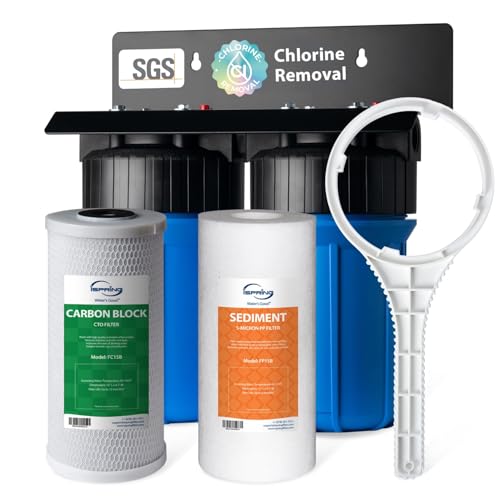
- Best Overall Whole-House System: iSpring WGB32B commercial-grade 3-stage system
- Best Under Sink RO: Waterdrop G3P600 tankless reverse osmosis system
- Best Value Whole-House: Waterdrop WHF3T-PG 3-stage whole house filter
- Best Sediment Prefilter: iSpring WSP-50 spin-down sediment filter
- Best UV Add-On: HQUA-OWS-12 whole house ultraviolet purifier
- Best RO Replacement Kit: Express Water 3-year RO replacement filter set
- Best Pitcher Refill Pack: ICEPURE CRF950Z 4-pack for PUR pitchers
The best whole house and under sink water filters work as a team, not as rivals: a sediment prefilter or whole-house cartridge system protects the plumbing and appliances, an under-sink reverse osmosis unit handles the kitchen tap, and replacement cartridges keep both running. If you can only buy one thing for the whole house, the iSpring WGB32B three-stage system is our top pick for a full-house setup, and the Waterdrop G3P600 tankless reverse osmosis system is our top pick for the kitchen sink. Runner-ups worth a look are the Waterdrop WHF3T-PG for a lower-cost whole-house system and the iSpring WSP-50 spin-down sediment prefilter for well-water homes.
This guide is research-based and we did not personally use these products. We compare listing details and maker specs, and we do not promise that any filter removes a specific contaminant. Water quality differs from house to house, so the right first step is always a water report or lab result for your own supply. Check the certification data sheet of any filter for what it is actually certified to reduce, and talk to a qualified plumber or your water utility if you have health concerns about your water.
Our top picks



As an Amazon Associate we earn from qualifying purchases at no extra cost to you.
Top Picks at a Glance
- Best Overall Whole-House System: iSpring WGB32B commercial-grade 3-stage system
- Best Under Sink RO: Waterdrop G3P600 tankless reverse osmosis system
- Best Value Whole-House: Waterdrop WHF3T-PG 3-stage whole house filter
- Best Sediment Prefilter: iSpring WSP-50 spin-down sediment filter
- Best UV Add-On: HQUA-OWS-12 whole house ultraviolet purifier
- Best RO Replacement Kit: Express Water 3-year RO replacement filter set
- Best Pitcher Refill Pack: ICEPURE CRF950Z 4-pack for PUR pitchers
Comparison Table
| Product | Best for | Key specs (as listed) | Watch for | Price tier |
|---|---|---|---|---|
| iSpring WGB32B | Whole-house, 3-stage | Commercial-grade 3-stage housings | Needs plumbing work and space | Premium |
| Waterdrop G3P600 | Kitchen RO, tankless | 8-stage; 2:1 pure to drain; NSF/ANSI 42, 53, 58, 372 listed; LED smart faucet | Needs power and a cabinet drain connection | Premium |
| Waterdrop WHF3T-PG | Lower-cost whole house | 3-stage; 5 micron | Fewer upgrade options than premium kits | Mid-range |
| iSpring WSP-50 | Well water, sediment | 50 micron; flushable; reusable stainless mesh; lead-free brass | Not a taste or chemical filter | Mid-range |
| HQUA-OWS-12 | Whole-house UV stage | 120V, 40W; 3/4 in MNPT; extra UV bulb | Needs clear water ahead of it | Premium |
| Express Water 3-year set | RO upkeep | 23 filters; 50 GPD membrane; 10 inch; GAC, ACB, PAC, SED | Fits only matching 5-stage RO units | Mid-range |
| ICEPURE CRF950Z 4-pack | PUR pitcher refills | Fits PPF951K, PPF900Z and other listed PUR models | Check your exact pitcher model | Budget |
How a Layered Water Filter Setup Works
Most people shop for one filter and expect it to do everything. In reality, water treatment is a chain. At the front of the chain, a sediment stage catches sand, silt and rust so the later stages do not clog. In the middle, carbon stages deal with chlorine taste and odor, and some are certified for additional reductions. At the drinking tap, an under-sink reverse osmosis system can add a further membrane stage, and a UV unit can be added after clear-water filtering if your water source needs it. Pitcher filters sit at the end for people who do not want a plumbed system.
That chain is why this guide covers whole house systems, a sediment prefilter, a UV purifier, an RO kitchen system and two sets of replacement filters together. If you buy the pieces to match, each one works better and lasts longer.
1. iSpring WGB32B Whole House System: Best Overall Whole-House Pick
- Type: whole-house point-of-entry, 3-stage
- Build: commercial-grade housings, per the listing
- Stages: sediment and carbon stages as listed on the maker page
- Install: plumbed at the main water line
- Flow rate and cartridge life: check the maker data sheet; not repeated here
Best for: homeowners who want a full-house filter that covers every tap, shower and appliance. Skip if: you rent, or you cannot cut into the main line.
A whole-house system is a plumbing project, not a countertop gadget. The WGB32B is designed for the point where water enters your home, and it uses three stages in separate housings so that each cartridge can be changed on its own. The practical benefit of a three-stage layout is that the first stage takes the heavy sediment load, which protects the carbon stage behind it, which in turn is what usually determines how nice your shower and tap water taste and smell.
The housings are described as commercial grade, which in practice means thicker, pressure-rated bodies and brass fittings rather than the lightweight plastic of cheaper kits. That matters because whole-house housings sit under line pressure all day. Whichever model you buy, install a pressure gauge on both sides of the filter, and shut the main off before changing cartridges. A poorly seated O-ring is the most common cause of drips.
Plan the space first. Three housings with wrench clearance need a wall area of roughly the size of a small cabinet, and you should leave room beneath each one to remove the filter. If your main line is in a cold garage or crawlspace, protect it against freezing.
Pros:
- Covers the whole house, not just one tap
- Three stages that can be replaced individually
- Commercial-grade build, per the listing
- Pairs well with a sediment prefilter or UV stage
Cons:
- Needs plumbing work and wall space
- Highest upfront cost among the whole-house options here
2. Waterdrop G3P600 Tankless RO System: Best Under Sink RO
- Type: under-sink tankless reverse osmosis
- Stages: 8-stage RO filtration
- Efficiency: 2:1 pure to drain ratio, per the listing
- Certifications listed: NSF/ANSI 42, 53, 58 and 372
- Faucet: silver, with smart LED display
- Output rate: model name suggests 600 GPD, confirm on the maker page
Best for: kitchens with limited cabinet space where a bulky storage tank would be a problem. Skip if: you have no outlet under the sink or very low incoming water pressure.
Traditional RO systems hold treated water in a tank, which eats a lot of cabinet space. A tankless design filters on demand, so the unit is a compact box under the sink. The listed 2:1 pure to drain ratio means about one gallon of waste water for each two gallons of filtered water, which is far better than older tank systems that waste several gallons per gallon produced. If you worry about water use, that ratio is worth checking on any RO system you consider.
The certification list in the listing is a useful starting point, but treat it carefully: a system can be certified for a standard without being certified for every possible contaminant. Open the maker’s performance data sheet, find the contaminants you care about and read the reduction claims directly. For health concerns, rely on your own water test and speak with a qualified professional.
Plan for electricity: a tankless RO uses a pump, which needs a nearby outlet. Also plan for filter changes. Multi-stage systems have several cartridges with different lives, and the maker’s app or LED display can remind you when to change them.
Pros:
- Compact tankless design
- 2:1 pure to drain ratio, per the listing
- Smart LED faucet display
- Multiple NSF/ANSI certifications listed
Cons:
- Needs power under the sink
- Premium price tier
- Needs a drain saddle connection
3. Waterdrop WHF3T-PG 3-Stage Whole House Filter: Best Value Whole-House
- Type: whole-house point-of-entry, 3-stage
- Filtration size: 5 micron, per the listing
- Contents: housings and cartridges, per the listing; check the exact kit contents
- Install: plumbed at the main water line
Best for: homeowners who want whole-house filtering at a lower cost than the commercial-grade kits. Skip if: you want heavy-duty brass fittings or iron and manganese stages.
The WHF3T-PG is a mid-priced entry to whole-house filtering. A 5 micron filter is a fine sediment stage, so it will catch much smaller particles than a coarse 50 micron prefilter. The trade-off with finer cartridges is that they clog sooner on dirty water, so well-water households often put a spin-down filter in front.
The listing does not publish everything you need to compare it with the iSpring system, such as flow rate in the title, so look at the maker page for flow, pressure rating and the cartridge lifespan before you buy. Larger homes with several bathrooms need a higher flow rate than a one-bath apartment.
Installing any of these kits is a good time to add a bypass valve, which lets you route around the filter when you change cartridges. Whole-house filtering cannot replace a drinking-water stage for people who want a further membrane stage at the kitchen tap.
Pros:
- Lower cost than premium kits
- 3-stage layout with fine 5 micron sediment stage
- Whole-house coverage
Cons:
- Finer sediment stage may clog sooner on dirty water
- Details like flow rate are not in the title
4. iSpring WSP-50 Spin-Down Sediment Filter: Best Sediment Prefilter
- Type: whole-house spin-down prefilter
- Rating: 50 micron
- Element: reusable stainless steel mesh, flushable
- Build: lead-free brass, dual O-ring, leak-free design, per the listing
- Typical use: well water and sandy supplies
Best for: well-water homes and any house with sand or silt. Skip if: your supply is municipal and clear of grit.
A spin-down filter is a coarse first line of defense. Instead of a paper or string cartridge you have to throw away, it uses a reusable mesh and a flush valve that lets you rinse out the trapped sediment. That makes ownership cheap: no cartridge to rebuy. The 50 micron rating means it targets larger particles like sand and grit, which is exactly what ruins the finer cartridges downstream.
The key thing to understand is what this filter does not do. It does not change the taste, remove chlorine or treat anything dissolved in the water. It is a protection stage. It belongs at the front of the chain, ahead of the finer cartridge system or the UV unit, and its job is to extend the life of everything behind it.
Flush it regularly. How often depends on your water; sandy wells may need a flush every few weeks, and municipal homes only a few times a year. A drain hose from the flush valve to a floor drain makes the job much easier.
Pros:
- Reusable mesh element
- Flushable, easy to clean
- Lead-free brass, per the listing
- Protects downstream cartridges
Cons:
- Does not affect taste or dissolved chemicals
- Needs a nearby drain for flushing
5. HQUA-OWS-12 Whole House UV Purifier: Best UV Add-On
- Type: whole-house ultraviolet water purifier
- Electrical: 120V, 40W
- Connections: 3/4 inch MNPT inlet and outlet
- Included: one extra UV bulb, per the listing
Best for: well and private-water homes that already filter sediment and want a UV stage. Skip if: you have murky water or you have not installed a sediment stage.
UV purifiers are not filters. They use light to treat water as it passes through a chamber, and they depend on clear water so the light can pass through. That is why the sequence matters: sediment first, carbon next and UV last. Without a clear-water stage ahead, particles can shield microorganisms from the lamp and reduce effectiveness.
A listed 40W lamp on a 3/4 inch connection suits many single-family homes, but check the maker’s stated flow rating against your household demand. UV lamps wear out and need replacement on a yearly schedule, and the included spare bulb helps with that. Also remember that UV leaves no residual in the pipes, so it treats water at the point it passes the lamp.
If you have any concerns about microbial contamination, test your water and discuss options with your local health department or a qualified water professional. This guide does not claim that any product makes water safe.
Pros:
- Adds a UV stage to a layered setup
- Spare bulb included
- Standard 3/4 inch connections
Cons:
- Needs clear water ahead of it and mains power
- Lamp replacement is an ongoing cost
6. Express Water 3-Year RO Replacement Filter Set: Best RO Replacement Kit
- Contents: 23 filters, covering a 3-year schedule
- Membrane: 50 GPD RO membrane
- Size: 10 inch filters
- Media: GAC, ACB, PAC and SED stages, per the listing
- Fit: designed for 5-stage RO systems; check your model
Best for: owners of a matching 5-stage RO unit who want to buy once and stay stocked. Skip if: you own a tankless unit like the Waterdrop G3P600, which uses its own cartridges.
The most overlooked cost of an RO system is upkeep. Pre-filters are typically changed more often than the membrane, and post-filters often follow a yearly schedule. A bundle that covers three years in one box is convenient because it spares you from tracking down each part, and it usually costs less per cartridge than buying separately.
The critical check is compatibility. This set is specified as 10-inch filters with a 50 GPD membrane, which is the common format for standard under-sink RO units, but cartridge fittings and sizes differ among makers. Compare the set against your unit’s manual before you order.
Mark your calendar the day you install the first set. Old cartridges do not announce themselves, and overdue filters can slow flow or change taste.
Pros:
- Three years of cartridges in one purchase
- Includes membrane and several media stages
- Standard 10 inch format
Cons:
- Only suits matching systems
- Large upfront purchase
7. ICEPURE CRF950Z 4-Pack: Best Pitcher Refill Pack
- Pack: 4 replacement filters
- Replacement for: PUR PPF951K, PPF900Z, PPT700W and other listed PUR pitcher and dispenser models
- Type: pitcher cartridge, third-party
- Filter life per cartridge: not listed in the title
Best for: households that use a PUR pitcher or dispenser and want to stock up. Skip if: your pitcher is another brand or you prefer genuine maker parts.
A pitcher is the simplest layer in the stack, and replacement cartridges are the only ongoing cost. A four-pack that fits a range of PUR models is convenient and usually cheaper than buying single cartridges. Match the model number on the listing against the one on your pitcher; a wrong fit either leaks past the seal or does not seat at all.
Be cautious about certification. Generic replacement cartridges may not carry the same certification as the original maker’s part, so if certification matters to you, check the product page for the exact standards listed and compare with the original filter.
Change the cartridge on the maker’s schedule, not when it looks dirty. A used pitcher filter can get slow or lose performance without visible signs.
Pros:
- Four-pack for stocking up
- Fits many PUR pitchers and dispensers
- Budget tier
Cons:
- Third-party part, so certification may differ
- Cartridge life not listed in the title
Also Consider
APEC ROES-50 5-Stage Under Sink RO System
A traditional tank-style 50 GPD reverse osmosis system with NSF/ANSI 58 certification listed. A reliable alternative if you do not need a tankless design.
Brita Standard Pitcher and Dispenser Replacement Filters
A familiar choice for Brita pitchers, with WQA and NSF/ANSI certification listed. Handy if your pitcher is a Brita rather than a PUR.
Membrane Solutions 5 Micron 10-Inch String Wound Cartridge
A universal sediment cartridge used in standard 10-inch whole-house housings. A budget refill for 3-stage kits.
SimPure 10-Inch Whole House Filter Housing
An empty clear housing for DIY filter stacks. Good for those who want to choose their own cartridges, but it needs more planning.
How We Chose
This guide is research-based. We did not personally use these products. We began with the water-treatment listings in our product store and picked items that are currently sold and that make sense together in a layered chain. We compared maker-stated specs, certifications and ownership requirements, then cross-checked how NSF/ANSI standards are generally explained by independent water-quality resources. Where the title did not list flow rate or filter life we wrote “not listed” or told you to check the maker data sheet.
We limited each brand to two picks, covered every layer of a home setup and treated replacement parts as part of the buying decision. We do not make claims about contaminant removal or health effects.
Buying Guide
Start With a Water Report
Before you buy anything, read your utility’s annual water quality report if you are on municipal water, or send a sample to a certified lab if you are on a well. A report shows hardness, chlorine, iron and many other numbers, so you can match the equipment to your actual water instead of marketing claims.
Understand the NSF/ANSI Labels
NSF/ANSI 42 covers aesthetic items such as chlorine taste and odor. NSF/ANSI 53 covers health-related reductions. NSF/ANSI 58 is the standard for reverse osmosis drinking-water systems, and NSF/ANSI 372 concerns low-lead materials. UV purifiers are covered by a different standard, NSF/ANSI 55. A model can be certified for some claims and not others, so always read the claim list.
Micron Ratings and Stage Order
Filter stages should go from coarse to fine. A common sequence is a 50 micron spin-down stage, then a 20 or 5 micron sediment cartridge, then carbon. Putting a fine filter first means it clogs fast. UV goes after the sediment stage, because particles can block the light.
Flow Rate and Pressure
Whole-house systems must pass enough water for showers and appliances running at the same time. A household with several bathrooms generally needs a higher rated flow than a small apartment. Very fine cartridges and long filter life both reduce flow as the cartridges load, so leave some margin and check pressure before and after the system.
Ownership Costs and Replacement Schedules
Count cartridges, UV lamps and RO membranes in your budget. Sediment cartridges may need changing every few months on dirty water. UV lamps are usually replaced yearly. RO membranes last longer than pre-filters. A cheap system with expensive proprietary cartridges can cost more over three years than a pricier one with standard parts.
Common Mistakes
- Buying an RO unit without checking cabinet space, outlet and drain access
- Installing a UV purifier without a sediment stage
- Ignoring replacement cartridge costs
- Assuming a certification covers every contaminant
- Skipping a bypass valve and pressure gauges on a whole-house installation
- Forgetting to flush a spin-down filter
More Picks Worth Considering
These additional options fit the same use case and are worth a look if the main picks above do not match your needs.
Waterdrop G3P600 Tankless Reverse Osmosis Water Filter System Silver Faucet

Listed as Waterdrop G3P600 Tankless Reverse Osmosis Water Filter System Silver Faucet. The maker’s listing highlights: NSF/ANSI 42 & 53 & 58 & 372 Certified, 8-Stage RO Water Filtration System Under-Sink, 2:1 Pure to Drain, Smart LED Faucet. Compare size, material and compatibility with your own setup before choosing, and check the maker’s size or fit chart where relevant.
Express Water FLTSETC6G6S6I3M502 Reverse Osmosis Replacement Filter Set
Listed as Express Water FLTSETC6G6S6I3M502 Reverse Osmosis Replacement Filter Set. The maker’s listing highlights: 3 Year Set, 50 GPD RO Membrane, 10 Inches, Includes 23 Water Filters, Carbon GAC, ACB, PAC, and SED Filtration. Compare size, material and compatibility with your own setup before choosing, and check the maker’s size or fit chart where relevant.
iSpring WSP-50 Spin Down Sediment Filter, Whole House Prefilter, 50 Micron

Listed as iSpring WSP-50 Spin Down Sediment Filter, Whole House Prefilter, 50 Micron. The maker’s listing highlights: Flushable Sediment Buster Prefilter for Well Water, Reusable Stainless Steel Mesh, Dual O-Ring, Lead-Free Brass, Leak-Free. Compare size, material and compatibility with your own setup before choosing, and check the maker’s size or fit chart where relevant.
HQUA-OWS-12 120V 40W 3/4″ MNPT Inlet/Outlet Whole House Ultraviolet Water Purifi

Listed as HQUA-OWS-12 120V 40W 3/4″ MNPT Inlet/Outlet Whole House Ultraviolet Water Purifi. Compare size, material and compatibility with your own setup before choosing, and check the maker’s size or fit chart where relevant.
ICEPURE CRF950Z Pitcher Water Filter Replacement for PUR PPF951K, 4PACK

Listed as ICEPURE CRF950Z Pitcher Water Filter Replacement for PUR PPF951K, 4PACK. The maker’s listing highlights: Replacement for All PUR Pitcher and Dispensers, PPF900Z, PPT700W, CR-1100C, CR1100CV, DS-1800Z, PPT711W, PPT711B, PPT111W. Compare size, material and compatibility with your own setup before choosing, and check the maker’s size or fit chart where relevant.
Frequently Asked Questions
What is the best whole house water filter?
For a full-house setup, the iSpring WGB32B is our top pick for its commercial-grade three-stage design, and the Waterdrop WHF3T-PG is the lower-cost alternative. Check your water report before choosing.
Is an under sink reverse osmosis system worth it?
It can be if you want a further filtering stage at the kitchen tap. Check the certification data sheet for what a specific model is certified to reduce, and consider the wastewater ratio and filter costs.
Do I need a sediment filter before my other filters?
If your water carries sand, silt or rust, yes. A sediment stage protects finer cartridges and UV lamps behind it, which is why the iSpring WSP-50 is a common first stage on well-water systems.
Can a UV purifier work without a sediment filter?
It is much less effective. UV needs clear water for the light to reach the water, so add a sediment stage in front.
How often should I replace RO filters?
Follow your maker’s schedule. Pre-filters are commonly changed more often than the membrane, and many post-filters are changed yearly. A multi-year kit like the Express Water set helps you plan.
Are third-party pitcher filters as good as the original?
Not necessarily. Compare the listed certifications to the original maker’s part, and make sure the model fits your pitcher.
Can I install a whole-house filter myself?
Some people with plumbing experience do, but you must shut off the main, follow local code and may need a licensed plumber. When in doubt, hire a professional.
Which One Should You Buy?
Pick the layer that matches your problem. If you want the whole house covered, start with the iSpring WGB32B, or the Waterdrop WHF3T-PG if you prefer a lower price. If your water carries sand, add the iSpring WSP-50 in front. If you want a further stage at the kitchen tap, the Waterdrop G3P600 is a compact tankless RO option. If your source needs UV, add the HQUA-OWS-12 after the sediment stage. For upkeep, stock the Express Water RO set if your unit matches, and the ICEPURE four-pack if you use a PUR pitcher. Always confirm fit, certifications and maintenance schedules on the maker page before ordering.
Sources
- iSpring Water Systems product pages for the WGB32B and WSP-50
- Waterdrop product pages for the G3P600 and WHF3T-PG
- HQUA product page for the whole-house UV purifier
- Express Water RO replacement filter documentation
- NSF International standards overview for NSF/ANSI 42, 53, 55, 58 and 372
- Independent explainers on NSF certifications from Clean Water Adviser and Water Filter Lab
Last updated: October 2026






Write Your Review
No reviews yet. Be the first to share your experience!