

Key takeaways
- USA Softball certification: Often required in leagues using the USA Softball standard. Look for the current approved mark and verify the model on the governing body’s list.
- USSSA certification: Common in travel and recreational competition. A USSSA-approved bat may not be legal in a USA Softball league.
- NSA or other league certification: Some adult and recreational leagues use their own approved lists or stamps.
- BBCOR: A certification associated primarily with baseball bats and not a substitute for a fastpitch softball approval.
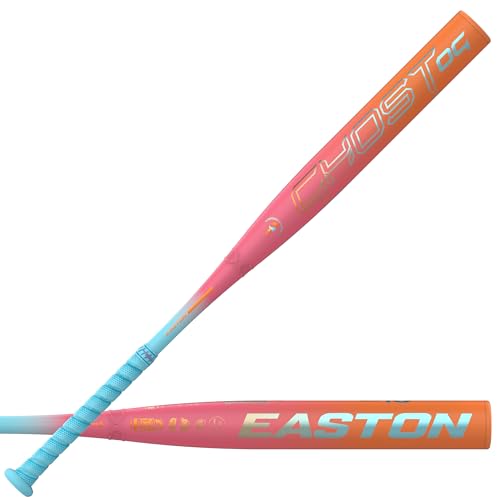
The best softball bats match your league certification, hitting style, body strength, and position—not simply the highest price or the lightest swing weight. For fastpitch, proven choices include the Louisville Slugger LXT for a balanced, forgiving feel, DeMarini CF for a smooth two-piece composite swing, Easton Ghost Unlimited for a flexible composite barrel, and Rawlings Mantra for players who want a balanced-to-slightly end-loaded option; slowpitch players need entirely different USSSA, USA Softball, or NSA-approved models.
Our top picks



As an Amazon Associate we earn from qualifying purchases at no extra cost to you. Ratings are shown as listed on Amazon.
Best softball bats by player and situation
| Player situation | Most suitable bat type | Useful starting specification | Why it fits |
|---|---|---|---|
| Young or developing fastpitch hitter | Balanced two-piece composite | 30–31 inches, drop -11 or -10 | Easier to control while still providing a forgiving barrel |
| Stronger contact hitter | Balanced composite or hybrid | 31–33 inches, drop -10 or -9 | Adds mass without making the barrel excessively difficult to turn |
| Power-oriented varsity or college hitter | End-loaded composite or hybrid | 32–34 inches, drop -9 or -8 | More barrel mass can increase drive when the player controls it |
| Fastpitch utility player prioritizing quick reactions | Balanced alloy or composite | 29–32 inches, drop -11 or -10 | Quick through the zone for bunts, slap hits, and late adjustments |
| Adult slowpitch league player | Slowpitch bat with the league’s stamp | 33–34 inches, 26–28 ounces | Built for a slower pitch and a different swing path; fastpitch bats are unsuitable |
What separates the leading bat choices?
Louisville Slugger LXT: the balanced-control benchmark
The Louisville Slugger LXT fastpitch line is a strong choice for players who want a balanced swing and a large usable barrel. Its multi-piece composite construction is designed to reduce harsh vibration while keeping the bat easy to accelerate. The LXT is especially sensible for contact hitters, middle infielders, and developing players who need to adjust quickly to inside and outside pitches.
Choose it when control matters more than maximum barrel loading. As with many composite bats, it usually needs a break-in period, and extremely cold temperatures can increase the risk of damage. Confirm the exact model’s league certification before buying.
DeMarini CF: smooth speed and a forgiving barrel
The DeMarini CF is another well-established fastpitch option, typically recognized for a balanced feel, two-piece composite construction, and a relatively comfortable response on mishits. It suits hitters who generate speed with technique rather than relying on a heavy end cap. A -10 version is a common middle ground for older youth and high-school players, while a -11 can help smaller athletes maintain bat speed.
The CF is not automatically the best choice for every power hitter. If a player already controls a heavier bat and wants more mass behind contact, a slightly end-loaded model may produce a more suitable swing feel.
Easton Ghost: flexible composite feel with strong pop
The Easton Ghost fastpitch family is known for a responsive composite barrel and a forgiving two-piece feel. It can work well for hitters who want the barrel to flex slightly on contact instead of feeling as rigid as a one-piece alloy bat. The Ghost is often appealing to players who value distance and a softer vibration profile.
Composite barrels can show visible cracks or structural damage if used improperly. Do not share one composite bat among many players during cold-weather practices, and avoid using it for batting-practice balls that are harder or heavier than the manufacturer allows.
Rawlings Mantra: a choice for controlled power
The Rawlings Mantra fastpitch line generally targets players who want a responsive composite barrel with enough mass to support aggressive contact. Depending on the model and drop weight, its feel can range from balanced to moderately end-loaded. That makes it worth considering for older travel-ball or high-school hitters who have outgrown a very light bat but are not ready for a strongly power-biased design.
When comparing a Mantra with a CF, LXT, or Ghost, focus less on brand reputation and more on whether the barrel arrives on time. A bat that is technically powerful but consistently late will reduce hard contact.
How to choose the right length and drop weight
Length is measured in inches, while drop weight is the numerical difference between length and weight in ounces. A 32-inch, -10 bat weighs approximately 22 ounces; a 33-inch, -9 bat weighs approximately 24 ounces. Actual scale weight can vary slightly by model.
- Start with the league and age rules. Youth and high-school fastpitch leagues commonly use bats from about 29 to 34 inches, but permitted drop weights vary. A bat with the wrong certification can be illegal even if its size is appropriate.
- Check reach and contact point. With the player in a normal stance, the barrel should not force the hands away from the body. A bat that is too long often produces late contact and weak opposite-field balls.
- Compare swing weight, not only scale weight. Two 22-ounce bats can feel very different if one places more mass toward the end. Balanced bats are usually easier to start and stop; end-loaded bats can offer more momentum but demand better timing.
- Use repeatable swings as the test. The right bat is one the player can swing at game speed repeatedly without losing posture, hand position, or barrel control.
As a practical example, suppose a player is choosing between a 31-inch, -11 bat and a 32-inch, -10 bat. The first weighs approximately 20 ounces and the second approximately 22 ounces. The extra inch and two ounces may provide more reach and impact mass, but only if the hitter can still turn the barrel quickly. If the player’s last few swings become visibly slower, the lighter option is the better fit.
Barrel diameter and certification matter
Fastpitch bats commonly use a 2 1/4-inch barrel, while many youth and adult slowpitch bats use a 2 1/4-inch barrel as well, though construction, length, weight, and certification are different. A larger-looking sweet spot does not make an uncertified bat legal.
- USA Softball certification: Often required in leagues using the USA Softball standard. Look for the current approved mark and verify the model on the governing body’s list.
- USSSA certification: Common in travel and recreational competition. A USSSA-approved bat may not be legal in a USA Softball league.
- NSA or other league certification: Some adult and recreational leagues use their own approved lists or stamps.
- BBCOR: A certification associated primarily with baseball bats and not a substitute for a fastpitch softball approval.
Certification can change by model year, so inspect the stamp on the actual bat rather than relying on an old product description. For tournament play, check the league’s current rules before removing the wrapper.
Composite, alloy, or hybrid?
| Construction | Typical strengths | Trade-offs | Expected ownership concern |
|---|---|---|---|
| Composite | Low vibration, large sweet spot, tunable flex | Usually costs more and may need break-in | Cracks, temperature sensitivity, and gradual performance changes |
| One-piece alloy | Durable, immediate use, often less expensive | Can feel stiffer on mishits | Dents, end-cap wear, and rattles |
| Hybrid | Rigid alloy barrel with a vibration-reducing composite handle | Feel sits between alloy and composite | Connection-point or end-cap damage if abused |
Durability and maintenance realities
The barrel usually shows wear first. Alloy bats may dent, while composite bats may develop hairline cracks, especially when used in cold weather or against inappropriate balls. End caps can loosen after repeated ground contact, and grips flatten or become slick long before the bat itself fails.
- Keep composite bats above roughly 60°F (16°C) when possible, unless the manufacturer specifies otherwise.
- Use the correct game or practice balls; do not use weighted balls unless the bat maker permits them.
- Rotate contact locations during practice instead of striking the same barrel area repeatedly.
- Do not throw the bat after an at-bat or use it to knock dirt from cleats.
- Inspect for cracks, dents, rattles, loose end caps, and a slipping grip before every game.
- Replace a grip when it becomes smooth, torn, or saturated with sweat; a fresh grip can restore control more cheaply than changing bats.
Final buying decision
Choose a balanced -11 bat for a smaller or developing fastpitch player who values speed and control. Move to a balanced -10 when the hitter can maintain bat speed with the added mass. Consider a -9 or moderately end-loaded model only when the player consistently controls the barrel and wants more power through contact. Among established fastpitch lines, the LXT and CF are strong control-first candidates, the Ghost emphasizes a flexible composite response, and the Mantra is worth considering for controlled power.
Before paying, confirm four details: the exact length and drop, barrel diameter, league stamp, and return policy for an unused bat. The best softball bats are the legal ones that the player can accelerate, square up, and repeat confidently through a full game.







Write Your Review
No reviews yet. Be the first to share your experience!