

Key takeaways
- After each session: Run the grinder empty briefly, use the included bellows if supplied, and brush loose grounds from the chute.
- Weekly or every few hundred grams: Remove the hopper or single-dose cup and clean visible coffee dust. The exact interval depends on roast level and usage.
- Every one to three months: Remove the upper burr according to the manual, brush the burr chamber, and inspect the threads and carrier for packed grounds.
- When changing beans: Purge a small amount or accept that some previous coffee will remain in the path. Do not pour water into the burr chamber.
- When performance changes: Check for a dull burr edge, foreign material, a loose carrier, or a blocked chute before changing the recipe.
The best flat burr coffee grinders for precise brewing are the DF64 Gen 2 for value and espresso versatility, the Fellow Ode Gen 2 for clean filter coffee, the Eureka Mignon Specialità for quiet espresso-focused use, and the Mahlkönig X54 for a polished all-rounder.
Flat burr grinders use two parallel, toothed discs to break coffee beans into particles. Their performance depends less on the burr shape alone than on burr diameter, alignment, adjustment design, motor control, static management, retention, and how easily the grinder can be cleaned. The right choice is therefore the one that matches your brewing method and daily routine—not simply the grinder with the largest burrs.
Our top picks

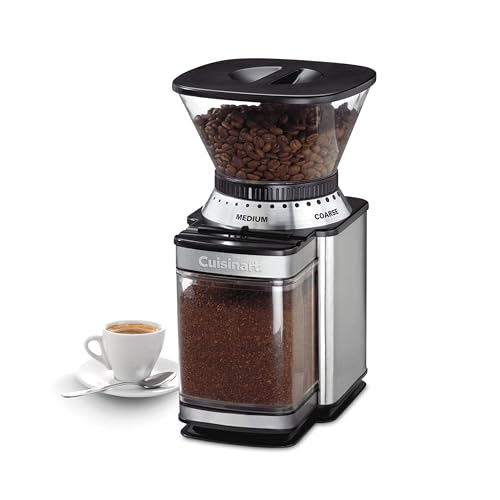

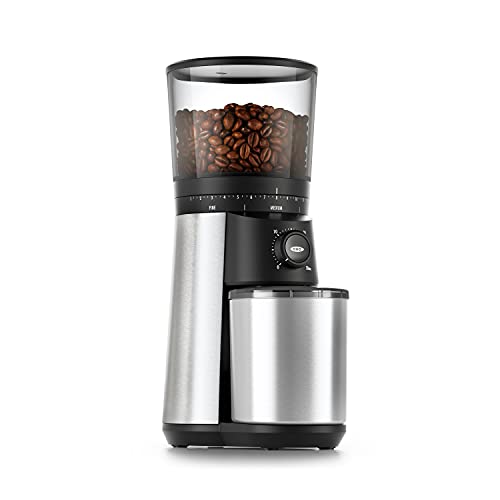
As an Amazon Associate we earn from qualifying purchases at no extra cost to you. Ratings are shown as listed on Amazon.
Quick comparison of leading flat-burr grinders
| Grinder | Burr size and type | Best suited to | Approx. dimensions | Typical price range | Important limitation |
|---|---|---|---|---|---|
| Fellow Ode Gen 2 | 64 mm flat, standard or upgraded burr set depending on version | Filter coffee and manual brewing | 239 × 105 × 241 mm; about 4.5 kg | $300–$400 | Not designed for espresso-fine grinding |
| DF64 Gen 2 | 64 mm flat steel burrs; interchangeable burr ecosystem | Espresso, filter, and single dosing | About 330 × 130 × 260 mm; about 6 kg | $400–$550 | May need careful setup and alignment checking |
| Eureka Mignon Specialità | 55 mm flat hardened-steel burrs | Frequent espresso preparation | 350 × 120 × 180 mm; about 5.6 kg | $600–$800 | Less convenient for switching repeatedly between brew methods |
| Mahlkönig X54 | 54 mm flat steel burrs | Espresso and filter coffee in one household grinder | 425 × 190 × 280 mm; about 5.1 kg | $500–$700 | Relatively tall and broad for a home grinder |
| Fiorenzato AllGround | 64 mm flat burrs | Users wanting electronic, repeatable adjustment | About 430 × 240 × 270 mm; about 5.5 kg | $900–$1,200 | Costs substantially more than manual-adjustment alternatives |
Dimensions and prices vary by market, finish, voltage, and included accessories. Treat them as buying ranges rather than fixed quotations.
How the important specifications affect your cup
Burr diameter: useful, but not decisive
Larger burrs can grind a dose quickly and often reduce the amount of work required from the motor. A 64 mm burr has approximately 42% more face area than a 54 mm burr, calculated as 64² ÷ 54² − 1. That does not mean it automatically produces coffee that is 42% better. Burr geometry, sharpness, motor speed, alignment, and the coffee itself matter just as much.
For espresso, 54–55 mm flat burrs can be entirely adequate in a domestic grinder. A 64 mm model becomes more attractive if you prepare several consecutive shots, want faster grinding, or plan to experiment with alternative burr sets. For filter coffee, a 64 mm grinder can offer high throughput, but a well-designed 54 mm grinder may still provide excellent results.
Alignment and grind uniformity
Alignment describes how accurately the burrs sit parallel to one another and how concentrically they rotate. Poor alignment can create an uneven gap: one part of the burrs grinds too fine while another part grinds too coarse. The result may be more boulders and fines, inconsistent espresso flow, or a cup that tastes simultaneously harsh and thin.
Uniformity is not the same as producing particles of one identical size. Espresso needs enough fines for resistance and body, while filter coffee benefits from a distribution that supports even extraction without excessive clogging. A stable carrier, rigid adjustment mechanism, and properly seated burrs generally matter more than a specification sheet that only lists burr diameter.
Static control and retention
Static electricity makes grounds cling to the chute, dosing cup, and surrounding surface. It becomes more noticeable with very dry beans, low humidity, high motor speed, and certain roast styles. Anti-static features, a conductive exit path, a declumper, and a well-shaped chute can reduce the mess, but no home grinder eliminates static in every environment.
Retention is the coffee left inside the burr chamber, chute, and grinding path after a dose. A grinder advertised as “single dose” may still retain a small amount unless the chute is cleared. For example, if a grinder retains 0.3 g after each use, a person grinding one 18 g dose daily could have up to 6 g of older coffee moving through the system over 20 uses. That is enough to matter when switching from a dark espresso roast to a delicate light filter roast.
Bellows or a short purge can reduce carryover, but purging wastes beans. A grinder with low retention is especially valuable for people who alternate between decaf and regular coffee, or between espresso and filter settings.
Which grinder fits your situation?
| Your situation | Best direction | Why |
|---|---|---|
| Mostly pour-over or batch brew; no espresso | Fellow Ode Gen 2 or another filter-only 64 mm grinder | Simple workflow, strong filter range, and no need to pay for espresso adjustment |
| Espresso every day; rarely change brew method | Eureka Mignon Specialità or a similar stepped/dialed espresso grinder | Fine adjustment, quiet operation, and a hopper workflow suited to repeated shots |
| Espresso and filter; frequent bean changes | DF64 Gen 2 | Single dosing, 64 mm burrs, and broad burr compatibility |
| One appliance with electronic convenience | Mahlkönig X54 or Fiorenzato AllGround | Convenient controls and repeatable settings for multiple brew styles |
| Limited counter depth | A compact 54–55 mm grinder | Often shallower than larger single-dose designs; measure space including the handle and cup |
| Lowest practical cost for espresso and filter | DF64-style 64 mm single-dose grinder | Usually offers more flexibility per dollar than premium integrated machines |
Head-to-head: DF64 Gen 2 versus Fellow Ode Gen 2
These grinders are often compared because both use 64 mm flat burrs, but they serve different priorities. The DF64 Gen 2 is the more flexible choice: it is intended for espresso-fine settings, usually uses a single-dose workflow, and can accept compatible replacement burrs. Its open design and adjustment system reward owners who are willing to inspect alignment and learn a little maintenance.
The Ode Gen 2 is the easier filter specialist. Its controls and workflow are less complicated for pour-over users, and its burr configuration is designed around brewed coffee rather than espresso. It is a poor choice if espresso is a firm requirement, because its adjustment range and burr design are not intended to generate espresso-fine grounds reliably.
Choose the DF64 when versatility and experimentation matter. Choose the Ode when filter coffee is the destination and you prefer a simpler, less espresso-oriented appliance.
Cleaning access is part of grind quality
Old grounds absorb moisture and oils, then break loose later in clumps. They can also alter the apparent grind setting and add stale flavors. Before buying, check whether the upper burr carrier can be removed without losing calibration, whether the chute is accessible, and whether a brush can reach the exit path.
A practical maintenance routine
- After each session: Run the grinder empty briefly, use the included bellows if supplied, and brush loose grounds from the chute.
- Weekly or every few hundred grams: Remove the hopper or single-dose cup and clean visible coffee dust. The exact interval depends on roast level and usage.
- Every one to three months: Remove the upper burr according to the manual, brush the burr chamber, and inspect the threads and carrier for packed grounds.
- When changing beans: Purge a small amount or accept that some previous coffee will remain in the path. Do not pour water into the burr chamber.
- When performance changes: Check for a dull burr edge, foreign material, a loose carrier, or a blocked chute before changing the recipe.
Rice and improvised abrasive cleaners are a poor substitute for manufacturer-approved products. Hard particles can stress the motor or damage burr edges, and powdery cleaners may leave residue in the grinding path.
Durability and ownership realities
Burrs usually wear gradually rather than failing suddenly. High-volume use, hard foreign objects, oily dark roasts, and frequent cleaning with unsuitable tools accelerate wear. Dull burrs may require a finer setting, produce more heat or grinding time, and make espresso less consistent. Replacement burr availability is therefore a meaningful long-term advantage.
Hoppers, lids, declumpers, adjustment threads, and ground-cup magnets can be more vulnerable than the motor. A hopper grinder is convenient when the same beans are used throughout the day; a single-dose grinder is generally easier to manage when freshness and switching coffees are priorities. Neither workflow is universally superior.
Bottom line
For most households, the DF64 Gen 2 is the strongest all-purpose recommendation because it combines 64 mm burrs, espresso capability, single dosing, and upgrade potential. Select the Fellow Ode Gen 2 for filter-only brewing, the Eureka Mignon Specialità for a quiet espresso routine, or the Mahlkönig X54 when you want one established machine for both methods. Whatever you choose, prioritize burr alignment, accessible cleaning, low carryover, and a stable adjustment system over burr diameter alone.







Write Your Review
No reviews yet. Be the first to share your experience!