

Key takeaways
- Stepped adjustment: easier to repeat and learn, but a setting may fall between two useful points.
- Stepless adjustment: better for precise espresso dialing-in, but record the position before switching beans or brew methods.
- Larger burrs: can grind a dose more quickly, though they usually increase cost, body size, and replacement-burr expense.
- Broad advertised ranges: do not guarantee equally good results at every extreme; a grinder optimized for espresso may be less impressive at coarse settings, and vice versa.
The best conical burr coffee grinders depend on your brew: choose the Baratza Encore ESP for an affordable espresso-and-filter machine, the Fellow Opus for a quiet, compact all-rounder, the Niche Zero for low-retention espresso, and the Comandante C40 for portable manual grinding.
Our top picks

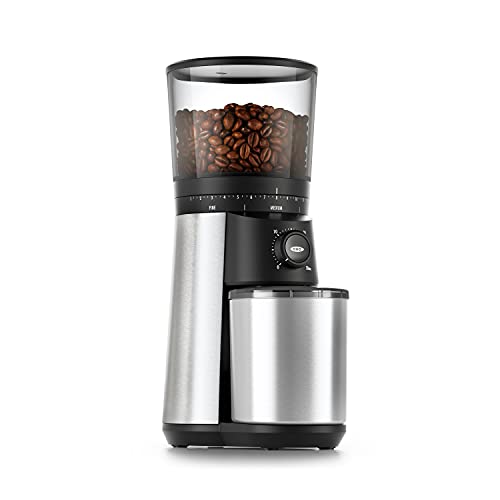
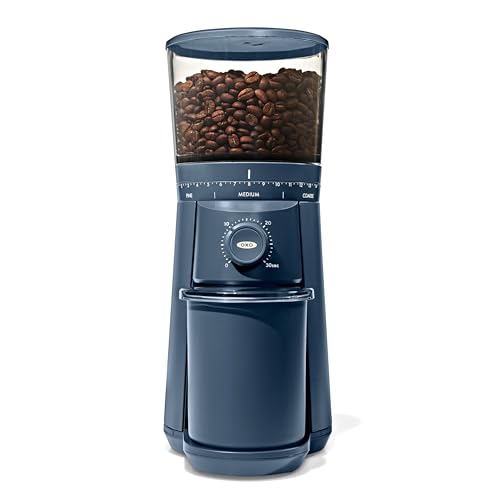
As an Amazon Associate we earn from qualifying purchases at no extra cost to you. Ratings are shown as listed on Amazon.
Quick comparison: the leading conical burr grinders
| Grinder | Burr material and size | Approx. grind range | Hopper or capacity | Best match | Typical market range |
|---|---|---|---|---|---|
| Baratza Encore ESP | 40 mm hardened steel conical burrs | 40 settings; espresso through French press | 240 g hopper | Budget espresso and pour-over | About $150–$200 |
| Fellow Opus | 40 mm stainless-steel conical burrs | 41 settings; espresso through cold brew | 110 g hopper | Compact all-purpose use | About $175–$225 |
| Eureka Mignon Oro Single Dose | 65 mm diamond-inside coated burrs | Micrometric adjustment; espresso through filter | 45 g single-dose hopper | Frequent single-dose espresso | About $700–$900 |
| Niche Zero | 63 mm conical steel burrs | Stepless; espresso through French press | 130 g hopper, plus single-dose workflow | Low-retention espresso | About $600–$800 |
| Comandante C40 MK4 | Nitro Blade hardened-steel conical burrs | Many stepped settings; filter through French press | 40 g glass jar capacity | Quiet manual pour-over | About $250–$350 |
Manufacturers describe settings differently, so the numbers above are not a direct measure of particle size. A “setting” on one grinder does not equal a setting on another. Burr alignment, calibration, motor speed, and the grinder’s adjustment mechanism matter just as much as the count.
Best conical burr coffee grinders by brewing situation
Best value for espresso and filter: Baratza Encore ESP
The Encore ESP is a practical choice when one grinder must cover espresso, drip coffee, pour-over, and French press without a premium price. Its 40 mm hardened-steel conical burrs and separate fine-adjustment section make espresso tuning more usable than on the original Encore.
Its stepped dial is helpful for beginners because returning to a previous setting is easy. The trade-off is that espresso adjustment is less continuous than with a stepless grinder, and the plastic-heavy body is not as quiet or refined as more expensive machines. The 240 g hopper suits a household that fills the grinder once and makes several servings, but it is less convenient for people who change beans every morning.
Choose it if you make espresso several times a week but also brew filter coffee and want accessible replacement parts and straightforward cleaning.
Best compact all-rounder: Fellow Opus
The Fellow Opus combines a relatively small footprint with a broad claimed range, including espresso, pour-over, and coarser immersion brewing. Its 40 mm stainless-steel conical burrs, timed dosing, inner adjustment ring, and magnetic catch cup make it attractive for a kitchen where counter space matters.
The 110 g hopper is enough for a typical household batch, but not for a large pot of coffee without refilling. Its multiple adjustment controls can require more attention than a simple stepped grinder: changing between espresso and pour-over may involve checking both the outer setting and the internal adjustment. That flexibility is useful once learned, but it is not the easiest option for someone who wants one obvious dial.
The Opus is a good fit for occasional espresso, daily pour-over, and users who value a quieter, more design-conscious countertop appliance than a large commercial-style grinder.
Best for low-retention espresso: Niche Zero
The Niche Zero is designed around single dosing: weigh the beans, grind them, and leave little coffee sitting in a chute or grinding chamber. Its 63 mm conical steel burrs are especially well suited to espresso, producing a texture many espresso users prefer for syrupy, full-bodied shots. It can also grind for filter and French press.
The single-dose workflow reduces stale coffee when you switch between beans. It also avoids keeping a hopper full, which is useful for households that make only one or two coffees a day. The limitation is speed and workflow: you must weigh beans for each dose, and the stepless adjustment means recording the dial position is important when changing recipes.
Choose the Niche Zero when espresso is your main drink, you frequently rotate beans, and low retention matters more than a large hopper or the lowest purchase price.
Best premium single-dose alternative: Eureka Mignon Oro Single Dose
The Eureka Mignon Oro Single Dose uses larger 65 mm conical burrs and a 45 g single-dose hopper. Its design targets people who want a premium espresso grinder without a conventional full hopper. The larger burr set can support efficient grinding, while micrometric adjustment allows fine control during espresso dialing-in.
Its small single-dose capacity is intentional rather than a weakness: it encourages fresh weighing and makes bean changes simple. However, it costs substantially more than entry-level grinders, and the fine adjustment can be slow to navigate when moving repeatedly between espresso and coarse French press settings.
For an espresso-focused user who values build quality, single dosing, and precise adjustment, it is a stronger match than a general-purpose hopper grinder.
Best quiet manual option: Comandante C40 MK4
The Comandante C40 MK4 is a manual grinder with hardened-steel Nitro Blade conical burrs. It needs no motor, so it is inherently quieter than electric grinders and useful for early-morning brewing, travel, or places without reliable counter space.
Its roughly 40 g capacity is appropriate for one or two filter servings. The stepped adjustment system is well suited to pour-over, AeroPress-style brewing, and French press, but manual grinding is slower and more effortful for very fine espresso. The C40 is therefore a premium portability choice rather than the most convenient grinder for a household making multiple espresso drinks every day.
How burr material and adjustment affect the choice
Steel conical burrs are common because they are durable, relatively affordable, and effective across a broad range. Hardened steel is intended to resist wear from normal roasted coffee use, although burrs can still be damaged by stones or other foreign objects. Coatings may improve wear resistance, but they do not eliminate the need for cleaning.
Conical burrs use an outer ring and inner cone to crush beans. They generally allow compact grinder designs and can produce a pleasing espresso texture, but the final cup depends on burr geometry and alignment rather than the conical shape alone.
- Stepped adjustment: easier to repeat and learn, but a setting may fall between two useful points.
- Stepless adjustment: better for precise espresso dialing-in, but record the position before switching beans or brew methods.
- Larger burrs: can grind a dose more quickly, though they usually increase cost, body size, and replacement-burr expense.
- Broad advertised ranges: do not guarantee equally good results at every extreme; a grinder optimized for espresso may be less impressive at coarse settings, and vice versa.
Decision matrix for real kitchens
| Your situation | Recommended type | Why | Compromise to expect |
|---|---|---|---|
| Budget under about $200; espresso and filter | Baratza Encore ESP | Accessible adjustment and large hopper | More noise and less premium feel |
| Small counter; one or two coffees daily | Fellow Opus | Compact body and broad range | More complicated adjustment procedure |
| Espresso every day; frequent bean changes | Niche Zero | Single-dose, low-retention workflow | Higher price and manual weighing |
| Premium espresso setup; precise tuning | Eureka Mignon Oro Single Dose | Large conical burrs and micrometric adjustment | Less convenient for repeated coarse-to-fine changes |
| Travel, shared walls, or early-morning brewing | Comandante C40 MK4 | No motor and very low operating noise | Manual effort and smaller capacity |
Retention, hopper size, and noise: details listings often omit
Retention is the coffee left inside the burr chamber, chute, and outlet after grinding. A hopper grinder may hold a dose in the system even when the hopper appears empty. Single-dose models reduce this problem, but “zero retention” should be treated as a design goal rather than a literal guarantee. Static, humidity, roast level, and cleaning condition all affect the amount left behind.
Hopper capacity is also a workflow choice. A 240 g hopper can hold several days of coffee for one person, while a 45 g single-dose hopper is intentionally too small for that approach. Keeping beans in a hopper is convenient, but storing only the day’s dose separately makes bean switching easier and limits prolonged exposure to air.
Noise depends on motor speed, burr load, body construction, and the particular coffee. Manual grinders remain the quietest option. Among electric grinders, compact budget models generally produce more audible motor and vibration noise than heavier premium machines; published decibel figures are uncommon and are difficult to compare across rooms.
Ownership costs and maintenance
For a simple cost-per-use comparison, suppose a $180 grinder is used for one coffee dose per day over three years. That is about 1,095 uses, or approximately 16 cents per use before electricity, beans, and replacement parts. A $700 grinder used twice daily over five years makes about 3,650 doses, or approximately 19 cents per dose. The more expensive grinder can therefore be reasonable for heavy use, but not merely because it has a higher price or larger burrs.
Brush loose grounds from the burr chamber and chute regularly, especially after dark or oily roasts. Emptying the hopper before changing beans prevents old coffee from mixing with a new recipe. Avoid washing burrs or electrical components unless the manufacturer specifically permits it; moisture can encourage corrosion or damage the motor.
- Clean the outlet when grounds begin clumping or dosing becomes inconsistent.
- Use a grinder-cleaning product only according to its instructions, and follow with a small amount of coffee if the manufacturer recommends purging.
- Replace burrs when grinding becomes unusually slow, adjustment becomes difficult, or cups remain inconsistent despite correct technique.
- Do not force an adjustment dial through beans; change settings while the grinder is running only as the manual allows.
Bottom line
For most mixed-brew households, the Baratza Encore ESP offers the strongest value. The Fellow Opus is better when compact design and broad brewing coverage matter. Espresso specialists should look at the Niche Zero or Eureka Mignon Oro Single Dose for single-dose control, while the Comandante C40 MK4 is the clearest choice for quiet, portable pour-over. Select by workflow first—dose size, brew frequency, bean switching, and acceptable noise—then compare burr material and adjustment range within that shortlist.






Write Your Review
No reviews yet. Be the first to share your experience!