

Key takeaways
- Choose the Baratza Encore for a reasonably priced, repairable electric grinder; the Fellow Ode Gen 2 for quieter, faster, low-retention daily brewing; and a 1Zpresso or Comandante hand grinder when portability and fine adjustment matter more than speed. Whichever model you select, prioritize repeatable coarse…
The best coffee grinders for French press are burr grinders with a broad, repeatable coarse setting, low retention, and enough capacity to grind your full batch without repeated refilling; for most households, the Baratza Encore, Fellow Ode Gen 2, and 1Zpresso J-Ultra are the strongest starting points.
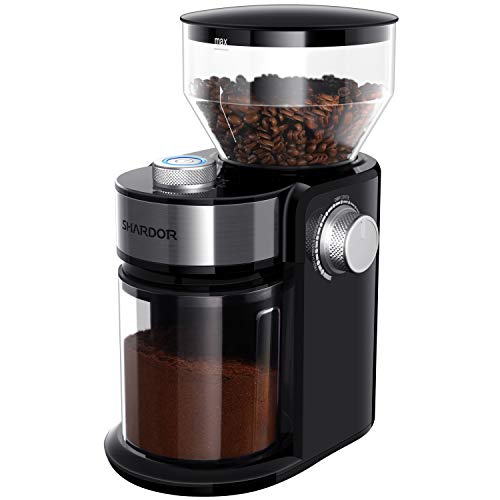
Our top picks



As an Amazon Associate we earn from qualifying purchases at no extra cost to you. Ratings are shown as listed on Amazon.
Quick picks by brewing situation
| Situation | Best fit | Why it suits French press | Approximate market range |
|---|---|---|---|
| Lowest-cost electric option | Baratza Encore | 40 mm conical burrs, simple stepped adjustment, replaceable parts | About $130–$170 |
| Frequent home brewing | Fellow Ode Gen 2 | 64 mm flat burrs, generous hopper, quiet operation, low retention | About $300–$350 |
| Travel or occasional brewing | 1Zpresso J | Manual operation, steel burrs, compact storage, broad adjustment range | About $130–$200 |
| Maximum manual control | Comandante C40 MK4 | High-quality conical burr set and precise click adjustment | About $250–$325 |
| Small kitchen with one or two cups daily | Timemore C2 | Compact aluminum body, approximately 25 g capacity, no electrical noise | About $60–$90 |
What matters most for coarse French press coffee
Coarse-grind consistency
French press brewing is forgiving, but an inconsistent coarse grind still affects the cup. Excessive fine particles can migrate through the filter, increase sediment, and produce a drier or more bitter result. Oversized particles, meanwhile, may remain under-extracted and taste thin.
Look for a grinder that produces a narrow distribution around the selected coarse setting rather than one that merely offers a “French press” label. Burr grinders generally outperform blade grinders because they crush beans between shaped surfaces instead of repeatedly chopping them. The key is not that every particle has exactly the same size; it is that the grinder limits both powdery fines and very large chunks.
A useful practical test is to grind at the same setting three times and compare the results. A good grinder should produce broadly similar grounds, not a noticeably different mixture each time. Static, bean age, and burr alignment also influence the result, so consistency is a range rather than a perfect number.
Burr material and design
Hardened stainless-steel burrs are common in manual grinders and many entry-level electrics. They are durable, relatively affordable, and well suited to coarse brewing. Ceramic burrs resist corrosion and can work well in inexpensive hand grinders, but they may be more vulnerable to chipping if a stone or unusually hard foreign object enters the grinder.
Larger burrs usually grind faster and can reduce the amount of heat generated during a batch. They do not automatically guarantee better French press coffee: burr geometry, alignment, motor control, and adjustment design matter just as much. For a typical 30–60 g French press dose, 40 mm conical burrs can be adequate, while 64 mm flat-burr models provide a faster and more substantial electric upgrade.
Electric versus manual grinders
Baratza Encore: practical and repairable
The Baratza Encore remains a sensible choice for an uncomplicated home setup. Its 40 mm conical burrs and 40 stepped settings cover coarse French press brewing as well as filter coffee. The approximately 225 g hopper is more than enough for a standard batch, and the grinder’s straightforward controls are easier for beginners than a complicated dial.
Its drawbacks are noticeable rather than deal-breaking: the motor is audible, the grind is not as uniform as that of higher-priced 64 mm models, and some grounds can remain in the chute or burr chamber. The Encore’s ownership advantage is its serviceable design. Burrs, the gearbox, and other parts are available for replacement, so a worn component does not necessarily mean replacing the entire grinder.
Fellow Ode Gen 2: the quieter electric upgrade
The Fellow Ode Gen 2 uses 64 mm flat burrs, a 100 g hopper, and a broad range of stepped settings. Its larger burrs make a full French press dose relatively quick, while the anti-static design and short grind path help limit mess and retention. It is also quieter and more polished than many entry-level electric grinders.
The Ode is designed for brewed coffee rather than espresso, which is an advantage for French press. Its coarse settings are easy to access, and the catch cup is convenient for batch preparation. The price is higher, and the hopper is intentionally sized for single dosing rather than long-term bean storage. For most French press users, that is preferable: beans stay in an airtight container instead of sitting in a hopper.
Manual grinders: excellent control without electrical noise
A manual grinder is attractive when kitchen space, noise, or portability matters. Models such as the 1Zpresso J series use steel conical burrs and offer many adjustment steps, making it easier to tune a coarse recipe in small increments. The Comandante C40 MK4 is another established premium option, with a sturdy body and carefully controlled click adjustment.
The trade-off is physical effort. Grinding 55–60 g of coffee by hand is manageable for many people but can be tiring when repeated every morning, particularly with light-roasted beans. A Timemore C2 is lighter and less expensive, but its roughly 25 g capacity means a 1-liter French press may require two or more loads.
Decision matrix: match the grinder to your routine
| Your priority | Recommended type | Target features | Compromise to expect |
|---|---|---|---|
| Budget under $100 | Entry-level hand grinder | Steel burrs, at least 20–25 g capacity, external adjustment | Slower preparation and smaller batches |
| One French press every day | Midrange electric grinder | 40 mm or larger burrs, 40+ settings, removable burrs | More motor noise and some retention |
| Several brews per day | Large-burr electric grinder | 64 mm burrs, 50–100 g working capacity, accessible grind chamber | Higher purchase price and larger footprint |
| Small kitchen or travel | Compact manual grinder | Under 700 g, foldable handle, removable catch cup | Manual labor and limited dose capacity |
| Very sensitive to sediment | Consistent burr grinder | Fine-particle control, rigid burr support, repeatable adjustment | Usually a higher price than basic grinders |
Capacity: calculate before choosing
French press recipes commonly fall near a coffee-to-water ratio of 1:15 to 1:17, although personal preference varies. A 1-liter press therefore uses approximately 59–67 g of coffee at those ratios. That makes a 25 g hand grinder inconvenient for a full press: it requires three loads at 20–22 g each. A grinder with a 40 g working capacity needs two loads, while a 100 g hopper or single-dose workflow handles the batch in one cycle.
For a 500 ml press, the same calculation gives approximately 29–33 g of coffee. A 30 g-capacity grinder is sufficient, but leaves little room for weighing errors or a denser bean. Capacity is more important than hopper size alone; check whether the manufacturer’s stated capacity is a practical dose or simply the maximum volume the container can hold.
How to set up and maintain a French press grinder
- Begin at a middle-coarse setting. Use the grinder’s French press or coarse range, but do not assume the label is universal. Adjustment numbers differ between brands.
- Grind a weighed dose. Weigh beans before grinding rather than relying on a hopper filled to an arbitrary level. This improves repeatability and prevents running short.
- Inspect the grounds. A little powder is normal. If the brew tastes harsh and the filter becomes difficult to press, reduce fines by trying a cleaner setting or a better-aligned grinder.
- Brush the chute and burr area regularly. A small dry brush removes stale fragments that otherwise mix into the next batch. Avoid washing burrs or electrical components unless the manufacturer specifically permits it.
- Deep-clean periodically. Frequency depends on use and oily beans, but monthly cleaning is a reasonable starting point for daily brewing. Remove the burrs only as directed, mark the original setting, and ensure every part is completely dry before reassembly.
Ownership details that affect long-term value
Retained grounds are usually found in the chute, around the burr carrier, or inside the catch cup. A grinder that retains 1 g after each use can leave roughly 30 g of old coffee behind after a month of daily brewing. Tapping the grinder gently, brushing the exit path, and using a brief pulse can reduce this carryover; do not insert fingers or metal tools into moving burrs.
Burr edges eventually dull, adjustment threads collect coffee dust, and plastic catch cups can crack if dropped. Replaceable burrs and accessible cleaning paths are therefore valuable even when two grinders produce similar results when new. Avoid grinding flavored, damp, or heavily oily beans in a grinder intended for routine brewed coffee, since residue can cling to the burrs and contaminate later doses.
Bottom line
Choose the Baratza Encore for a reasonably priced, repairable electric grinder; the Fellow Ode Gen 2 for quieter, faster, low-retention daily brewing; and a 1Zpresso or Comandante hand grinder when portability and fine adjustment matter more than speed. Whichever model you select, prioritize repeatable coarse output, a capacity matched to your press, accessible cleaning, and burrs that can be replaced or serviced.




Write Your Review
No reviews yet. Be the first to share your experience!