

Key takeaways
- Choose the Eureka Mignon Specialità for a compact, everyday hopper workflow; the DF64 Gen 2 for single dosing and burr experimentation; or the Baratza Sette 270Wi for quick weight-based portions. The right grinder is the one whose adjustment, dosing style, noise, and service support fit…
Best Espresso Grinders Under $1,000: The Short Answer
The best espresso grinders under 1000 dollars depend on whether you prioritize fast single dosing, a simple timed workflow, or room to experiment with grind settings. For most home baristas, the Eureka Mignon Specialità is a strong all-round choice; choose the DF64 Gen 2 for single dosing and burr flexibility, or the Baratza Sette 270Wi if grind-by-weight convenience matters more than quiet operation and low retention.
All three use 64 mm or similarly capable flat burrs, but burr diameter alone doesn’t determine espresso quality. Burr geometry, alignment, adjustment feel, dose consistency, and how easily you can clean or service the grinder affect daily use just as much. Prices vary by retailer and configuration; the ranges below are general US-market estimates, not guaranteed quotes.
Our top picks


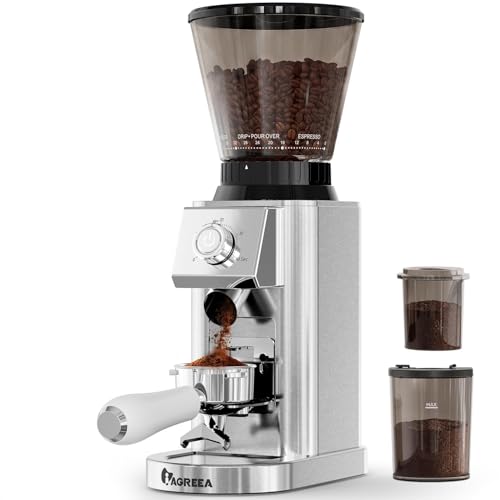
As an Amazon Associate we earn from qualifying purchases at no extra cost to you. Ratings are shown as listed on Amazon.
Three Grinders for Three Different Workflows
| Grinder | Burrs | Adjustment and dosing | Approx. price range | Best fit |
|---|---|---|---|---|
| Eureka Mignon Specialità | 55 mm flat steel burrs | Stepless micrometric adjustment; timed dosing into portafilter | $650–$850 | Daily espresso with a hopper and a tidy, compact setup |
| DF64 Gen 2 | 64 mm flat burrs; compatible replacement burr options vary by version | Stepless adjustment; single-dose bellows workflow | $400–$600 | Rotating beans, low-retention dosing, and future burr experimentation |
| Baratza Sette 270Wi | 40 mm conical burr set | Stepped macro/micro adjustment; grind-by-weight dosing | $600–$800 | Repeatable portions without weighing every dose separately |
Specifications can differ by market and model revision. Check the exact version before buying, especially for burr compatibility and included accessories.
Best all-rounder: Eureka Mignon Specialità
The Specialità suits households that keep one espresso bean in the hopper and pull several shots a day. Its 55 mm flat burrs and stepless adjustment allow small changes as beans age or humidity shifts. Timed dosing keeps the routine quick, though a timer measures time rather than coffee weight: dose output can drift with bean density, grind setting, and hopper level.
Its compact footprint is a practical advantage on a crowded counter. The trade-off is that changing beans or switching between espresso and other brew methods is less convenient than with a single-dose grinder. The adjustment dial is also less intuitive for large changes than a clearly indexed system.
Best for single dosing: DF64 Gen 2
The DF64 Gen 2 is a better match if you weigh beans for each shot, want to minimize old grounds between doses, or may try different compatible burrs. Its 64 mm flat burrs offer a useful platform, but the standard burr set is not automatically “better” just because it is larger. Alignment, the burr geometry, and the coffee recipe all influence the result.
Single dosing avoids relying on a hopper full of beans, but it adds a small task: weigh the dose, load it, and use the bellows as directed to clear the chamber. Expect a little residual coffee rather than a perfectly clean exit. Occasional grounds retention is normal, and frequent bellows pumping can scatter grounds if the outlet or catch cup is poorly positioned.
Best for quick, repeatable portions: Baratza Sette 270Wi
The 270Wi’s grind-by-weight system aims to deliver a set dose directly into the portafilter. That can be convenient for a household where different people make coffee and consistency matters more than changing beans constantly. Its conical burrs and fast grinding make it a very different proposition from a quiet, low-retention flat-burr single doser.
Plan for more noise than many grinders in this class. The stepped macro/micro adjustment is useful for dialing in, but it does not offer the continuous movement of a stepless collar. Baratza is known for a repair-oriented approach and parts support; check current parts availability in your region before purchase, since service options can vary.
Choose by Your Situation
| Your situation | Best starting point | Why |
|---|---|---|
| New to espresso; one or two shots most days | Eureka Mignon Specialità | Compact, timed workflow, and fine stepless adjustment |
| Experienced; changes beans or brew styles often | DF64 Gen 2 | Single dosing and a broad ecosystem of compatible burr choices |
| Several users want fast, similar doses | Baratza Sette 270Wi | Weight-based dosing reduces the need to weigh each output manually |
| Noise-sensitive kitchen or early-morning use | Compare Eureka and DF64 in person if possible | The Sette is notably loud; sound levels and counter resonance vary by setup |
| Repairability is a priority | Favor models with accessible parts and service documentation | Confirm local support and parts supply rather than assuming every component is user-serviceable |
What Matters More Than the Burr Diameter
Geometry: Flat burrs often appeal to people seeking a more separated flavor profile, while conical burrs can suit those who prefer a fuller impression. These are tendencies, not guarantees. Burr design, alignment, roast, and extraction recipe can outweigh the flat-versus-conical label.
Adjustment: Stepless grinders make tiny espresso changes easy, but the dial may not provide a repeatable number when returning to an old setting. Stepped grinders offer reference points but can leave you between settings. If your machine or coffee needs frequent fine tuning, a smooth adjustment mechanism is valuable.
Dosing and retention: Timed dosing saves time but needs periodic weight checks. Grind-by-weight dosing can improve repeatability, while single dosing makes bean changes easier. None of these approaches removes the need to manage a few retained grounds. Keep your dose method consistent and avoid adjusting several variables at once.
Ownership: Cleaning, Wear, and Repair
For ordinary home use, brush loose grounds from accessible areas regularly and clean the burr chamber when buildup begins to affect dosing or aroma. Unplug the grinder before opening it, follow the manufacturer’s instructions, and avoid water on burrs or electrical components. Rice and other improvised cleaning materials can stress a grinder; use a product only if the manufacturer approves it.
Burrs are wear parts. Their lifespan depends on coffee volume, bean hardness, and how the grinder is used; there is no universal replacement interval. Dull burrs may grind more slowly and produce less consistent results, but check alignment and cleanliness before assuming the burrs are worn. Other wear points can include switches, adjustment components, seals, and dosing electronics. A grinder that can be opened and has available replacement parts is generally easier to keep in service than one treated as a sealed appliance.
Before buying, check whether the seller or manufacturer provides burrs, adjustment parts, and service guidance in your country. Also confirm voltage, warranty terms, hopper or single-dose accessories, and whether replacement burrs fit the exact model revision. Those ownership details can matter more over several years than a small difference in listed grinding speed.
Bottom Line
Choose the Eureka Mignon Specialità for a compact, everyday hopper workflow; the DF64 Gen 2 for single dosing and burr experimentation; or the Baratza Sette 270Wi for quick weight-based portions. The right grinder is the one whose adjustment, dosing style, noise, and service support fit how you make coffee—not simply the one with the biggest burrs.







Write Your Review
No reviews yet. Be the first to share your experience!