

Key takeaways
- Best Cuisinart Pick: Cuisinart Kitchen Pro Food Slicer, 7.5-inch blade, 130 W
- Best for Power and Blade Size: CUSIMAX Meat Slicer, 8.7-inch, 200 W
- Best Large-Capacity Value: VEVOR Meat Slicer, 8.6-inch, 200 W, two blades
- Best Budget Electric: NutriChef Electric Meat Slicer, 200 W, 0-15 mm
- Best Manual Slicer: Starfrit Deli Slicer, 6.5-inch blade
- Best Manual Frozen-Meat Slicer: befen Manual Frozen Meat Slicer
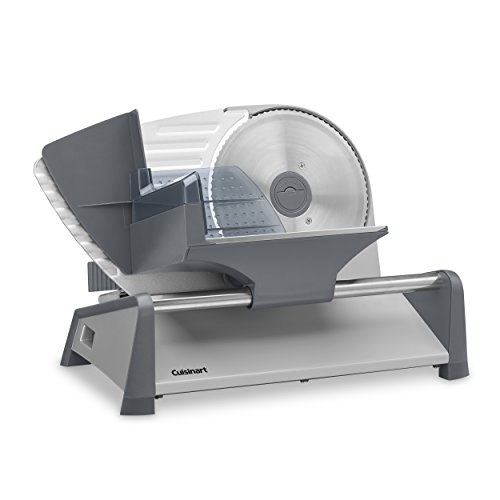
The best Cuisinart meat slicer is the Cuisinart Kitchen Pro Food Slicer (model FS-75), a 130-watt countertop slicer with a removable 7.5-inch stainless steel blade and a thickness knob that adjusts from 1/32 inch to 1/2 inch. It is the only true meat slicer in Cuisinart’s current home lineup that we found in a retail catalog, so the honest question is not “which Cuisinart” but “is the Cuisinart the right slicer for you, or should you choose a more powerful electric model or a manual slicer instead?” This guide answers that by comparing the Cuisinart with five alternatives, including two manual slicers for people searching for the best manual meat slicer.
The runner-up is the CUSIMAX 8.7-inch meat slicer, which offers a larger blade and a 200-watt motor for tougher jobs. If you only slice small quantities, or want to slice partially frozen beef for hot pot, a manual slicer such as the Starfrit Deli Slicer or a befen-style frozen meat slicer costs less and takes less space. We did not personally use these products; this guide is research-based, built from listing details, maker pages and retailer specifications.
Our top picks


As an Amazon Associate we earn from qualifying purchases at no extra cost to you.
Top Picks at a Glance
- Best Cuisinart Pick: Cuisinart Kitchen Pro Food Slicer, 7.5-inch blade, 130 W
- Best for Power and Blade Size: CUSIMAX Meat Slicer, 8.7-inch, 200 W
- Best Large-Capacity Value: VEVOR Meat Slicer, 8.6-inch, 200 W, two blades
- Best Budget Electric: NutriChef Electric Meat Slicer, 200 W, 0-15 mm
- Best Manual Slicer: Starfrit Deli Slicer, 6.5-inch blade
- Best Manual Frozen-Meat Slicer: befen Manual Frozen Meat Slicer
Comparison Table
| Product | Best for | Key specs from listing | Watch for | Price tier |
|---|---|---|---|---|
| Cuisinart Kitchen Pro FS-75 | Roasts, firm cheese, bread at home | 130 W; 7.5 in removable blade; 1/32 to 1/2 in thickness | Heavy at about 12 lb; smaller blade | Premium |
| CUSIMAX 8.7 in | Larger cuts, tougher jobs | 200 W; 8.7 in; removable food carriage; two blades | Larger footprint | Premium |
| VEVOR 8.6 in | Frozen meat, ham, baguettes | 200 W; 8.6 in; two SUS420 blades | Bulky for small kitchens | Mid-range |
| NutriChef 200 W | Budget electric slicing | 200 W; 0-15 mm adjustable; deli and bread slicer | Few details beyond title | Mid-range |
| Starfrit Deli Slicer | Occasional manual slicing | 6.5 in blade; adjustable thickness; slices meat, cheese, bread | Manual effort; smaller capacity | Budget |
| befen Manual Frozen Slicer | Hot pot style frozen meat | Stainless steel; manual; for frozen meat | Thickness range not listed | Mid-range |
1. Cuisinart Kitchen Pro Food Slicer (FS-75): Best Cuisinart Meat Slicer
- 130-watt motor in a premium-coated steel and die-cast aluminum housing, per retailer specifications
- Removable 7.5-inch undulated stainless steel blade
- Slice control knob adjusts from 1/32 inch to 1/2 inch
- Non-slip feet; residential use
- Weight listed between roughly 11 and 12 lb depending on the retailer
Best for: Home cooks who slice roasts, deli meats, firm cheeses or bread several times a month and want a recognisable brand. Skip if: you slice large volumes of frozen meat or need a wider blade.
The Cuisinart’s selling points are consistency and a thickness range that suits most home tasks. A 1/32-inch setting gives sandwich-shop shavings, while the 1/2-inch end can handle thick-cut bacon or roast beef. The undulated blade is designed to grip the food as it moves, and because the blade is removable, cleaning is more practical than with fixed-blade models. The die-cast housing adds stability, which matters because a slicer that moves on the counter is both frustrating and unsafe.
The trade-offs are weight and motor size. At around 11 to 12 pounds, it is not something you want to carry up from a basement every time. At 130 watts, it is also less powerful than the 200-watt models in this guide, so avoid pushing semi-frozen meat through it. Cuisinart’s own materials describe it for roasts, bread and firm cheese. Warranty terms vary by retailer, from a limited motor warranty to a shorter parts-and-labor period, so check before you buy.
Pros: Recognised brand; wide thickness range; removable blade; stable housing; good for deli meat, cheese and bread.
Cons: Heavy; smaller motor than rivals; warranty varies by seller; not for frozen meat.
2. CUSIMAX Meat Slicer (8.7-inch, 200 W): Best for Power
- 8.7-inch blade, 200-watt motor
- Removable food carriage for easier cleaning
- Two stainless steel blades included, per the listing
- Sold in other sizes, including 7.5-inch and foldable versions
Best for: Households that slice larger roasts, frozen-then-thawed meat or want to portion an entire ham. Skip if: counter space or storage is tight.
CUSIMAX is the stand-in for the “bigger and stronger” category. A larger blade means you can slice wider cuts, such as a full roast, in a single pass. The 200-watt motor has more headroom than the Cuisinart’s 130 watts, which helps when slicing denser items. The removable carriage matters in practice because food residue builds up there and a carriage that lifts off makes cleaning faster and more thorough.
The cost is size and price. This is a bulkier machine, and you should measure your counter and storage before buying. Like all slicers in this class, it is meant for household use, not commercial all-day slicing. Check the maker’s guidance on slicing frozen meat; most manufacturers recommend partially freezing meat rather than slicing it rock-hard.
Pros: 200-watt motor; larger blade; removable carriage; two blades; multiple size options.
Cons: Large and heavy; priced like the Cuisinart; takes storage space.
3. VEVOR Meat Slicer (8.6-inch, 200 W): Best Large-Capacity Value
- 8.6-inch electric deli slicer
- 200-watt home food slicer
- Two SUS420 blades, per the listing
- Listed for frozen meat, ham and baguettes
- Also available in a 7.5-inch version
Best for: Meal preppers and hosts who slice a lot of meat and bread. Skip if: you need a compact or foldable design.
VEVOR positions itself as a value alternative to the better-known brands. The two-blade setup gives you flexibility: one blade for general slicing and another for tougher or different textures, as the listing describes. The 8.6-inch size is a good match for large roasts and loaves. If you routinely prepare charcuterie boards, a slicer of this size makes uniform slices much easier than hand cutting.
As with any value brand, read the specifications on the page you buy from, since the listing title does not state thickness range or motor type. Look for a child safety lock, a stable base and a removable blade for cleaning. Clean thoroughly after every use to keep meat residue from building up.
Pros: Large blade; 200 W motor; two blades; good value per capacity.
Cons: Bulky; fewer details in the title; brand support varies.
4. NutriChef Electric Meat Slicer (200 W): Best Budget Electric
- 200-watt automatic meat, deli and bread slicer
- Adjustable dial for 0-15 mm cutting thickness
- Sold in more than one model number
- Blade size: not listed in the title
Best for: Occasional slicing on a tighter budget. Skip if: you need a verified blade size or a long track record of independent coverage.
The NutriChef is a straightforward electric slicer: a 200-watt motor, a dial that adjusts from paper-thin up to roughly 15 mm, and a design aimed at meat, deli and bread. For a home cook who wants to slice lunch meat from a whole roast rather than buying pre-sliced, it covers the basics. The 15 mm maximum is slightly thicker than the Cuisinart’s 1/2-inch (about 12.7 mm) limit, so both cover similar territory.
Because the title is brief, verify blade size, weight and safety features on the product page before buying, and treat our summary as a starting point rather than a full specification.
Pros: 200 W; adjustable dial; deli and bread capable; budget-friendly.
Cons: Limited details in the listing; less independent coverage; bulk similar to other electric slicers.
5. Starfrit Deli Slicer (6.5-inch Blade): Best Manual Slicer
- 6.5-inch blade
- Adjustable thickness
- Slices meat, cheese and bread, per the maker
- A 2-in-1 version with a bonus peeler is sold
- Manual operation
Best for: Small households and occasional slicing without a motor or plug. Skip if: you slice large quantities or want uniform paper-thin results.
A manual slicer is a very different tool. You push the food against a blade by hand, which means less power but also less noise, less cleaning and much less storage. For someone who slices a loaf of bread or a block of cheese once a week, the Starfrit is a pragmatic answer. It also makes sense as an entry-level option if you are unsure whether you would use a full electric slicer enough to justify the space.
The limitations are speed and consistency. Hand-powered slicing relies on your technique, so slices will vary more than a motorised machine. Chill the food first, since cold, firm items cut more cleanly. Keep fingers clear of the blade and use any guard provided.
Pros: Compact; no electricity; easy to store; adjustable thickness; low cost.
Cons: Manual effort; smaller blade; less consistent than motorised slicers.
6. befen Manual Frozen Meat Slicer: Best for Frozen Meat
- Stainless steel manual meat cutter
- Designed for frozen or semi-frozen meat such as beef and mutton rolls
- Marketed for home use
- Thickness range and dimensions: not listed in the title
Best for: Cooks who prepare hot pot, shabu-style dishes or thinly sliced stir-fry meats. Skip if: you want to slice deli meat, bread or cheese.
This category of slicer is aimed at a specific task: cutting thin sheets from a block of semi-frozen meat. Rather than a spinning blade, the design uses a manual cutting mechanism that feeds the meat across a blade. It is not a general-purpose deli slicer, and it is not intended to replace the Cuisinart. If hot pot is a regular meal in your home, it can be more convenient than wrestling with a knife.
Look at the product page for thickness settings and cleaning instructions. Keep frozen meat partially frozen, not rock hard, and always follow safe food handling: keep raw meat separate, wash tools thoroughly and refrigerate promptly.
Pros: Built for frozen meat; no motor; stainless steel; compact.
Cons: Specialised; limited use for bread or cheese; specs sparse in the title.
Also Consider
- Mangoct 150 W Foldable Meat Slicer: A folding design with a 6.7-inch stainless steel blade and 0-15 mm thickness for small kitchens.
- Weston Manual Beef Jerky Slicer: An aluminum manual slicer for jerky strips, cutting up to 5 inches wide and 1.25 inches thick.
- Cuisinart Electric Knife Set with Cutting Board: Not a slicer, but a better fit for carving roasts and bread if you want a Cuisinart tool without a large machine.
- ritter manus 3 Manual Food Slicer: A German-made manual slicer for bread and general slicing, at a premium price for a manual tool.
How We Chose
This guide is research-based. We searched a retail product catalog for real, currently sold slicers, confirmed what Cuisinart actually offers in this category, and compared listing details, retailer specifications and maker descriptions. We did not personally use these products and do not present our own lab measurements. We limited the list to one or two products per brand, covered budget, mid-range and premium tiers, and left out any spec the listing did not state. Cuisinart’s FS-75 specifications (130 W, 7.5-inch blade, 1/32 to 1/2 inch thickness, roughly 12 lb) were cross-checked across multiple retailers, which differ slightly on weight and warranty.
Because the keyword asks for a Cuisinart specifically, we put the Cuisinart first and framed the others as alternatives. We also included manual slicers because the search interest in a manual meat slicer is real, and these tools suit different needs than motorised machines.
Buying Guide
Blade size and motor power
For household use, a 7.5-inch blade handles most roasts, deli meats and cheeses. An 8.6-inch or larger blade is useful when you slice full hams or large roasts. Motors between 130 and 200 watts are typical for home slicers; higher wattage helps with denser foods and sustained use, but it is not a guarantee of better slices. Consider whether you slice frozen or partly frozen meat, because stronger motors and sharper blades cope better.
Thickness range
Look for adjustment from very thin (about 1 mm or 1/32 inch) to at least 12 mm (about 1/2 inch). A wider range lets you shave prosciutto-style slices and cut thick steaks or bacon with the same machine. Cuisinart’s 1/32 to 1/2 inch covers most needs.
Safety features
A meat slicer has an exposed sharp blade, so safety matters more than speed. Look for a child-safety switch or lock, non-slip feet, a food pusher or carriage guard and a blade guard. Keep children away, never use the machine without the guard, and unplug it before cleaning.
Cleaning and removable parts
Meat residue is a food safety concern. A removable blade and carriage make it easier to clean every surface. Clean after each use with warm soapy water, dry thoroughly and store in a clean place. Follow the maker’s directions for cleaning the blade, and handle it with care.
Weight and storage
Electric slicers are heavy, often 10 to 15 pounds. If you have little counter space, consider a foldable model or a manual slicer. If you have a pantry shelf or cabinet where the machine can live, weight is less of a problem. A stable machine is safer than a light one that slides during slicing.
Manual versus electric
Electric slicers give consistent slices and handle larger quantities. Manual slicers are quiet, compact and inexpensive but require effort and technique. If you slice more than once or twice a week, or want precisely thin slices, electric is the better choice. If you slice rarely or work with frozen meat in small amounts, manual is a sensible way to start.
Common Mistakes to Avoid
- Slicing rock-hard frozen meat in a machine meant for chilled food.
- Skipping the guard or pusher to save time.
- Letting residue dry on the blade or carriage.
- Buying a large machine without measuring counter and storage space.
- Assuming every “Cuisinart” slicer listing is genuine; check seller and model number.
What to Slice and at Which Thickness
Matching thickness to the food is where a slicer starts to pay for itself. The Cuisinart’s 1/32 to 1/2 inch range and the 0-15 mm range on the NutriChef and similar models cover the following jobs, though you should always confirm settings in your own manual.
- Sandwich deli meat (turkey, ham, roast beef): roughly 1/16 inch or about 1.5 to 2 mm, thin enough to fold, thick enough not to tear.
- Prosciutto-style or very thin shavings: the thinnest setting, usually around 1/32 inch, and only with cold, firm meat.
- Roast beef for dinner plates: about 1/8 to 1/4 inch, or 3 to 6 mm.
- Firm cheese: 1/16 to 1/8 inch for sandwiches, thicker for snack boards.
- Bread and baguettes: 1/4 to 1/2 inch, depending on whether you want toast or table slices.
- Bacon and thick-cut meats: the upper end of the dial, near 1/2 inch.
Chill meat and cheese for an hour before slicing. Cold, firm food holds its shape against the blade and produces cleaner slices, while room-temperature meat tends to smear and tear. For ham or roast beef, trim excess surface fat and any hard bone or gristle first, because these can dull the blade or jam the carriage.
Safe Handling and Cleanup Routine
A slicer is a kitchen appliance where good habits matter. Before you start, place the machine on a dry, stable surface, check that the blade guard and food pusher are in place and set the thickness dial to zero when not slicing. Keep your hand behind the carriage and use the pusher for the last portion of the food, so your fingers never approach the blade edge.
After slicing, unplug the machine and turn the thickness dial to its zero position so the blade is shielded. Remove the carriage and blade as the manufacturer describes, wash with warm, soapy water, rinse and dry thoroughly. Wipe the base and housing with a damp cloth and avoid getting water into the motor area. If you slice raw meat, sanitise all surfaces that touched it and wash your hands. Never leave sliced meat at room temperature for long; refrigerate promptly in covered containers.
Manual slicers need the same care: keep the blade covered when stored, hand-wash it rather than placing sharp parts loosely in a dishwasher unless the maker permits it, and keep it out of children’s reach. Finally, if the blade starts to tear instead of cut, it may need sharpening or replacement. Follow the manufacturer’s advice, since sharpening a slicer blade incorrectly can be dangerous.
Cuisinart Versus the Alternatives: A Quick Verdict
If brand, warranty support and a well-documented specification matter to you, the Cuisinart is a safe choice for ordinary home slicing. If raw capability matters more, the 200-watt CUSIMAX and VEVOR machines give you extra power and blade size, though they ask for more space. The NutriChef is a budget route that requires you to do some extra checking of the listing. The two manual options exist for people with specific, lighter needs: the Starfrit for deli-style slicing of bread, cheese and meat, and the befen for frozen meat sheets used in hot pot and stir-fry.
Frequently Asked Questions
What is the best Cuisinart meat slicer?
The Cuisinart Kitchen Pro Food Slicer (FS-75) is the best Cuisinart option. It has a 130-watt motor, a removable 7.5-inch blade and a thickness knob from 1/32 to 1/2 inch, suited to roasts, deli meats, firm cheese and bread.
What is the best manual meat slicer?
For deli-style slicing, the Starfrit Deli Slicer is a practical manual option. For thin slices of semi-frozen beef or mutton, a frozen meat slicer such as the befen model fits better. Choose based on what you slice most.
Can the Cuisinart slicer cut frozen meat?
Cuisinart describes it for roasts, bread and firm cheese. Partially frozen meat is firmer and easier to slice, but fully frozen meat can strain a 130-watt motor and dull the blade. Follow the instruction manual.
How thin can the Cuisinart FS-75 slice?
The thickness knob adjusts from 1/32 inch up to 1/2 inch, which is about 0.8 mm to 12.7 mm. That range covers shaved deli meat through thick-cut slices.
Is an electric or manual meat slicer better?
Electric slicers are better for volume and consistency. Manual slicers suit occasional use, small kitchens and tasks like frozen meat for hot pot.
How do I clean a meat slicer safely?
Unplug it, remove the blade and carriage according to the manual, wash with warm soapy water, dry thoroughly and wipe the base. Handle the blade carefully. Never submerge the motor housing unless the manufacturer says it is safe.
Is a meat slicer worth it for home use?
It is worth it if you regularly slice roasts, cheese or bread, or want to buy whole cuts and slice them yourself. For rare use, a sharp knife or a manual slicer is usually enough.
Which One Should You Buy?
If you want the Cuisinart, buy the Kitchen Pro FS-75 and use it for roasts, deli meats, cheese and bread. If you need more power and a bigger blade, step up to the CUSIMAX 8.7-inch or the VEVOR 8.6-inch. If you want a lower-cost electric slicer, consider the NutriChef after checking its full specifications. If you slice rarely or want something compact, the Starfrit manual slicer is a sensible pick, and the befen is the right tool for frozen meat dishes like hot pot. Match the machine to your habits, measure your space and prioritise safety features.
Sources
- Cuisinart Kitchen Pro Food Slicer FS-75 retailer specifications and maker description
- CUSIMAX, VEVOR, NutriChef, Starfrit and befen product listings and maker descriptions
- Weston, ritter and Mangoct product listings
- General food safety guidance on handling raw meat and slicer cleaning
Last updated: October 2026






Write Your Review
No reviews yet. Be the first to share your experience!