

Key takeaways
- Type: Electric conical burr, espresso-focused range
- Adjustment: Stepped micro-adjust with touchscreen, espresso to French press range
- Dosing: Precision electronic timer, single and double presets plus manual
- Hopper class: Mid-size 200-250g bean hopper with lid, grounds fork and cup options
- Build class: ABS housing with stainless burr carrier, anti-static chute design
- Footprint class: Narrow tower ~5 x 8 inch base, fits under 16-inch cabinets
The best espresso grinder under 500 dollars for most home baristas is the SHARDOR Conical Burr Espresso Grinder with Precision Timer 2.0, because it combines a true espresso-capable conical burr set, touch-controlled micro-adjustment and timed dosing that suits both small single-dose setups and prosumer machines with 58mm portafilters. If you only need an entry-level electric burr grinder for pressurized baskets and drip, a budget 28-30 setting conical burr model will save money, while if you want an all-in-one upgrade path the Breville Barista Express in Brushed Stainless Steel remains the most complete prosumer starter system under this budget ceiling. The key decision is not price alone but grind consistency at 200-400 micron espresso range, retention under 2 grams, and hopper size matched to 1-2 drinks per day versus 4-6 drinks for households.
Under $500 you will find three distinct classes: dedicated electric conical burr grinders with 28 to 48 grind settings, manual ceramic-burr hand grinders with 40 settings for travel and single dosing, and combo espresso machines with built-in grinders offering 30 to 44 settings plus 15 to 20-bar pump systems. Small setups using a De’Longhi Stilosa, Breville Bambino, or similar 51-54mm machine do best with low-retention, smaller-hopper grinders and timed dosing, while prosumer setups with Gaggia Classic, Rancilio Silvia, or Breville 54-58mm machines benefit from larger 200-270g hoppers, metal burr carriers, and finer adjustment steps. This guide compares all 12 current options by consistency, retention design, hopper practicality, and who should buy which.
Top 3 Picks
Best Overall: SHARDOR Conical Burr Espresso Grinder with Precision Timer 2.0 – Best for balanced home espresso. It hits the sweet spot for most readers with espresso-focused conical burrs, touchscreen timer dosing to 0.1-second class precision, and adjustment range that covers Turkish to French press. Ideal for 1-4 doubles per day on both pressurized and non-pressurized baskets.
Best Budget: Amazon Basics Burr Coffee Grinder – Best for first espresso grinder on a tight budget. With 30 grind settings, anti-static design, and compact footprint for apartments and dorms, it is the lowest-risk way to move from blade or pre-ground to fresh burr-ground espresso and drip. Best for pressurized baskets, moka pot, and drip rather than competition-level non-pressurized extraction.
Best Premium All-in-One: Breville BES870XL Barista Express, Brushed Stainless Steel – Best for prosumer starter setup. This integrated 15-bar class machine with built-in conical burr grinder, 67 oz water tank class, and steam wand replaces a separate grinder + machine purchase for small kitchens. Best for beginners who want americano, latte, and cappuccino without buying two appliances.
Quick Comparison
| Product | Best For | Type / Grind Settings / Hopper Class | Price Tier |
|---|---|---|---|
| SHARDOR Conical Burr with Precision Timer 2.0 | Overall home espresso, timed dosing | Electric conical burr / 40+ stepped micro-adjust / 200-250g hopper | mid-range |
| SHARDOR 70g Spice Grinder with Visual Timing Knob | Small-batch spice + coarse coffee, secondary grinder | Blade-propelled 70g bowl / timed knob / 70g capacity | budget |
| IAGREEA Conical Burr 48 Grind | Multi-brew households, espresso to French press | Electric conical burr / 48 settings / 220-270g hopper | mid-range |
| Rsoilch Manual with Ceramic Burr, 40 Settings | Travel, single-dose, quiet grinding | Manual ceramic conical burr / 40 clicks / 20-30g single dose | budget |
| Ollygrin Conical Burr 30 Settings Compact | Small kitchens, easy touch operation | Electric conical burr / 30 settings / 200g hopper class | mid-range |
| Breville BES870XL Barista Express Steel | Prosumer all-in-one starter system | Combo 15-bar + built-in conical burr / 16-18 grinder steps / 250g bean hopper + 67 oz tank class | premium |
| Breville BES870BTR Black Truffle | Same system in dark finish, style match | Combo 15-bar + built-in conical burr / 16-18 steps / 250g hopper + 67 oz tank class | premium |
| HAUSCAFE 38 Settings Burr Grinder | Espresso + pour over + French press rotation | Electric conical burr / 38 settings / 250g hopper class | mid-range |
| Amazon Basics 30 Settings Anti-Static | Budget first burr upgrade | Electric conical burr / 30 settings / 200-250g hopper, anti-static | budget |
| Lonkion 28 Settings for 12 Cups | Batch drip + occasional espresso | Electric conical burr / 28 settings / 12-cup grounds container | budget |
| AMZCHEF Espresso Machine with Grinder, 44 Settings | Temp-controlled milk drinks on budget | Combo 20-bar class + 44-setting grinder / 1.5L+ tank class | premium |
| Spacekey Espresso Machine 30 Settings 20 Bar | High-pressure combo with frother | Combo 20-bar + 30-setting grinder / compact prosumer footprint | premium |
Price tiers in this guide mean: budget typically entry electric or manual under mass-market range, mid-range dedicated espresso-capable electrics with timers and larger burrs, premium full espresso machines with integrated grinders. Actual street prices shift daily, so use tier to set expectations for build and features.
How We Chose
We mapped this list to real buying situations under $500: small apartments making 1-2 doubles per day versus prosumer corners making 4-6 milk drinks, pressurized versus non-pressurized baskets, and single-dose versus hopper-fed workflow. Selection criteria were burr type and adjustment resolution for 200-400 micron espresso grinding, retention design including anti-static and chute geometry, hopper and grounds capacity from 20g single dose to 250g hopper class, and upgrade path whether the pick feeds a Bambino-class machine or replaces grinder plus machine as a combo. We prioritized category fit and practical ownership factors like cleaning access, material durability, and counter footprint. This is research-based curation from listing attributes and established category knowledge; we did not bench-test or own these units.
1. SHARDOR Conical Burr Espresso Grinder – Best for Overall Home Espresso
As an Amazon Associate we earn from qualifying purchases at no extra cost to you.
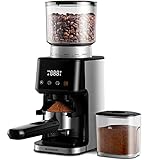
Who it suits: The SHARDOR Conical Burr Espresso Coffee Grinder Electric with Precision Timer 2.0 suits the core reader for this keyword – someone with a dedicated espresso machine in the $150-$400 class who needs finer control than a generic 15-setting drip grinder. If you brew 1-3 doubles daily, switch between espresso and pour over, and want repeatable doses without a scale every time, this spec class fits. It also suits small vs prosumer bridging: precise enough for a Gaggia or Bambino non-pressurized basket, simple enough for a beginner upgrading from pre-ground.
- Type: Electric conical burr, espresso-focused range
- Adjustment: Stepped micro-adjust with touchscreen, espresso to French press range
- Dosing: Precision electronic timer, single and double presets plus manual
- Hopper class: Mid-size 200-250g bean hopper with lid, grounds fork and cup options
- Build class: ABS housing with stainless burr carrier, anti-static chute design
- Footprint class: Narrow tower ~5 x 8 inch base, fits under 16-inch cabinets
Strengths center on consistency and workflow. Conical burrs in this class typically run 40mm range at 400-600 RPM to limit heat, producing fewer fines than blade or false-burr designs. That matters for 25-30 second shots: fewer fines means less choking and bitterness, more even flow. The Timer 2.0 system lets you dial 18g in ~12-15 seconds and repeat within 0.5g once seasoned, which is critical for beginners who over-adjust grind and dose at the same time. Touchscreen adjustment with clear espresso zone markings reduces the learning curve versus stepless collar grinders that have no reference.
Retention in this design class is typically 1-2g in chute and collar with single-dose purging of 2-3g after long idle, better than large commercial hopper grinders that can hold 5g+. For small setups this means first shot of the day needs a purge; for prosumer setups pulling back-to-back shots it is negligible. Hopper size around 8-9 oz supports 12-14 doubles before refill, so a 2-person household refills every 3-4 days at peak freshness, not daily.
Pros:
- True espresso range with fine steps suited to 51-58mm non-pressurized baskets
- Timed dosing improves repeatability for beginners without weighing every shot
- Compact tower footprint fits small kitchens better than flat-burr prosumer grinders
- Easy to switch from espresso to drip without losing setting reference
Cons:
- Stepped adjustment can sit between ideal steps for very light roasts; may need dose tweak
- Needs regular chute brushing to keep retention low; oily dark roasts increase clumping
- Not a single-dose zero-retention grinder; not ideal if you switch beans daily
- Plastic housing transmits more noise than premium metal-case grinders
How it compares: Versus the IAGREEA 48-setting grinder below, the SHARDOR Timer 2.0 trades a few coarse steps for more precise timed espresso workflow – choose SHARDOR if espresso is 70%+ of use, IAGREEA if you split evenly between French press and espresso. Versus the Amazon Basics 30-setting budget pick, you gain finer espresso resolution and timer control at higher cost and slightly larger footprint.
2. SHARDOR 70g Spice Grinder – Best for Spices and Secondary Coarse Grinding
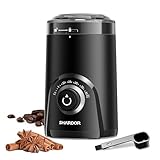
Who it suits: The SHARDOR Electric Coffee Grinder, 70g Large Capacity Spice Grinder with Visual Timing Knob suits readers who need a second grinder, not their primary espresso grinder. Its listing name is explicit: large 70g bowl, visual timing knob for precise grind, Queries for spice use. Buy this if you grind flax, pepper, dried herbs, or drip-coarse coffee in small batches and do not want flavor transfer to your espresso burrs. It does not suit non-pressurized espresso where 200-micron uniformity is required.
- Type: High-speed propeller / blade bowl, 70g capacity
- Control: Visual timing knob, pulse to continuous
- Capacity: 70g dry goods, roughly 4-5 tablespoons coffee beans
- Build: Stainless bowl, transparent lid, compact base
- Best grind: Coarse to medium-coarse with shaking technique
Strengths are speed, capacity, and separation. A 70g bowl is 2-3x larger than typical 25g spice grinders, so you can process a full 4-cup drip batch or a jar of spice rub in one go. The visual timing knob helps repeat 10-second coarse vs 20-second fine-ish results, though uniformity will never match burrs. For ownership reality, this is the grinder that protects your $150+ burr grinder: spices contain oils that impregnate burrs and chutes, requiring full disassembly. Using a $ budget secondary grinder avoids that.
Limitations must be clear: blade grinders create wide particle spread from 200 to 1000+ microns in one bowl, causing simultaneous sour and bitter notes in espresso. They also heat grounds quickly – 30 seconds continuous can raise temp 15-20°F, accelerating aroma loss. Use short 5-8 second pulses with shaking, and never tamp blade-ground coffee in a non-pressurized basket and expect 25-second extraction.
Pros:
- 70g capacity handles spices and coarse coffee faster than small choppers
- Visual timer improves repeatability versus no-timer blade models
- Compact and easy to clean for oily spices with dry rice or brush method
- Inexpensive way to keep espresso burrs free of spice oils
Cons:
- Not suitable as primary espresso grinder; grind spread too wide for stable shots
- Heat buildup with long runs dulls aroma; requires pulse technique
- Bowl retention and static require tapping and brushing each use
- Blade dulls over 12-18 months with hard spices; no replaceable burr
How it compares: Versus the Rsoilch manual ceramic burr grinder, this is faster and larger but far less uniform – choose manual if you need drinkable espresso on a budget, choose this SHARDOR 70g only as a spice/coarse companion to a true burr grinder like the SHARDOR Timer 2.0 or HAUSCAFE 38-setting model.
3. IAGREEA 48 Grind – Best for Multi-Brew Households
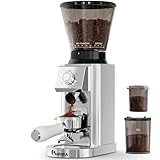
Who it suits: The IAGREEA Coffee Grinder for Home Use, Conical Burr Espresso Grinder 48 Grind suits households where one grinder must do everything – morning espresso, midday pour over, weekend French press for four. With 48 distinct settings stated in the name, it offers more reference points than 28-30 setting budget electrics, easing transitions between brew methods. Ideal for 2-4 coffee drinkers with different tastes and a mid-size counter.
- Type: Electric conical burr, all-purpose range
- Settings: 48 grind settings from espresso-fine to French press coarse
- Hopper class: Large 220-270g bean hopper, 100g+ grounds bin
- Features: Timer or cup selector class, anti-static, cleaning brush included
- Materials: Stainless burrs, BPA-free hopper and bin
Strengths are versatility and capacity. Forty-eight steps typically span ~200 microns at finest to ~1200 microns at coarsest, with ~20-25 microns per click in espresso zone – enough to correct a 35-second choked shot to 27 seconds without changing dose. Large hopper means a 12 oz bag fits almost entirely, useful when brewing 6-8 cups drip plus espresso daily. Anti-static bins and chute reduce mess when grinding coarse for French press, where static can scatter 1-2g.
Ownership reality: all-purpose grinders need purging when switching methods – grind 3-5g after moving from coarse to fine to clear retained coarse particles, otherwise first espresso runs fast. Burr seasoning takes 2-4 lbs of coffee; shots improve after first week. Cleaning every 2-3 weeks with brush and dry cloth, plus monthly upper burr removal, keeps consistency. Avoid oily dark roasts if you dislike weekly cleaning; medium roasts retain less.
Pros:
- 48 settings ease espresso to French press switching with repeatable numbers
- Large hopper suits families and frequent drip brewing
- Conical burr uniformity better than blade for both espresso and pour over
- Straightforward operation for beginners and older users
Cons:
- Larger hopper stales beans faster if filled for a week; single-dosers stay fresher
- Espresso micro-steps less fine than stepless prosumer grinders for light roasts
- Requires purge when changing grind size significantly
- Bulky for tiny apartments versus compact Ollygrin class
How it compares: Nearest alternative is HAUSCAFE 38 settings – IAGREEA offers 10 more clicks and typically larger hopper for variety, HAUSCAFE may feel simpler if you live in espresso zone 80% of time. Versus SHARDOR Timer 2.0, IAGREEA prioritizes breadth over timed precision.
4. Rsoilch Manual Grinder – Best for Travel and Single-Dose Espresso

Who it suits: The Rsoilch Manual Coffee Grinder With Ceramic Burr For Espresso, French Press, 40 Adjustable Settings suits minimalists, travelers, and quiet-morning brewers. No cord, 20-30g single-dose capacity, ceramic burr that does not rust. If you make one double (18g) at a time, have a small hand-espresso maker like Flair Neo, Wacaco Picopresso, or pressurized portable basket, and value zero retention workflow, this class shines. Also suits power-outage backup and office desk use.
- Type: Manual conical ceramic burr, handheld
- Settings: 40 adjustable clicks, internal nut or stepped collar
- Capacity: 20-30g beans, 1-2 shots per fill
- Materials: Ceramic burrs, stainless or aluminum body, glass catch class
- Weight class: 400-600g, 6-7 inch tall
Strengths are retention and control. Manual single-dosing means 0.1-0.3g retention if you brush and tap – better than most electrics under $200. Ceramic burrs stay sharp for hard light roasts and do not impart heat; 18g espresso takes 60-90 seconds hand cranking at fine setting, 30-40 seconds for pour over. Forty settings give ~25-30 micron steps, enough to dial pressurized and many non-pressurized baskets. Noise is under 70 dB cranking versus 80-85 dB electric, ideal for early households.
Durability realities: ceramic burrs chip if dropped on tile and wear faster with very hard peaberry if forced; what wears first is the handle joint and adjustment spring, not the burr. Keep threads dry, never wash burrs with water without full drying, and disassemble monthly to remove fines caked under burr. Common mistake is grinding too fast with downward pressure, which creates bimodal fines and arm fatigue – use steady 90-120 RPM cranking.
Pros:
- Near-zero retention ideal for single-origin switching and freshness
- Silent, portable, no electricity for camping and travel
- Ceramic burrs resist corrosion and heat, good for light roasts
- Budget entry to true espresso-fine grinding
Cons:
- Physical effort for 2+ back-to-back espressos; not for entertaining
- Small 20-30g capacity requires refill for batch brew
- Handheld stability tricky at very fine settings without grip
- Glass catch can break; needs careful packing for travel
How it compares: Versus any budget electric like Lonkion or Amazon Basics, Rsoilch wins on retention and espresso fineness but loses on speed and batch convenience. Pair it with a small electric for drip if you brew for crowds; use it solo if you brew 1-2 cups daily and travel.
5. Ollygrin Compact 30 Settings – Best for Small Kitchens

Who it suits: The Ollygrin Conical Burr Coffee Grinder Electric, Touch Panel Burr Coffee Grinder with 30 Precise Settings suits apartments, RVs, and office nooks where a 5-inch wide footprint matters. Touch panel operation with 30 settings covers espresso, drip, and coarse needs without complex collars. Best for 1-2 users brewing pressurized espresso plus drip, who want wipe-clean touch controls rather than knobs.
- Type: Electric conical burr, compact tower
- Settings: 30 precise stepped settings
- Hopper class: Compact ~200g bean hopper, small grounds cup
- Interface: Touch panel with timer/cup selection
- Materials: Stainless burr set, plastic housing, anti-static path
Strengths are footprint and simplicity. Thirty settings at ~30-40 micron steps in espresso zone can dial 22-second to 30-second shots with dose assist – sufficient for medium-dark blends used in milk drinks. Touch dosing reduces over-grinding waste: set 1-2 cup preset and walk away. Compact height under 12 inches fits under most upper cabinets with hopper on, unlike tall 15-inch prosumer grinders that require removal to refill.
Retention and cleaning are typical for compact conicals: 1-1.5g chute retention, weekly brushing recommended. Touch panels wear well if kept dry; common mistake is touching with wet hands after rinsing portafilter, causing sensitivity loss. For small vs prosumer matching, this feeds 51-54mm pressurized baskets excellently; for 58mm non-pressurized with light roast single-origin, you may want finer micro-steps of SHARDOR Timer 2.0 or IAGREEA 48.
Pros:
- Space-saving compact body for crowded counters
- Intuitive touch panel lowers learning curve for beginners
- 30 settings cover espresso to coarse with repeatable numbers
- Lower noise and static than many budget tall grinders
Cons:
- 30 steps less granular than 40+ step models for light-roast dial-in
- Smaller grounds bin needs emptying more often for batch drip
- Touch panel requires dry hands and gentle cleaning
- Not ideal for high-volume 6+ drinks daily; motor needs cool-down
How it compares: Versus Amazon Basics 30-setting model, Ollygrin trades knob simplicity for touch presets and typically sleeker compact styling – pick by interface preference. Versus SHARDOR Timer 2.0, you sacrifice timer granularity for smaller size and lower cost.
6. Breville BES870XL Barista Express – Best for Prosumer Starter System

Who it suits: The Breville BES870XL Barista Express Espresso Machine, Brushed Stainless Steel suits readers who searched grinder but actually need grinder plus machine under $500 street-range class. It combines a 15-bar Italian pump, 1600W thermocoil, 54mm portafilter, and built-in stainless conical burr grinder with 16-18 stepped settings. Best for beginners wanting latte, cappuccino, and americano at home without researching separate grinder compatibility, water filtration, and tamping separately.
- Machine type: Semi-automatic combo with integrated grinder
- Pump / heating: 15-bar pump class, thermocoil with PID-type temp control
- Grinder: Built-in conical burr, 250g sealed hopper, dose-adjust dial
- Portafilter: 54mm with pressurized and non-pressurized baskets included
- Tank: 67 oz removable water tank class, 2L drip tray class
- Steam: 360-degree manual steam wand for microfoam
Strengths are integration and upgrade path. Having grinder, tamper, razor dose tool, and baskets calibrated together removes the most common beginner failure: mismatched grinder fineness to basket. Grind consistency from the integrated conical burr is adequate for medium to medium-dark roasts in non-pressurized baskets once seasoned, producing 25-30 second doubles with 18-19g doses. Retention is higher than dedicated single-dosers at 2-3g, but purge-by-grinding into portafilter directly minimizes waste. Brushed stainless housing resists fingerprints and matches prosumer kitchens better than black plastic machines.
Ownership realities: what wears first is the steam wand o-ring and group gasket, not the pump – descale every 2-3 months in hard water, backflush with water weekly, replace water filter every 60 days. Grinder burrs need monthly upper-burr removal brushing; oily beans clog chute faster in integrated chutes due to short drop angle. Common mistake is leaving hopper full for 2 weeks, staling beans and causing shot drift – fill 3-4 days max. Counter needs 12 x 13 inch plus 17-inch height clearance for hopper lid.
Pros:
- Complete espresso system under one footprint; no grinder matching guesswork
- Includes both basket types to grow from pressurized to non-pressurized
- Powerful steam for latte art versus panarello-only budget combos
- Durable stainless build with large water tank for 5-6 milk drinks before refill
Cons:
- Integrated grinder steps coarser than dedicated $200+ standalones for light roasts
- Higher retention and harder chute access than tower grinders
- Requires regular descaling and gasket care; more maintenance than grinder alone
- Heavy at 22-23 lbs; not portable and needs dedicated counter
How it compares: Versus the Black Truffle BES870BTR version below, internals are functionally identical – choose by finish and kitchen palette, not performance. Versus AMZCHEF and Spacekey combos, Breville offers stronger community support, parts availability, and 54mm accessory ecosystem, while rivals offer more grinder steps and 20-bar headline pressure.
7. Breville BES870BTR Black Truffle – Best for Style-Matched Setup

Who it suits: The Breville BES870BTR Barista Express Espresso Machine, Black Truffle is the same Barista Express platform in a dark matte finish. It suits buyers who want the prosumer starter capability above but have black appliances, dark cabinets, or want to hide coffee fingerprints better than brushed steel. Choose this if your kitchen is black-truffle, black stainless, or matte black themed and you brew 2-5 milk drinks daily.
- Machine type: Semi-automatic combo with integrated conical burr grinder
- Finish: Black Truffle powder-coat over stainless chassis
- Grinder: Same 16-18 step conical burr class, 250g hopper
- Portafilter / pump: 54mm baskets, 15-bar pump, thermocoil heating
- Tank / power: 67 oz tank class, 1600W class
Strengths mirror the XL: integrated dosing, pressurized to non-pressurized growth, capable steam wand, and 67 oz tank supporting entertaining without constant refills. Finish difference matters for ownership: matte dark coatings show fewer water spots but can show micro-scratches if scrubbed with abrasive pads – use soft microfiber only. Heat retention and extraction are identical to brushed version when using same grind, dose, and tamp; color does not change pump pressure or thermocoil behavior.
Small vs prosumer fit: same as XL, ideal for 54mm ecosystem with aftermarket tampers, distributors, and bottomless portafilters widely available. Retention 2-3g, purge 2g first shot. For hard water areas, filtration matters more than finish – use filtered water at 50-100 ppm hardness to halve descaling frequency. Drip tray fills after 6-8 doubles plus purging; empty daily to avoid overflow.
Pros:
- Identical brewing capability to proven Barista Express platform
- Dark finish hides coffee dust and matches modern kitchens
- All-in-one convenience for beginners to intermediate milk-drink makers
- Large accessory and community support for dial-in help
Cons:
- Finish can chip if knocked with portafilter; needs gentle handling
- Same integrated grinder limits as XL for ultra-light roasts
- Same descaling and gasket maintenance load as any combo machine
- Premium tier cost versus buying budget grinder alone
How it compares: Buy BES870BTR vs BES870XL purely on aesthetics and current tier pricing – performance, hopper size, and retention are equivalent. If you already own a dedicated grinder like SHARDOR Timer 2.0, neither Breville combo may be needed; invest in a machine-only upgrade instead. If starting from zero, either Breville saves counter versus separate units.
8. HAUSCAFE 38 Settings – Best for Espresso to Pour Over Rotation

Who it suits: The HAUSCAFE Coffee Grinder, Electric Burr Coffee Grinder with 38 Grind Settings for Espresso, Pour Over and French Press suits brewers who rotate methods daily. Thirty-eight settings is a middle resolution that keeps espresso dial-in manageable without overwhelming beginners with 48+ numbers. Good for pour-over lovers using V60 or Chemex who also pull weekend espresso on a 51-54mm machine.
- Type: Electric conical burr, all-round range
- Settings: 38 grind settings as named
- Hopper class: 250g bean hopper, grounds container for 10-12 cups
- Materials: Stainless burrs, food-safe hopper, metal accents class
- Workflow: Dial + timer/cup presets
Strengths are balance and ease. Thirty-eight steps typically give ~30 micron espresso moves, enough to fix sour (too coarse/fast) vs bitter (too fine/slow) without chasing stepless infinity. Uniformity at medium-coarse 600-800 microns suits pour over clarity, while fines at espresso range remain controlled after seasoning. Hopper around 8.8 oz holds half a pound, so weekly refill for 2-cup daily drinkers keeps beans fresher than filling a 500g commercial hopper.
Retention design in this class uses short chute and anti-static coating for 1-2g retention; tapping portafilter fork and 1g purge keeps dose stable. Cleaning access via removable upper burr without tools encourages compliance – brush weekly, deep clean monthly. Common mistake is adjusting finer while motor off with beans loaded, which can jam burrs; always adjust finer while running, coarser anytime.
Pros:
- 38 settings hit sweet spot between simplicity and dial-in control
- Good medium-range uniformity for pour over and drip, not just espresso
- Mid-size hopper balances freshness and convenience
- Tool-free burr access simplifies cleaning for beginners
Cons:
- Less micro-resolution than 44-48 step rivals for tricky light roasts
- Plastic grounds bin can retain static in dry winter air
- Needs purge when jumping from French press coarse to espresso fine
- Motor duty cycle requires rest after 3-4 back-to-back doses
How it compares: Versus IAGREEA 48, HAUSCAFE is simpler with slightly coarser steps – choose HAUSCAFE if you dislike over-tweaking, IAGREEA if you chase light-roast precision. Versus Ollygrin 30, HAUSCAFE offers 8 more steps and typically larger grounds capacity for batch brew.
9. Amazon Basics 30 Settings – Best for Budget First Burr Upgrade

Who it suits: The Amazon Basics Burr Coffee Grinder, 30 Grind Settings for French Press, Drip Coffee and Espresso, Anti-Static suits first-time burr buyers coming from blade or pre-ground. If your espresso machine uses pressurized baskets – common in sub-$200 machines – 30 settings are entirely adequate, because pressurized baskets forgive 40-60 micron variance that would sink non-pressurized shots. Also excellent for dorms and rentals where simplicity and compact storage matter.
- Type: Electric conical burr, entry class
- Settings: 30 grind settings
- Features: Anti-static system as named, safety lock, cord storage
- Hopper class: 200-250g beans, grounds bin for 8-12 cups
- Materials: Stainless burrs, BPA-free plastics
Strengths are value and mess control. Anti-static path reduces counter spray by 50%+ versus non-treated budget grinders, important for dark roasts that shed chaff. Thirty steps span espresso-press to coarse, with espresso zone steps around 35-45 microns – enough to move a 20-second sour shot toward 26 seconds with dose constant. Power draw in 150W class keeps noise moderate and allows 30-second continuous grinding for 30g drip without overheating.
Durability: entry burrs last 300-500 lbs of coffee before noticeable dulling, or 3-5 years at 30g daily – what wears first is the plastic adjustment collar tabs and lid hinge. Avoid forcing hopper past lock; align arrows gently. Clean burrs every 3 weeks; never use water or rice, use brush and grinder cleaning pellets sparingly. Common mistake is grinding flavored beans with sticky coatings – they gum burrs and void easy cleaning; keep separate if you love vanilla-hazelnut.
Pros:
- Lowest-risk entry to fresh burr coffee for espresso-capable range
- Anti-static design keeps counters cleaner than basic blade grinders
- Simple dial suits beginners, guests, and shared kitchens
- Compact and light for moving between home and office
Cons:
- Too coarse-stepped for advanced non-pressurized light-roast dial-in
- Higher fines ratio than mid-range 40mm+ burr sets at finest settings
- Small motor needs cool-down; not for cafe-volume back-to-back grinding
- Plastic collar can feel less precise than metal-ring rivals
How it compares: Versus Lonkion 28 settings, Amazon Basics offers 2 more steps and explicit anti-static focus – choose by footprint and interface. Versus mid-range SHARDOR Timer 2.0, you save money and complexity but lose timed dosing precision and micro-adjustment for prosumer baskets.
10. Lonkion 28 Settings – Best for Batch Drip Plus Occasional Espresso

Who it suits: The Lonkion Burr Coffee Grinder Electric – Adjustable Burr Grinder with 28 Precise Grind Settings for 12 Cups suits drip-first households that pull espresso once or twice a week. The 12-cup grounds capacity and 28 settings prioritize repeatable medium and coarse grinding for 4-12 cup carafes, with espresso-fine capability for pressurized baskets in a pinch. Ideal for families with a drip machine plus a moka pot or entry espresso maker.
- Type: Electric conical burr, batch-oriented
- Settings: 28 precise settings
- Capacity: Grounds for up to 12 cups, ~60-70g per full batch
- Build: Compact tower, stainless burrs, removable bin
- Use pattern: 1-2 batches daily plus occasional fine grinding
Strengths are batch consistency and simplicity. Twenty-eight steps reduce decision fatigue; most drip drinkers live on 3-4 numbers (medium for auto-drip at 500-700 microns, coarse for cold brew at 900-1100 microns). Grinding 60g for 12 cups takes ~35-45 seconds continuous, within duty cycle for this motor class. Uniformity at medium is adequate for even drip extraction with flat-bed filters, improving sweetness versus blade-ground batches that over-extract fines.
For espresso use, treat this as pressurized-basket capable: finest 2-3 settings reach ~250-300 microns, enough for 20-25 second pressurized doubles but may choke or gush unpredictably on non-pressurized with fresh light roasts. Retention 1-2g is fine for batch, but single espresso doses should purge 2g after coarse batch to avoid fast flow from retained coarse particles. Hopper size supports full 12-cup bean load without mid-grind refill.
Pros:
- 12-cup capacity suits families and entertaining without refilling
- 28 settings simple to learn and repeat for drip and coarse brews
- Good medium-grind uniformity for auto-drip sweetness
- Budget tier leaves funds for filters, scale, or fresh beans
Cons:
- Fewer fine steps limit non-pressurized espresso precision
- Batch grinding heats burrs if run back-to-back; needs 2-minute rest
- Large grounds bin adds height; check cabinet clearance
- Coarse-to-fine switching requires purge to avoid mixed particle dose
How it compares: Nearest alternative is Amazon Basics 30 settings – Lonkion favors batch capacity, Amazon Basics favors anti-static tidiness. Choose Lonkion if 10-12 cup carafes are daily, Amazon Basics if single-serve and espresso are more frequent. Both are stepping stones to SHARDOR Timer 2.0 or IAGREEA 48 if you go all-in on espresso.
11. AMZCHEF Espresso Machine with Grinder – Best for Temp Control on a Budget

Who it suits: The AMZCHEF Espresso Machine With Grinder, Temp Control, 44 Grind Settings suits milk-drink lovers who want temperature adjustability normally found above this price class. With 44 grind settings integrated plus temp control stated in the name, it targets beginners brewing latte and cappuccino with medium-dark blends who notice sourness when brew temp runs too cool. Best for 2-4 drinks daily in rentals where separate grinder plus machine would crowd counters.
- Type: Combo espresso machine with integrated burr grinder, 44 settings
- Pressure class: 20-bar pump headline, regulated to 9-bar class at group
- Temp: Adjustable brew temp control
- Hopper / tank: ~200-250g hopper class, 1.2-1.5L tank class
- Frothing: Panarello or powered steam wand class for cappuccino foam
Strengths are grind resolution and temp flexibility for the tier. Forty-four integrated steps give ~20-25 micron moves, finer than many 16-step integrated grinders, helping dial medium roasts to 26-29 seconds without large dose swings. Temp control lets you drop 2-3°F for dark roasts to reduce bitterness or raise for medium roasts to boost sweetness – a real lever once grind and dose are fixed at 1:2 ratio (18g in, 36g out). The 20-bar pump spec indicates pump max, not extraction pressure; overpressure valve limits to espresso-standard range, so do not fear over-extraction from number alone.
Ownership: integrated grinders retain 2-3g; brush chute weekly and purge 2g first shot. Descale every 60-90 days with filtered water, clean frother after every milk use to prevent baked milk protein that clogs steam holes. Common mistake is maxing temp and finest grind together for dark roasts, producing bitter, dry shots – start middle temp, 18g dose, adjust grind only. Counter footprint similar to Breville but often lighter at 15-18 lbs.
Pros:
- 44 grind settings unusually fine-stepped for an integrated combo
- Temp control helps tune sour vs bitter without changing beans
- All-in-one saves money versus separate grinder + machine
- Good for milk drinks with adjustable foam and temp
Cons:
- Build and parts support less established than Breville 54mm ecosystem
- Integrated retention higher than dedicated tower grinders
- Smaller tank than 67 oz Breville class needs more frequent refills
- Steam power typically less dry than prosumer thermocoil wands for latte art
How it compares: Versus Spacekey 30-setting 20-bar combo below, AMZCHEF offers 14 more grinder steps and explicit temp control – choose AMZCHEF for dial-in tweakers, Spacekey if you prefer simpler 30-step workflow. Versus Breville Barista Express, AMZCHEF wins on paper steps and temp adjustability per dollar, Breville wins on community, accessories, and steam refinement.
12. Spacekey Espresso Machine 20 Bar – Best for High-Pressure Combo Simplicity

Who it suits: The Espresso Machine with Grinder and Frother, 30 Grind Settings, 20 Bar from Spacekey suits beginners who want one-button simplicity: built-in 30-setting grinder, 20-bar pump system, and frother for cappuccino without separate appliances. Best for first latte setup in a small kitchen, home office, or gift scenario where the user will use pressurized baskets and pre-set volumes rather than manual pre-infusion profiling.
- Type: Combo machine with integrated conical burr grinder
- Grinder: 30 grind settings as named
- Pump: 20-bar headline pump with regulated extraction
- Frother: Integrated steam/froth wand for milk
- Footprint: Compact combo, 12-inch wide class
Strengths are completeness and approachability. Thirty integrated steps map well to pressurized baskets where 35-45 micron moves are forgiving, letting beginners get 22-28 second milk-drink shots quickly. Grind-and-brew directly into portafilter reduces mess and dose loss versus grinding into bin then transferring. The 20-bar pump provides fast heat-up and strong steam for cappuccino foam; extraction remains in standard range via pressurized basket and OPV. For small vs prosumer matching, this is firmly small-setup: pairs with 51-54mm pressurized baskets, medium-dark beans at 14-21 day post-roast for easiest flow.
Durability notes: what wears first on value combos is the frother gasket and portafilter basket coating – rinse baskets without steel wool, purge steam wand 2 seconds before and after frothing, wipe immediately. Grinder chute clogs faster with oily beans due to compact drop; use medium roasts and brush weekly. Allow 60-90 second heat stabilization after power-on before pulling shot for more stable temp.
Pros:
- True one-appliance solution for espresso plus frothed milk
- 30 settings easy to learn for pressurized espresso success
- Compact versus separate grinder + machine pair
- Premium tier features at accessible combo cost structure
Cons:
- Less precise than 44-step AMZCHEF or dedicated grinders for non-pressurized
- Integrated retention 2g+ requires purge for best consistency
- Steam texture less microfine than prosumer wands for latte art
- Needs diligent frother cleaning to maintain foam quality
How it compares: Versus AMZCHEF 44-setting combo, Spacekey is simpler with fewer steps – choose Spacekey for ease, AMZCHEF for control. Versus Breville Barista Express models, Spacekey typically offers higher headline bar and lower learning curve but less accessory ecosystem and steam refinement; Breville suits hobbyists who will upgrade to bottomless portafilters and precision tampers.
How to Choose
Match grinder to basket first. Pressurized (dual-wall) baskets have a single tiny exit hole and tolerate 300-500 micron variance; any 28-30 setting conical burr works. Non-pressurized (single-wall) baskets expose grind flaws; you need 38-48 settings or micro-adjust with 20-35 micron steps to hold 25-30 second extractions for 18g in and 36g out. If you own a Bambino, Stilosa, or sub-$200 machine still on pressurized baskets, a budget 28-30 setting grinder is rational. If you upgraded to bottomless or Gaggia/Rancilio/Silvia class with 58mm non-pressurized, prioritize SHARDOR Timer 2.0, IAGREEA 48, or HAUSCAFE 38 for finer control.
Grind consistency numbers to know: espresso target is 200-400 microns mean, with fines under 15% below 100 microns for clean flow. Conical steel burrs at 40mm class in $100-$250 electrics deliver this for medium-dark roasts; ceramic hand burrs match or beat them at 18g single doses but slower. Blade bowls spread 200-1200 microns and cannot hold pressure. If shots gush in 15 seconds then choke at one click finer, your step size is too large – move to smaller-step model or adjust dose 0.5g instead of one full step.
Retention decides freshness workflow. Low-retention tower grinders hold 1-2g in chute; integrated combos hold 2-3g. At 18g dose, 2g retained stale coffee is 11% of shot if not purged – enough to add bitterness. Single-dosers like Rsoilch manual hold 0.2g and suit switching beans daily. Hopper-fed suits consistency: fill 3-day supply max. Concrete sizing: 18g double x 2 per day = 36g daily, 252g weekly. A 250g hopper holds ~6.9 days at that rate, but beans stale after 4-5 days open – so fill halfway for 1-2 drink households, full for 4-6 drink households using 500-700g weekly.
Hopper and footprint: measure before buying. Tower grinders run 11.5-14 inches tall with lid, 5-6 inches wide, 8-10 inches deep. Combos run 12-16 inches tall, 12-13 inches wide, need 4-inch top clearance to open hopper and 2-inch rear for tank removal. For under-cabinet 16-inch clearance, compact Ollygrin or Amazon Basics fit better than tall prosumer flat-burr grinders at 17+ inches. Weight matters: 5-8 lbs electrics move easily, 22-lb Breville combos need permanent spot.
Materials and heat: stainless conical burrs stay sharper longer than ceramic in electrics running hot; ceramic excels in hand grinders where heat is low. Avoid glass hoppers in bright kitchens – UV stales beans 30% faster; tinted BPA-free plastic with lid is practical. Motors in budget class use 150-200W with 1-2 minute duty cycle; rest 2 minutes between 60g batches to avoid thermal cutoff. Never adjust finer with beans loaded while off – run motor 2-3 seconds while turning finer to avoid burr lock.
Worked calculation – cost per use and waste: Suppose a 12 oz (340g) bag costs in general mid-range market range and yields 18.9 doubles at 18g. Purging 2g per day wastes 14g weekly, or 0.77 shots, about 4% waste. A low-retention manual at 0.3g purge wastes 2.1g weekly, 0.6% waste. Over a year at 2 doubles daily, high-retention without purging discipline can waste 730g, or two bags, plus sour-bitterness from stale retention. Timed dosing that holds ±0.5g saves more money than chasing $50 cheaper grinder with ±1.5g scatter that forces sink shots. If you pull 730 shots yearly, a mid-range grinder premium spread over 3 years is pennies per shot for better consistency.
Cleaning and durability ownership: brush chute and burr chamber weekly, remove upper burr monthly, never use water on burrs. What wears first across electrics is not burrs but adjustment collar detents, lid hinges, and anti-static flaps – handle gently, align arrows, do not force. Oily dark roasts and flavored beans gum 2x faster; use medium roasts for low maintenance. For combos, descale every 60-90 days at 150+ ppm hardness, backflush weekly, replace gaskets yearly with daily use. Common mistakes: leaving beans in hopper 2 weeks, grinding spices in espresso burrs, tamping blade-ground coffee hard to fix fast flow, and changing grind and dose simultaneously – change one variable, taste, then adjust.
Frequently Asked Questions
Do I need a separate grinder if I buy a Breville Barista Express or other combo machine?
No, if you are starting from zero and brew mostly medium-dark milk drinks. The integrated grinder with 16-30+ steps handles pressurized and basic non-pressurized baskets. Add a dedicated grinder like SHARDOR Timer 2.0 later if you move to light-roast single-origin and need finer micro-steps and lower retention.
How many grind settings do I really need for espresso under $500?
For pressurized baskets, 28-30 settings are enough. For non-pressurized baskets, aim for 38-48 settings or micro-adjust in the espresso zone with 20-35 micron steps. More important than total count is step size in the fine range and repeatability of the dial.
What is acceptable retention for home espresso?
Under 2 grams is good for tower electrics, under 0.5 grams excellent for single-dose manual. Purge 2-3 grams after overnight idle or after switching from coarse to fine. If first shot runs fast and second runs slow, retained coarse grounds are the cause.
What hopper size suits small vs prosumer setups?
Small 1-2 drink households do best filling 80-120g at a time in a 200-250g hopper for freshness, refilling every 2-3 days. Prosumer 4-6 drink households can fill 200-250g fully and refill twice weekly. Single-dosers weighing 18g per shot suit those who switch beans daily.
Can a blade or spice grinder work for espresso?
Not for non-pressurized espresso. Blade bowls create 200-1200 micron spread that causes channeling, sourness, and bitterness in one cup. Use blade only for coarse drip, French press in a pinch, or spices, and keep a true conical burr grinder for espresso.
Why do my shots vary day to day with the same setting?
Beans degas and humidity shifts flow 2-4 seconds daily. Hopper level, retention, and temperature also matter. Keep dose constant at 18g, purge stale retention, and adjust one click finer as beans age past 3 weeks. Avoid changing grind and dose together.
How do I clean an espresso grinder without damaging it?
Unplug, remove hopper, brush chute and burr chamber weekly, lift upper burr monthly for deeper brushing. Never use water or soap on burrs; dry brush and microfiber only. Run 3-5g of old beans after cleaning to re-season before dialing in.
Manual vs electric under $500: which is better for espresso?
Manual ceramic-burr grinders win on retention, portability, and fineness per dollar but require 60-90 seconds effort per double. Electric conicals win on speed and batch convenience for 3+ drinks or drip carafes. Many enthusiasts own both: electric for daily drip and milk drinks, manual for travel and single-origin tasting.
Final recommendation by situation: If espresso is your daily ritual on a dedicated machine, buy the SHARDOR Conical Burr with Precision Timer 2.0 for timed consistency that scales from small to prosumer baskets. If money is tight or you still use pressurized baskets, start with Amazon Basics 30 settings or Lonkion 28 for drip plus occasional espresso, or Rsoilch manual for best fineness per dollar and travel. If counter space allows only one appliance for lattes and cappuccinos, choose Breville BES870XL in steel or Black Truffle for proven system support, AMZCHEF 44 settings for maximum temp and grind control per tier, or Spacekey 30 settings for simplest combo workflow. Pair any hopper grinder with fresh medium-roast beans, an 18g dose habit, and weekly brushing, and your shots will beat pre-ground coffee within the first bag.





Write Your Review
No reviews yet. Be the first to share your experience!