

Key takeaways
- Edges becoming dark before the center is hot: Lower the temperature to 300–325°F and reseal the foil with a teaspoon of liquid.
- Surface looks leathery: Add a small amount of stock or water, keep the packet closed, and heat for 3–4 more minutes.
- Sauce is burning: Scrape away loose char, cover the ribs, and use a fresh thin layer only at the end.
- Meat is hot but tough: The ribs may have lost moisture during their original cooking or storage. A covered reheating cycle can improve texture, but it cannot fully restore moisture that is gone.
- Outside is wet and soft: Open the packet and air fry at 350°F for 2–3 minutes to dry and set the surface.
To reheat ribs in an air fryer without drying them out, use 325°F (165°C), wrap chilled ribs loosely in foil with a teaspoon or two of liquid, and heat them for 8–12 minutes; frozen ribs generally need 18–25 minutes at the same temperature. Unwrap the ribs for the final 2–4 minutes so the sauce can set and the edges can regain a grilled texture.
The best method depends on whether the ribs are chilled or frozen, how thick the rack is, and whether you want soft, moist meat or caramelized sauce. Air fryers heat quickly, so lower heat, added moisture, and a short uncovered finish work better than reheating bare ribs at high temperature.
Our top picks

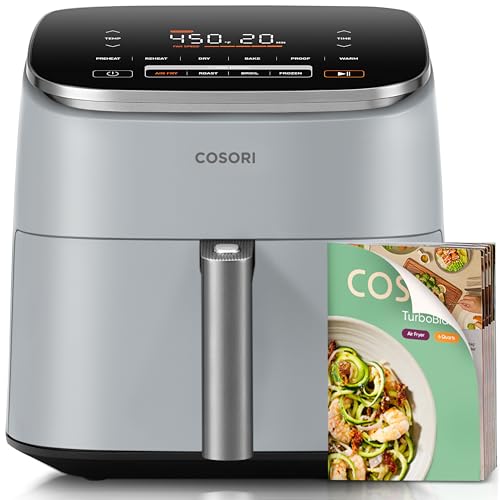


As an Amazon Associate we earn from qualifying purchases at no extra cost to you. Ratings are shown as listed on Amazon.
Reheating chart for ribs
| Rib condition | Preparation | Temperature | Covered time | Uncovered finish | Target result |
|---|---|---|---|---|---|
| Chilled, individual ribs | Foil packet with 1 teaspoon liquid | 325°F / 165°C | 6–8 minutes | 2 minutes | Hot through, moist surface |
| Chilled, 3–4 ribs | Foil packet with 1 tablespoon liquid | 325°F / 165°C | 8–12 minutes | 2–4 minutes | Hot center, set sauce |
| Chilled, half rack | Foil-wrapped; cut if needed to fit | 325°F / 165°C | 12–16 minutes | 3–5 minutes | Evenly heated without hard edges |
| Frozen, individual ribs | Foil packet with 1 tablespoon liquid | 325°F / 165°C | 14–18 minutes | 2–4 minutes | Thawed and hot inside |
| Frozen, 3–4 ribs | Foil-wrapped in a single layer | 325°F / 165°C | 18–25 minutes | 3–5 minutes | Hot center, browned sauce |
These times assume fully cooked pork or beef ribs, pieces approximately 1 to 1½ inches thick, and an air fryer basket that is not overcrowded. Add 2–4 minutes for a tightly packed basket or unusually thick pieces. Start checking early because air fryers vary in fan strength, basket design, and temperature accuracy.
How to reheat ribs in an air fryer
1. Check and portion the ribs
Separate a rack into portions that fit in the basket without overlapping heavily. A half rack usually reheats more evenly when cut into two or three sections. Remove large areas of hardened, exposed fat only if you prefer; the fat can help protect the meat during reheating.
Ribs should have been refrigerated within two hours of cooking and kept cold. Discard leftovers that smell sour, feel unusually slimy, or have been held at room temperature for an extended period. Reheating does not reliably make mishandled food safe.
2. Preheat when your air fryer benefits from it
Preheat the air fryer to 325°F (165°C) for 3–5 minutes if your model recommends preheating or tends to heat slowly. A mandatory preheat is not essential for every appliance, but starting with a hot basket shortens the warming time and reduces the chance that the outside dries while the center is still cold.
3. Add moisture and wrap the ribs
Place the ribs on a sheet of heavy-duty foil. Add 1 teaspoon of liquid for one or two ribs, 1 tablespoon for three or four ribs, or 2 tablespoons for a half rack. Good choices include water, unsalted stock, apple juice, diluted barbecue sauce, or a small amount of cider vinegar mixed with water.
Seal the foil into a loose packet, leaving a little air space above the ribs. Do not pour in enough liquid to submerge the meat. Excess liquid can make the bark soggy, leak into the basket, and dilute the sauce. If the ribs already have a wet sauce coating, use water or stock rather than adding more sugary sauce at the beginning.
4. Heat covered at 325°F
Put the foil packet in the basket with the seam facing upward. Heat according to the chart, turning the packet once if it is thick or contains a half rack. The foil slows surface moisture loss while the trapped steam warms the meat more gently than direct hot air.
For frozen ribs, keep the packet closed for the longer covered stage. If the ribs are frozen together in a solid block, separate them as soon as the outer edges soften, then continue heating in a single layer. A solid, tightly packed block can remain cold in the middle while the outside becomes dry.
5. Sauce and brown the outside
Carefully open the packet because steam can escape quickly. Brush on a thin layer of barbecue sauce, glaze, or reserved cooking juices, then return the ribs to the basket uncovered for 2–4 minutes at 350°F (175°C). Watch sugary sauces closely; they can scorch within a minute or two in a powerful air fryer.
For a softer, less caramelized finish, leave the ribs covered until hot and skip the uncovered stage. For a drier bark, use a thin sauce layer and add one extra minute at 350°F, but avoid raising the temperature much higher than that. Temperatures around 400°F can harden the edges before the center is warm.
6. Check doneness and rest briefly
Reheated ribs should be steaming or hot in the center, with no cold section near the bone. For leftovers, the United States Department of Agriculture recommends reheating to 165°F (74°C), measured in the thickest part with an instant-read thermometer. Insert the probe from the side, avoiding contact with the bone, which can give a misleading reading.
Let the ribs rest for 2–3 minutes before serving. This allows heat to distribute and makes the meat less likely to release its remaining moisture immediately when cut.
Foil, sauce, and moisture choices
| Situation | Use | Why it works | What to avoid |
|---|---|---|---|
| Dry-looking ribs | Foil plus 1 tablespoon stock or water | Creates a humid environment and softens the surface | High heat without a cover |
| Sweet barbecue sauce | Apply sauce only during the final 2–4 minutes | Reduces burning and keeps the glaze glossy | Thick sauce from the start |
| Already-sauced ribs | Foil plus 1 teaspoon water or stock | Adds moisture without making the flavor excessively sweet | Adding several tablespoons of extra sauce |
| Firm bark desired | Cover first, then finish uncovered at 350°F | Protects the interior while restoring exterior texture | Leaving the ribs uncovered for the whole cook |
| Very tender ribs | Keep sealed and use the lower end of 325°F | Minimizes surface drying and harsh airflow | Frequent opening of the packet |
Chilled versus frozen ribs
Chilled ribs are the easiest to reheat because the center is already thawed. They usually need 8–12 minutes for a small portion. Frozen ribs need more time because the air fryer must first thaw the meat before heating it fully; a 3–4 rib portion commonly needs 18–25 minutes.
Do not use the same timing for a frozen half rack and a few chilled ribs. The size of the cold center matters more than the total weight. If a frozen portion is thicker than about 1½ inches, lower the risk of a cold middle by separating it into smaller pieces after 8–12 minutes, when possible.
For the most even result, thaw ribs overnight in the refrigerator before reheating. If you thaw them, use the chilled-rib timing rather than the frozen timing. Avoid thawing meat on the counter, where the surface can remain in an unsafe temperature range while the center is still frozen.
How to tell whether ribs are drying out
- Edges becoming dark before the center is hot: Lower the temperature to 300–325°F and reseal the foil with a teaspoon of liquid.
- Surface looks leathery: Add a small amount of stock or water, keep the packet closed, and heat for 3–4 more minutes.
- Sauce is burning: Scrape away loose char, cover the ribs, and use a fresh thin layer only at the end.
- Meat is hot but tough: The ribs may have lost moisture during their original cooking or storage. A covered reheating cycle can improve texture, but it cannot fully restore moisture that is gone.
- Outside is wet and soft: Open the packet and air fry at 350°F for 2–3 minutes to dry and set the surface.
Basket size and arrangement matter
Keep ribs in a single layer whenever possible. A 4–6 quart basket generally accommodates three or four individual ribs or a small half rack cut into sections, while a compact 2–3 quart basket may be limited to one or two ribs per batch. These are practical capacity estimates, not universal specifications; the shape of the basket and the height of the ribs make a difference.
Leave some space around the packet so hot air can circulate. A tightly folded foil parcel that touches every side of the basket may heat more slowly and unevenly. If you need to reheat a full rack, use two batches rather than stacking the ribs, or use an oven where a larger covered pan can hold the rack comfortably.
Cleaning and ownership details
Foil can reduce cleanup, but it should not block the air fryer’s entire basket or cover the heating element. Keep it weighted down by the ribs, and do not use loose foil during preheating. Check the appliance manual for restrictions on foil, parchment, and accessories.
Let the basket cool before removing sticky drips. Soak the removable basket or tray in warm, soapy water rather than scraping aggressively with metal tools. Abrasive pads can damage nonstick coatings, which are often the first parts to show wear. Wipe the heating element only when the appliance is unplugged and fully cool.
Common mistakes include using 400°F from start to finish, overcrowding the basket, adding too much liquid, and applying a sugary glaze before the ribs are warm. A small foil packet, moderate heat, and a short uncovered finish use less energy and usually produce a better texture than repeated high-temperature cycles.
Worked example: reheating four chilled ribs
Suppose you have four chilled pork ribs with a thin barbecue coating. Place them on foil, add 1 tablespoon of water or unsalted stock, and seal a loose packet. Heat at 325°F for 10 minutes, open the packet, brush on a teaspoon of sauce, and cook uncovered at 350°F for 3 minutes.
Check the thickest rib with a thermometer. If it has not reached 165°F, reseal the packet and continue for 2 minutes before checking again. If it has reached the target and the edges are becoming dark, remove the ribs rather than extending the cooking time simply to create more browning.
Frequently Asked Questions
What is the best temperature to reheat ribs in an air fryer?
Use 325°F (165°C) for the covered reheating stage. This is hot enough to warm the ribs efficiently while giving the interior time to heat before the outside dries. Use 350°F (175°C) only for a brief final browning stage.
Can I reheat ribs in an air fryer without foil?
Yes, but uncovered ribs lose moisture faster. If you skip foil, brush the ribs lightly with sauce or stock and use 300–325°F for a shorter cycle, checking after 5–7 minutes for chilled individual ribs. Foil is the safer choice when the ribs are lean, dry, or frozen.
How long do frozen ribs take in an air fryer?
Individual frozen ribs usually take about 14–18 minutes at 325°F, while three or four ribs commonly take 18–25 minutes. Heat them in a foil packet with a tablespoon of liquid, then uncover them for 2–4 minutes. Confirm that the center reaches 165°F.
Should I put barbecue sauce on ribs before air frying?
Put most barbecue sauce on during the final 2–4 minutes. The sugar in many sauces can darken or burn if exposed to strong airflow for the entire reheating cycle. If the ribs are very dry, use a small amount of thin sauce or stock inside the foil packet, then add the finishing glaze later.
How do I keep ribs from drying out in an air fryer?
Use moderate heat, wrap the ribs loosely in foil, and add a small amount of water, stock, or juice. Avoid overcrowding and do not keep reheating after the center is hot. A thermometer is useful because it prevents the extra minutes that commonly turn moist leftovers tough.
Can I reheat a full rack of ribs in an air fryer?
Only if the rack fits without pressing against the heating element or blocking most of the airflow. Cutting the rack into two or three sections usually gives a more even result. For a large full rack, a covered oven pan is generally more practical than stacking ribs in a small air fryer basket.






Write Your Review
No reviews yet. Be the first to share your experience!