

Key takeaways
- The phrase "Japanese cutlery set" pulls two different shoppers into the same search. One is setting a table and wants slim.
The phrase “Japanese cutlery set” pulls two different shoppers into the same search. One is setting a table and wants slim, well-finished dinner flatware with a Japanese pedigree. The other is stocking a kitchen and wants a block of blades in the gyuto-and-santoku tradition. This guide covers both, because the listings do too: one genuine Japan-made dinner set, and four knife sets that lean on Japanese steel, Japanese styling, or a Japanese-pattern chef knife.
If you are shopping for a wedding gift, a first apartment, or a cook who has outgrown a drawer of mismatched knives, the decision is really about what the word “Japanese” is promising. On a flatware listing it can mean country of manufacture. On a knife listing it often means blade geometry, a thinner edge angle, or a steel grade. Read the product title closely, separate origin claims from style claims, and use the table below to match each set to the job you actually have.
Quick Picks
Our top picks

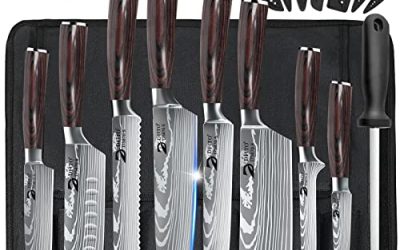
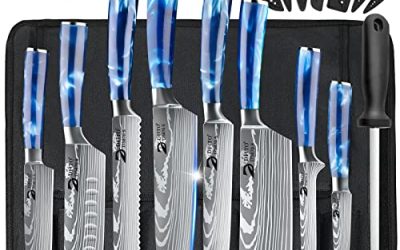
 15 Pieces Kitchen Knife Set with Block
- 【All-In-One Knife Set】Our 15-piece knife set included 8”Chef…
- 【High Quality Kitchen Knife Set】All knives’ blade is…
- 【Ultra-Sharp & Unique pattern】The blades of our wooden…


As an Amazon Associate we earn from qualifying purchases at no extra cost to you.
| Product | Best for | Key spec from the title |
|---|---|---|
| Nagao NT-5 | Dinner table flatware | 10-piece stainless steel, made in Japan |
| 15-piece Hammered Collection set | Full block with steak knives | Japan stainless steel, sharpener, 6 steak knives |
| SYOKAMI 7-piece | Small counters | Foldable magnetic acacia block, high carbon stainless |
| HOSHANHO 7-piece | Magnetic block fans | Japanese high carbon stainless steel, magnetic block |
| Imarku 14-piece Gyutou | Edge-geometry shoppers | 15 degree edge, 56 plus or minus 2 HRC, full tang, built-in sharpener |
How to Choose
Decide whether you need flatware or blades
Dinner cutlery and kitchen knives are separate purchases that happen to share a search term. A dinner set is measured in place settings: a ten-piece set typically covers a small number of diners, so count your regular guests before you buy. A knife set is measured by which tasks it handles: slicing, paring, bread, and carving. If your drawer already holds forks and spoons you like, a knife block is the smarter spend. If your blades are fine and your table looks mismatched, flatware is.
Read “Japanese” as origin, steel, or style
Only a title that says “made in Japan” is making an origin claim. Phrases like “Japanese style” or “Japanese high carbon stainless steel” describe design or material, not where the set was manufactured. Neither is a flaw, but they are different promises. Look for named hardness figures too: a Rockwell number such as 56 plus or minus 2 HRC is a checkable spec, while “ultra sharp” is not. Ignore adjectives and rank listings by how many measurable facts they give you.
Check edge angle, tang, and block design
Japanese-pattern knives usually advertise a narrower edge, and a 15 degree figure is the one to look for; a 20 degree edge is the more common Western default. A full tang, where the metal runs the length of the handle, helps balance. For blocks, a magnetic or foldable design saves counter space but holds fewer knives than a slotted wood block. Also confirm that a sharpener is included, since a finer edge dulls noticeably if it never sees a steel or stone.
Think about the last ten meals you cooked. If most involved slicing vegetables and trimming chicken, a chef knife, utility knife, and paring knife do almost all the work, and a seven-piece set already covers that. If you regularly carve roasts or serve steak, a block with dedicated steak knives earns its footprint. Buy for the meals you actually make, not for a hypothetical dinner party.
Know where cheaper sets cut corners
Lower-priced sets often pad the piece count with small items: a second pair of shears, a peeler, or extra steak knives. Count only the knives you would reach for weekly: chef, utility, paring, bread, and slicer. Watch handle joints for gaps where grime collects, and treat dishwasher-safe claims with caution on any fine-edged blade. Hand washing preserves both the edge and the handle finish, and it matters more than any spec on this list.
The 5 Best Options
Nagao NT-5 Dinner Cutlery Set
This is the only true flatware pick, and the only title that states Japanese manufacture outright. The listing describes a 10-piece stainless steel dinner set, which suits a household that wants a tidy, modest table setting rather than service for a crowd. Buyers who care about origin on the underside of the fork will find that stated plainly in the title.
- Strength: the made-in-Japan wording is explicit, not implied through styling.
- Strength: a compact ten-piece count keeps storage simple for couples and small families.
- Trade-off: it solves the table, not the cutting board, and gives you no kitchen blades.
Skip it if you came looking for chef knives or if you routinely host more guests than ten pieces can serve. It also makes a sensible gift for someone moving into a first place, since a compact, clearly labeled set is easy to wrap and easy to store.
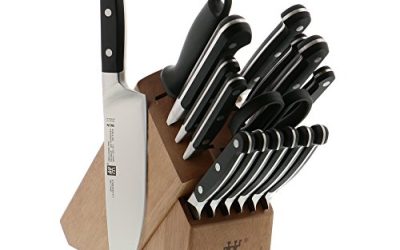
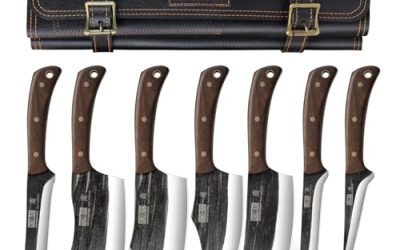
15-Piece Hammered Collection Knife Set with Block and Sharpener
The largest set here, and the one most obviously aimed at someone filling an empty kitchen in one purchase. The title names Japan stainless steel, a sharpener, a block, and six steak knives, so it spans prep work and the dinner table in a single box.
- Strength: six steak knives mean the set doubles as a serving solution for family dinners.
- Strength: the listing includes both a block and a sharpener, so there is nothing extra to buy for upkeep.
- Trade-off: a high piece count means several knives you may rarely use, and the block will take up real counter space.
Skip it if your counter is small or if you want a short, curated lineup instead of a bundle. Shoppers who cook daily but only use three or four knives will be paying, in space and storage, for pieces that mostly sit idle.
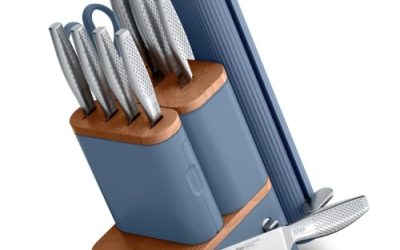
SYOKAMI 7-Piece Japanese Style Knife Set
SYOKAMI pitches a Japanese style seven-piece collection in a foldable magnetic acacia wood block, with high carbon stainless steel blades. The foldable block is the standout idea: it is designed for cooks who want a wooden block without a permanent slab on the counter.
- Strength: the foldable magnetic block is a clear space-saving feature stated right in the title.
- Strength: seven pieces covers the core jobs without drowning a small kitchen in blades.
- Trade-off: the title says “Japanese style,” which describes design intent rather than country of origin.
Skip it if you want a Japan-made claim on paper or a very large block with a steak knife set. The listing also does not mention a sharpener, so plan on buying a honing steel or whetstone separately.
HOSHANHO 7-Piece Japanese Magnetic Knife Block Set
HOSHANHO also keeps the count at seven, pairing Japanese high carbon stainless steel with a magnetic block. It is the nearest direct rival to the SYOKAMI set on size and format, and the choice between them comes down to block design and handle preference once the listings are in front of you.
- Strength: the title names Japanese high carbon stainless steel, giving a material claim to compare against other sets.
- Strength: a magnetic block keeps blades visible and off a cutting surface where edges could dull.
- Trade-off: seven pieces means no dedicated steak knife lineup, so table service needs a separate set.
Skip it if you prefer a traditional slotted block or want more than a handful of knives. If you are choosing between this and the SYOKAMI, compare how each block mounts and how easily the knives release before deciding.
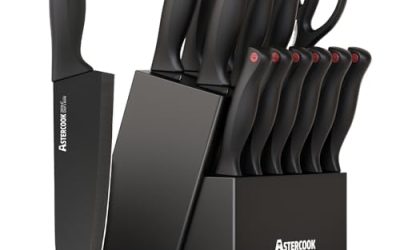
Imarku 14-Piece Japanese Gyutou Knife Set
Of the knife sets, this one offers the most measurable specs: a 15 degree precision edge, a hardness of 56 plus or minus 2 HRC, a full-tang build, and a built-in sharpener. The word gyutou, the Japanese term for a chef knife, signals the intended blade pattern.
- Strength: the edge angle and hardness figures give you numbers to verify and compare.
- Strength: full-tang construction and a built-in sharpener cover balance and maintenance together.
- Trade-off: a finer edge asks for more careful handling, so chopping through bone or frozen food is a poor use.
Skip it if you want a magnetic or foldable block, or if you plan to run every knife through the dishwasher. Cooks new to thin edges should also budget a few weeks to get used to how little pressure the blade needs.
Which One Fits Your Situation
You are setting a table, not stocking a kitchen
Go with the Nagao NT-5. It is the only listing built around dinner cutlery and the only one that says made in Japan in the title. Pair it with whatever knives you already own. The five listings here sort into flatware, a large all-in-one block, two compact magnetic sets, and a specification-heavy gyutou set, so deciding the category first saves a lot of comparison.
You are furnishing a first kitchen in one order
The 15-piece Hammered Collection set bundles a block, a sharpener, and six steak knives. For someone starting from zero, that breadth removes the need for follow-up purchases.
Your counter is small and you want a magnetic block
Choose between the SYOKAMI 7-piece and the HOSHANHO 7-piece. The SYOKAMI foldable block is the pick for tight spaces, while the HOSHANHO suits cooks who simply want a compact magnetic holder.
You care about edge geometry and specs on paper
The Imarku 14-piece Gyutou is the one to open first, because its title carries the edge angle, the hardness range, and the tang detail that other listings leave out.
Common Mistakes
- Assuming “Japanese style” means made in Japan; only an explicit origin phrase makes that claim.
- Buying on piece count alone and ending up with a block of rarely used small tools.
- Putting fine-edged blades in the dishwasher, which dulls and can damage handles.
- Ignoring counter width before choosing a slotted wood block.
- Skipping a sharpener or honing step, then blaming the steel when the edge fades.
Japanese Knife Terms Explained
Gyuto, santoku and nakiri
A gyuto is the Japanese take on a chef knife, with a pointed tip and a long belly for rocking. A santoku has a flatter edge and a rounded tip, favored for quick up-and-down chopping. A nakiri is a rectangular vegetable blade with no tip. Knowing which shapes appear in a set tells you more than the word “Japanese” on the box.
Single versus double bevel
Traditional Japanese knives such as sashimi blades are sharpened on one side only. Most sets sold for home use are double bevel, ground on both faces, so they are easier to use and sharpen.
Layers and Damascus patterns
Wavy patterns and layer counts are partly cosmetic. What matters is the core steel at the center of the blade, because that is what holds the edge. If a listing counts layers but never names the core, treat the number as decoration.
Made in Japan versus Japanese style
The first is about origin and the second about design. A set can follow Japanese shapes and thin edge angles while being made elsewhere, which is not a flaw, but it is not the same promise.
Sizing and Setup Checklist
- For flatware, count the place settings you need and whether the set includes forks, spoons and knives or only one type.
- For knives, measure the counter spot under cabinets before choosing a block or magnetic holder.
- Mount magnetic blocks away from the stove and keep the knife spine, not the edge, against the magnet when placing it.
- Check handle length and weight if you have smaller hands; thin Japanese-style handles can feel different from Western ones.
- Confirm that a sharpener, if listed, suits the thinner edge angle.
Which Shape for Which Cook
| Shape | Best for |
|---|---|
| Gyuto | Cooks who like to rock the blade on the board and handle meat and vegetables alike |
| Santoku | Cooks who prefer a flat, up-and-down chop with a shorter blade |
| Nakiri | Vegetable-heavy cooking where a straight edge meets the board evenly |
| Petty | Small jobs such as trimming, peeling and slicing a single shallot |
Who Should Skip These
If you want one-pot durability and dishwasher cycles without thought, thin-edged Japanese-style knives will frustrate you; they prefer hand washing and careful storage. Cooks who regularly cut through bone or frozen food should pick heavier Western blades. And buyers who want only dinner flatware should not pay for a block of knives they will never open.
Related guides
- Black Friday And Cyber Monday Kitchen Deals
- Knife Sharpener For Kitchen Knives
- Cuisinart Air Fryer Toaster Oven Review
Frequently Asked Questions
Is a Japanese cutlery set the same as a Japanese knife set?
Not always. Cutlery can mean dinner flatware, as with the Nagao set, or kitchen knives. Check the title for words like forks and spoons versus chef, santoku, or block.
What does a 15 degree edge mean?
It is the angle on each side of the blade where it meets the cutting edge. A smaller angle is thinner and slices cleanly, but it is more delicate than a wider Western-style edge.
Does HRC hardness matter for home cooks?
It indicates how well steel resists dulling, and harder steel can also chip more easily. A mid-50s range, like the one in the Imarku title, is a balanced figure for everyday kitchen use in 2026.
Are magnetic blocks safe for knives?
They are designed to hold blades securely and keep edges off a surface. Place each knife spine-first, and keep the block away from the edge of the counter if children are around.
Write Your Review
No reviews yet. Be the first to share your experience!