

Key takeaways
- Compare the best fish tweezers for salmon, trout and sea bass, from curved Japanese tweezers and wide fishbone tongs to flat-and-slant pairs and pliers.
Pin bones run in a neat row along a fillet, angled toward the head, and they punish the wrong tool. Fingertips slip off them, a knife tip gouges the flesh around them, and ordinary household tweezers bend before the bone lets go. The real decision is jaw shape: a fine curved tip for hair-thin bones in delicate fish, a wide grooved tong for thick salmon bones, or a bent-nose plier for bones that fight back.
This guide serves home cooks who debone a weekly salmon side, cooks prepping fish for sushi and sashimi, buyers who bring home whole trout or sea bass, and anyone equipping a first fish-prep drawer. Every pick below was chosen from the product names and specifications on its Amazon listing page, comparing stated length, steel, tip form and grip design rather than packaging claims.
Quick Picks
Disclosure: As an Amazon Associate we earn from qualifying purchases.
| Product | Best for | Key spec from title |
|---|---|---|
| Kwizing Fish Bone Tweezers by RCI GLOBAL | Fine bones in delicate fillets | Made in Japan, 4 3/4 inch |
| Rösle Stainless Steel Fishbone Tongs | Thick pin bones in salmon sides | 5.9-inch |
| iziusy 2 Pieces Fish Bone Tweezers | Learning which tip shape suits you | 4.6 inch, flat and slant pair |
| SIDAZON Fish Bone Pliers/Tweezers | Stubborn bones that need plier leverage | 6 Inches, bent nose |
How to Choose
Tip Shape Decides What You Can Grip
Flat tips meet across a broad edge, which suits thicker bones that need a firm, even clamp. Slant tips approach the fillet at an angle, so your hand stays clear of the flesh while the point finds bones lying almost flush with the surface. Curved jaws, like the Kwizing pair below, close around fine bones without pinching the meat beneath them. Wide grooved tongs take the opposite approach, spreading pressure across several ridges. Match the tip to the thinnest bone you usually face, because a jaw that works on salmon can crush its way through a trout fillet.
Length Changes Control and Leverage
Most fish tweezers fall between 4.6 and 6 inches, and that small spread matters at the board. A compact 4 3/4 inch pair keeps your fingers close to the bone, which helps when bones are short, pale and hard to see against the flesh. A longer tool, such as a 5.9 inch tong or a 6 inch plier, adds reach across a wide salmon side and gives stubborn bones more pull before your grip tires. Longer is not automatically better: extra length amplifies hand shake, so fussy work on small fish often goes faster with the shorter tool.
Steel Grade and Spring Tension
The steel decides how long the tips stay aligned. Higher-grade material such as the 18/10 stainless in the Rösle tongs resists corrosion from salt and fish juices, while lighter 430-grade pairs cost less and still handle occasional use. Just as important is spring tension, the force needed to close the jaws. A stiff pair grips hard but aches through a whole side of salmon; a soft pair feels easy yet lets greased bones slide out mid-pull. Listings rarely quantify tension, so favour makers who describe tempered or heat-treated steel, a sign the spring was set deliberately rather than left to chance.
Grip Texture and Cleaning
Deboning is wet work, and smooth polished handles turn treacherous once fish oil coats your fingers. Grooved ridges, cross-hatch patterns and non-slip finishes all exist to keep the tool planted while you pull at an angle. Cleaning splits the field just as clearly. Dishwasher-safe pairs, like the Rösle and Kwizing below, suit cooks who debone often and want a quick reset. Hand-wash-only tools ask for a minute at the sink but often carry finer tip finishes worth protecting. Whichever you choose, dry the tips before storing, because trapped moisture in a drawer dulls edges and spots steel over time.
The 4 Best Options
Kwizing Fish Bone Tweezers by RCI GLOBAL
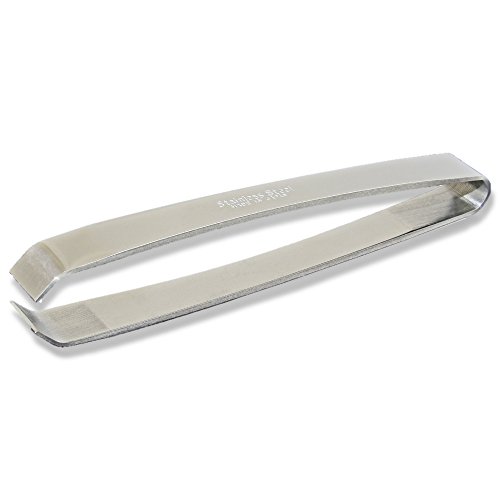
Handmade in Japan, this compact pair is built for cooks who debone delicate fish and care about the flesh as much as the bones. The curved jaws close around fine pin bones in trout, sea bass and mackerel without digging a crater into the fillet, and the non-slip grip keeps the tool steady when your hands are wet. At 4 3/4 inches it sits close to the work, suiting careful, bone-by-bone prep for sushi, sashimi and pan-fried fillets where a torn surface shows. Salmon and bass are named in the listing title itself.
Specs
- Length: 4 3/4 inches
- Material: stainless steel
- Origin: made in Japan, handmade
- Jaw form: curved
- Grip: non-slip precision grip
- Weight: about 18 g
- Care: dishwasher safe per the listing
Best for: fine, hair-thin pin bones in delicate fillets prepped for sushi or sashimi.
Watch out for: the short 4 3/4 inch length gives less leverage on thick salmon bones, so check the listing size against the fish you buy most.
ASIN: B01M8FHKOS
Rösle Stainless Steel Fishbone Tongs

Rösle takes the opposite route from fine-point tweezers: flat, wide grips with grooved ridges that close over pin bones of all sizes without snapping them. That makes this 5.9 inch tong a natural fit for salmon sides and other broad fillets, where bones are thick enough to need pressure spread across a wider jaw. The 18/10 stainless steel shrugs off salt and goes in the dishwasher afterwards, and the listing carries a lifetime warranty note. Cooks with larger hands, or anyone who finds narrow tweezers fiddly, will appreciate the tong format.
Specs
- Length: 5.9 inches
- Material: 18/10 stainless steel
- Grip form: flat, wide grips with grooved ridges
- Rösle article number: 120910
- Weight: approximately 50 g
- Care: dishwasher safe
- Warranty: lifetime warranty noted on the listing
Best for: thick pin bones in salmon sides and other large, sturdy fillets.
Watch out for: the wide tips are less precise than a needlepoint or curved tip, so confirm this format suits you if your usual catch is small, delicate fish.
ASIN: B0000YOLQA
iziusy 2 Pieces Fish Bone Tweezers, Flat and Slant

This two-piece set answers the most common beginner question by including both tip shapes: one flat pair for thicker bones and one slant pair for bones lying at an angle in the flesh. At 4.6 inches each, they are compact tools for smaller fillets and occasional deboning rather than whole-fish production. For a household equipping its first fish drawer, the pair format means you can learn which shape your hand prefers before spending more on a single specialist tool, and the second pair doubles as a backup when one is in the wash.
Specs
- Set contents: 2 tweezers, one flat tip and one slant tip
- Length: 4.6 inches
- Material: stainless steel
- Model number: 8541910293
- UPC: 826913807471
- Item weight: 1.41 ounces
Best for: first-time buyers who want both flat and slant tips in one purchase.
Watch out for: this is a two-pair set rather than a single tweezer, so check the listing contents carefully if you only want one specific tip shape.
ASIN: B077CY288Z
SIDAZON Fish Bone Pliers/Tweezers, 6 Inches, Bent Nose

Some bones, especially the thick row in large salmon or older fish, defeat tweezer tension entirely. This SIDAZON tool answers with a plier format: a 6 inch bent-nose design that brings leverage and an ergonomic grip to bones that need a committed pull. The curved nose reaches into the fillet at an angle while your hand stays above the board, and the stainless construction wipes down after the job. It is the heavy option in this roundup, better kept for stubborn work than for fine bones, which its wider jaws could tear free with too much flesh attached.
Specs
- Length: 6 inches
- Form: bent nose pliers with curved jaws
- Material: stainless steel
- Handle material: stainless steel
- Grip type: ergonomic
- Item weight: 2.39 ounces
- Listed use: fish de-boning
Best for: thick, stubborn pin bones in large fish that defeat standard tweezers.
Watch out for: plier jaws are wider than tweezer tips, so verify the jaw width on the listing if most of your fish are small and thin-boned.
ASIN: B0CLQY84JZ
Which One Fits Your Situation
You Debone a Salmon Side Every Week
Reach for the Rösle Fishbone Tongs. A weekly salmon routine means dozens of thick bones per fillet, and the wide grooved grips spread pressure so bones come out whole instead of snapping at the surface. The 5.9 inch length covers a broad side without repositioning your hand, 18/10 steel tolerates constant washing, and dishwasher cleaning keeps the habit sustainable.
You Prep Delicate Fish for Sushi and Sashimi
Choose the Kwizing tweezers. Presentation fish shows every mistake, and the curved Japanese jaws lift fine bones from trout or sea bass without gouging the flesh that diners will see. The short body keeps your fingers close for control, and the non-slip grip matters when you are working slowly through a fillet that must stay flawless.
You Are Buying Your First Pair
Start with the iziusy two-piece set. Because it includes one flat and one slant tweezer, you can discover which tip shape matches your hand and your usual fish before committing to a specialist tool. The compact 4.6 inch size suits the smaller fillets most beginners start with, and having two pairs means one is always clean and ready.
You Battle Thick Bones in Big Fish
Take the SIDAZON bent-nose pliers. When tweezer tension gives up on the heavy bone row of a large salmon or similar fish, plier leverage finishes the pull without repeated slipping. The 6 inch body and ergonomic grip let you lean into stubborn bones, while the curved nose still reaches bones seated deep along the centre line.
Common Mistakes
- Pulling pin bones straight up instead of drawing them out toward the head end of the fillet, following the angle they grew in, which snaps them and leaves the tip behind.
- Reaching for cosmetic or electronics tweezers, whose fine flexible tips bend under load and cannot hold a greased bone.
- Squeezing harder when a bone slips, rather than regripping closer to the flesh where the bone is widest and easiest to hold.
- Buying on length alone and ignoring tip shape, so a wide tong ends up crushing delicate fillets or a fine tip struggles through salmon.
- Putting tweezers away wet in a closed drawer, which spots the steel and can misalign fine tips over time.
Frequently Asked Questions
Should pin bones come out before or after cooking?
Before, in almost every case. Raw flesh holds its structure while you grip and pull, so bones slide out cleanly along their natural angle. Cooked fish flakes apart under the same pressure, and the bones fragment as the meat gives way around them. Deboning raw also lets you run a fingertip over the fillet afterwards and feel for anything missed.
What is the difference between flat and slant tips?
Flat tips meet squarely and clamp thicker bones across a broad edge, which suits salmon and larger fish. Slant tips are cut at an angle, letting the point slide under bones that lie nearly flush with the flesh while your hand stays clear of the fillet. Many cooks keep both shapes, which is why sets like the iziusy pair bundle one of each.
Are fishbone tongs better than tweezers for salmon?
For salmon, often yes. Salmon pin bones are thick and numerous, and a wide grooved tong spreads the clamping force so each bone pulls free whole instead of breaking. Fine tweezers still win on small fish, where a tong jaw is too broad to isolate one bone. The honest answer depends on your usual catch, which is why this guide includes both formats.
How do you clean and store fish tweezers?
Wash them soon after use, because dried fish residue hardens around the tip joint and dulls the grip. Dishwasher-safe models like the Rösle and Kwizing can go straight in; hand-wash pairs need warm soapy water and a thorough dry. Store them dry, ideally in a drawer divider or sheath, so the aligned tips are not knocked sideways by heavier utensils.
More from Amazon
Programs that pair well with the guide above. Offers and eligibility are set by Amazon and may change.
Set up recurring deliveries of everyday items on eligible products. Terms and savings are set by Amazon.
Explore Subscribe & SaveCollect the home and kitchen items you want in one registry that guests can shop from.
Create a wedding registryFree shipping on eligible items, Prime Video and more. Eligible new members can start with a free trial.
Start a Prime free trialAudiobooks and podcasts to listen to on the go. Eligible new members can start with a free trial.
Try Audible freeAs an Amazon Associate we earn from qualifying purchases.

Write Your Review
No reviews yet. Be the first to share your experience!