

Key takeaways
- HDMI eARC: lets a compatible soundbar receive higher-quality audio and simplifies volume control.
- HDMI 2.1: important for 4K gaming at up to 120Hz, although a television can advertise HDMI 2.1 while offering the feature on only one port.
- VRR and ALLM: reduce screen tearing and automatically switch to a lower-latency game mode.
- Optical audio: useful with older soundbars, but it supports fewer modern audio formats than eARC.
- Wi-Fi 5 or newer: sufficient for most 4K streaming; Ethernet is helpful if the TV is near a network cable.
- ATSC tuner: necessary for receiving over-the-air broadcast channels with an antenna. Verify the tuner type if local broadcast reception is important.
The best budget TVs for small living rooms are usually 43- to 55-inch models with a 4K LED or QLED panel, at least HDR10 support, three HDMI ports, and a price between roughly $250 and $550; choose a basic LED set for the lowest cost, a QLED for stronger color, or a budget Mini-LED model when contrast matters most.
Our top picks


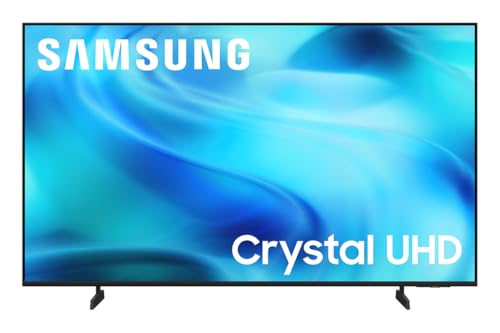
As an Amazon Associate we earn from qualifying purchases at no extra cost to you. Ratings are shown as listed on Amazon.
Quick picks by situation
| Situation | Best fit | Target specifications | Typical 2026 price range |
|---|---|---|---|
| Bedroom, studio, or compact kitchen | 43-inch 4K LED TV | 4K, HDR10, 60Hz, 3 HDMI ports | $220–$350 |
| Small living room with movies and streaming | 50- or 55-inch QLED TV | 4K, HDR10+, wide color, 60Hz | $300–$500 |
| Dark-room viewing and better contrast | Budget Mini-LED TV | 4K, local dimming, Dolby Vision or HDR10+ | $450–$700 |
| Console gaming on a limited budget | 4K gaming-oriented LED or QLED TV | 120Hz panel or 120Hz input, VRR, ALLM, HDMI 2.1 | $450–$700 |
What makes a budget TV good for picture quality?
Picture quality depends on more than resolution. A 4K television has 3,840 × 2,160 pixels, but panel contrast, brightness, processing, viewing angle, and HDR performance determine whether those pixels look impressive.
LED: the affordable baseline
Most inexpensive televisions use an LCD panel with an LED backlight. These models are generally thin, efficient, and easy to find in 43- to 55-inch sizes. They are a sensible choice for daytime viewing, news, sitcoms, and ordinary streaming.
The main limitation is contrast. Dark scenes can look gray, especially on an IPS-style panel or on a set without local dimming. A VA-style panel typically produces deeper blacks, although its image may lose brightness and color accuracy when viewed from the side. If the sofa is directly in front of the television, VA is often the better budget compromise.
QLED: more color without an OLED price
QLED is still an LED-backlit LCD television, but it adds a quantum-dot color layer. In practical terms, a QLED model can produce a wider, more saturated color range and often reaches higher brightness than a basic LED set. It does not automatically guarantee better black levels, so compare local-dimming features and contrast rather than choosing solely by the QLED label.
Examples of widely available budget QLED families include the TCL Q6 and QLED models from Hisense, Samsung, and Vizio. Exact features vary by screen size and model year, so confirm the specification sheet before buying.
Mini-LED: the contrast upgrade
Mini-LED televisions use many smaller backlight elements, allowing more precise local dimming than conventional LED sets. This can make black bars, night scenes, and shadows look more convincing. They are often the strongest picture-quality choice below premium OLED pricing.
However, Mini-LED is not magic. Bright objects on a dark background may produce a visible halo, known as blooming, and inexpensive models can have uneven dimming behavior. They are most valuable when you watch films in a dim room rather than in direct sunlight.
OLED: excellent picture, less often a budget pick
OLED provides individually lit pixels, excellent black levels, and wide viewing angles. It is usually more expensive than the budget category, particularly in smaller sizes. An entry-level OLED can be worthwhile for a film-focused buyer, but it is not normally the best value when the priority is low purchase cost and a compact secondary room.
Resolution and HDR: what you actually need
For almost every new purchase, 4K is preferable to 1080p. A 43-inch 4K TV viewed from about 5 to 7 feet can show noticeably finer text and image detail than a comparable 1080p model. At very small sizes or longer viewing distances, the difference is less obvious, but 4K models usually offer better processors and newer smart-TV platforms as well.
HDR, or high dynamic range, is useful only when the TV has enough brightness and contrast to display it properly. Look for HDR10 as a baseline. HDR10+ and Dolby Vision can provide scene-by-scene or dynamic brightness instructions, but support varies by streaming service and content.
Do not pay a large premium for an HDR label alone. A low-brightness TV may accept HDR video while showing little visible improvement. For a small room with ordinary lighting, a television reaching approximately 300 to 500 nits is adequate for basic HDR viewing. Around 600 nits or more gives a stronger effect, especially for daytime use, while budget Mini-LED models may go higher in selected picture modes.
Connectivity matters more as the room gets smaller
A compact television may serve as the hub for a streaming box, game console, soundbar, Blu-ray player, and antenna. Three HDMI inputs are a practical minimum. Four are preferable if you expect to keep several devices connected.
- HDMI eARC: lets a compatible soundbar receive higher-quality audio and simplifies volume control.
- HDMI 2.1: important for 4K gaming at up to 120Hz, although a television can advertise HDMI 2.1 while offering the feature on only one port.
- VRR and ALLM: reduce screen tearing and automatically switch to a lower-latency game mode.
- Optical audio: useful with older soundbars, but it supports fewer modern audio formats than eARC.
- Wi-Fi 5 or newer: sufficient for most 4K streaming; Ethernet is helpful if the TV is near a network cable.
- ATSC tuner: necessary for receiving over-the-air broadcast channels with an antenna. Verify the tuner type if local broadcast reception is important.
Budget TV comparison by panel and features
| TV type | Common compact sizes | Typical refresh rate | HDR support to seek | Main advantage | Main compromise |
|---|---|---|---|---|---|
| Basic LED LCD | 32–55 inches | 60Hz | HDR10 | Lowest cost and broad availability | Limited contrast and color volume |
| QLED LCD | 43–55 inches | 60Hz, sometimes 120Hz | HDR10, HDR10+, sometimes Dolby Vision | Stronger color and brightness | Still uses an LCD backlight; blacks vary |
| Full-array LED | 50–65 inches | 60Hz or 120Hz | HDR10, often Dolby Vision or HDR10+ | More even brightness and better contrast | Thicker chassis and higher cost |
| Mini-LED LCD | 50–65 inches | 60Hz or 120Hz | HDR10, HDR10+, often Dolby Vision | Best budget-level contrast | Possible blooming and processing inconsistencies |
How to choose the right size for a small room
Measure the distance from your eyes to the screen, not from the wall to the sofa. A useful starting point is:
- 32 inches: approximately 4 to 6 feet away.
- 43 inches: approximately 5 to 8 feet away.
- 50 inches: approximately 6 to 9 feet away.
- 55 inches: approximately 6.5 to 10 feet away.
These are comfort ranges rather than strict rules. A 55-inch screen can work in a small living room if the viewing distance is around 7 feet, but it may dominate a narrow space. Also measure the stand width: many 50- to 55-inch televisions need roughly 36 to 48 inches of furniture space, depending on their feet.
Ownership realities that affect value
The first component likely to cause frustration is often not the panel but the software. Low-cost smart TVs may become slower after updates, show more promotional content, or take longer to open apps. A television with a responsive operating system and regular security updates can be a better long-term purchase than a slightly brighter model with poor software.
Backlight uniformity is another lottery-like issue in inexpensive LCD sets. Look for pronounced bright corners, dark patches, or vertical bands during a return window. Avoid pressing or rubbing the screen during cleaning; use a dry microfiber cloth, and if necessary, a cloth very lightly dampened with distilled water. Never spray liquid directly onto the panel.
Heat and ventilation also matter. Leave several inches around the rear vents, avoid enclosing the TV tightly in a cabinet, and use a surge protector if the electrical supply is inconsistent. Excess heat can shorten the useful life of electronics.
A soundbar may be the next sensible upgrade. Budget TVs commonly have small downward- or rear-firing speakers. Before buying one, confirm that the television has HDMI eARC or optical output and that the soundbar supports the same connection. This avoids spending more on a television panel when the biggest daily weakness is audio.
Bottom line
For the lowest-cost small-room setup, choose a 43-inch 4K LED TV with three HDMI ports and HDR10. Spend more on a 50- or 55-inch QLED when color, brightness, and streaming are priorities. Choose a budget Mini-LED model when you watch films in a dark room and value contrast above the absolute lowest price. A 120Hz panel, VRR, and HDMI 2.1 are worth paying for mainly when gaming is a regular activity; otherwise, a well-equipped 60Hz 4K TV usually delivers the strongest value.








Write Your Review
No reviews yet. Be the first to share your experience!