

Key takeaways
- "Professional" is the most abused word in knife marketing. It appears on starter rolls, three-piece Damascus trios, and sixteen-piece blocks alike.
“Professional” is the most abused word in knife marketing. It appears on starter rolls, three-piece Damascus trios, and sixteen-piece blocks alike, and none of those titles prove that a set can survive a restaurant line. For a home buyer the phrase usually points to something narrower: knives that feel more serious than a supermarket block, with a heavier build, a sharper factory edge, and a design borrowed from the chef-knife tradition.
This guide is for the home cook who is ready to move up, the culinary student who needs a portable kit, and the gift buyer shopping for someone who talks about mise en place. The six sets below split into three styles: roll-bag kits that travel, short Japanese-pattern sets built around a few blades, and a block set for the counter. Each point comes from the product title alone, so confirm details on the full listing before you buy in 2026.
Quick Picks
Our top picks




As an Amazon Associate we earn from qualifying purchases at no extra cost to you.
| Product | Best for | Key spec from the title |
|---|---|---|
| Dfito 9-piece with roll bag | Portable kit | High carbon stainless, sharpener, red pakkawood handles |
| Japanese 3-piece Damascus set | Pattern-and-core seekers | 67-layer Damascus, VG10 steel core |
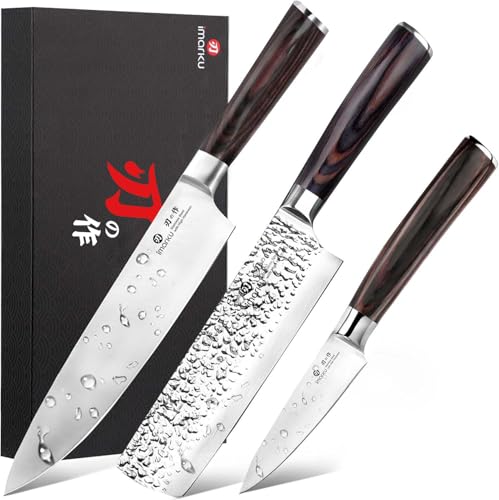
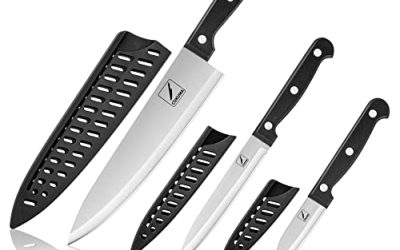
| imarku 3-piece | Minimal chef trio | Japanese HC stainless steel, pakkawood handle |
| Brewin CHEFILOSOPHI 5-piece | Mid-size Japanese-style set | Five pieces, red pakkawood handle, ergonomic design |
| DRGSKL 6-piece with bag | Steel-grade shoppers | Japanese ATS-34 steel, full tang, walnut handle |
| HOSHANHO 16-piece with block | Full counter setup | Japanese high carbon stainless steel, block included |
How to Choose
Separate real steel facts from adjectives
A title that names a steel, such as VG10 or ATS-34, gives you something to look up, because those are recognized knife steels with known behavior. Layer counts like 67-layer Damascus describe how the cladding was made and affect appearance more than cutting performance. Phrases like ultra sharp or professional are claims without a number. When two sets look alike, favor the one that publishes a steel name, a tang type, or a handle material. A listing that gives you three facts you can check is more trustworthy than one that gives you ten adjectives, and the difference shows up quickly when you line up the titles side by side.
Decide between a bag, a short set, and a block
A roll bag protects edges in transit and suits students, caterers, and anyone cooking at a friend’s house. A three- or five-piece set concentrates budget into a handful of good blades, which is how many working cooks buy. A block suits a permanent counter and holds more knives but gives you the least per-knife quality for the same spend. Match the format to how often you leave your own kitchen. If the answer is never, a bag is wasted money, and if the answer is often, a block is dead weight.
Check handle material and tang
Pakkawood handles are resin-impregnated wood, valued for resisting moisture better than plain wood. Walnut handles feel warm but need more care. A full tang, the metal extending the length of the handle, improves balance and durability; the DRGSKL title names it. If you have small hands, look for the word ergonomic, and if you chop heavily, a secure handle matters more than a pretty finish.
Know where lower-priced sets cut corners
Cheaper sets pad the count with items you may not need, like peelers, extra shears, or a sharpener of unknown quality. Blade thickness and rivet finishing are the quiet places where costs are trimmed. A shorter set from a maker that names the steel is usually the safer purchase than a large collection with only vague claims. Whichever you buy, hand washing and a dry storage spot will do more for longevity than any spec. Wipe each blade right after use, especially after cutting acidic foods such as citrus or tomatoes, which can stain and pit steel left damp.
The 6 Best Options
Dfito 9-Piece Chef Knife Set with Roll Bag
Dfito packs nine pieces into a roll bag with a sharpener, high carbon stainless blades, and red pakkawood handles. It is the grab-and-go kit, suited to cooks who want a set they can unroll in any kitchen.
- Strength: the roll bag protects the edges and makes the set portable.
- Strength: the included sharpener means upkeep travels with the knives.
- Trade-off: the title gives no steel grade, so you have only the general term high carbon stainless to go on.
Skip it if you want a block on the counter or a specific named steel. Cooks who never leave home may not use the bag. A culinary student or a weekend caterer will get the most from it, since the bag doubles as a protective case between classes or events.
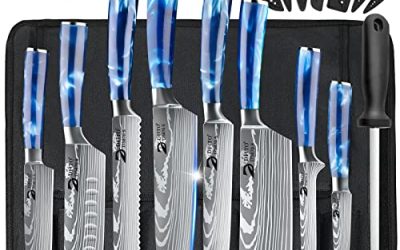
Japanese Chef Knife Set, 3-Piece, 67-Layer Damascus with VG10 Core
This trio centers on a 67-layer Damascus surface over a VG10 steel core, finished with ocean-blue ergonomic handles. It is a short set for buyers who prefer a few striking blades over a full roster.
- Strength: VG10 is a recognized knife steel, so the core material is something you can research.
- Strength: the layered Damascus pattern gives a distinctive look that suits display and gifting.
- Trade-off: with three pieces, you will likely need a separate bread knife and a way to store the blades.
Skip it if you want a bag, a block, or a sharpener in the box. Practical cooks should remember that the pattern is cosmetic and the core steel is what does the cutting. Because it has only three pieces, it also pairs well with an existing block, where a bread knife and paring knife are already covered.
imarku 3-Piece Japanese HC Stainless Steel Knife Set
imarku offers a three-piece set in Japanese high-carbon stainless steel with an ergonomic pakkawood handle. It is the simplest entry among the short sets, built around the core chef-style tasks.
- Strength: a three-piece lineup keeps the focus on a few blades you will use daily.
- Strength: the pakkawood handle is described as ergonomic, a good fit for long prep sessions.
- Trade-off: the title does not name a specific steel grade beyond Japanese HC stainless.
Skip it if you want a roll bag, a larger count, or a named steel. Shoppers who regularly break down whole chickens may want a boning knife added later. It makes a reasonable first upgrade for someone replacing a single worn chef knife and wanting two companion blades to match.
Brewin CHEFILOSOPHI Japanese Chef Knife Set, 5-Piece
The CHEFILOSOPHI set is a five-piece Japanese-style collection with red pakkawood handles and an ergonomic design. It sits between the minimal trios and the large kits and fits a cook who wants a few more roles covered.
- Strength: five pieces offer more range than a trio without the bulk of a block.
- Strength: red pakkawood handles give it a bold look and moisture-resistant handles.
- Trade-off: the title does not list a steel grade or storage solution.
Skip it if you need a bag or a sharpener included. Buyers seeking a detailed steel specification should compare it against the DRGSKL listing. A cook who values how a set looks on the counter or in a gift box will appreciate the handle color, which is more distinctive than the plain black of many rivals.
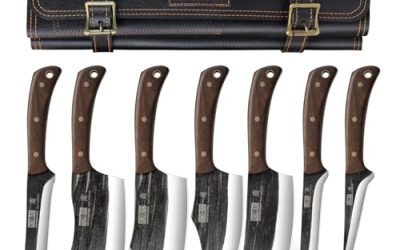
DRGSKL 6-Piece Chef Knife Set with Bag
DRGSKL stands out for naming its steel: Japanese ATS-34, with full-tang construction and an ergonomic walnut handle. The set comes with a bag, so it travels well.
- Strength: ATS-34 is a named steel, which lets you compare it against other knife steels.
- Strength: full-tang construction and a walnut handle point to a balanced build.
- Trade-off: wood handles benefit from more careful drying than resin-based ones.
Skip it if you want a block, a sharpener, or a dishwasher-friendly routine. Cooks who value spec transparency will find it one of the more informative listings here. A bag also means the knives can be tucked away from children, a point that appeals to families with small kids in the house.
HOSHANHO 16-Piece Knife Set with Block
The HOSHANHO is the counter-friendly option: sixteen pieces and a block, built from Japanese high carbon stainless steel. It targets someone who wants a complete kitchen from a single set rather than a curated few.
- Strength: sixteen pieces and a block cover tasks from prep to serving.
- Strength: Japanese high carbon stainless steel is named in the title.
- Trade-off: a large count spreads quality thinner, and the block takes real counter space.
Skip it if you want a portable kit or prefer a short, focused set. Cooks with limited counter space should measure before ordering. Because sixteen pieces includes extras beyond the core knives, a buyer should count how many of them match real cooking habits before accepting the bundle at face value.
Which One Fits Your Situation
You cook in different kitchens
The Dfito 9-piece with roll bag is the practical choice. The DRGSKL 6-piece is the alternative if you would rather carry a named steel.
You want a few excellent blades
Choose between the Japanese 3-piece Damascus set and the imarku 3-piece. The Damascus option offers a named VG10 core, while the imarku is the plainer pick.
You want a mid-size set that looks distinctive
The Brewin CHEFILOSOPHI 5-piece, with its red pakkawood handles, covers more tasks than a trio without crowding the counter.
You are furnishing a whole counter
The HOSHANHO 16-piece with block is the only listing that gives you a permanent home for the knives and a high piece count in one purchase.
Common Mistakes
- Treating the word professional as a spec; it is a marketing term without a measurement.
- Paying for a Damascus pattern and expecting it to improve edge performance by itself.
- Rolling knives up wet or storing them loose in a drawer.
- Buying a large set and finding that only three knives get used.
- Skipping a sharpener or honing plan, then blaming the steel when the edge fades.
What “Professional” Should Mean
Balance and grip
Working cooks often hold a chef knife with a pinch grip near the bolster, so the point where the blade meets the handle should be comfortable. A knife that feels heavy at the tip tires the hand over a long prep session; one balanced near the heel feels easier to control.
Ease of maintenance
A knife that stays sharp is only half the story. Professionals value steel that returns to a good edge quickly with a few strokes on a honing rod and a stone. Extremely hard steels can hold an edge longer but are more prone to chipping, which owners commonly report when such blades are twisted or used on bone.
Sanitation
Seamless handles and tight rivets matter in a busy kitchen because food gets trapped in gaps. This is one reason professional gear usually has simple, smooth handles rather than decorative ones.
Specs and Terms Explained
| Listing claim | What it usually tells you |
|---|---|
| Layered or Damascus | Cosmetic pattern over a core; the core steel sets performance |
| VG10 core | A hard, stain-resistant core steel common in Japanese-style blades |
| High carbon stainless | A broad label; look for a named grade |
| Full tang | Steel running through the handle for balance and strength |
| Hand sharpened | Describes a finishing step, not edge life |
Setup and Care Tips
- Hone before service or a big prep session, and keep a stone for periodic sharpening.
- Dry bag pockets before closing; trapped moisture invites rust on non-stainless steel.
- Dedicate your sharpest knife to produce and proteins, not cardboard or packaging.
- Store blades with guards if they are not in a block, and never leave them soaking.
A Short Pre-Purchase Checklist
- Name the steel. If the listing only says “premium”, treat the claim as unproven.
- Find out whether the set comes with a bag, guards or a block, and make sure it fits how you store knives.
- Decide how often you are willing to hone and sharpen.
- Compare blade lengths to your board size.
- Confirm that the handle shape suits your grip, especially if you have small hands.
Handle Fit Matters More Than Fashion
A knife you can hold comfortably for twenty minutes beats a prettier one that cramps your hand. If you have small hands, look for slimmer handles and shorter blades; if you have large hands, choose a handle with enough width to avoid knuckles scraping the board. Rounded edges along the spine also make the pinch grip more comfortable over a long prep session.
Who Should Skip These
If you want something you can toss in the dishwasher, a professional-style set will not forgive that. Casual cooks who open a knife block twice a week may find a premium trio more than they need, and those who dislike regular honing may prefer a simpler, softer steel that is easy to maintain.
Related guides
- Black Friday And Cyber Monday Kitchen Deals
- Knife Sharpener For Kitchen Knives
- Cuisinart Air Fryer Toaster Oven Review
Frequently Asked Questions
What does a VG10 steel core mean?
VG10 is a Japanese knife steel used as the hard core of laminated blades, with softer cladding on the outside. It is a recognized name, but the title alone does not tell you how well it is heat-treated.
Is a roll bag better than a block?
It depends on use. A bag protects knives in transport and saves space, while a block keeps them visible and ready on the counter.
Are pakkawood handles durable?
They are resin-impregnated wood, which resists moisture better than untreated wood. Hand washing and drying still extend their lifespan. Avoid soaking them in a sink, since standing water is hard on any handle joint.
How many knives does a professional-style home set need?
Three well-chosen blades, a chef knife, a utility knife, and a paring knife, cover most tasks. Additional pieces such as a bread knife are useful but not essential. Many working cooks build outward from a single chef knife over several years instead of buying a large bundle at once.
Write Your Review
No reviews yet. Be the first to share your experience!