

Key takeaways
- NSF/ANSI 42: Covers aesthetic effects such as chlorine, taste, and odor. It does not automatically mean the filter removes lead or other health-related contaminants.
- NSF/ANSI 53: Covers specific health-effect contaminants, such as lead or cysts, only when the manufacturer lists that contaminant for that model.
- NSF/ANSI 58: Applies to reverse-osmosis systems and can cover total dissolved solids and selected contaminants. The certified reduction list differs by product.
- NSF/ANSI 401: Addresses certain emerging contaminants, including some pharmaceuticals and personal-care compounds, when specifically listed.
- WQA or IAPMO certification: These organizations also certify filtration products. The key question is the standard and contaminant claim, not the organization’s logo alone.
The best countertop water filters in 2026 depend on what you need removed: choose a certified reverse-osmosis (RO) unit for the broadest reduction, a certified carbon system for better taste with less water waste, or a gravity pitcher-style filter for the lowest cost and simplest setup.
Our top picks


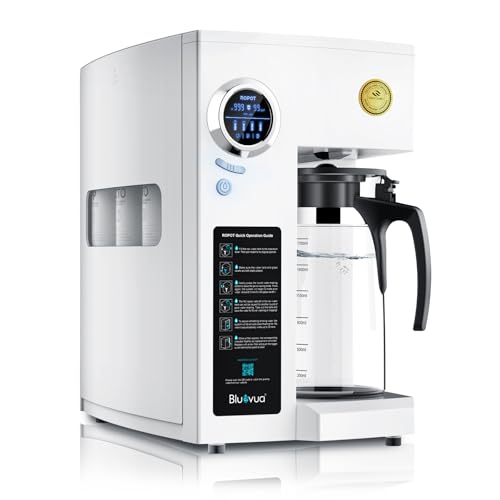
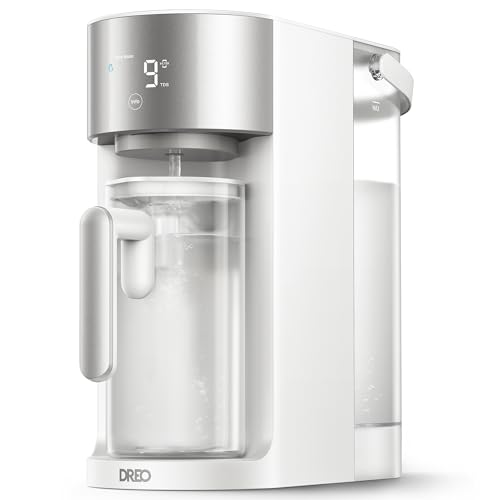
As an Amazon Associate we earn from qualifying purchases at no extra cost to you. Ratings are shown as listed on Amazon.
Quick picks by household need
| Household situation | Best fit | Why it fits | Main compromise |
|---|---|---|---|
| Small kitchen, occasional use | Gravity pitcher or dispenser | Usually 8–12 cups of filtered capacity, no plumbing, and easy storage | Slow refilling and limited contaminant claims |
| Daily drinking and cooking for one or two people | Countertop carbon block system | Fast dispensing, compact footprint, and no reject-water tank | Often does not reduce dissolved minerals, nitrate, or fluoride |
| Older plumbing or concern about dissolved contaminants | Countertop RO system | Multiple stages can reduce many dissolved solids, including contaminants covered by its certification | Higher price, slower production, and wastewater |
| Four or more people using filtered water all day | Larger RO reservoir or high-capacity dispenser | Less frequent refilling and enough water for bottles, cooking, and appliances | Uses more counter space and replacement filters cost more |
| Renter who cannot alter the faucet | Gravity unit or self-contained RO unit | Requires no permanent drilling or under-sink installation | Self-contained RO models still need a nearby electrical outlet |
What certification tells you
Certification is more useful than a long list of marketing claims. Look for the exact product or filter model in the certifier’s database, then match the contaminant claim to the standard.
- NSF/ANSI 42: Covers aesthetic effects such as chlorine, taste, and odor. It does not automatically mean the filter removes lead or other health-related contaminants.
- NSF/ANSI 53: Covers specific health-effect contaminants, such as lead or cysts, only when the manufacturer lists that contaminant for that model.
- NSF/ANSI 58: Applies to reverse-osmosis systems and can cover total dissolved solids and selected contaminants. The certified reduction list differs by product.
- NSF/ANSI 401: Addresses certain emerging contaminants, including some pharmaceuticals and personal-care compounds, when specifically listed.
- WQA or IAPMO certification: These organizations also certify filtration products. The key question is the standard and contaminant claim, not the organization’s logo alone.
A filter saying “tested to NSF standards” is not necessarily certified. If lead, PFAS, arsenic, nitrate, or fluoride matters to you, check your water report and select a model with a verifiable claim for that contaminant. A home water test or advice from your local health department can help identify what should be filtered.
Head-to-head: the main countertop filter types
| Filter type | Typical filtration | Typical flow or output | Reservoir size | Filter life | Installation |
|---|---|---|---|---|---|
| Gravity pitcher or dispenser | Activated carbon, ion exchange, or multi-stage media | About 0.1–0.5 gallons per hour, depending on water level | 7–24 cups | About 1–6 months; often 20–120 gallons | Fill by hand; no power |
| Countertop carbon block | Carbon block, sometimes with sediment or ion-exchange media | About 0.3–1.5 gallons per minute | Usually none; filters as the tap runs | About 500–2,000 gallons or 6–12 months | Faucet diverter or dedicated connection |
| Countertop RO | Sediment, carbon, RO membrane, and post-carbon stages | About 0.05–0.2 gallons per minute at the membrane; stored water dispenses faster | About 0.4–1.5 gallons of clean water | Pre-filters 6–12 months; membrane commonly 1–2 years | Fill tank manually; electrical outlet usually required |
| UV-plus-filter dispenser | Carbon or sediment filtration with ultraviolet treatment | Often 0.1–0.5 gallons per minute | About 0.5–1.5 gallons | Filter commonly 6–12 months; UV lamp varies by model | Water and power; follow sanitation instructions |
These are useful planning ranges rather than universal specifications. Filter life falls when incoming water is cloudy, hard, or heavily chlorinated, and flow rate falls as media becomes loaded.
Notable options and where they fit
AquaTru countertop RO systems
AquaTru’s countertop RO range is a strong choice when dissolved contaminants are the priority. The Classic countertop model is a self-contained, multi-stage RO system associated with NSF/ANSI 58 certification; the exact certified claims and replacement schedule should be checked against the model number. It uses separate clean- and tap-water reservoirs, so it does not require a faucet connection, but it needs counter space and an outlet.
RO is particularly useful when a water report points to elevated dissolved solids, lead, or other contaminants covered by the selected model’s certification. Its disadvantages are slower production, filter expense, and reject water. The unit also needs periodic tank and tray cleaning to prevent stale-water odors.
ZeroWater 5-stage systems
ZeroWater’s 5-stage pitchers and dispensers are designed for very low total dissolved solids, using ion-exchange media alongside carbon and other stages. They can be attractive for renters and people who want a simple, unplumbed setup. However, a TDS meter only measures dissolved conductivity; it does not prove that every contaminant is absent. Replace the filter when the manufacturer’s indicator or taste changes, rather than treating a low TDS reading as a complete water-safety test.
Brita pitchers and dispensers
Brita is a practical choice for chlorine taste, odor, and selected contaminant claims on particular filter lines. The important distinction is between Brita filter types: Standard, Elite, and other cartridges do not make identical claims or have identical capacities. Choose the cartridge with the certification and contaminant reduction you actually need, and do not assume that a Brita pitcher reduces fluoride, nitrate, or all PFAS unless the exact cartridge documentation says so.
Faucet-connected carbon systems
Countertop carbon-block systems from established water-treatment brands can deliver the best balance of speed and running cost for municipal water that mainly needs taste improvement. They typically have no holding tank and can dispense around a gallon per minute, but they occupy the faucet while operating. A diverter connection is usually removable, making this style suitable for many renters, although faucet compatibility must be checked first.
Calculate the capacity you actually need
Estimate daily demand before buying. For example, two people drinking three 16-ounce bottles each, plus 1.5 gallons for coffee and cooking, use:
2 × 3 × 16 ounces = 96 ounces = 0.75 gallons
0.75 + 1.5 = 2.25 gallons per day
A 10-cup pitcher holds only 0.625 gallons, so this household would need at least four full batches each day. A countertop RO unit with a 0.8-gallon clean-water reservoir would also require several cycles. A direct-flow carbon system would be more convenient if its certified contaminant claims match the household’s water needs.
For RO, also account for wastewater. If a system produces one gallon of clean water while sending two gallons to the drain, making 2.25 gallons can use about 6.75 gallons of tap water. Actual ratios vary by model, water pressure, temperature, and filter condition.
Installation and ownership details that matter
- Measure vertically, not just across the counter. Leave room to remove the lid or lift out the reservoir. A cabinet overhang can make a seemingly compact unit unusable.
- Use the correct water. Most countertop filters are intended for treated municipal water. Private-well owners should test for bacteria, nitrate, arsenic, and other local concerns before selecting a filter.
- Flush new cartridges. Carbon dust can cause gray water or an initial taste. Follow the manufacturer’s flushing volume instead of judging the cartridge after the first glass.
- Clean tanks and trays. Standing water, especially in warm kitchens, can develop odor and biofilm. Empty unused water, wash removable parts, and follow the product’s sanitation instructions.
- Replace filters on time. A clogged cartridge reduces flow and may allow water to bypass poorly in some designs. A filter that still tastes acceptable can nevertheless be beyond its rated capacity.
- Do not mix cartridge brands casually. A physically compatible cartridge may not have the same media, seal, or certification as the original.
Bottom line
For the broadest contaminant reduction, start with a certified countertop RO system such as an AquaTru model and accept its slower output, electricity use, and wastewater. For fast, economical improvement of chlorine taste, choose a certified carbon-block countertop filter. For the lowest upfront cost and zero installation, use a Brita or ZeroWater pitcher or dispenser after checking the exact cartridge claims. The best countertop water filters are the ones whose certified reductions, capacity, and maintenance demands match your water report and daily volume—not simply the ones with the longest feature list.





Write Your Review
No reviews yet. Be the first to share your experience!