

Key takeaways
- Brush the accessible chute and dosing area every few days if you grind oily dark roasts.
- Empty the hopper before long storage; oils can become sticky and stale.
- Vacuum loose grounds from the chamber rather than pushing debris deeper with a damp cloth.
- Remove and clean the upper burr according to the manual, commonly every few weeks or whenever the grind becomes inconsistent.
- Use grinder-cleaning pellets only as directed, then run a small amount of coffee through to clear residue.
- Never wash electrical parts or immerse burr carriers unless the manufacturer specifically permits it.
Best Commercial Coffee Grinders for Home Use
The best commercial coffee grinders for home use are usually compact café-style grinders with 55–65 mm flat burrs: choose the Eureka Mignon Specialità for quiet daily espresso, the Baratza Forte AP for a more versatile brew range, or a compact single-dose grinder such as the Niche Zero when retention and switching beans matter most.
A commercial burr set can improve grind consistency and service life, but “commercial” does not automatically mean better in a kitchen. Café equipment is designed for speed, repeated dosing, and a large counter. At home, noise, heat, cleaning access, static, retention, and the distance between the grinder and your cabinets can matter just as much as burr diameter.
Our top picks
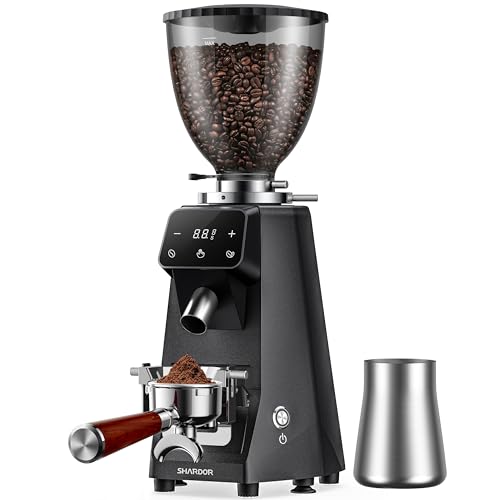
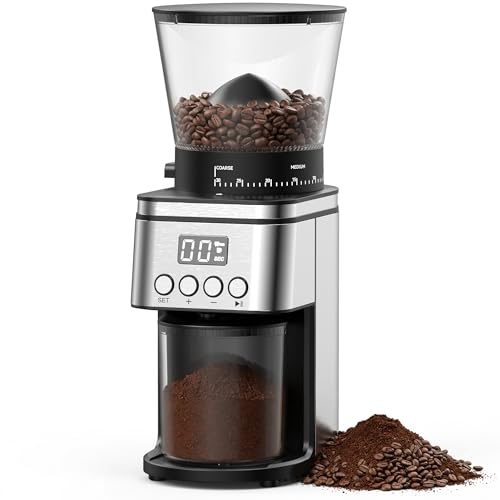


As an Amazon Associate we earn from qualifying purchases at no extra cost to you. Ratings are shown as listed on Amazon.
Quick comparison
| Grinder | Burr type and size | Approx. dimensions | Approx. weight | Best fit | Main limitation at home |
|---|---|---|---|---|---|
| Eureka Mignon Specialità | 55 mm flat hardened-steel burrs | 12 × 14 × 35 cm | 5.6 kg | Quiet, low-retention espresso | Less convenient for frequent brew-size changes |
| Baratza Forte AP | 54 mm flat ceramic burrs | 13 × 36 × 18 cm | 6.0 kg | Espresso and filter versatility | Relatively expensive and bulky for a home grinder |
| Baratza Sette 270 | 40 mm conical steel burrs | 13 × 24 × 40 cm | 3.2 kg | Fast espresso grinding and timed dosing | Noticeably loud; more plastic in the construction |
| Mazzer Mini Electronic | 58 mm flat steel burrs | 20 × 29 × 43 cm | 10 kg | Heavy-duty espresso use | Large footprint and substantial retained coffee |
| Niche Zero | 63 mm conical steel burrs | 31 × 15 × 42 cm | 4.1 kg | Single dosing and easy bean changes | Not a traditional high-volume commercial grinder |
Dimensions are approximate and can vary slightly by version, hopper, and catch-cup configuration. Allow additional vertical clearance for removing the hopper and adding beans.
Best choices by home situation
| Your situation | Most suitable type | Why | Compromise |
|---|---|---|---|
| One to four espresso drinks daily | Compact 55–65 mm flat-burr grinder | Stable grind adjustment, durable motor, quick dosing | Cleaning the chute is important to control retention |
| Espresso and pour-over in the same week | Single-dose grinder or stepped multi-purpose grinder | Less coffee remains when changing grind size | Single dosing adds weighing and bellows work |
| Shared kitchen or early-morning brewing | Low-speed compact grinder with sound-dampened housing | Lower perceived noise and less vibration | May grind more slowly than a café grinder |
| Very limited counter depth | Small conical-burr grinder | Often narrower and lighter than commercial café models | Some models produce more fines or have less precise adjustment |
| High-volume household or small office | 58–75 mm commercial flat-burr grinder | Fast output and motor designed for repeated doses | Heat, hopper size, noise, and retention become more noticeable |
What the commercial burr set changes
Larger burrs generally grind a dose faster and can reduce the time coffee spends exposed to motor heat. That does not mean a large burr automatically creates a better cup. Burr geometry, alignment, seasoning, grind adjustment, coffee freshness, and the brewer all affect the result.
For espresso, a 55–65 mm flat-burr grinder is often a useful middle ground. It can deliver repeatable fine settings without the size and electrical demands of a full café grinder. A 40 mm conical-burr model can also be excellent for espresso, particularly when speed and a small footprint matter more than maximum workflow refinement.
For filter coffee, the ability to make large grind changes without leaving old coffee behind is more important than a commercial label. A hopper-fed grinder may retain several grams in its chute and burr chamber. If you change from espresso to pour-over, that retained material can alter the first dose unless you purge it.
Noise, heat, and kitchen fit
Noise
Commercial motors and fast burrs can be loud even when the grinder operates for only 10 to 20 seconds. A grinder with a lower operating pitch may feel less intrusive than one with a higher-pitched motor, but published sound figures are not measured consistently enough for reliable cross-brand ranking. If noise matters, prioritize a slower, enclosed grinder and place it on a stable rubber mat rather than a resonant stone or hollow countertop.
Heat
For normal home volumes, heat is rarely a reason to reject a commercial burr set. The larger concern is repeated back-to-back grinding: a busy household or office can warm the motor and burr carrier, changing the grind slightly. Leave short cooling intervals during large batches and avoid running a grinder empty for extended periods. Do not put warm grounds into an airtight container until they have stopped visibly steaming or clumping from heat.
Footprint and clearance
Measure depth from the wall to the front edge of the counter, then add space for the portafilter, dosing cup, or grounds bin. Measure height with the hopper fitted, not merely the body. A 40 cm-tall grinder may not fit beneath cabinets if the hopper must be removed vertically. Large commercial hoppers also encourage keeping more beans exposed than you need; a smaller hopper or single-dose workflow protects freshness and reduces the visual footprint.
Dosing accuracy and retention
Timed dosing is convenient, but it is not the same as accurate dosing. Bean density, roast level, grind setting, static, and the amount left in the chute all affect the result. A grinder that dispenses 18.0 seconds of grinding may not deliver the same mass tomorrow.
For espresso, weigh the output during setup. If the target is 18 g, adjust the timer until the grinder consistently produces approximately 18 g, then recheck it when changing beans or grind size. A single-dose workflow is more controlled: weigh the beans before grinding, use a dosing cup, and compare the output. A small difference is normal, but a persistent shortfall indicates retention or grounds trapped in the chute.
As a practical example, suppose a grinder retains 1.5 g after each grind-size change. If you switch from espresso to filter and purge one full dose of 20 g, the purge uses about 18.5 g more coffee than the retained amount itself. At a coffee cost of $30 per kilogram, that extra purge costs about $0.56. Occasional switching is inexpensive; daily switching over a year can cost more than $200, making low-retention single dosing valuable for multi-bean households.
Cleaning access and ownership costs
The burrs are not usually the first part to fail. Home users more often encounter a clogged chute, worn adjustment threads, a damaged hopper, a tired declumper, or a switch and timer problem. Burrs gradually lose sharpness and may need replacement after substantial use, but the interval depends heavily on dose volume, roast debris, and whether stones or foreign objects enter the grinder.
- Brush the accessible chute and dosing area every few days if you grind oily dark roasts.
- Empty the hopper before long storage; oils can become sticky and stale.
- Vacuum loose grounds from the chamber rather than pushing debris deeper with a damp cloth.
- Remove and clean the upper burr according to the manual, commonly every few weeks or whenever the grind becomes inconsistent.
- Use grinder-cleaning pellets only as directed, then run a small amount of coffee through to clear residue.
- Never wash electrical parts or immerse burr carriers unless the manufacturer specifically permits it.
Easy access matters more than a polished exterior. A grinder with tool-free upper-burr removal and a short, visible chute is often easier to keep consistent than a larger machine that traps grounds behind a narrow exit. Check whether replacement burrs, hopper lids, declumpers, and adjustment parts are available in your market before buying.
Which grinder should you choose?
Choose the Eureka Mignon Specialità for quiet espresso
Its compact body, 55 mm flat burrs, stepless adjustment, and generally restrained operating noise make it a strong fit for a home espresso routine. It suits someone who keeps one main espresso setting and values a tidy, relatively quiet counter. Its weakness is workflow friction when switching repeatedly between espresso, moka pot, and filter settings.
Choose the Baratza Forte AP for broad brewing flexibility
The Forte AP is built around a more substantial grinder platform and offers useful control for both espresso and brewed coffee. It makes sense for an experienced user who wants repeatable dosing and does not mind a heavier machine. Its price and footprint are harder to justify if you make only one or two espresso drinks per day.
Choose the Niche Zero for bean changes and low retention
The Niche Zero is a home-oriented single-dose grinder rather than a conventional café hopper grinder. Its workflow is attractive when you alternate beans, roast levels, or brew methods. Expect to weigh doses, manage the single-dose cup, and use the grinder’s cleaning routine. It is a better answer to retention than to high-volume speed.
Choose the Baratza Sette 270 when speed and compactness dominate
The Sette 270 has a narrow body, fast grinding, programmable dosing, and espresso-focused adjustment. It can work well in a small kitchen, but the operating noise is a major limitation. Consider it when the grinder runs briefly and kitchen noise is acceptable.
Choose the Mazzer Mini Electronic for heavy-duty longevity
The Mazzer Mini Electronic is closer to a traditional café grinder: heavy, durable, and well suited to repeated espresso dosing. It is appropriate for a large household or small office with a permanent espresso station. Its retained coffee, hopper height, noise, and counter depth make it excessive for many kitchens.
Bottom line
For most homes, the best commercial coffee grinder is not the largest model available. Select a compact 55–65 mm burr grinder for a dedicated espresso setup, a single-dose design if you change beans often, or a versatile multi-purpose grinder if one machine must cover espresso and filter coffee. Before buying, verify the grinder’s measured height, clearance for hopper removal, replacement-burr availability, cleaning access, and likely retention. Those details determine whether a commercial burr set becomes a durable kitchen asset or an oversized source of noise and stale grounds.





Write Your Review
No reviews yet. Be the first to share your experience!