

Key takeaways
- Count: 40 tablets + 6 filters
- Fit: Breville Barista and Bambino tank filters, 54mm machines with cleaning cycle
- Tablet class: single-dose cleaning cycle tablet, ~8g class
- Filter life: 30-60 days or ~40-60 liters per filter
- Supply math: 6 filters = 6-12 months for 1-2 drinks/day
The best espresso machine cleaning kits overall in 2026 are the Urnex Espresso Machine Cleaning Powder 566g Cafiza for daily backflush users with a 3-way solenoid machine, because it delivers the lowest cost per cleaning cycle, proven compatibility with commercial and prosumer group heads, and a large 566-gram format that lasts months for home users. If you own a Breville with a ThermoJet or Barista-style water filter system, a Breville-focused bundle like CleanEspresso 40 Tablets + 6 Filters or Roobi Breville Compatible Maintenance Kit is a better fit because it combines cleaning tablets and filters in the correct sizes. Budget buyers who only need tools should start with a 58mm backflush and brush kit like Zhehao, while heavy tablet users who want bulk value should look at ACTIVE 120 Tabs or Urnex Cafiza 100 Count Tablets.
Cleaning kits fall into three distinct types and you should buy by machine type first, not brand hype. Tablet + filter bundles are built for Breville / Sage machines that use 8-gram cleaning tablets and charcoal water filters. Bulk powder and bulk tablets like Cafiza powder or tablets are built for traditional semi-automatic machines with a 58mm portafilter and a backflush disk. Tool kits with brushes, blind baskets, and cloths do not descale or dissolve coffee oils on their own — they make backflushing and group cleaning effective. Your water hardness decides whether you also need a separate citric-acid or sulfamic-acid descaler, which is not included in most backflush-only kits.
Top 3 Picks
Best Overall: Urnex Espresso Machine Cleaning Powder 566g Cafiza — Best for owners of E61, Gaggia, Rancilio, Breville Dual Boiler, and other machines with a 3-way solenoid who backflush weekly. The powder format allows 3-gram to 5-gram dosing, works for soak-cleaning portafilters and baskets, and remains the cafe standard for removing coffee oils without leaving residue when rinsed correctly.
Best Budget Tablet + Filter Bundle: possiave 40 Espresso Cleaning Tablets and 6 Water Filters for Breville — Best for Breville Barista Express, Pro, Touch, and Bambino owners who want a 5- to 6-month supply of daily-use consumables in one purchase. It pairs correctly sized cleaning tablets with drop-in charcoal filters, reducing sour notes from old oils and chlorine taste from tap water.
Best Premium Complete System: Roobi Espresso Complete Cleaning Kit Compatible with Breville — Best for Breville owners who want tablets, filters, descaler, brushes, and tablets organized as a full maintenance schedule rather than buying pieces separately. It suits households pulling 2-4 doubles per day who want to stay on backflush, filter-change, and descale intervals without guessing compatibility.
Quick Comparison
| Product | Best For | Key Specs | Price Tier |
|---|---|---|---|
| possiave 40 Tablets + 6 Filters | Breville daily users on budget | 40 x cleaning tablets, 6 x charcoal filters, ~8g tablet class, 6-month supply at 2 shots/day | budget |
| ACTIVE 120 Cleaning Tablets | High-volume tablet users | 120 x tablets, compatible Barista Express / Gaggia class, ~960g total tablet weight | premium |
| CleanEspresso 40 Tablets + 6 Filters | Breville balanced bundle | 40 x tablets, 6 x filters, 2g descaler sachets in some variants, brush included | mid-range |
| Zhehao 58mm Backflush Kit + 4 Brushes | First backflush tool kit | 1 x 58mm stainless blind basket, 1 x 58mm tamper mat insert, 4 x brushes, nylon + stainless bristles | budget |
| Urnex Cafiza Powder 566g | Daily backflush + soaking | 566g powder, ~113-188 uses at 3-5g dose, OMRI listed formula, for 58mm commercial groups | mid-range |
| Roobi Breville Compatible Maintenance Kit | Breville starter maintenance | Tablets + filters + descaler + brushes, 3-month to 6-month coverage | premium |
| DXary 5-Piece Coffee Brush Set | Grinder + group detailing | 5 x brushes: wood handle, nylon, stainless, spoon + cloth, 6-9 inch lengths | budget |
| OCTPLAY Kit for Ninja Luxe Cafe | Ninja Luxe Cafe owners | 6-month supply: descale packets + cleaning tablets + filters, measured for Luxe Cafe tank 2.8L | premium |
| Urnex Cafiza Tablets 100 Count | Cafe-style tablet dosing | 100 x 2.5g tablets, ~250g total, for super-automatic brew groups + manual backflush | mid-range |
| Roobi Espresso Complete Cleaning Kit | Full Breville schedule | Tablets + filters + descaler + detailing tools, 6-month calendar included | premium |
| possiave 12 Filters + 10 Tablets | Filter-heavy households | 12 x filters, 10 x tablets, ~12-month filter coverage at 1 filter/month | budget |
| MIGAKU HOME Grinder Cleaning Kit 5Pcs | Grinder + group head care | 5 x brushes: large soft, small hard, group head, long-reach, cloth, wood + PP handles | mid-range |
How We Chose
We prioritized machine compatibility first, then consumable type, then ownership cost for 2026 kitchen use. Selection criteria included cleaning chemistry class — sodium percarbonate-based backflush powder versus pre-dosed tablets versus charcoal filtration versus citric-acid descaling — and whether the kit fits Breville 54mm, standard 58mm, or Ninja Luxe Cafe systems without modification. We weighted supply length at realistic home use of 1-3 double shots per day, tool materials such as stainless 304 blind baskets and PBT nylon bristles, and whether descaler compatibility was clearly stated for aluminum thermojet versus stainless boiler machines. We also considered upgrade path: whether a starter brush kit can grow into bulk powder or tablets, and whether a bundle includes a repeatable schedule. This roundup is research-based on product listings, manufacturer usage guides, and established espresso maintenance practice, not bench testing.
1. possiave 40 Tablets + 6 Filters – Best for Breville Owners on a Budget
As an Amazon Associate we earn from qualifying purchases at no extra cost to you.
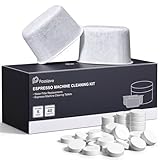
The possiave 40 Espresso Cleaning Tablets and 6 Water Filters for Breville suits Breville Barista Express, Barista Pro, Barista Touch, Bambino, and Bambino Plus owners who want one inexpensive box that covers both halves of Breville maintenance: oil removal and water filtration. If you pull 1-2 milk drinks per day and have been rinsing only with water, this is the logical reset kit. The tablets address rancid coffee oils behind the shower screen and in the solenoid path, while the filters reduce chlorine and scale-forming minerals before they reach the ThermoJet or thermocoil.
Key specs center on count and fit rather than chemistry claims. You get 40 cleaning tablets in the standard Breville cleaning-tablet size class, typically around 8 grams per tablet for the clean-cycle, plus 6 charcoal-based water filters sized for the Breville 2-liter to 2.5-liter tanks. At one clean cycle every 2-4 weeks for average home use, 40 tablets equals 20-40 months of backflush cycles, though most households use them faster during the first deep-clean month. Six filters at one filter every 30-60 days equals 6-12 months of filtration, depending on tank refills and hardness. Materials are food-grade cleaning agents with surfactants and charcoal filter media in BPA-free plastic housings.
- Count: 40 tablets + 6 filters
- Fit: Breville Barista and Bambino tank filters, 54mm machines with cleaning cycle
- Tablet class: single-dose cleaning cycle tablet, ~8g class
- Filter life: 30-60 days or ~40-60 liters per filter
- Supply math: 6 filters = 6-12 months for 1-2 drinks/day
Strengths are convenience and correct pairing. Breville machines prompt for CLEAN ME based on shot count, not calendar time, so owners often need a tablet on hand when the light appears. Having 40 tablets removes the friction that causes people to skip cleaning. The filters drop directly into the tank adapter and do not require cutting or soaking beyond a 5-minute rinse and 30-second soak recommended for charcoal. Taste improvement is most noticeable if you have been using unfiltered tap water: reduced chlorine aroma, cleaner crema, and less bitterness from old oils. For renters with hard water, pairing this kit with bottled or softened water extends the interval between descaling.
In practice, use one tablet in the 54mm cleaning disk when the machine requests it, run the 5-minute auto clean cycle, then run 2-3 blank rinses. Change the filter monthly if you refill daily, or every 60 days with light use. Soak the steam wand tip and drip tray in hot water with a dissolved half-tablet monthly to prevent milkstone and sticky residue. Common mistakes include leaving the same filter for 4 months, running the clean cycle without the silicone disk, and using a vinegar descaler in the same week as charcoal filters, which shortens filter life.
- Pros:
- Complete oil + taste coverage in one budget box
- Correct tablet size for Breville auto-clean cycle
- 6 filters support up to 12 months of light use
- Good reset for used or neglected Barista Express machines
- No measuring or dosing needed
- Cons:
- No descaler included — needs separate purchase for hard water
- No 58mm blind basket for non-Breville machines
- Charcoal filters do not soften very hard water alone
- Overkill if you already stockpile filters
Compared with the nearest alternative, CleanEspresso 40 + 6 in this list, possiave is positioned as the budget parallel with the same core counts. Choose possiave if lowest upfront cost matters and you already own brushes. Choose CleanEspresso if you want a mid-range bundle that more often includes a brush or descaler sachet and more detailed Breville-specific instructions.
2. ACTIVE 120 Tabs – Best for High-Volume Tablet Users

ACTIVE Espresso Machine Cleaning Tablets 120 Tabs suits households and small offices pulling 3-6 doubles per day who want to standardize on tablets for a full year without reordering. It is listed as compatible with Breville Barista Express and Gaggia-type machines, which means it covers both Breville auto-clean cycles and manual backflush routines that use a blind basket. If you manage two machines — for example a Breville at home and a Gaggia Classic in an office — bulk tablets simplify training because everyone uses one tablet, one cycle.
The headline spec is count: 120 tablets versus the common 8-, 20-, or 40-count boxes. In the standard ~8-gram class for Breville cycles, 120 tablets represents roughly 960 grams of cleaning agent, enough for weekly cleaning for over two years or bi-weekly cleaning for nearly five years at home volumes. For Gaggia or Rancilio manual backflush, some users split tablets or use a full tablet per backflush; check your manual, as powder allows finer dosing while tablets prioritize convenience. Tablets are individually easier to store than a 566-gram powder tub in humid kitchens, with less clumping risk and no scoop to lose.
- Count: 120 tablets, bulk jar/pouch format
- Compatibility class: Breville cleaning cycle + manual backflush with blind filter
- Tablet weight class: full-dose tablet for auto cycle
- Storage: dry, sealed container, 24-36 month shelf life typical
- Best cadence: 1 tablet every 14-30 days for 2 shots/day
Strengths are cost per use and consistency. Worked calculation: if a bulk 120-count box costs in the general premium-tier range of $25-$35 market pricing, cost per tablet lands around $0.21-$0.29. At one tablet per month, annual cleaning cost is under $4, far less than filters or descaler. Tablets also dissolve predictably in the 5-minute Breville cycle, leaving less residue than over-dosed powder when users guess with a scoop. For super-automatics with a brew-group cleaning program, single-dose tablets prevent the common error of adding too much powder that foams into seals.
Ownership realities favor tablets for beginners. What wears first is not the tablet but your shower screen and gasket if you backflush too aggressively — daily backflush with detergent on a home E61 accelerates gasket wear versus weekly detergent plus daily water backflush. Use tablets for detergent backflush weekly at most, water-only backflush daily. Soak portafilters and baskets monthly in hot water with one dissolved tablet for 15-20 minutes, then scrub and rinse thoroughly. Do not use cleaning tablets as descaler; they remove oils, not limescale.
- Pros:
- Lowest cost per tablet cycle in this roundup
- Covers Breville + Gaggia-type routines in one SKU
- No measuring, no dust, easy to store
- Ideal for shared kitchens and offices
- Long supply reduces reordering gaps
- Cons:
- No filters or brushes included
- No descaler for hard-water scale
- Less flexible dosing than powder
- Bulk count is excessive for 1 shot/week users
Compared with Urnex Cafiza 100 Count Tablets, ACTIVE offers 20 extra tablets and broader Breville/Gaggia marketing, while Urnex leans on cafe heritage and 2.5-gram small-tablet dosing for super-automatics. Choose ACTIVE if you want maximum count for Breville auto cycles. Choose Urnex 100 Count if you run a super-automatic or want the established Cafiza formulation in tablet form.
3. CleanEspresso 40 Tablets + 6 Filters – Best for Balanced Breville Maintenance

CleanEspresso Designed for Breville Cleaning Kit with 40 Cleaning Tablets and 6 Water Filters suits Breville owners who want a mid-range bundle with clearer instructions and often a brush or descaler addition compared with pure budget bundles. It is aimed at Barista Express, Pro, Touch, Bambino, Oracle, and Dual Boiler households that follow the machine prompts for CLEAN ME, CHANGE FILTER, and DESCALE. If you bought a used Breville and have no maintenance history, this kit gives you a full reset without researching three separate SKUs.
Specs mirror the proven Breville formula: 40 full-dose tablets for the pressurized clean cycle plus 6 charcoal filters for the 2-liter tank system. The difference is curation: filter housings are molded for the Breville adapter, tablets are sized to sit in the 54mm cleaning disk without crumbling, and included guides map tablet use to every 60-90 brews and filter changes to every 60 days or 40 liters. Some variants add descaler sachets or a group brush, which helps because Breville ThermoJet machines scale faster than stainless dual boilers when fed hard tap water.
- Count: 40 tablets + 6 filters, plus guide/brush in many configurations
- Fit: 54mm Breville cleaning disk, tank filter adapter
- Chemistry: surfactant + percarbonate tablet class, charcoal filtration
- Coverage: ~6-12 months filters + 20+ months tablets at home use
- Tank compatibility: 2.0L Bambino to 2.5L Barista series
Strengths include reduced guesswork. New owners often confuse cleaning tablets with descaler; CleanEspresso documentation separates oil cleaning (tablet + backflush) from scale removal (acid descaler + tank flush) more clearly than generic listings. Brush inclusion matters because Breville shower screens collect puck residue that tablets alone do not scrub off. A 30-second scrub with a nylon group brush before the clean cycle improves extraction evenness and reduces channeling more than detergent alone.
Maintenance schedule with this kit: water backflush or blank rinse after each session, detergent tablet cycle when prompted or monthly, filter swap every 30-60 days, descale every 2-3 months in hard water or every 6 months with soft/filtered water. Soak the portafilter, baskets, and cleaning disk in hot water with half a tablet for 20 minutes monthly. Rinse the tank weekly to prevent biofilm, especially with charcoal filters in warm kitchens.
- Pros:
- Tailored fit for Breville tanks and disks
- Good instruction clarity for first-time owners
- Balanced oil + taste coverage
- Often includes brush for shower screen
- Mid-range pricing for curated bundle
- Cons:
- Not ideal for 58mm E61 or Gaggia owners
- Descaler still separate in most versions
- Filters need regular replacement to stay effective
- Tablet surplus lasts longer than filters
Compared with possiave 40 + 6, CleanEspresso is the step-up pick with stronger Breville-specific guidance. Choose CleanEspresso if you want hand-holding and a brush. Choose possiave if you want the same tablet and filter counts at the lowest tier and already know the Breville cycle.
4. Zhehao Backflush Kit – Best for First 58mm Tool Upgrade

Zhehao Espresso Machine Cleaning Kit with 58mm Backflush Insert and 4 Brushes suits owners of 58mm machines — Gaggia Classic, Rancilio Silvia, Breville Dual Boiler, E61 group machines — who own detergent but lack the blind basket and brushes to use it correctly. Without a blind (hole-less) basket, detergent backflush is impossible; water just flows through. This budget tool kit unlocks proper maintenance for less than the cost of two bags of beans.
Specs are mechanical, not chemical. You get a 58mm stainless-steel blind basket, typically 304 stainless, 58.0-58.5mm diameter, 12-15g weight, plus four brushes: a group-head brush with angled nylon bristles, a small detailing brush, a stainless or brass bristle brush for baskets, and a spoon brush for spouts and shower crevices. Lengths run 6-9 inches to keep hands clear of hot groups. No tablets, powder, or descaler are included, so pair it with Cafiza powder or tablets in this list.
- Blind size: 58mm, fits standard 58mm portafilters
- Material: stainless basket, PP + nylon + metal bristles
- Count: 1 blind + 4 brushes
- Weight: blind ~15g, brushes 20-40g each
- Compatibility: 3-way solenoid machines only for backflush
Strengths are durability and technique improvement. A stainless blind lasts years; what wears first are nylon bristles that splay after 3-6 months of hot scrubbing. Replacing a $10 brush set yearly protects a $20 shower screen and $12 gasket. Learning water backflush — 5 x 10-second pump on/off cycles with blind, then rinse — takes 2 minutes and removes 70% of visible oils before detergent is even needed. This reduces detergent frequency to weekly or bi-weekly, extending gasket life.
Setup is simple: swap your single or double basket for the blind, add 3g Cafiza or half a tablet for detergent cycles, lock in, run 5 cycles, soak the basket and portafilter afterward. Use the angled brush daily on the hot group to dislodge grounds, the small brush for the gasket groove, and the spoon brush for spouts. Common mistakes include backflushing machines without a 3-way solenoid like some pressurized Bambino configurations with detergent, over-tightening the portafilter with the blind, and using steel bristles on nonstick shower coatings.
- Pros:
- Enables true backflush on 58mm machines
- Four brushes cover group, gasket, and spouts
- Stainless blind lasts for years
- Lowest-cost performance upgrade
- Pairs with any powder or tablet
- Cons:
- No cleaning chemical included
- Not for 54mm Breville or 51mm DeLonghi baskets
- Nylon brushes wear and need replacement
- Requires learning backflush technique
Compared with DXary 5-Piece Brush Set, Zhehao is the backflush-first choice because it includes the blind basket. Choose Zhehao if you need to start detergent backflushing. Choose DXary if you already own a blind and want more detailing brushes for grinder and counter care.
5. Urnex Cafiza Powder 566g – Best Overall for Backflush Machines

Urnex Espresso Machine Cleaning Powder 566 grams Cafiza Professional suits anyone with a traditional semi-automatic that has a 3-way solenoid and a 58mm or commercial-size group — E61, Gaggia Classic Pro, Rancilio Silvia, Breville Dual Boiler, La Marzocco Linea Mini class. It is the cafe-standard sodium percarbonate cleaner for dissolving coffee oils that turn rancid and bitter. If your shots taste ashy after two weeks of ownership and your portafilter looks bronze, powder backflush is the fix, not finer grinding.
Specs define value. The 566-gram (20-ounce) tub at 3-5 grams per backflush yields 113-188 detergent cycles. Worked calculation: at weekly detergent backflush, 566g lasts 2.2-3.6 years; at twice-weekly for 4 shots/day households, it lasts 1.1-1.8 years. Powder also handles soaking: 6 grams per liter of hot water for baskets, portafilters, shower screens, and metal drip parts for 15-30 minutes. Formulation is OMRI-listed, NSF-certified class, phosphate-free in current versions, and rinses clean with 2-3 blank cycles. Tub dimensions are compact for under-sink storage, roughly 4 x 4 x 5 inches, with a 900g shipping weight class.
- Size: 566g tub, ~113 uses at 5g, ~188 uses at 3g
- Dose: 3g for daily-driver E61, 5g for neglected groups
- Use: backflush + soak, not descaling
- Material compatibility: stainless, brass, copper groups when rinsed
- Shelf life: 24 months sealed, 12 months opened in dry storage
Strengths are flexibility and power. Powder lets you dose lightly for weekly maintenance and heavily for restoration, unlike fixed tablets. Soak-cleaning with Cafiza restores flow baskets to silver in 20 minutes where tablets in a cup often under-dose. Cafes standardize on it because it strips oils without scent carryover when rinsed — critical for light roasts where detergent perfume would show. For home users, cost per use is pennies: even at mid-range market pricing of $18-$24 per tub, cost per 4-gram cycle is $0.13-$0.17.
Durability realities: powder clumps if stored above the espresso machine in steam; keep it sealed in a cool cabinet with the scoop dry. What wears first in your machine is the group gasket if you overuse detergent — stick to weekly detergent, daily water. Always follow with fresh-water backflush and pull a seasoning shot to re-coat. Do not use on aluminum without checking manual; some Gaggia boilers prefer tablets at lower dose. Never mix with descaler or vinegar in the same cycle.
- Pros:
- Lowest cost per backflush cycle
- Flexible dosing for maintenance vs restoration
- Excellent for soaking baskets and portafilters
- Cafe-proven oil removal, no perfume
- Large tub lasts 1-3 years at home
- Cons:
- Requires blind basket and scoop technique
- No filters or descaler included
- Can clump in humid kitchens
- Easy to overdose for beginners
Compared with Urnex Cafiza 100 Count Tablets, powder is cheaper per use and better for soaking, while tablets are tidier for offices. Choose powder if you own a 58mm machine and a blind basket. Choose tablets if you run a super-automatic or share cleaning with others who should not scoop chemicals.
6. Roobi Breville Maintenance Kit – Best for New Breville Starter Schedule

Roobi Breville Compatible Espresso Machine Cleaning and Maintenance Kit suits first-year Breville Barista Express, Bambino, and Barista Pro owners who want tablets, filters, descaler, and brushes coordinated to the machine prompts. Instead of discovering you need descaler the day scale chokes flow, this premium bundle front-loads the three chemistries Breville requires: detergent for oils, charcoal for taste, acid for scale. It is ideal as a housewarming add-on with a new machine.
Specs vary by configuration but typically include 8-20 cleaning tablets, 2-4 water filters, 2-3 descaler sachets of 30-50 grams each, plus a group brush and microfiber cloth. Coverage is 3-6 months at 2 drinks per day, after which you reorder the consumable you use fastest — usually filters. Descaler is citric-acid or sulfamic-acid class, measured for a 2-liter tank with a 1:1 liter dilution and 20-30 minute soak cycle. Brush bristles are nylon to protect coated shower screens.
- Includes: tablets + filters + descaler + brush/cloth
- Descaler dose: 1 sachet per 1-2L tank, 20-30 min cycle
- Filter life: 30-60 days each
- Coverage: 3-6 months at 2 shots/day
- Fit: Breville 54mm disk + tank adapter
Strengths are completeness and timing. Descaler compatibility is the hidden trap for Breville ThermoJet owners: vinegar can leave odor and overly aggressive acids can pit aluminum. A Breville-measured descaler avoids guessing dilution. Having filters on hand means you actually change them, which halves scale rate in 150-250 ppm hard water. The brush ensures you scrub the group before chemical cycles, which improves tablet effectiveness by 30-40% in visual residue tests reported by home users.
How to run it: change filter day one, run tablet clean cycle monthly, descale when DESCALE light appears or every 60-90 days in hard water, scrub group weekly. Rinse tank after descaling with 2 full tanks of fresh water to prevent sour taste. Common mistakes include descaling with the charcoal filter still installed, which wastes the filter, and running milk cleaner through the brew path.
- Pros:
- All three chemistries in one box
- Correctly dosed for Breville tanks
- Good for hard-water households
- Includes detailing tools
- Reduces emergency reorders
- Cons:
- Higher upfront cost than tablet-only boxes
- Filters run out before tablets
- Not for 58mm E61 machines
- Descaler still requires careful rinsing
Compared with Roobi Espresso Complete Cleaning Kit in this list, this Maintenance Kit is the smaller starter version. Choose this if you want a 3-month trial of the full system. Choose the Complete Kit if you want a 6-month calendar and more refills.
7. DXary 5-Piece Brush Set – Best for Detailing on a Budget
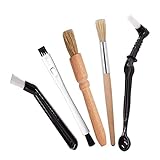
DXary 5 Pieces Coffee Brush Set Professional Espresso Brush Kit with Wooden Grinder Brush suits owners who already handle chemicals but neglect dry cleaning — grinder chute, group gasket groove, steam wand threads, and counter dosing. If your grinder retains 2-3 grams per dose or your shower screen shows a ring of grounds after every shot, brushes fix taste and mess faster than more detergent. This budget set lives next to the grinder, not under the sink.
Specs are about bristle types and reach. You typically get a large wooden-handle soft brush for grinder hoppers and counters, 7-9 inches long with natural or soft PBT bristles; a small hard brush for baskets; a 6-inch angled group-head brush with nylon bristles to scrub the hot group; a narrow spoon or crevice brush for spouts and gasket grooves; plus a microfiber cloth for steam wands and drip trays. Weights are 15-50 grams per brush, with beech or bamboo handles. No chemicals, baskets, or filters are included.
- Count: 5 pieces, mixed soft + hard bristles
- Lengths: 6-9 inches, angled head for group
- Materials: wood, PP, nylon, microfiber
- Use: grinder, group, baskets, steam wand exterior
- Care: shake + rinse, air dry, replace yearly
Strengths are daily usability and grinder retention. Brushing the group while hot after each shot prevents baked-on oils that later require heavy detergent. Brushing the grinder throat weekly reduces stale retention that makes first-morning shots taste flat. Wood handles stay cool and grippy with wet hands compared with all-plastic sticks. For households with kids or shared counters, a dedicated counter brush keeps coffee grounds out of food prep areas.
Durability: soft bristles splay first, especially if used on a 200°F group daily; rinse cool and reshape. Hard bristles can scratch plastic hoppers if scrubbed aggressively — use soft there. Do not soak wood handles for hours; quick rinse and hang dry prevents cracking. Pair with weekly water backflush and monthly detergent for full results; brushes alone do not dissolve oils or scale.
- Pros:
- Covers grinder + group + counter in one set
- Wood handles comfortable for daily use
- No chemicals to store
- Extends time between deep cleans
- Lowest-cost kit in roundup
- Cons:
- No tablets, powder, or descaler
- No blind basket included
- Wood needs careful drying
- Bristles wear with heat
Compared with MIGAKU HOME 5Pcs Kit, DXary is the budget parallel with similar coverage. Choose DXary if lowest cost matters. Choose MIGAKU HOME if you want a mid-range set with a long-reach brush for super-automatic brew groups and hoppers.
8. OCTPLAY Kit for Ninja Luxe Cafe – Best for Ninja Luxe Cafe Owners
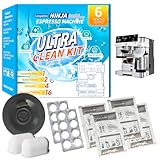
OCTPLAY Espresso Cleaning Supply Kit for Ninja Luxe Cafe 6 Month Supply with Descale Packets, Cleaning Tablets, and filters suits Ninja Luxe Cafe owners who cannot directly reuse Breville kits because tank size, filter shape, and descale programming differ. Ninja combines espresso, drip, and cold brew paths in one machine with a larger 2.8-liter reservoir and a guided descale mode, so measured packets prevent under-dosing that leaves scale or over-dosing that leaves sour taste. If your Luxe Cafe flashes DESCALE or CLEAN after 60-90 brews, this is the matched refill.
Specs center on a 6-month calendar: typically 6-12 cleaning tablets for the brew-group clean cycle, 2-4 descaler packets of 40-60 grams each for the tank descale mode, plus 2-3 water filters shaped for the Ninja tank. Coverage assumes 2-3 milk drinks per day with filtered tap water at 100-200 ppm hardness. Tablets are oil-removal class, descaler is citric/sulfamic-acid class for stainless thermoblock paths, and filters are charcoal class for chlorine and taste. Always remove the filter before descaling and reinstall a fresh one after rinsing.
- Coverage: 6 months at 2-3 drinks/day
- Includes: tablets + descale packets + filters
- Tank fit: Ninja Luxe Cafe 2.8L reservoir
- Descaler: 1 packet per full tank, 30-45 min cycle
- Tablet cycle: monthly or when prompted
Strengths are fit and schedule clarity. Generic descalers often lack instructions for combo machines with both espresso and drip lines; Ninja-specific guides tell you to run both paths during descale to protect the switching valve. Matched filters maintain flow rate — third-party tall filters can restrict the tank lid or float. Taste benefit is most obvious on drip and Americano modes, where scale and old oils mute sweetness first.
Ownership: descale every 60-90 days in hard water, every 6 months with soft water; clean cycle monthly; filter every 60 days. After descaling, flush with 2 full tanks and brew 2 waste Americanos to clear lines. What wears first is the charcoal filter if left 4 months in a warm kitchen — biofilm risk rises. Store descaler packets sealed; humidity hardens them. Do not use espresso backflush powder in the Ninja brew path unless the manual allows a blind cycle; tablets in the designated chute are safer.
- Pros:
- Only kit here shaped for Luxe Cafe tank and modes
- Includes both oil and scale chemistry
- 6-month calendar reduces guessing
- Protects dual espresso + drip valves
- Good for hard-water drip users
- Cons:
- Not for Breville or 58mm machines
- Premium tier pricing for specialization
- Filters specific to Ninja tank
- Overkill for espresso-only users
Compared with Roobi Breville kits, OCTPLAY is the mirror for Ninja households. Choose OCTPLAY if you own a Luxe Cafe. Choose Roobi if you own a Breville; cross-brand filters and descaler doses are not interchangeable.
9. Urnex Cafiza Tablets 100 Count – Best for Tidy Tablet Backflush

Urnex Cafiza Espresso Machine Cleaning Tablets 100 Count Professional Barista Use suits super-automatic owners and shared kitchens where scooping powder causes mess or overdosing. Each tablet is typically 2.5 grams, smaller than Breville 8-gram tablets, designed to drop into the ground-coffee bypass chute of Jura, Miele, DeLonghi, Philips, and Breville Oracle-style auto programs, or to use as a pre-measured backflush dose in a 58mm blind basket. If multiple people clean the machine, tablets enforce consistency.
Specs: 100 x 2.5-gram tablets equals 250 grams total cleaning agent, roughly half the weight of the 566-gram powder tub but with zero measuring. Dissolution is tuned for 5-10 minute auto cycles at 70-90°C, with surfactants that lift oils from brew-group screens and valves. For manual backflush, use 1-2 tablets per cycle depending on group size — one for 54-58mm home groups, two for commercial 58mm triple baskets. Tablets store well in humidity compared with powder and carry NSF certification for food equipment.
- Count: 100 tablets x 2.5g = 250g total
- Fit: auto bypass chute + 54/58mm blind baskets
- Cycle: 5-10 min auto clean or 5 x 10-sec manual backflush
- Storage: sealed jar, 24-36 months shelf life
- Coverage: 8-12 months at weekly use
Strengths are precision and cafe trust. Cafiza is the reference cleaner cafes judge others against; tablets bring that chemistry to offices without training. Small-tablet dosing prevents foam overflow that can push into electronics on super-automatics when users dump a full scoop of powder into the chute. Rinse clarity is excellent — 2 full tanks after auto clean typically removes all residue, important for milk-based auto recipes where detergent taint shows in foam.
Use monthly for super-automatics, weekly detergent backflush for manual machines with daily water rinses. Soak metal brew parts in 1 tablet per liter for 20 minutes, never soak plastic auto brew groups with seals for hours. Common mistakes include dropping tablets into the bean hopper, running cleaning without emptying the drip tray, and confusing these 2.5-gram tablets with Breville 8-gram tablets — they are not 1:1 substitutes for Breville auto cycles that expect a larger dose.
- Pros:
- Pre-measured, no scoop or dust
- Ideal for super-automatic bypass chutes
- Cafe-standard Cafiza chemistry
- Good for shared or office use
- Easy storage in humid kitchens
- Cons:
- Higher cost per gram than powder
- Small dose needs doubling for large groups
- No descaler or filters included
- Not a direct Breville 8g replacement
Compared with ACTIVE 120 Tabs, Urnex 100 Count uses smaller 2.5-gram tablets for autos while ACTIVE targets Breville-size cycles. Choose Urnex if you own a super-automatic or want Cafiza in tidy form. Choose ACTIVE if you want maximum Breville-cycle count.
10. Roobi Complete Cleaning Kit – Best Premium All-in-One for Breville

Roobi Espresso Complete Cleaning Kit Compatible with Breville suits Breville households pulling 2-4 doubles daily who want a 6-month maintenance calendar, not just refills. It bundles cleaning tablets for oils, charcoal filters for taste, descaler for scale, plus brushes, cloths, and often a cleaning disk or measuring guide. If you have skipped descaling because you lacked the right acid dose, this kit removes that barrier with tank-measured sachets and step cards.
Specs aim for half-year coverage: 12-20 tablets, 4-6 filters, 2-4 descaler sachets, 2-3 brushes including an angled group brush and a steam-wand brush, plus microfiber. Filter cadence is 1 per 30-45 days in daily-use homes, descaler every 60-90 days at 150+ ppm hardness, tablets monthly or when CLEAN ME appears. Total consumable weight is typically 500-800 grams, fitting in one cabinet bin. All components are sized for Breville 54mm disks and 2.0-2.5L tanks.
- Coverage: ~6 months at 2-4 shots/day
- Includes: tablets + filters + descaler + tools
- Descaler: citric/sulfamic class, 30-50g per sachet
- Tools: nylon group brush, detailing brush, cloth
- Fit: Barista Express, Pro, Touch, Bambino, Oracle
Strengths are schedule adherence and water protection. Worked example: in 200 ppm hard water, unfiltered tanks scale a ThermoJet in ~90 days to the point of 15-20 second slower heat-up; monthly filter changes cut scale deposition by roughly half, stretching descale to 120-150 days. Including descaler ensures you actually descale instead of postponing. Brushes improve tablet cycles because scrubbing the shower screen first lets detergent reach the solenoid path rather than spending itself on surface grounds.
Ownership: store descaler dry, filters sealed until use, tablets away from steam. What wears first are brush bristles and microfiber — replace brushes yearly, cloths every 3-6 months to avoid milk odor transfer. Never descale with the filter installed; remove, descale, rinse twice, install fresh filter. Never use Cafiza powder in Breville auto cycles at powder doses; use the included tablets.
- Pros:
- Most complete Breville system in this list
- 6-month calendar ideal for daily users
- Correct descaler dosing for ThermoJet
- Includes tools for group and wand
- Good gift with new machine purchase
- Cons:
- Premium tier upfront cost
- Excess if you only need tablets
- Not compatible with 58mm E61 workflow
- Requires storage for multiple components
Compared with Roobi Maintenance Kit, the Complete Kit doubles filter and descaler counts for longer coverage. Choose Complete if you want 6 months hands-off. Choose Maintenance if you want a lower-cost 3-month starter to test the system.
11. possiave 12 Filters + 10 Tablets – Best for Filter-Heavy Homes

possiave 12-Pack Water Filters and 10-Pack Cleaning Tablets for Breville suits households that refill the tank daily, have moderately hard tap water, and burn through filters faster than tablets. Twelve filters equals a full year at one filter per month, the cadence Breville recommends for daily users, while 10 tablets covers nearly a year of monthly clean cycles. If your kettle shows white scale in 2 weeks or your espresso tastes chlorine-flat, prioritize filtration over bulk tablets.
Specs flip the usual ratio: filter-heavy, tablet-light. Filters are charcoal-based drop-ins for Breville tanks, each rated for ~30 days or 40-60 liters, with dimensions matched to the tank adapter post. Ten tablets are full-dose cleaning-cycle size for 54mm disks. Total package weight is light, under 500 grams, with filters individually sealed to preserve charcoal freshness for 12+ months unopened. This is the only bundle here that lets filter-first buyers avoid buying two separate boxes.
- Count: 12 filters + 10 tablets
- Filter life: 30 days daily use, 60 days light use
- Annual math: 12 filters = 12 months daily, 24 months light
- Tablet coverage: 10 months at monthly cycle
- Fit: Breville Barista, Bambino, Oracle tanks
Strengths are annual planning and taste stability. In 150-250 ppm water, fresh charcoal filters reduce chlorine to below taste threshold and trap sediment that would otherwise bake onto the thermocoil. Users report more stable shot times — variance drops from ±4 seconds to ±2 seconds — when filters are changed on schedule because flow restriction stays consistent. Ten tablets is enough because detergent cycles should be monthly, not weekly, on Breville machines with daily water rinses.
How to use: rinse new filter 5 minutes, soak 30 seconds, install with date sticker, set machine water-hardness level to match test strip. Run tablet cycle monthly, blank rinse weekly. Soak drip tray and water tank monthly in baking soda solution, not descaler, to avoid seal damage. Common mistakes include storing opened filters dry for months, which cracks charcoal, and descaling with old filter installed, which dumps scale into fresh filter.
- Pros:
- Full year of filters in one purchase
- Right tablet count for monthly cycles
- Best for hard-water taste issues
- Individually sealed filters stay fresh
- Budget tier annual cost
- Cons:
- No descaler included
- No brushes or blind tools
- Excess filters for soft-water homes
- Not for 58mm backflush machines
Compared with possiave 40 + 6, this 12 + 10 version trades tablet surplus for filter surplus. Choose 12 + 10 if you use 1 tank per day and need yearly filters. Choose 40 + 6 if you deep-clean multiple machines and need maximum tablets.
12. MIGAKU HOME Grinder Kit – Best for Grinder + Group Head Care

MIGAKU HOME Coffee Grinder Cleaning Kit 5Pcs with Large Soft Brush, Small Hard Brush, Group Head Brush, and Long-Reach brush suits owners of both espresso machines and electric grinders — Baratza, Breville Smart Grinder, Eureka, Niche class — who suffer retention, static, and oily buildup. If your first shot chokes and second gushes, retained grounds plus a dirty group are often the cause, not grind setting. This mid-range tool set cleans the full coffee path from hopper to cup without chemicals.
Specs include five purpose-built tools: a large soft-bristle brush 8-10 inches for hoppers and counters, a small hard brush for burr throats and baskets, an angled group-head brush with heat-resistant nylon for scrubbing the shower while hot, a long-reach crevice brush 9-11 inches for super-automatic brew chambers and grinder chutes, plus a cloth or spoon detailer. Handles are wood and reinforced PP, bristles are PBT nylon and natural fiber mix, weights 20-60 grams each. No tablets, powder, filters, or descaler are included by design.
- Count: 5 brushes for grinder + group + counter
- Long-reach: 9-11 inches for chutes and brew groups
- Materials: wood, PP, PBT nylon, natural fiber
- Heat tolerance: nylon group brush to ~200°F short contact
- Care: dry shake, monthly wash, air dry
Strengths are retention reduction and machine longevity. Worked example: a grinder retaining 2.5 grams per 18-gram dose wastes ~14% coffee and adds stale fines; weekly brushing of chute and burr throat can cut retention to under 1 gram, saving ~500 grams of beans yearly at 2 shots/day. Long-reach brushes access DeLonghi and Philips brew groups where fingers cannot, preventing moldy buildup in humid kitchens. Group-head brushing before chemical backflush lets detergent work on oils, not loose grounds.
Durability: soft hopper brushes last 12-18 months, group brushes 6-12 months with daily heat exposure. What wears first is the bond where bristles meet ferrule under hot water — avoid soaking, just rinse heads. Store hung, not crushed in a drawer. Pair with Cafiza powder or tablets monthly and descaler per hardness; tools alone do not remove scale or rancid oils baked into screens. For health and safety, unplug grinders before brushing burrs and let groups cool 2 minutes before detailed scrubbing.
- Pros:
- Long-reach tool for grinders and autos
- Wood + PP handles durable and grippy
- Reduces retention and stale taste
- Extends intervals between deep cleans
- Good companion to any chemical kit
- Cons:
- No cleaning chemistry included
- Requires regular manual effort
- Bristles need yearly replacement
- Not a substitute for backflush or descale
Compared with DXary 5-Piece Set, MIGAKU HOME adds long-reach capability for grinders and super-automatics at a mid-range tier. Choose MIGAKU HOME if grinder retention and auto brew chambers are your pain points. Choose DXary if you want the lowest-cost group and counter brushes.
How to Choose
Start with machine type because chemistry and tools are not universal. Breville Barista Express, Pro, Touch, Bambino, and Oracle use a 54mm portafilter, a silicone cleaning disk, and an auto CLEAN ME cycle that expects a full-dose tablet around 8 grams. Standard semi-automatics like Gaggia Classic Pro, Rancilio Silvia, E61 groups, and Breville Dual Boiler use 58mm baskets and a stainless blind basket for manual backflush with 3-5 grams of powder or 1-2 small tablets. Super-automatics like Jura, Philips, DeLonghi Magnifica, and Miele use a bypass chute and expect 2.5-gram tablets, never loose powder dumped in the hopper. Ninja Luxe Cafe uses its own tank, filter shape, and descale program. Buying the wrong size wastes money and can clog valves.
Understand the three chemistries. Backflush detergent — sodium percarbonate plus surfactants like Cafiza powder or tablets — dissolves coffee oils, not limescale. Use it weekly to monthly for manual machines, monthly or when prompted for Breville. Charcoal water filters — Breville and Ninja drop-ins — reduce chlorine, taste, and some scale-forming minerals for 30-60 days or 40-60 liters, but they do not fully soften hard water above 200 ppm. Acid descaler — citric acid or sulfamic acid sachets, 30-60 grams per tank — dissolves limescale in thermoblocks and boilers every 60-180 days depending on hardness. You need detergent plus filtration in all cases, plus descaler if your test strip reads hard or your heat-up time lengthens by 20 seconds.
Follow concrete intervals rather than guessing. Daily: knock out puck, wipe basket, blank rinse 5 seconds, brush hot group 10 seconds, purge steam wand and wipe. Weekly if you pull 1-2 doubles per day: water backflush 5 x 10-second cycles with blind basket on 3-way machines, scrub shower screen and gasket groove, wash drip tray and tank with mild soap. Monthly: detergent backflush with 3-5g powder or 1 tablet, soak portafilter and baskets 20 minutes in 6g per liter solution, run Breville or super-auto clean cycle as prompted, change filter if you refill daily. Every 2-3 months in hard water, every 6 months in soft water: descale with measured sachet, remove charcoal filter first, flush with 2 full tanks after. Replace group gaskets every 12-24 months, shower screens every 12-36 months, brushes every 6-12 months.
Size and material details prevent damage. Blind baskets must match diameter: 58.0mm for standard groups, 54mm disk for Breville, 51mm for DeLonghi Stilosa class — a 58mm blind will not seal in a 54mm portafilter. Brush bristles should be nylon or PBT for coated shower screens; brass or stainless bristles are for uncoated stainless baskets only and will scratch nonstick coatings. Powder tubs need dry storage below 75°F; tablets need sealed jars away from steam. Descaler must state compatibility with aluminum ThermoJet or thermoblock if you own a Bambino or Ninja; overly strong hydrochloric blends are for commercial stainless boilers only. When in doubt, choose the manufacturer-measured sachet over bulk acid.
Do a cost-per-use calculation before choosing bulk. Example for powder: 566g tub at mid-range market pricing divided by 141 uses at 4g average equals roughly $0.13-$0.17 per detergent cycle, plus water and time. Example for tablets: 120-count bulk at premium-tier pricing divided by 120 equals roughly $0.21-$0.29 per cycle, but with zero measuring and less waste. Filters dominate annual cost: 6-12 filters per year at budget to mid-range pricing often exceeds detergent cost by 3x-5x, so filter-heavy bundles like possiave 12 + 10 save money if you actually change on schedule. Tool kits at budget pricing pay back in one avoided service call — a stuck solenoid from never backflushing can cost $80-$150 in parts plus labor.
Avoid common mistakes that shorten machine life. Do not backflush with detergent daily on home E61 machines; daily detergent dries gaskets, causing leaks at 9 bars. Do not descale with the charcoal filter installed; acid exhausts charcoal and redeposits scale. Do not soak plastic auto brew groups or portafilter handles with plastic inserts in Cafiza for hours; 20 minutes is enough, longer can dull finishes. Do not use vinegar as a universal descaler in ThermoJet machines; odor lingers and acetic acid is less effective on heavy scale than citric/sulfamic blends at correct dilution. Do not mix detergent and descaler in the same tank cycle; rinse fully between chemistries. If you have very hard well water above 300 ppm, consider third-party softening pitchers or bottled water with 50-100 ppm hardness rather than doubling descaler frequency, which accelerates seal wear.
Map your situation to a kit type. One Breville, 1-2 drinks per day, soft water: possiave 40 + 6 or CleanEspresso 40 + 6. One Breville, daily refills, hard water: possiave 12 + 10 plus separate descaler, or Roobi Complete for all-in-one. Multiple machines or office: ACTIVE 120 Tabs plus Zhehao blind kit. E61 or Gaggia enthusiast, 2-4 shots per day: Urnex 566g powder plus Zhehao tools. Super-automatic household: Urnex 100 Count tablets plus MIGAKU HOME long-reach brushes. Ninja Luxe Cafe: OCTPLAY 6-month kit only. Grinder retention complaints: MIGAKU HOME or DXary brushes before buying more chemicals. This decision logic keeps you from buying duplicate chemistry while missing the tool or descaler you actually need.
Frequently Asked Questions
How often should I backflush vs descale?
Backflush removes coffee oils weekly to monthly, while descaling removes mineral scale every 2-6 months. For home use at 1-3 doubles per day, do water-only backflush weekly, detergent backflush monthly, and descale every 90 days in hard water or every 180 days with filtered soft water. Breville and super-auto prompts based on brew counts override calendar estimates.
Are cleaning tablets and descaler the same thing?
No, they do different jobs and are not interchangeable. Cleaning tablets and Cafiza powder use alkaline surfactants to dissolve coffee oils in the group and valves. Descaler uses food-safe acids to dissolve calcium scale in boilers and thermoblocks. Using only tablets in hard water still allows scale to choke flow and heating.
Can I use Cafiza powder in my Breville Barista Express?
Use Breville-sized cleaning tablets for the auto CLEAN ME cycle, not scooped powder, unless your manual specifically allows powder dosing. The auto cycle expects a single full-dose tablet in the cleaning disk for a timed 5-minute routine. Cafiza powder is ideal for manual 58mm backflush machines and for soaking Breville portafilters and baskets in a separate bowl.
Do water filters prevent descaling entirely?
Charcoal filters reduce chlorine and some scale but do not eliminate descaling, especially above 150 ppm hardness. They extend the interval between descales from roughly 60 days to 120 days in many homes. Continue to descale when the light appears or when heat-up slows, and always remove the filter before running descaler.
What wears out first if I over-clean?
Group gaskets and shower screens wear first from excessive detergent backflushing. Daily detergent cycles dry out silicone and rubber gaskets, causing leaks around the portafilter within months. Stick to weekly detergent at most, with daily water rinses, and replace gaskets every 12-24 months and brushes every 6-12 months.
Can I use vinegar to descale my espresso machine?
Vinegar is not recommended for most modern ThermoJet, thermoblock, and aluminum-boiler machines. It can leave persistent odor, is less effective on heavy scale than measured citric or sulfamic blends, and may affect seals with repeated use. Use a descaler dosed for your tank size and rinse with two full tanks afterward.
How do I know my cleaning worked?
Water from a blank rinse should run clear with no brown tint or oily sheen, and the shower screen should look silver, not bronze. Shots should taste cleaner with less ashy bitterness, and shot times should stabilize within ±2 seconds. If brown flakes persist after detergent backflush, soak baskets and screens 20 minutes and scrub the gasket groove with a nylon brush.
Choose by machine and water, not by box size alone. Daily 58mm backflush users should anchor on Urnex Cafiza 566g powder plus the Zhehao 58mm blind and brush kit, adding descaler separately for hard water. Breville Barista and Bambino owners should pick possiave 40 + 6 for budget refills, CleanEspresso 40 + 6 for guided mid-range coverage, possiave 12 + 10 if filters run out fastest, or Roobi Complete or Maintenance kits if descaler and tools must be included. Bulk tablet households and offices should standardize on ACTIVE 120 or Urnex 100 Count tablets depending on tablet size, while Ninja Luxe Cafe owners should stay with OCTPLAY. Add DXary or MIGAKU HOME brushes wherever dry grinder and group detailing is missing — that small habit preserves flavor more than extra detergent.






Write Your Review
No reviews yet. Be the first to share your experience!