

Key takeaways
- Assemble on a level surface and leave every bolt slightly loose until the frame is aligned.
- Use a hand tool for final tightening; excessive force can strip aluminum threads.
- Check whether the feet are adjustable for uneven decks or pavers.
- For windy locations, favor a broad base, a heavy frame, or a table that can be secured without damaging the deck.
- Do not place a glass tabletop on a frame with missing bumpers or loose supports.
The best outdoor coffee tables are weather-resistant aluminum or teak tables with a 16–18-inch height, enough surface area for your usual number of drinks, and a footprint that leaves comfortable walking space around your seating.
Our top picks
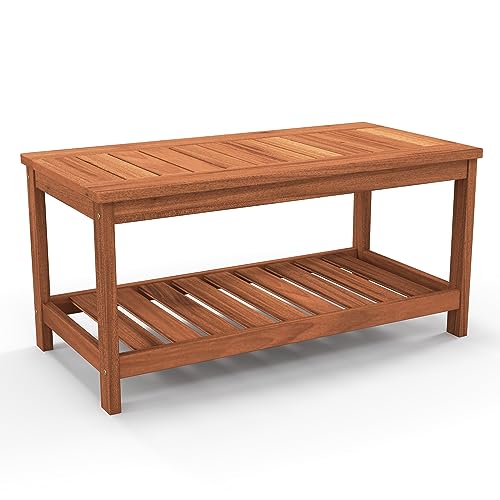


As an Amazon Associate we earn from qualifying purchases at no extra cost to you. Ratings are shown as listed on Amazon.
Quick picks by outdoor space
| Situation | Best table type | Useful size | Why it fits | Typical price range |
|---|---|---|---|---|
| Small apartment balcony | Folding or nesting metal table | 24–30 in. wide | Lightweight, easy to store, modest footprint | $60–$180 |
| Two-seat patio set | Compact aluminum or acacia table | 30–36 in. wide | Enough room for two drinks and a small tray | $100–$300 |
| Family patio | Slatted aluminum, teak, or all-weather wicker table | 42–48 in. wide | Supports snacks, serving dishes, and four to six seats | $200–$650 |
| Large deck or entertaining area | Wide rectangular table with shelf | 48–60 in. wide | More serving area and useful lower storage | $300–$900 |
| Frequent storms or strong wind | Heavy steel, teak, or weighted aluminum | 36–48 in. wide | Less likely to shift, though it is harder to move | $180–$750 |
How to choose among the best outdoor coffee tables
1. Start with height, not appearance
Most outdoor coffee tables are 16–18 inches high, which works with standard lounge seating. Measure from the ground to the top of your sofa or chair cushion. Ideally, the tabletop sits level with the seat or up to 2 inches lower. A table that is substantially higher feels like a dining surface; one that is much lower can make drinks and plates awkward to reach.
If you regularly eat outdoors, consider a lift-top table or a 19–21-inch model. For a balcony with café chairs, a 26–30-inch bistro table may be more suitable than a conventional coffee table. Do not select a low table simply because the product description calls it a coffee table; the surrounding furniture determines the right height.
2. Match surface area to the way you use it
A 24-inch square tabletop is adequate for two mugs and a small object, but it becomes crowded when you add a French press, plates, or a candle. A 30–36-inch square or round surface is a better everyday choice for two to four people. For a sectional or a seating arrangement with four or more users, look for at least 42 inches of width.
Measure the usable area rather than the advertised dimensions. A 48-inch rectangular table may have a generous top, but it can dominate a narrow deck. Leave at least 18 inches between the table edge and seating for legroom, and approximately 24–30 inches on the main walking side when the layout permits.
Worked sizing example: Suppose a balcony is 72 inches wide and you have a 60-inch sofa against one wall. A 30-inch-deep table leaves 12 inches between the table and railing if centered, which is too tight for comfortable passage. A 20–24-inch-deep rectangular table leaves 18–20 inches and is the safer fit. In this situation, a narrow table with a lower shelf is more useful than a large square model.
Material comparison: what survives outdoors?
| Material | Weather resistance | Typical weight | Maintenance | Common weakness |
|---|---|---|---|---|
| Powder-coated aluminum | Very good; does not rust | 15–35 lb | Wash with mild soap; inspect coating | Can blow over or dent more easily than steel |
| Stainless or galvanized steel | Good when coating and welds are intact | 25–60 lb | Dry after washing; watch for chips | Rust may begin at scratches, fasteners, or seams |
| Teak | Very good with suitable outdoor construction | 35–80 lb | Clean periodically; oil is optional, not mandatory | Turns gray and may crack if neglected or poorly made |
| Acacia or other hardwood | Moderate to good with regular sealing | 25–65 lb | Reapply exterior finish as directed | Needs more protection from standing water and sun |
| All-weather wicker over metal | Good if resin is UV-resistant | 20–45 lb | Brush debris from the weave; rinse gently | Strands can split or pull loose |
| Glass with metal frame | Good with tempered outdoor-rated glass | 30–70 lb | Clean frequently; check edge and frame | Shows pollen, water spots, and fingerprints |
Best overall material for low maintenance: powder-coated aluminum. It is light enough to move and will not rust, but choose a wide-leg design or one with a lower shelf if your deck is windy.
Best for a substantial, natural look: teak. It costs more initially and is heavy, but quality teak furniture can remain outdoors for years when water drains freely. Expect the color to weather from honey-brown to silver-gray unless you use a suitable outdoor finish.
Best budget compromise: powder-coated steel or acacia. Steel offers stability at a moderate price, while acacia can look like premium hardwood. Neither should be treated as maintenance-free.
Storage features worth paying for
A lower shelf is often more useful than a hidden compartment. It can hold a tray, unbreakable outdoor cups, or a folded cover while keeping the tabletop clear. Look for a shelf at least 8 inches above the ground so it is less exposed to splashback and easier to sweep beneath.
Hidden storage helps on balconies and small patios, but inspect its construction carefully. A sealed compartment can trap moisture against cushions or serving items. Ventilation holes, a slightly raised base, and a water-shedding lid are more important than maximum capacity.
Lift-top designs provide a higher eating surface, but their hinges and gas struts are additional failure points. Choose one with rust-resistant hardware and a mechanism that locks securely. A removable tray is simpler and usually easier to maintain.
Assembly difficulty and stability
Simple four-leg tables generally require attaching the legs and take about 15–30 minutes with basic tools. Tables with shelves, adjustable feet, lift tops, or woven panels may take 45–90 minutes. Assembly time is less important than alignment: an uneven frame can cause wobbling, premature stress at the joints, and water pooling on the top.
- Assemble on a level surface and leave every bolt slightly loose until the frame is aligned.
- Use a hand tool for final tightening; excessive force can strip aluminum threads.
- Check whether the feet are adjustable for uneven decks or pavers.
- For windy locations, favor a broad base, a heavy frame, or a table that can be secured without damaging the deck.
- Do not place a glass tabletop on a frame with missing bumpers or loose supports.
Decision matrix for a confident purchase
| Your priority | Choose | Avoid | Reason |
|---|---|---|---|
| Lowest ongoing maintenance | Powder-coated aluminum | Unsealed softwood | Aluminum needs cleaning but not periodic staining or oiling |
| Small space and occasional use | Folding, nesting, or 24–30-inch table | Large fixed sectional table | Storage and circulation matter more than maximum capacity |
| Frequent entertaining | 42–60-inch table with shelf | Very small round top | Extra surface reduces crowding and repeated trips indoors |
| Beginner assembly | Welded frame with four attached legs | Lift-top or multi-panel construction | Fewer joints mean fewer alignment and maintenance issues |
| Windy deck | Heavy steel, teak, or weighted aluminum | Very light hollow furniture | Stability is more valuable than effortless portability |
| Limited budget | Coated steel or acacia in a simple design | Decorative mechanisms and specialty finishes | Frame quality and drainage matter more than extra features |
Durability and ownership realities
The first parts to wear are usually finish edges, fasteners, adjustable feet, wicker strands, and lift-top hardware—not the central tabletop. Inspect the underside before buying. Drainage gaps, capped tube ends, and stainless or corrosion-resistant fasteners are strong indicators of outdoor-oriented construction.
Clean most surfaces with water, a soft brush, and mild dish soap. Avoid abrasive pads, chlorine-based cleaners, and pressure washing close to joints or woven material. Dry the table after cleaning, especially if it has steel hardware. Never allow wet leaves, plant pots, or damp textiles to sit on wood for long periods.
Use a breathable cover only when the table is dry. A tightly fitted impermeable cover can trap condensation and encourage mildew or finish damage. In freezing climates, store glass tops and lightweight tables in a protected area when possible. For wood, follow the manufacturer’s guidance on cleaning and exterior sealers; applying oil over dirt or moisture can leave a sticky, uneven surface.
Bottom line
For most patios, the best outdoor coffee tables are 30–48 inches wide, 16–18 inches high, and made from powder-coated aluminum or well-constructed teak. Choose a narrow folding table for a balcony, a heavy low-maintenance frame for a windy deck, and a larger shelf-equipped design when the table will serve as a regular entertaining station. Prioritize correct dimensions, drainage, stable hardware, and easy cleaning over decorative features that add complexity without improving daily use.








Write Your Review
No reviews yet. Be the first to share your experience!