

Key takeaways
- Buying a filter for hard water when the real problem is calcium scale. Most shower filters do not soften water or remove dissolved hardness minerals.
- Choosing a cartridge with no published replacement part or capacity.
- Ignoring the shower’s existing flow restrictor and blaming the filter for low pressure.
- Assuming more media stages automatically mean better chlorine reduction.
- Leaving a cartridge installed far beyond its rated life because the water still looks clear.
- Using a shower filter as a solution for a known health-related water-contamination issue instead of obtaining appropriate water testing and professional advice.
The best shower head water filter for most homes is an independently certified or clearly specified inline filter using calcium sulfite for hot-water chlorine reduction, a standard 1/2-inch connection, and a replacement cartridge that costs roughly $10–$25 every 3–6 months.
That recommendation is less about a particular brand than about matching the filter media, flow rate, cartridge life, and installation arrangement to your water and showering habits. A shower filter can reduce some chlorine, sediment, and odor; it is not a substitute for a whole-house system, and it should not be assumed to remove every contaminant or make unsafe water safe.
Our top picks

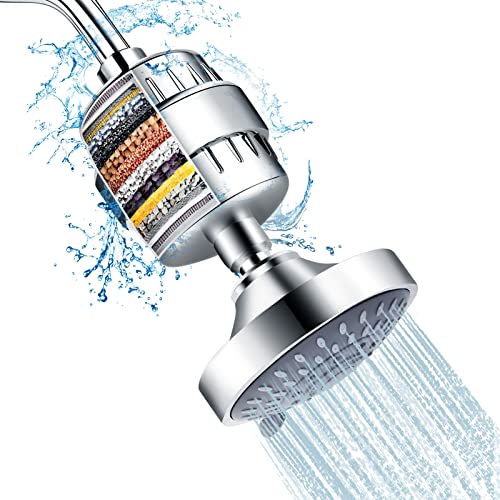

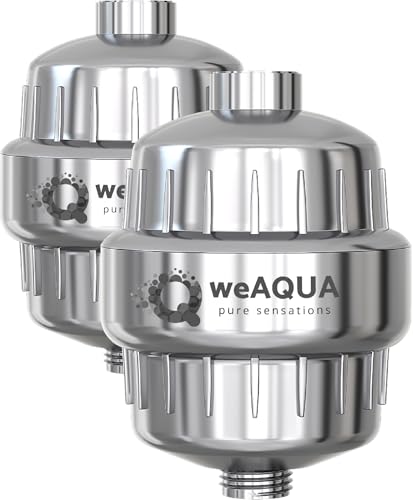
As an Amazon Associate we earn from qualifying purchases at no extra cost to you. Ratings are shown as listed on Amazon.
Best shower head water filters by buying situation
| Situation | Best choice | Why it fits | Main compromise |
|---|---|---|---|
| Lowest-cost trial | Inline filter with calcium sulfite | Usually $20–$45, compact, and compatible with an existing shower head | Shorter cartridge life and less protection from sediment |
| Hard-water odor or visible particles | Multistage filter with sediment media plus calcium sulfite | Better suited to water containing rust, sand, or pipe debris | Larger housing and potentially lower pressure |
| Rental or no-tools installation | Inline unit with universal 1/2-inch fittings | Installs between the shower arm and hose or shower head and can usually be removed later | Extra length may make the shower head project farther from the wall |
| Maximum convenience | Filter-and-shower-head combination | Fewer separate parts and a tidier appearance | You must replace the filter’s proprietary cartridge or the complete head |
| High-frequency household use | Large-capacity inline housing with an available replacement cartridge | Lower cost per shower when several people use it daily | Higher initial cost and more visible hardware |
Filter media: what each layer actually does
Calcium sulfite
Calcium sulfite is commonly used for chlorine reduction because it reacts with chlorine quickly, including in warm shower water. It is often a better fit than ordinary activated carbon in a compact shower filter, where contact time is brief. Look for a stated media quantity rather than only the phrase “multi-stage.”
Activated carbon
Carbon can reduce chlorine, odors, and some organic compounds, but performance depends heavily on carbon type, quantity, water temperature, and flow rate. Hot water and rapid flow reduce contact time. Carbon is useful as part of a combination filter, but a small carbon bead cartridge should not be treated as equivalent to a large drinking-water filter.
KDF copper-zinc media
KDF media are often included to help manage chlorine and reduce conditions that support microbial growth inside the cartridge. KDF-55 is commonly associated with chlorine reduction, while KDF-85 is used more often for hydrogen sulfide concerns. A KDF layer does not turn a shower filter into a certified purifier.
Sediment screens and vitamin C
A fine mesh or sediment layer can catch particles that would otherwise clog the shower head. Vitamin C media can neutralize chlorine, but cartridges may require more frequent replacement and are sensitive to storage and water exposure. Treat “vitamin C” as a specific media choice, not proof of superior overall filtration.
Head-to-head comparison of common shower-filter formats
| Format or example | Typical media | Typical flow range | Typical cartridge interval | Typical replacement cost | Best use |
|---|---|---|---|---|---|
| Sprite High Output Universal Shower Filter | Chlorine-reduction media, commonly marketed around Chlorgon or related media depending on model | About 2.0–2.5 gallons per minute | About 3–6 months or 10,000–12,000 gallons, depending on model and water | About $15–$30 | Simple inline replacement for an existing shower head |
| Culligan WH-S200-C | Carbon-based cartridge with sediment filtration | About 2.5 gallons per minute | Often about 6 months or 10,000 gallons | About $15–$25 | Homes wanting a familiar housing-and-cartridge design |
| AquaBliss SF100 | Multistage media including sediment, carbon, and redox-style media | Commonly listed around 2.5 gallons per minute | About 4–6 months, depending on use and water quality | About $10–$25 | Budget buyers wanting several media layers |
| Filtered shower-head combination | Varies: carbon, calcium sulfite, KDF, or blended media | About 1.5–2.5 gallons per minute | About 3–6 months | About $15–$35, or replacement of the complete head | People prioritizing appearance and a single integrated unit |
These are market and manufacturer-specification ranges, not guarantees for every revision or cartridge. Confirm the current package label before buying, especially the stated flow rate, fitting size, media, and replacement number.
Do chlorine-reduction claims mean the same thing?
No. “Reduces chlorine,” “removes chlorine,” and “filters impurities” are not interchangeable claims. The useful details are the test method, contaminant named, percentage reduction, influent concentration, flow rate, and rated capacity. A claim measured at 1 gallon per minute may not apply when the shower runs at 2.5 gallons per minute.
Also distinguish free chlorine from chloramine. Calcium sulfite and many shower cartridges are primarily aimed at chlorine. If your municipal water report lists chloramine, choose a product with a specific chloramine claim or ask the manufacturer for supporting test data. A basic shower filter should not be purchased on the assumption that it removes lead, PFAS, bacteria, fluoride, or hardness minerals.
Flow rate versus filtration time
Flow rate affects both shower comfort and filtration performance. A 2.5-gallon-per-minute shower used for 8 minutes consumes about 20 gallons. A 1.8-gallon-per-minute head uses about 14.4 gallons for the same shower, saving 5.6 gallons each time but potentially providing less pressure.
Do not assume a filter with a high advertised capacity will last that many gallons in practice. Sediment, old plumbing, high chlorine levels, and multiple daily users can shorten cartridge life. A noticeable pressure drop is usually a sign of clogging, although loss of chlorine-reduction performance may occur before pressure changes become obvious.
Installation in six steps
- Check the connection. Most North American shower arms and heads use a 1/2-inch NPT-style connection, but verify the product and your plumbing before ordering.
- Remove the existing shower head. Use a wrench on the metal fitting, not on a plastic filter housing. Protect the finish with a cloth.
- Clean old thread sealant. Remove loose tape and mineral debris so the new washer can seat evenly.
- Install the supplied rubber washers. Many leaks result from a missing washer or from using excessive thread tape where the washer is meant to seal.
- Attach the filter in the correct direction. Follow the arrow or inlet marking. Hand-tighten first, then make only a small additional turn if needed.
- Flush the cartridge. Run cold or lukewarm water for the time stated by the manufacturer, commonly 1–5 minutes, then check for leaks.
Avoid installing a shower filter where it will be forced to support a heavy shower head or handheld hose at an awkward angle. Use a separate wall bracket if the added length places stress on the shower arm.
Ownership costs and replacement timing
Suppose a $35 filter uses a $20 cartridge every four months. The first year costs about $95: $35 initially plus three $20 replacements. At one shower per person per day for a two-person household, that is approximately 730 showers, or about $0.13 per shower in the first year. A four-person household would reduce the cost to about $0.07 per shower, but would likely consume the cartridge faster.
Replace the cartridge at the rated interval, when the manufacturer’s capacity is reached, or sooner if pressure falls, the water develops an odor, or the cartridge shows heavy discoloration. Do not wash and reuse disposable media. Clean the housing and shower-head screen during replacement, and inspect the washers for flattening or cracking.
Common mistakes before buying
- Buying a filter for hard water when the real problem is calcium scale. Most shower filters do not soften water or remove dissolved hardness minerals.
- Choosing a cartridge with no published replacement part or capacity.
- Ignoring the shower’s existing flow restrictor and blaming the filter for low pressure.
- Assuming more media stages automatically mean better chlorine reduction.
- Leaving a cartridge installed far beyond its rated life because the water still looks clear.
- Using a shower filter as a solution for a known health-related water-contamination issue instead of obtaining appropriate water testing and professional advice.
Bottom line
Choose the best shower head water filter by starting with your water report and shower setup, not the number of filtration stages. For ordinary municipal chlorine concerns, a compact calcium-sulfite or combination-media inline filter with a 1/2-inch connection is usually the sensible choice. For sediment, prioritize a replaceable sediment stage and accept more frequent maintenance. Compare the real ownership cost over a year, confirm the claim applies to your flow rate, and replace the cartridge on schedule.





Write Your Review
No reviews yet. Be the first to share your experience!