

Key takeaways
- 20-32 mm: compact, light, and well suited to low-power scopes.
- 40-44 mm: the most versatile range for general-purpose rifles.
- 50-56 mm: useful for high magnification and dim conditions, but heavier and more demanding to mount.
The best rifle scopes match magnification, objective lens size, reticle design, eye relief, weatherproofing, and mounting height to the distance and conditions in which you actually shoot—not simply the highest magnification available.
Our top picks
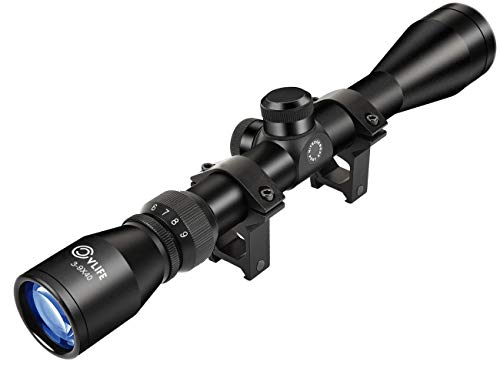

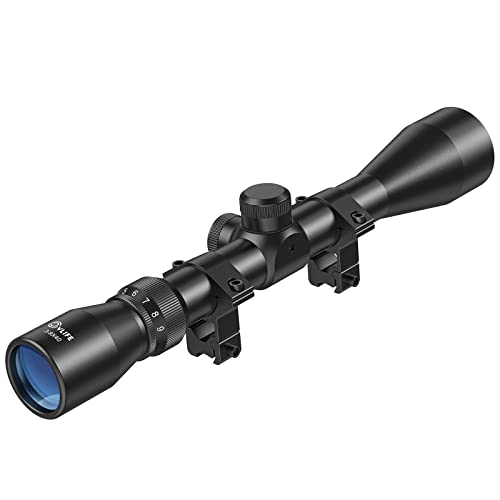
As an Amazon Associate we earn from qualifying purchases at no extra cost to you. Ratings are shown as listed on Amazon.
Quick picks by shooting situation
| Situation | Useful scope range | Objective lens | Reticle priority | Best scope type |
|---|---|---|---|---|
| Dense woodland and short distances | 1-4x or 2-7x | 20-32 mm | Fast, uncluttered center aiming point | Low-power variable or compact scope |
| General-purpose hunting | 3-9x or 2.5-10x | 32-42 mm | Duplex or simple BDC reticle | Versatile hunting scope |
| Mixed terrain and longer shots | 4-16x | 40-50 mm | Holdover or adjustable elevation references | Mid-power variable scope |
| Target shooting at known distances | 5-25x or 6-24x | 50-56 mm | First-focal-plane grid or fine hash marks | Precision-oriented scope |
These are practical starting points rather than rigid rules. A 3-9x scope can be more useful than a 6-24x model when the rifle is carried frequently, targets appear quickly, or the terrain rarely allows a long, steady shot.
What magnification range do you need?
Magnification determines how large the target appears through the optic. Low power provides a wider field of view and makes it easier to find a moving or nearby target. High power helps with aiming at small targets and judging precise holdover, but it narrows the field of view, makes wobble more noticeable, and can reduce brightness in poor conditions.
Close-range and woodland shooting
A 1-4x, 1-6x, or 2-7x scope is suited to short and moderate distances. At 1x or 2x, both-eyes-open shooting and rapid target acquisition are easier. These scopes are also generally lighter and shorter, which helps a rifle remain balanced during long periods of carrying.
All-purpose use
The familiar 3-9x configuration remains practical because it covers low-power aiming as well as moderate-distance precision. A 2.5-10x or 3-12x model offers a little more flexibility without the bulk of a high-power precision optic. For many hunting rifles, this is the most sensible range to buy first.
Longer-distance and target shooting
Scopes such as 4-16x, 5-25x, and 6-24x are designed for deliberate shooting from a stable position. They can reveal more detail at distance, but they are usually heavier, more expensive, and less forgiving of poor form. High magnification does not compensate for wind, an unstable rest, or an incorrectly zeroed rifle.
Objective lens size: brightness versus weight
The objective lens is the front lens, and its diameter is measured in millimeters. Larger objectives can transmit more light, particularly at higher magnification, but they add weight and may require taller mounting rings.
- 20-32 mm: compact, light, and well suited to low-power scopes.
- 40-44 mm: the most versatile range for general-purpose rifles.
- 50-56 mm: useful for high magnification and dim conditions, but heavier and more demanding to mount.
Exit pupil is a useful way to compare practical brightness. Divide objective diameter by magnification. For example, a 42 mm objective at 6x produces a 7 mm exit pupil, while the same scope at 12x produces a 3.5 mm exit pupil. Increasing magnification can therefore make the view appear dim even when the objective lens is relatively large.
A large objective is not automatically better. If it forces the scope too high above the bore, makes the rifle awkward to carry, or prevents a comfortable cheek weld, the optical advantage may be outweighed by poor handling.
Reticles: choose the aiming information you can use
A reticle should provide useful references without obscuring the target. The best rifle scopes for simple hunting applications often use a duplex reticle: thicker outer posts guide the eye toward a fine central crosshair. It is quick to understand and remains relatively uncluttered in low light.
A BDC, or bullet-drop-compensating, reticle adds aiming marks below the center. These marks are only approximate because their relationship to bullet drop depends on cartridge, bullet weight, velocity, sight height, and zero distance. Confirm every reference at the range rather than assuming the printed values will match your ammunition.
Mil-dot and graduated hash reticles are more flexible for estimating holdover and wind correction. They reward careful learning but can look busy to a new user. A first-focal-plane reticle maintains the same relationship with the target at every magnification; a second-focal-plane reticle changes apparent size while its subtensions are typically calibrated at one specified power.
Illumination can make the center easier to see against a dark or cluttered background. It does not turn an unsuitable scope into a night-vision optic, and batteries are another consumable to maintain.
Eye relief and field of view are safety and usability factors
Eye relief is the distance your eye can be from the eyepiece while still seeing a full image. A practical hunting scope commonly offers about 3.5 to 4 inches of eye relief. More generous eye relief is especially desirable on rifles with substantial recoil or for shooters who may not mount the rifle identically every time.
Too little eye relief can produce a painful impact from the scope during recoil. Too much can make the image difficult to acquire because the eye must be positioned very precisely. When comparing specifications, also check the field of view at both low and high power. A scope that shows 35 feet at 100 yards on low power will be much easier to use in close cover than one showing only 15 feet.
Weatherproofing and durability
For outdoor use, look for an aluminum tube, sealed construction, nitrogen or argon purging, and claims of waterproof, fogproof, and shock-resistant performance. These terms describe useful design features, but they do not mean the optic can be neglected.
- Keep lens caps on when the scope is stored or transported.
- Remove grit with a blower before wiping glass; dry particles can scratch coatings.
- Use lens-cleaning tissue or a clean microfiber cloth rather than clothing or paper towels.
- Check mounting screws periodically for movement, especially after transport or heavy recoil.
- Store the rifle and optic dry, and avoid sealing a damp scope inside a case for long periods.
External turret markings, rubberized eyepiece rings, and battery contacts are common wear points. A scope can remain optically clear while developing loose adjustment caps or damaged seals, so physical protection matters as much as the headline magnification.
Mounting considerations that affect accuracy
Choose rings or a one-piece mount that match the scope tube diameter—commonly 1 inch or 30 mm—and the rifle’s receiver or rail standard. Ring height should be as low as practical while allowing the objective bell, bolt handle, and lens caps to clear the rifle.
A 50 mm objective often needs medium or high rings, whereas a 32 or 40 mm objective may fit with low or medium rings. Higher rings can create an uncomfortable head position and inconsistent eye alignment. The mount must also suit the rifle’s recoil level and be installed according to the mount maker’s torque guidance; guessing torque or overtightening can deform the tube.
A sensible setup sequence
- Confirm that the rifle is unloaded and follow the firearm manufacturer’s safety guidance.
- Install the correct base or rail and inspect that all contact surfaces are clean.
- Place the scope in the rings, set the rifle in a stable position, and adjust eye relief at the highest magnification.
- Level the reticle with the rifle before tightening screws evenly in stages.
- Verify clearance around the objective, bolt, safety, and charging or loading controls.
- Zero at a safe, appropriate range, then confirm the point of impact at the distances and magnifications you intend to use.
Mounting is not finished when the reticle appears centered. A scope can be level yet positioned too far forward, too high, or unevenly clamped. Those errors can make a well-made optic frustrating to use.
Decision guide by budget and experience
| Buyer profile | Recommended specification | Typical market range in 2026 | Why it makes sense |
|---|---|---|---|
| First-time owner on a tight budget | 3-9×40, duplex reticle, 1-inch tube | About $120-$250 | Simple setup, moderate weight, inexpensive rings |
| Regular hunter | 2.5-10×42 or 3-12×44, sealed body, illuminated option | About $250-$700 | Useful across changing terrain and light |
| Experienced precision shooter | 5-25×56, 30 mm tube, FFP grid reticle, exposed or locking turrets | About $600-$2,000+ | Fine aiming references and repeatable adjustments |
| Lightweight mountain setup | 2-10x or 3-15x, 32-44 mm objective, compact body | About $300-$1,200 | Balances optical flexibility with carry weight |
Known product families such as the Vortex Crossfire II, Vortex Diamondback, Leupold VX-Freedom, Primary Arms SLx, and Burris Fullfield lines illustrate these broad categories, but the exact reticle, tube size, weight, and turret configuration vary by model. Compare the specific configuration—not only the series name—before buying.
Final buying recommendation
For a first general-purpose rifle, start with a clear 3-9×40 or 2.5-10×42 scope offering at least about 3.5 inches of eye relief, sealed weatherproof construction, and a reticle you can read immediately. Move to a 1-6x optic for fast, closer shooting, or a 4-16x and higher model when most shots are deliberate and supported. Spend as much attention on the mount, correct ring height, and proper zeroing as on magnification; those details often determine whether the scope performs well in real use.








Write Your Review
No reviews yet. Be the first to share your experience!