

Key takeaways
- Choose lightweight magnetic tins for budget-conscious organization, clear jars when visibility and quick inventory matter most, and a screw-mounted magnetic rack when you need substantial capacity or maximum security. For any refrigerator-door installation, prioritize a full-contact magnet, sealed lid, readable labels, and a conservative load…
Best Magnetic Spice Jars
The best magnetic spice jars for most kitchens are clear, metal-backed containers with a strong neodymium magnet, a screw or gasketed lid, and enough capacity for the spices you use weekly; choose compact magnetic tins for a low-cost starter set, larger clear jars for frequent cooking, or a rail-and-container system when a refrigerator door cannot safely carry the load.
Magnetic storage saves cabinet space, but the right choice depends on more than whether a jar sticks to metal. Magnet strength, filled weight, lid sealing, labeling, visibility, and the condition of the mounting surface determine whether the system remains useful—or gradually slides, spills, and becomes difficult to clean.
Our top picks



As an Amazon Associate we earn from qualifying purchases at no extra cost to you. Ratings are shown as listed on Amazon.
Best magnetic spice jars by kitchen situation
| Kitchen situation | Best format | Why it fits | Watch out for |
|---|---|---|---|
| Small budget or first setup | Magnetic metal tins, 6–12 jars | Usually about $2–$5 per jar in a set; light and simple | Spice contents are hidden; lids can be awkward to inspect |
| Frequent cooking with many spices | Clear glass or clear acrylic jars, 3–5 oz capacity | Better visibility and fewer refills | Heavier when full, so magnet quality matters more |
| Very limited refrigerator space | Small 1.5–2 oz jars or a magnetic rail | Uses less vertical and door space | Small capacity may be inconvenient for staple spices |
| Rental kitchen or uncertain surface | Magnetic rack attached to a suitable steel panel | Concentrates the load and avoids adhesive on painted surfaces | Requires a stable panel and secure installation |
| Children or pets can reach the refrigerator | Lockable cabinet storage or high mounted rail | Reduces the chance of jars being pulled down | Magnetic jars alone are not child-resistant storage |
Head-to-head: tins, clear jars, and magnetic racks
Magnetic metal tins: lightest and most forgiving
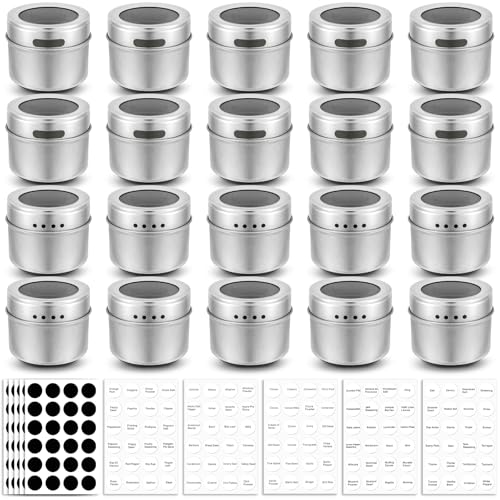
Metal tins are usually the safest starting point because they weigh less than glass and place less demand on the magnet. Many use a removable or sliding sifter insert, which helps dispense ground spices without opening the entire container. Their main weakness is visibility: unless the lid has a clear window, you must read the label every time.
Tins are particularly practical for paprika, cumin, chili powder, and other frequently used ground spices. They are less convenient for whole cinnamon sticks, bay leaves, or bulky dried herbs. A tin with a tight-fitting lid is preferable to a loose friction lid if it will live above a cooking surface, where steam and grease can enter.
Clear glass jars: best visibility, greater weight
Clear glass makes inventory control easy. You can see whether you have enough oregano before starting dinner and spot clumping or discoloration without opening the jar. Glass also resists retaining strong aromas better than some plastics.
The trade-off is weight. A typical empty 3-ounce glass jar may weigh roughly 3–5 ounces; once filled, the total can reach 5–8 ounces or more. A magnet that holds an empty jar securely may not hold it reliably when the jar is full. Look for a broad rear magnet, a magnetic metal backplate, and a stated load rating rather than relying on the word “magnetic.”
Magnetic racks: the safer choice for heavy collections
A rack transfers several containers as one mounted unit. It is useful when you want larger jars or need to remove the whole collection for cleaning. Racks may attach with magnets to a steel surface or with screws to a wall or cabinet side. A screw-mounted rail is usually the most dependable option for a large, glass-heavy collection.
Products such as Kamenstein magnetic spice jar sets and Gneiss Spice magnetic spice systems illustrate two common approaches: compact preconfigured sets and modular containers that can be arranged according to the cook’s needs. Check the current dimensions, magnet construction, and refill compatibility before buying, because sets and replacement components can change over time.
Specifications that matter more than the jar count
| Feature | Useful target | Why it matters |
|---|---|---|
| Capacity | 1.5–2 oz for occasional spices; 3–5 oz for staples | Balances refill frequency against filled weight |
| Empty container weight | Under 3 oz for a single magnetic jar | Leaves more holding capacity for the magnet |
| Magnet | Full-contact rear magnet or rated pull force of at least 8–10 lb | Creates a margin for vibration, door movement, and imperfect contact |
| Materials | Stainless steel, coated steel, glass, or food-contact plastic | Reduces corrosion and unwanted odor retention |
| Lid seal | Threaded lid or silicone gasket | Helps limit moisture and stale aromas |
| Label area | At least 1 inch square or a replaceable top label | Remains readable when jars are mounted close together |
The listed magnet rating is not the same as real-world carrying capacity. Pull-force figures are commonly measured against thick, flat steel under ideal conditions. Paint, curved refrigerator doors, a thin steel skin, gaps, and sideways sliding can reduce the effective hold substantially. Treat the rating as a comparison figure, not permission to load each jar to its maximum.
Lid design and spice visibility
Choose a full-opening screw lid when you regularly refill jars from bulk containers. It is easier to clean and less likely to trap powder around a narrow dispensing opening. A shaker insert is convenient for table use, but fine powders can bridge over small holes, and coarse herbs may not pass through evenly.
Dual-opening lids are a useful compromise: one side offers controlled shaking and the other opens wide for a measuring spoon. If the jar will be mounted vertically, confirm that the lid stays attached when opened. A loose lid can fall onto a counter or into food.
For labels, use oil-resistant vinyl, laminated paper, or a grease pencil on a smooth metal lid. Label both the top and the side when possible. Top labels work well when jars are arranged on a refrigerator door; side labels are easier to read on a horizontal steel panel. Include the purchase or refill month for blends whose ingredients you may not recognize later.
Safe mounting: refrigerator doors are not all alike
Test the surface before loading the jars. A magnet may stick to a refrigerator’s outer skin but not to a nearby stainless-steel panel, and some doors have only a thin magnetic area. Avoid mounting jars over a heat source, beside a sink where they receive splashes, or on a surface that flexes when the door opens.
- Check contact: Place one empty jar on the intended area and slide it gently sideways. If it creeps downward, do not use that location for a filled container.
- Measure the total load: Add the filled weights of all jars, then leave a safety margin of at least 30–50 percent below the rack or magnet system’s stated limit.
- Load gradually: Start with the lightest jar, wait several minutes, and check for movement before adding more.
- Keep jars clear of the door edge: Confirm that shelves, handles, and cabinet corners do not strike them as the door moves.
- Use mechanical fastening for heavy storage: A screwed rail or wall-mounted steel panel is preferable when using glass jars, large containers, or more than about 10–12 ounces per mounting point.
Do not assume adhesive magnetic strips are suitable for a refrigerator door. Adhesive can soften with heat, lose grip on textured paint, or detach suddenly under a repeated load. If drilling is not possible, use fewer, lighter jars and treat the arrangement as temporary rather than permanent.
Ownership realities: what wears first
The magnet itself often lasts longer than the rest of the system. Lid threads, silicone gaskets, printed labels, and shaker screens typically show wear first. Fine salt and powdered spices can lodge in threads, while steam encourages clumps and corrosion on low-quality metal.
Clean jars only after emptying them. Wash removable glass or food-safe plastic parts with warm water and mild dish soap, then dry every component completely before refilling. Do not soak a jar with an exposed or poorly sealed magnet. For metal tins, wipe the exterior and inspect the rim for rust; discard a container if corrosion reaches the food-contact surface.
A useful refill calculation is capacity divided by consumption. If a household uses 1 tablespoon of oregano weekly, and a jar holds approximately 3 tablespoons, it will need refilling about every three weeks. A 1.5-ounce jar may be adequate for an occasional spice, while a 5-ounce jar reduces interruptions for a daily staple but creates a heavier magnetic load. Capacity should follow usage, not the number of jars in a bundle.
Bottom line
Choose lightweight magnetic tins for budget-conscious organization, clear jars when visibility and quick inventory matter most, and a screw-mounted magnetic rack when you need substantial capacity or maximum security. For any refrigerator-door installation, prioritize a full-contact magnet, sealed lid, readable labels, and a conservative load limit over an impressive jar count. The best magnetic spice jars are the ones that stay securely mounted, remain dry and identifiable, and match how quickly your household actually uses each spice.





Write Your Review
No reviews yet. Be the first to share your experience!