

Key takeaways
- The cooking grate wears first. Porcelain-coated steel can chip if scraped aggressively or dropped. Stainless-steel replacement grates cost more but tolerate repeated cleaning.
- Vents may stiffen or loosen. Ash, grease, and corrosion can affect dampers. Clean around the vent plates and avoid forcing them when the grill is hot.
- Gaskets and handles are consumables. High heat and weather eventually degrade plastic handles, lid-handle hardware, or aftermarket sealing gaskets.
- Covering helps, but ventilation still matters. A cover protects the bowl and cart from rain, but a damp, covered grill can trap moisture and accelerate rust. Let the grill dry before covering it.
- Do not use water to extinguish a kettle. Water can create ash paste, damage metal, and make cleanup harder. Close the vents and allow the charcoal to cool naturally.
The best kettle grills for charcoal cooking are the Weber Original Kettle Premium for most households, the Weber Master-Touch for more flexible two-zone cooking, and an 18-inch portable kettle for balconies, tailgates, or small patios.
Our top picks
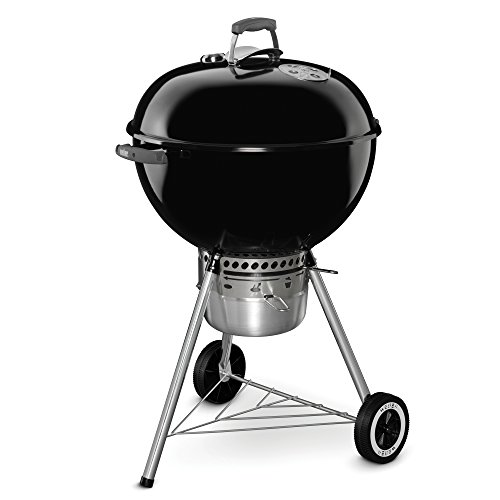
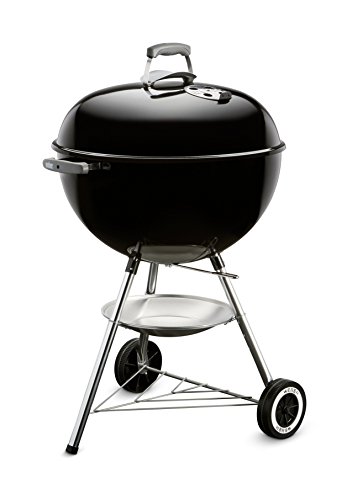

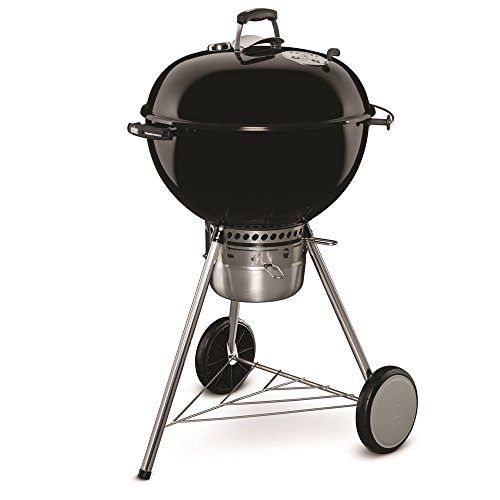
As an Amazon Associate we earn from qualifying purchases at no extra cost to you. Ratings are shown as listed on Amazon.
Quick comparison: the best kettle grills by use case
| Grill | Grate diameter | Primary cooking area | Best for | Typical market range |
|---|---|---|---|---|
| Weber Original Kettle Premium | 22.5 in | 363 sq in | Best all-purpose choice; covered ash catcher | About $200–$280 |
| Weber Master-Touch | 22.5 in | 363 sq in | Frequent cooking and more versatile grate accessories | About $280–$400 |
| Weber Performer Deluxe | 22.5 in | 363 sq in | Convenient charcoal preparation and ignition | About $450–$650 |
| Weber Jumbo Joe | 18.5 in | About 240 sq in | Portable charcoal cooking | About $80–$130 |
| Weber Original Kettle 26.75 | 26.75 in | 508 sq in | Large families and generous two-zone cooking | About $350–$500 |
| Napoleon PRO Charcoal Kettle | 22 in class | Roughly 360 sq in | Adjustable-height charcoal and premium grate features | About $350–$550 |
Cooking areas are nominal grate areas; the usable space is smaller once you leave room between food, the lid, and the hottest charcoal zone. Prices vary by finish, retailer, and included accessories.
Best overall: Weber Original Kettle Premium
The Weber Original Kettle Premium is the safest recommendation for most charcoal cooks because it combines a useful 22-inch-class grate with a hinged lid, a high-capacity ash catcher, and simple top-and-bottom vent control. Its 363 square inches can accommodate roughly 12 to 16 burger patties, depending on patty size and spacing, or a mixed meal with chicken on one side and vegetables on the other.
The hinged cooking grate is particularly useful when adding charcoal without removing the entire grate. The enclosed ash catcher is also a meaningful upgrade over the basic open-pan designs: ash is less exposed to wind, and cleanup takes seconds with a disposable liner or a brush into the catcher.
Choose this model if you cook once or twice a week, want dependable indirect grilling, and do not need a built-in work table or automatic ignition. It is usually the best balance of purchase price, usable cooking space, and replacement-part availability.
Best for frequent cooks: Weber Master-Touch
The Master-Touch uses the same broadly useful 22.5-inch grate size but adds features aimed at people who grill often. Depending on the version, its Gourmet BBQ System grate accepts compatible inserts such as a griddle, pizza setup, or wok. That does not make the basic grill hotter, but it can expand what you cook without buying a separate appliance.
Its larger wheels and accessory-friendly design also make it easier to live with on a patio. The main reason to pay more is flexibility rather than extra primary grate area. If you only grill burgers and steaks, the Original Kettle Premium delivers similar capacity for less money. If you regularly smoke ribs, bake, sear, and experiment with indirect cooking, the Master-Touch earns its premium more easily.
Best for convenience: Weber Performer Deluxe
The Performer Deluxe is a 22-inch kettle mounted on a sturdy cart with a work surface and a charcoal storage area. Its gas-assisted ignition system lights charcoal with less waiting and fewer loose fire starters. That is useful for frequent cooks, especially when the grill is used on weeknights rather than only on weekends.
The trade-off is size, price, and complexity. The ignition system introduces another component to maintain, and the cart needs more storage space than a standard three-legged kettle. It is a strong choice when preparation time and workspace matter more than portability; it is excessive for someone who cooks outdoors only a few times each summer.
Best portable option: Weber Jumbo Joe
The Jumbo Joe provides an 18.5-inch grate and about 240 square inches of cooking area in a smaller body. That is enough for several burgers, chicken pieces, or a compact indirect setup, but it is not ideal for feeding a large group. Its lighter form makes it practical for camping, tailgating, and small patios.
Portable kettles have a less forgiving two-zone layout because the charcoal occupies a larger percentage of the grate. Use a shallow charcoal bank on one side and keep the other side completely clear for indirect cooking. A small aluminum drip pan can further reduce the usable area, so plan for fewer portions than the headline square-inch number suggests.
Best for large two-zone cooking: Weber 26.75-inch Kettle
The 26.75-inch kettle offers 508 square inches of grate area, about 40 percent more than a 22.5-inch model. That difference is substantial when cooking a full meal: one side can hold a large charcoal bank while the other side remains available for chicken, ribs, vegetables, or a drip pan.
The larger lid and grate require more charcoal to heat, and the grill takes up more patio space. It is worthwhile for families, frequent entertainers, and anyone who finds a standard kettle crowded during indirect cooks. For two people, however, the extra surface can mean slower preheating and higher fuel use without a practical benefit.
What matters in a kettle grill
Grate diameter and usable cooking area
Grate diameter is more informative than the advertised cooking-area number because it shows how easily food can be arranged. A 22-inch kettle gives enough room for a direct zone over charcoal and an indirect zone beside it. An 18-inch kettle can do the same, but the zones are narrower and temperature changes affect the food more quickly.
As a sizing rule, choose an 18-inch-class kettle for one or two people, a 22-inch model for two to five people, and a 26-inch model for larger households or regular entertaining. These are planning guidelines, not fixed serving limits.
Vent control
Bottom vents control how much oxygen reaches the charcoal, while the top vent controls the path of hot air and smoke leaving the lid. A kettle with clearly marked, smoothly moving vents is easier to adjust than one with a loose or awkward damper.
For low-temperature cooking, make small changes and wait several minutes before adjusting again. Opening both vents fully is useful for preheating or high-heat searing, but it can make the fire run hotter than expected once the lid is closed. A built-in lid thermometer is convenient, although it measures air near the top of the dome rather than the temperature at the cooking grate.
Ash cleanup
An enclosed ash catcher is worth prioritizing if the grill stays on a patio or is used often. Open ash pans are inexpensive but expose hot ash to wind and can spill when moved. After every cook, close the vents to extinguish the coals, wait until the grill is completely cold, and then empty the catcher. Never dispose of ash while it may still contain embers.
Lid-hinge design
A hinged lid lets you add charcoal or rearrange food without placing the hot lid on the ground. It also reduces the chance of damaging the lid or contaminating the handle. The hinge adds a moving part, so check that it remains aligned and does not scrape the bowl.
A non-hinged lid is simpler and may seal well, but you need a safe place to set it down. For smoking or long indirect cooks, a hinge is particularly useful because opening the lid briefly is easier and less disruptive.
Two-zone cooking: how much space do you really need?
Two-zone cooking means the charcoal sits on one side while food cooks partly or entirely on the cooler side. A practical layout needs room for three things: the charcoal bank, the food, and a small gap for airflow and temperature separation.
| Kettle size | Approximate grate area | Practical two-zone capacity | Typical charcoal load |
|---|---|---|---|
| 18.5 in | 240 sq in | Small meal; about 2–4 portions | About 40–70 briquettes |
| 22.5 in | 363 sq in | Family meal; about 4–6 portions | About 60–90 briquettes |
| 26.75 in | 508 sq in | Large meal or several racks of food | About 80–120 briquettes |
These charcoal quantities are starting points for a moderate-to-hot cook, not guarantees. Wind, outside temperature, charcoal type, and vent settings can change fuel use considerably. For low-and-slow cooking, start with fewer lit coals and add fuel gradually rather than filling the entire basket at once.
Durability and ownership realities
- The cooking grate wears first. Porcelain-coated steel can chip if scraped aggressively or dropped. Stainless-steel replacement grates cost more but tolerate repeated cleaning.
- Vents may stiffen or loosen. Ash, grease, and corrosion can affect dampers. Clean around the vent plates and avoid forcing them when the grill is hot.
- Gaskets and handles are consumables. High heat and weather eventually degrade plastic handles, lid-handle hardware, or aftermarket sealing gaskets.
- Covering helps, but ventilation still matters. A cover protects the bowl and cart from rain, but a damp, covered grill can trap moisture and accelerate rust. Let the grill dry before covering it.
- Do not use water to extinguish a kettle. Water can create ash paste, damage metal, and make cleanup harder. Close the vents and allow the charcoal to cool naturally.
Which kettle grill should you buy?
| Your situation | Best direction | Why |
|---|---|---|
| Lowest sensible cost for regular use | 22-inch Original Kettle Premium | Good capacity, ash catcher, and simple maintenance |
| New to charcoal cooking | 22-inch Premium kettle | Enough space to learn direct and indirect cooking without overspending |
| Frequent cooking and varied menus | Master-Touch or equivalent premium kettle | Better accessory compatibility and convenient grate design |
| Small patio, camping, or tailgating | 18-inch portable kettle | Smaller footprint and lower charcoal requirement |
| Large family or regular entertaining | 26-inch kettle | More separation between the charcoal and indirect cooking zones |
| Weeknight convenience matters most | Cart-mounted kettle with ignition aid | More workspace and faster charcoal preparation |
For the broadest combination of capacity, vent control, ash management, and replacement-part support, the 22-inch Weber Original Kettle Premium is the best starting point. Move to the Master-Touch for accessory flexibility, the Performer Deluxe for cart and ignition convenience, or a 26-inch kettle when two-zone cooking space is the deciding factor.





Write Your Review
No reviews yet. Be the first to share your experience!