

Key takeaways
- For beginners: Choose an electric model with a ready light, automatic thermostat, and a dough guide. It limits the number of variables and reduces the chance of uneven cooking.
- For families or parties: Choose a stovetop press with a 1-inch or larger barrel and at least three nozzle shapes. A wide pan can cook more churros at once than most countertop appliances.
- For a small apartment: Choose an electric maker no deeper than 12 inches, or a manual press that fits inside a drawer. Check the cord-storage design before buying.
- For traditional long churros: Choose a stovetop extruder. Short electric plates are not a substitute if length and a crisp fried shell are your priorities.
- For occasional treats: A manual press is usually the better value because it has no heating element, thermostat, or electrical parts that can fail during long periods of storage.
- For frequent weekend use: Choose an electric maker with replaceable or removable plates, a cool-touch handle, and a housing that does not flex when pressure is applied.
The best churro maker for home kitchen use is usually a compact electric model with interchangeable nozzles, adjustable heat, and a batch capacity of at least four churros; choose a stovetop press instead if you want lower cost, easier storage, and complete control over frying.
Our top picks

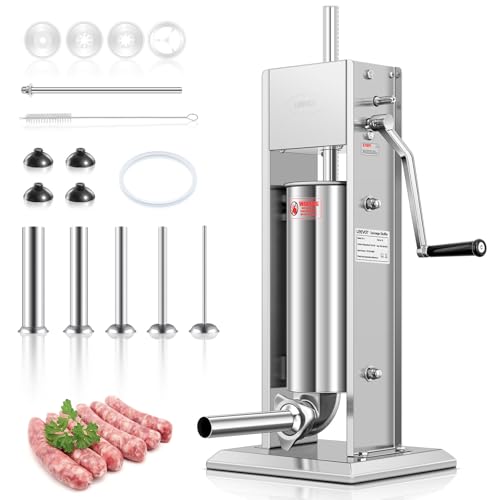

As an Amazon Associate we earn from qualifying purchases at no extra cost to you. Ratings are shown as listed on Amazon.
Electric versus stovetop churro makers
These two designs make different kinds of churro-making easier. An electric churro maker heats its cooking plates or chamber from a built-in power source, so it is convenient for small kitchens and cooks who want predictable results with minimal equipment. Many produce shorter, baked or pressed churros rather than the long, deep-fried style found at fairs.
A stovetop churro maker is normally a manual cylinder, extruder, or heavy-duty press. It shapes dough through a removable nozzle while the churros are cooked separately in a saucepan or Dutch oven. This setup requires more oil, temperature monitoring, and cleanup, but it can produce longer churros and larger batches.
| Feature | Compact electric maker | Stovetop press or extruder | Best choice when |
|---|---|---|---|
| Typical churro size | 3–5 inches long; about 0.5–0.75 inches wide | 4–10 inches long; about 0.5–1 inch wide | Electric for snacks; stovetop for long, traditional churros |
| Batch capacity | 4–8 short churros per cycle | 6–12 churros per frying batch, depending on pan size | Electric for one or two people; stovetop for groups |
| Temperature control | Fixed thermostat or approximately 300–425°F adjustment | Controlled by the stovetop; oil should generally remain near 350–375°F | Electric for repeatability; stovetop for adjustable browning |
| Contact or nozzle material | Nonstick-coated plates, stainless steel housing, or both | Stainless steel, aluminum, or food-grade plastic barrel with metal or plastic nozzles | Stainless steel for durability; nonstick for quick release |
| Typical footprint | 8–12 inches wide and 3–6 inches tall | 2–4 inches wide when stored, plus a frying pan | Electric for counter use; stovetop for minimal appliance storage |
| Typical weight | 2–5 pounds | 0.5–2 pounds, excluding cookware | Stovetop for portability and occasional use |
| Cleanup | Usually wipe-clean; some plates may be removable | Requires washing the barrel, nozzle, pan, and oil equipment | Electric for faster cleanup |
Best choice by kitchen situation
- For beginners: Choose an electric model with a ready light, automatic thermostat, and a dough guide. It limits the number of variables and reduces the chance of uneven cooking.
- For families or parties: Choose a stovetop press with a 1-inch or larger barrel and at least three nozzle shapes. A wide pan can cook more churros at once than most countertop appliances.
- For a small apartment: Choose an electric maker no deeper than 12 inches, or a manual press that fits inside a drawer. Check the cord-storage design before buying.
- For traditional long churros: Choose a stovetop extruder. Short electric plates are not a substitute if length and a crisp fried shell are your priorities.
- For occasional treats: A manual press is usually the better value because it has no heating element, thermostat, or electrical parts that can fail during long periods of storage.
- For frequent weekend use: Choose an electric maker with replaceable or removable plates, a cool-touch handle, and a housing that does not flex when pressure is applied.
What to look for before buying
Churro size and nozzle selection
Size affects more than appearance. Thin churros cook quickly and are easier to portion, while thick churros need more time for the center to set. A nozzle with deep, well-defined ridges creates more surface area for cinnamon sugar and helps the exterior crisp. Very shallow ridges can produce a nearly smooth tube that is difficult to fry evenly.
For an electric appliance, look for at least two plate or nozzle patterns: a narrow star shape for snack-size pieces and a wider star shape for fuller churros. For a stovetop press, three nozzles are useful: a small star, a large star, and a filling tip. Avoid buying based only on the number of included shapes; a sturdy nozzle that locks firmly is more useful than six thin attachments that bend or crack.
Plate and nozzle material
Stainless steel nozzles generally resist cracking, staining, and deformation from repeated cleaning. Food-grade plastic can work well for occasional use and is lighter, but thin plastic may split if the dough is too stiff. A metal nozzle is particularly useful for thick dough or a manual press.
Electric plates are often aluminum with a nonstick coating. Nonstick surfaces release dough easily but should not be scraped with metal utensils or abrasive pads. Look for a coating described as free of PFAS or other chemicals of concern if that is important to your household, and follow the manufacturer’s temperature and cleaning instructions rather than assuming every coating has the same limits.
Temperature control
For electric models, a fixed thermostat is adequate for simple baked churros, but an adjustable range is more flexible. A useful target range is approximately 300–425°F, allowing lower heat for pale, tender pieces and higher heat for deeper browning. A ready indicator is helpful, but it does not replace checking the first batch for color and doneness.
With a stovetop model, the oil temperature matters more than the press itself. Aim to keep frying oil near 350–375°F. If the oil is too cool, the dough absorbs more oil; if it is too hot, the exterior can darken before the center cooks. A clip-on or instant-read thermometer is one of the most valuable accessories for this design.
Capacity and recovery time
Ignore vague claims such as “family size” and count the actual pieces per cycle. A maker producing six 4-inch churros may have less useful capacity than one producing four 6-inch churros. Also check recovery time between cycles. If the plates need several minutes to return to temperature, a nominally large batch may still be slow for a family.
For stovetop frying, do not fill the pan with dough. Leave enough space for each churro to move freely, and avoid crowding that causes the oil temperature to drop. A 10- to 12-inch pan is a practical size for home batches, but the number of pieces depends on their width and the amount of oil used.
Ownership costs and storage reality
Typical market prices in 2026 range from about $20–$45 for a basic manual press, $30–$70 for a compact electric maker, and $70–$150 for heavier presses or more versatile countertop units. These are general ranges, and included accessories can change the value substantially.
Consider a simple cost-per-use calculation. Suppose an electric maker costs $50 and you use it 20 times over two years: the appliance portion is $2.50 per use before ingredients. A $25 manual press used only five times costs $5 per use. The manual option is still cheaper overall in many kitchens because it has fewer parts to replace, but frequent users may benefit from the electric unit’s faster setup and simpler cleaning.
Measure both the appliance and the storage location. A maker that is 11 inches wide may still need 14 inches of clearance when its lid opens. Manual presses usually store more easily, but nozzles can disappear unless they fit inside the barrel or a dedicated container. Keep electric appliances completely dry before storage, and do not wrap the cord tightly around a hot or damp unit.
Durability, cleaning, and common mistakes
- What wears first: Nonstick coatings can scratch, plastic locking rings can crack, and seals on manual presses can harden. Replacement seals and nozzles are worth checking before purchase.
- Clean immediately: Dough left inside a nozzle becomes much harder to remove. Unplug an electric maker, let it cool, then wipe it with a damp cloth unless the instructions specifically permit immersion or dishwasher cleaning.
- Do not force stiff dough: Excessive pressure strains manual handles and can split plastic attachments. Add liquid gradually when preparing dough rather than trying to repair an overly dry mixture inside the press.
- Do not overfill: Leave room in a manual barrel for the plunger. Overfilling creates uneven pressure and can cause dough to emerge around the seal.
- Dry every part fully: Water trapped behind a nozzle or in a threaded connection can create odors and encourage corrosion on lower-quality metal components.
- Handle hot oil carefully: Use long tongs, keep water away from the oil, and allow the oil to cool before disposal. Never pour used oil down a sink.
Bottom line
For most home cooks seeking the best churro maker for home kitchen use, a compact electric model with adjustable heat, two durable star nozzles, a four-to-eight-piece capacity, and removable cooking surfaces is the most convenient choice. Pick a stovetop press when you care more about long, traditional fried churros, larger batches, low storage space, or long-term mechanical simplicity than push-button convenience.





Write Your Review
No reviews yet. Be the first to share your experience!