
Our Short List of 3
All 5 Picks at a Glance
| Product | Specs | Action |
|---|---|---|
 Farberware Baker’s Advantage Cake Tester with Cover | Check price on Amazon | |
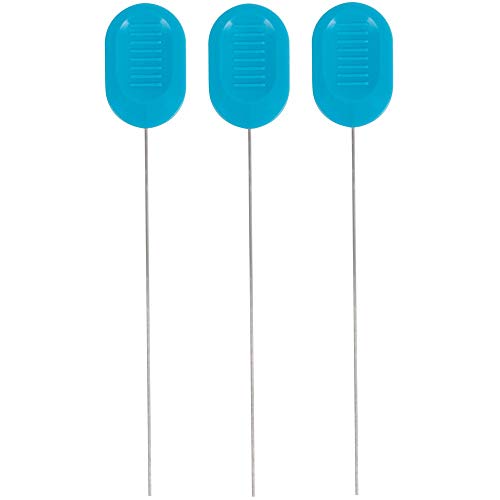 Ateco Stainless Steel Cake Tester, 7 Inch, Set of 3 | Check price on Amazon | |
 Ateco 1445 Cake Tester | Check price on Amazon | |
 Mrs. Anderson’s Baking Cake Tester, 8-Inches Long | Check price on Amazon | |
 RSVP International Endurance Cake Tester, Stainless Steel | Check price on Amazon |
Key takeaways
- Compare the best cake testers for clean doneness checks, from stainless wire testers with covers to long stems that reach deep layer cakes and loaves.
A cake tester is one of the smallest tools in a baking drawer, but it solves a familiar problem: how to check whether a cake is done without tearing a wide hole in the crumb or leaving a gummy trail behind. A thin stainless wire slips into the center of a layer, reads whether batter is still wet, and comes out leaving a mark so small it disappears under frosting. Compared with a toothpick, which is thicker and disposable, or a kitchen skewer, which is built for the grill, a dedicated tester is made for exactly this one job and can be washed and reused for years.
The five testers below cover the main shapes this simple tool comes in. There is a covered 6-inch tester that stores safely in a crowded drawer, a set of three 7-inch wires for bakers who misplace things, a classic holder-style tester, an 8-inch stem that reaches the center of deep layer cakes and tall loaves, and a flat-handled model stamped with its own name so it never gets mistaken for a skewer. All five are stainless wire testers; the differences are length, handle style, and how many you get.
As an Amazon Associate, we earn from qualifying purchases.
Quick Answer
The Farberware Baker’s Advantage Cake Tester with Cover is the top pick for most home bakers: its 6-inch stainless wire, soft grip handle, and protective cover make it the easiest tester to live with. Around it, the lineup splits by need — the Ateco set of three for spares, the Ateco 1445 for a holder grip, the 8-inch Mrs. Anderson’s tester for deep cakes, and the flat-handled RSVP Endurance for identification in a drawer.
Farberware Baker’s Advantage Cake Tester with Cover
The Farberware tester is the most complete package in this group because it thinks past the bake itself. The 6-inch stainless steel wire is long enough for standard layer cakes, loaf pans, and muffin tins, and the soft grip handle gives you something secure to hold when your other hand is wrapped in an oven mitt. The detail that sets it apart is the protective cover: the wire slides into a sleeve for storage, so the tip stays clean and does not poke through drawer organizers or catch on utensils. For a tool that costs little and gets used weekly, that small bit of storage sense matters.
It is also easy to care for. The listing describes the tester as dishwasher safe, so it can go in with the rest of the bakeware rather than needing a careful hand wash. Model 5141394 is the reference number if you are matching the listing. Bakers who mostly make standard-height cakes and want one tidy, covered tester to keep by the oven will find this the simplest choice here. It is the pick to start with unless you specifically need a longer stem or several testers at once.
Ateco Stainless Steel Cake Tester, 7 Inch, Set of 3
Ateco is a name pastry professionals know well, and this set follows the brand’s no-nonsense approach: three plain stainless steel testers, each 7 inches long, with nothing extra attached. The extra inch over the Farberware gives a little more reach into taller layers, and the set-of-three format is the real selling point. Cake testers are thin and famously easy to lose in a utensil drawer or leave behind at a bake sale; having three means one can live by the oven, one in the baking bin, and one as a spare.
Because there is no handle bulk or cover, these store flat and take up almost no space, and the stainless construction wipes or washes clean between uses. The trade-off is grip: a bare wire end is less comfortable to hold than a molded handle, especially with mitts on. Model 619920-1444 identifies the set. If you bake often, bake in more than one place, or simply lose small tools, this is the practical buy — three straightforward testers that do the one job without ceremony.
Ateco 1445 Cake Tester
The Ateco 1445 is the traditional holder-style tester: a stainless steel wire, described on its page as rust proof, set into a blue polypropylene handle that gives the tool a defined grip and a bit of color that is easy to spot in a drawer. The overall item dimensions are 17.8 x 7.6 x 1.7 centimetres per the product page’s spec table, which puts it in the same general hand-tool size class as the others here even though the usable wire portion is only part of that total length.
This is the tester for bakers who like the classic bakery-supply feel — a simple wire in a simple holder, from a brand that has supplied pastry kitchens for decades. The handle style sits between the bare Ateco wires above and the cushioned Farberware grip: more to hold than a plain wire, less padding than a soft grip. Model number 1445 is the reference. If you want one durable, old-school tester with a handle you can hang or spot quickly, the 1445 fits that role well.
Mrs. Anderson’s Baking Cake Tester, 8-Inches Long
Length is the whole story with this tester. At 8 inches long, the Mrs. Anderson’s stem reaches the center of deep layer cakes, tall loaves, and thick bundt-style bakes where a shorter wire can only sample the outer crumb and give a misleading reading. If you bake celebration cakes with stacked layers or deep coffee cakes, that extra reach is the difference between testing the part of the cake that finishes last and guessing at it.
The stem is stainless steel, and the handle is BPA-free plastic, with the listing describing the tester as dishwasher safe for easy cleanup. It comes from HIC, the company behind the Mrs. Anderson’s Baking line, and carries model number 43917. The longer stem is slightly less nimble in shallow muffin tins, where an 8-inch tool can feel oversized, but for bakers whose pans run deep it solves a real problem the shorter testers cannot. Choose this one when your bakes are tall and you are tired of cutting a test slice to check the middle.
RSVP International Endurance Cake Tester, Stainless Steel
The RSVP Endurance tester takes a different approach to identification: its flat handle is marked “Cake Tester,” so anyone reaching into the drawer knows exactly what it is and what it is for. That sounds trivial until a thin wire tool gets borrowed as a skewer, a plant stake, or a general poking device — the stamped flat handle keeps this one in its lane. The wire is 18/8 stainless steel, a grade commonly used for kitchen tools that need to resist staining and wash up well.
The listing describes the tester as dishwasher safe, and the flat handle stores neatly in a utensil tray without rolling. Model number 8074 is the reference for this one. There is no cover and no cushioning, so it suits bakers who value a simple, clearly labeled, easy-to-store tool over extra grip features. In a shared kitchen where tools wander and get repurposed, that built-in label is a genuinely useful design choice, and it rounds out this lineup as the pick for organized drawers.
How to Choose
Length comes first. A 6-inch tester covers most standard layers, loaves, and muffins, but deep layer cakes and tall loaves need a longer stem — that is where an 8-inch model earns its place. Match the tester to the deepest pan you actually use rather than buying the longest one by default, since extra length feels clumsy in shallow tins.
Handle style is the second decision. A soft grip with a storage cover suits bakers who want comfort and tidy storage. A bare wire is the slimmest option and stores flat. A holder-style handle gives a defined grip without bulk, and a flat marked handle keeps the tool identifiable in a shared drawer.
Pack count matters more than it seems. Testers are small and easy to misplace, so a set of three suits frequent bakers, while a single well-made tester is enough for occasional use. Finally, look for stainless steel construction and dishwasher-safe care so the tool is easy to clean between bakes. Remember that a clean wire is a doneness cue — it tells you batter is no longer wet in the spot you tested, and it works best alongside the spring-back test and the recipe’s baking time rather than replacing them.
Who Should Skip
Skip a dedicated cake tester if you bake only rarely and a toothpick from the pantry already covers your needs — the tester is a refinement, not a requirement. Skip the longest stem if all your pans are shallow, and skip bare-wire sets if you prefer a padded grip. And if you are looking for a tool that can confirm a bake is fully cooked on its own, skip this whole category: no wire tester can do that, and doneness still comes down to time, temperature, and the recipe’s cues taken together.
FAQ
Does a cake tester work better than a toothpick?
For most bakers, yes. The wire is thinner than a toothpick, so it leaves a much smaller hole in the crumb, and it does not drag crumbs the way wood can. It is also washable and reusable, so one tester replaces a steady supply of toothpicks over time.
Where should I insert the tester?
Push it into the center of the cake, which is the last part to finish baking, and pull it straight out. Wet batter clinging to the wire means more time in the oven; a wire that comes out clean or with a few dry crumbs is a good doneness cue alongside the cake pulling slightly from the pan sides.
Can I use a cake tester for muffins and loaves?
Yes. The same clean-wire reading works for muffins, quick breads, and loaf cakes. Shorter testers suit muffins and standard loaves, while a longer stem helps with deep loaves. Test the center of the largest muffin or the middle of the loaf for the most useful reading.
How do I clean and store a cake tester?
Most stainless testers, including several in this guide, are described by their listings as dishwasher safe, and all of them wash easily by hand with warm soapy water. Dry the wire before storing it. A covered model stores anywhere; bare wires keep best in a utensil tray where the tip will not bend.
Final Verdict
For most home bakers, the Farberware Baker’s Advantage with its cover and soft grip is the easiest tester to own. Buy the Ateco set of three if you want spares, the Ateco 1445 for a classic holder grip, the 8-inch Mrs. Anderson’s if your cakes run deep, and the RSVP Endurance if a labeled flat handle suits your drawer. Any of the five will read a crumb more cleanly than a toothpick — just treat the result as one cue among several, not a promise.
Product and ASIN Reference
| Product | ASIN |
|---|---|
| Farberware Baker’s Advantage Cake Tester with Cover | B01AHUIZUO |
| Ateco Stainless Steel Cake Tester, 7 Inch, Set of 3 | B07FCL1ZXC |
| Ateco 1445 Cake Tester | B0018AHVSU |
| Mrs. Anderson’s Baking Cake Tester, 8-Inches Long | B0C3MCDXLD |
| RSVP International Endurance Cake Tester, Stainless Steel | B0000VLZYE |
More from Amazon
Programs that pair well with the guide above. Offers and eligibility are set by Amazon and may change.
Set up recurring deliveries of everyday items on eligible products. Terms and savings are set by Amazon.
Explore Subscribe & SaveCollect the home and kitchen items you want in one registry that guests can shop from.
Create a wedding registryFree shipping on eligible items, Prime Video and more. Eligible new members can start with a free trial.
Start a Prime free trialAudiobooks and podcasts to listen to on the go. Eligible new members can start with a free trial.
Try Audible freeAs an Amazon Associate we earn from qualifying purchases.
Write Your Review
No reviews yet. Be the first to share your experience!