

Key takeaways
- Compare the best homebrew kits for a first batch: a 2-gallon extract keg kit, a conical fermenter kit with bottles, and a 1-gallon glass carboy kit.
The real decision when buying your first homebrew kit is how much process you want to learn on batch one: a mix-and-wait extract kit that has beer fermenting in about half an hour, or a fuller setup with a carboy, racking cane and thermometer that teaches the actual steps breweries use. Batch size matters just as much: one gallon suits quick experiments and small kitchens, while two gallons fills a modest stack of bottles without taking over a counter. Every kit in this guide takes a different position on that trade-off.
This guide serves three kinds of first-time brewers: the curious cook who wants a low-effort weekend project, the gift buyer who needs bottles included in the box, and the detail-minded beginner who would rather learn real technique on a small batch. Every pick was chosen from the product names and specification details published on its Amazon page, and each kit below is a complete starter set with equipment and a first recipe included, not an ingredient refill sold separately.
Quick Picks
Disclosure: As an Amazon Associate we earn from qualifying purchases.
| Product | Best for | Key spec from title |
|---|---|---|
| Mr. Beer Craft Beer Making Kit (2 Gallon) | A first batch with the least practical time | 2 Gallon Keg |
| BrewDemon Signature Pro Beer Making Kit with Bottles | Bottling day without a siphon | Conical Fermenter |
| Craft A Brew American Pale Ale Beer Making Kit | Learning real brewing steps on a small batch | 1 Gallon |
How to Choose
Batch Size and the Bottles It Fills
Batch size decides how much beer you store, how many bottles you wash, and how painful a failed batch feels. A 1-gallon kit yields roughly ten standard bottles, which suits brewers who want to try a style and move on. A 2-gallon kit doubles that output while still fitting on a stovetop and in a normal refrigerator. Check the listing’s stated batch size against your pot: small kits still need a stockpot for heating water or steeping, and the biggest bottle counts assume you have somewhere cool and dark to condition two dozen bottles for a couple of weeks. Weight matters too once a fermenter is full.
Extract Shortcut or Full Brewing Steps
Starter kits teach two very different lessons. Extract kits like the Mr. Beer and BrewDemon sets start from hopped malt extract, so brew day is mostly mixing, and the process forgives timing mistakes. All-grain and steeping-grain kits, such as the Craft A Brew set, add mashing or steeping steps, a thermometer reading, and more chances to influence flavor, at the cost of a longer, more attentive brew day. Neither route is wrong, but they suit different people: choose extract for a relaxed first success, and choose the fuller process if learning technique is the point of the hobby for you. That difference also decides how much equipment you handle on day one.
What Is Actually in the Box
The phrase complete kit hides real gaps, so read the included-components list line by line. Bottles are the classic omission: the Craft A Brew kit ships without bottles, caps, or a capper, while the Mr. Beer and BrewDemon kits include reusable bottles in the box. Also check for sanitizer, since every kit here includes some form of cleanser but volumes differ, and confirm whether a thermometer is present if you want to track fermentation progress. A kettle is another frequent gap: none of these three kits includes a brew pot, so a large stockpot you already own has to cover brew day.
Fermenter Design and Cleaning
Fermenter shape changes both the beer and the cleanup. A conical fermenter, like the BrewDemon’s, collects sediment below the spigot line, so you can bottle clearer beer without racking to a second vessel. A keg-style fermenter with a spigot, like the Mr. Beer Little Brown Keg, keeps things compact and simple but offers less control over sediment. A glass carboy shows fermentation activity clearly and does not hold odors, yet it is heavier and breakable. Whichever form you pick, confirm the fermenter fits where it will sit undisturbed for one to two weeks, away from sunlight and temperature swings. Also confirm the lid, spigot, and seals come apart for washing, because dried krausen hides in fittings.
The 3 Best Options
Mr. Beer Craft Beer Making Kit (2 Gallon), Golden Ale
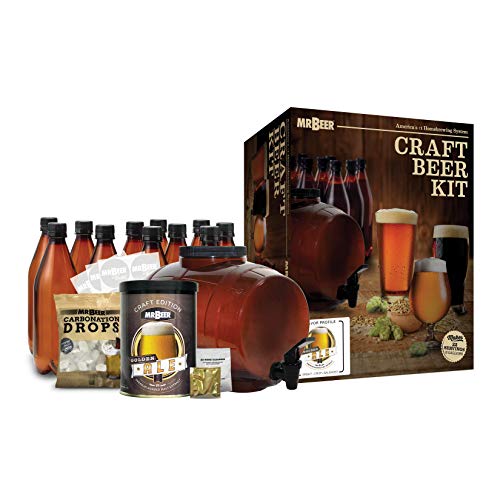
This is the kit for someone who wants a first batch fermenting today with the fewest possible decisions. The whole system is built around the 2-gallon Little Brown Keg fermenter and a can of hopped malt extract, so brew day is mostly mixing and pouring rather than measuring and timing. Eleven reusable 25 oz bottles come in the box, which removes the most common extra purchase, and the Golden Ale recipe is a middle-of-the-road style that suits sharing with people who are not craft beer specialists. The fermenter doubles as the bottling vessel, so there is no transfer step to manage.
Specs
- Batch size: 2 gallons
- Fermenter: 2-gallon reusable keg
- Bottles: Eleven 25 oz reusable, shatterproof bottles
- Ingredients: Hopped malt extract, Golden Ale, from Coopers Brewery
- Included extras: No-rinse cleanser and carbonation drops
- Product dimensions: 18.5 x 13.75 x 20 inches
- Item weight: 6 pounds
- Item model number: Golden Ale Complete Kit
Best for: A first batch with minimal equipment and no separate bottle purchase.
Watch out for: The listing’s stated brew time of 30 minutes covers mixing only; fermenting and bottle conditioning still take weeks, and the extract format limits recipe control.
ASIN: B001BCFUBU
BrewDemon Signature Pro Beer Making Kit with Bottles, 2 Gal. Pilsner

Choose this kit if bottling day is the part you dread. Its patented conical fermenter settles sediment below the valve, so finished beer pours from the spigot into the included 1-quart bottles through the bottle filler instead of being siphoned, which is where many first batches pick up spills and contamination. The included One Evil Pilsner recipe is an extract kit, keeping brew day short, and the fermenter’s temperature gauge and adjustable flow spigot add small controls the simpler keg kits leave out. It is the most equipment-forward of the three kits here.
Specs
- Batch size: 2 gallons
- Fermenter: Patented conical fermenter with CO2 venting system; no airlock or siphon required
- Recipe: One Evil Pilsner ingredients, 4.6% ABV signature recipe
- Bottles: 8 PET plastic 1-quart bottles with caps and labels
- Also included: Bottle filler and vinyl hose, 18-inch heat resistant mixing spoon, airlock, rubber stopper and gasket
- Product dimensions: 10 x 10 x 16 inches
- Item weight: 7.88 pounds
Best for: Brewers who want clearer beer and a tidy, siphon-free bottling day.
Watch out for: The fermenter stands 16 inches tall, so measure your shelf or cabinet first; the extract recipes also mean grain brewers will outgrow the included styles quickly.
ASIN: B07XKQDYRV
Craft A Brew American Pale Ale Beer Making Kit, 1 Gallon

This is the pick for the beginner who wants to learn brewing rather than just finish a batch. The 1-gallon glass carboy, racking cane, airlock, and thermometer walk you through the same transfer and monitoring steps used at larger scales, and the included Guide to Craft Brewing explains the process as you go. The batch is small, about ten bottles, which makes it a forgiving way to practice: a mistake costs a gallon, not five, and the reusable equipment accepts the brand’s other recipe kits. Everything is sized for a stovetop and a single shelf.
Specs
- Batch size: 1 gallon
- Fermenter: 1-gallon glass carboy
- Included equipment: Funnel, racking cane, rubber stopper, transfer tubing and thumb clamp, airlock, thermometer
- Also included: Sanitizer and Guide to Craft Brewing
- Recipe: American Pale Ale recipe kit
- Product dimensions: 9 x 9 x 16 inches
- Item weight: 5.2 pounds
- Item model number: BK-APA
Best for: Learning real transfer, monitoring, and sanitation habits on a small, low-stakes batch.
Watch out for: Bottles, caps, and a capper are not included, so budget for them before bottling day; the glass carboy also needs a dark, stable spot and careful handling.
ASIN: B00IYN6Z6S
Which One Fits Your Situation
You Want the Fastest First Brew Day
Pick the Mr. Beer kit. Its hopped malt extract and single-keg fermenter reduce brew day to mixing, pouring, and waiting, and the eleven reusable bottles in the box mean no second order before bottling. The trade is control: you follow the recipe rather than shape it, and the Golden Ale is a crowd-pleasing style rather than an experiment. For a first success that builds confidence, that simplicity is the point.
You Are Buying a Gift That Works Out of the Box
Pick the BrewDemon Signature Pro. It arrives with eight 1-quart bottles, caps, and labels, so the recipient is not handed a follow-up shopping list, and the conical fermenter looks and works like scaled-down professional gear. The included Pilsner recipe is extract-based and quick to prepare, which suits a gift: the first brew day stays short, while the reusable fermenter, spigot, and temperature gauge leave room to grow into the brand’s other 2-gallon recipes.
You Want to Learn Real Brewing Technique
Pick the Craft A Brew kit. Its glass carboy, racking cane, airlock, and thermometer make you perform the transfers and checks that larger-scale brewing depends on, and the printed brewing guide teaches the reasoning behind each step. A 1-gallon batch keeps the cost of a mistake low, and because all the equipment is reusable, your second batch only needs a fresh recipe kit in whichever style you want to try next.
You Have Very Little Counter and Shelf Space
Pick the Craft A Brew kit for the smallest working footprint. A 1-gallon carboy fits on a pantry shelf or in a closet corner while it ferments, and the finished batch is about ten bottles rather than two dozen competing for refrigerator space. The Mr. Beer keg is the fallback if you want two gallons: it is compact for its size, but its wider box and bottle count still claim more storage room.
Common Mistakes
- Assuming the stated brew time is the total time; fermentation and bottle conditioning still take weeks with every kit here.
- Forgetting bottles: kits that omit them, like the Craft A Brew set, need bottles, caps, and a capper bought before bottling day arrives.
- Skipping sanitizer steps or substituting dish soap, which can leave residues and off-flavors in a finished batch.
- Fermenting in a warm, bright spot; light and heat swings stress yeast, so choose a cool, dark place before brew day.
- Sealing bottles too early: carbonation only builds safely once fermentation has actually finished, so follow the kit’s timeline.
Frequently Asked Questions
How long does a first batch take from brew day to drinking?
Plan on roughly three to four weeks. Brew day itself can be under an hour with the extract kits here, but fermentation then needs about one to two weeks in the fermenter, and the bottled beer needs around two more weeks to carbonate and condition. Rushing either stage is the most common cause of flat or harsh-tasting first batches. The kit instructions give exact day counts for each stage.
Do these kits include everything needed to start?
Mostly, but read the box contents carefully. All three kits include a fermenter, a first recipe, and cleanser or sanitizer. Bottles are the dividing line: Mr. Beer and BrewDemon include reusable bottles, while the Craft A Brew kit leaves bottles, caps, and a capper to buy separately. Every kit also assumes you already own a large stockpot and basic kitchen tools.
Can the equipment be reused for more batches?
Yes. The fermenters, carboys, tubing, and tools in all three kits are reusable, and each brand sells recipe refills in other styles, so batch two only requires fresh ingredients. Replace worn tubing and tired seals as they age, and keep sanitizer stocked, because worn or dirty soft parts are where repeat brewers most often pick up contamination.
Which batch size is right for a beginner?
One gallon suits experimentation: about ten bottles, a small footprint, and little lost if a batch disappoints. Two gallons doubles the yield while staying manageable on a stovetop and in a refrigerator, which fits brewers who share with friends. Choose based on storage and how fast you drink, not ambition, because stale homebrew helps nobody.
More from Amazon
Programs that pair well with the guide above. Offers and eligibility are set by Amazon and may change.
Set up recurring deliveries of everyday items on eligible products. Terms and savings are set by Amazon.
Explore Subscribe & SaveCollect the home and kitchen items you want in one registry that guests can shop from.
Create a wedding registryFree shipping on eligible items, Prime Video and more. Eligible new members can start with a free trial.
Start a Prime free trialAudiobooks and podcasts to listen to on the go. Eligible new members can start with a free trial.
Try Audible freeAs an Amazon Associate we earn from qualifying purchases.

Write Your Review
No reviews yet. Be the first to share your experience!