

Key takeaways
- Choose the OXO Good Grips Dough Blender and Cutter if palm comfort and regular use are your priorities. Choose the Cuisipro 5-Blade Pastry Blender if you prefer a traditional five-blade layout for quick, controlled cutting. For occasional pie baking, a basic stainless-steel five-blade pastry cutter…
The best pastry blender for pie crust is a stainless-steel, five-blade cutter with a comfortable handle, roughly 5 inches of cutting width, and enough spacing to work cold butter without crushing it into a paste.
For most home bakers, a classic stainless-steel pastry blender is a better choice than a plastic model: it resists bending, handles chilled butter and shortening, and can be rinsed clean before fat hardens. The OXO Good Grips Dough Blender and Cutter is a strong comfort-first choice, while the Cuisipro 5-Blade Pastry Blender suits bakers who want closely spaced blades and efficient cutting. If price matters most, a basic five-blade stainless-steel pastry cutter is usually sufficient.
Our top picks
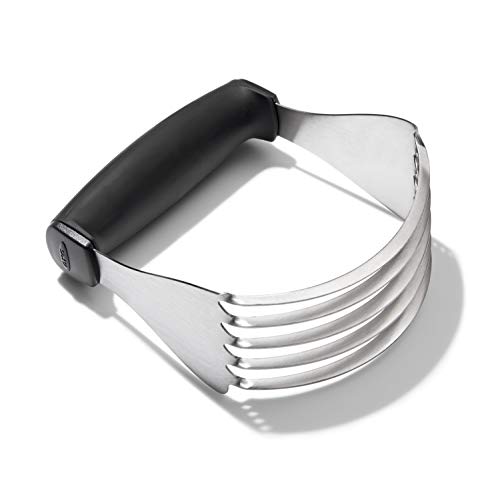

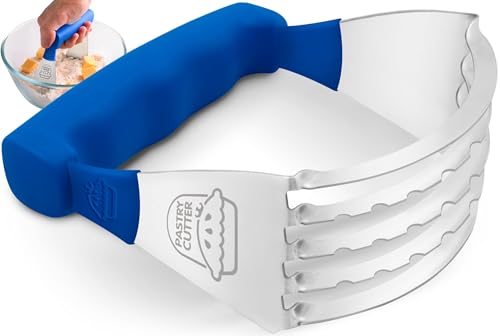

As an Amazon Associate we earn from qualifying purchases at no extra cost to you. Ratings are shown as listed on Amazon.
What matters when choosing a pastry blender
Blade material
Stainless steel is the safest all-around choice. It is rigid enough to cut cold butter, does not absorb odors, and generally tolerates repeated hand washing. Look for blades approximately 1.5 to 2 inches deep with a firm connection to the handle. Thin stamped blades can work, but they may flex when cutting a large block of butter.
Aluminum cutters are light and often inexpensive. They can perform well, but softer aluminum may bend or show scratches sooner. Anodized aluminum is more resistant to surface wear than untreated aluminum, although stainless steel is usually easier to maintain.
Plastic blades are uncommon in the most durable designs. They may be suitable for occasional use, but plastic can flex around hard, chilled butter and can eventually become marked by repeated scraping against a metal bowl.
Handle comfort and leverage
Pastry blending is a pressing motion, so handle shape matters more than it first appears. A broad, rounded handle spreads pressure across the palm and is more comfortable than a narrow straight rod. A soft, non-slip grip is useful when your hands are cold, lightly floured, or coated with butter.
A handle around 4 to 5 inches long gives most users adequate leverage without making the tool awkward in a small bowl. If you have limited hand strength or make double batches, prioritize a thick grip and a rigid frame. A very short handle forces your fingers close to the blades; a very long one can feel unstable when cutting butter into a shallow bowl.
Cutter spacing and blade count
Five curved blades are a practical middle ground. They provide enough contact points to break butter into pea-sized pieces without requiring excessive passes through the flour. Blades spaced roughly 0.4 to 0.6 inches apart are versatile for standard pie dough.
Closely spaced blades cut quickly and are useful for small butter pieces, but dough and flour can pack between them. Wider spacing is easier to clean and can be preferable when working with shortening, which tends to smear rather than fracture once it warms.
Head-to-head comparison
| Pastry blender type or example | Typical blade setup | Handle and control | Best use | Typical market range |
|---|---|---|---|---|
| OXO Good Grips Dough Blender and Cutter | Stainless-steel cutting blades; approximately 5-blade format | Wide, soft non-slip grip | Frequent baking and comfort-focused use | $12–$20 |
| Cuisipro 5-Blade Pastry Blender | Five stainless-steel blades | Rigid handle designed for controlled pressing | Fast blending in standard pie dough | $15–$25 |
| Basic stainless-steel five-blade cutter | Five blades, commonly 1.5–2 inches deep | Usually narrow or unpadded handle | Occasional baking and tight budgets | $6–$12 |
| Four-blade stainless-steel cutter | Four wider-spaced blades | Simple handle; often lightweight | Shortcrust dough and easy cleanup | $7–$15 |
| Pastry fork | Several flat tines rather than curved blades | Compact, familiar grip | Small batches and kitchens with minimal storage | $4–$12 |
Product dimensions and construction can vary by production run, so treat these figures as buying targets rather than universal specifications. The key comparison is the combination of rigid metal, a comfortable grip, and a head wide enough to cover several inches of dough at once.
Best choice by baking situation
| Your situation | What to choose | Why |
|---|---|---|
| Budget under $12 | Basic five-blade stainless-steel cutter | Delivers the essential cutting action without paying for premium grip materials |
| New to pie baking | Five blades with a broad, cushioned handle | More comfortable pressing makes it easier to stop before the butter becomes too small |
| Several pies per month | OXO Good Grips or a similar reinforced stainless-steel design | Better palm comfort and less concern about a handle loosening over time |
| Small kitchen or shallow drawer | Compact four- or five-blade model, about 8–10 inches overall | Enough working width without taking up whisk-sized storage space |
| Mostly shortening-based crusts | Wider-spaced stainless-steel blades | Reduces clogging and makes scraping the cutter easier |
| Weak grip or hand discomfort | Wide non-slip handle and rigid blade frame | Requires less concentrated finger pressure than a narrow metal handle |
How each material behaves in pie dough
Cold butter
Butter is easiest to control when it is cold but not rock-hard. Cut it into cubes about 1/2 inch wide, scatter the cubes through the flour, and press vertically with the pastry blender. After several passes, aim for a mixture containing mostly coarse crumbs plus visible pieces about the size of peas. Those larger pieces help create flaky layers as the butter melts during baking.
A rigid stainless-steel cutter is particularly useful here because it cuts rather than drags. If the butter smears across the bowl, pause and chill the mixture for 10 to 15 minutes. Continuing to press warm butter usually produces a less distinct fat distribution, regardless of the tool.
Shortening
Shortening is softer than refrigerated butter and can coat the blades quickly. Use fewer, more deliberate presses and scrape the underside of the cutter against the bowl rim when necessary. Wider blade spacing is helpful, but the most important factor is temperature: if the shortening begins to look glossy, chill the flour-fat mixture before adding liquid.
Chilled dough
A pastry blender is designed to cut fat into flour, not to knead finished dough. Once water has been added, switch to a fork, bowl scraper, or your fingertips and mix only until the dough holds together. Pressing a pastry blender into hydrated dough can overwork gluten, compact the mixture, and bend a lightweight frame.
Cleaning, storage, and durability
Clean the cutter soon after use. Flour and fat become a paste in the gaps between blades, and dried residue is harder to remove without bending the wires or edges. Rinse with warm water, apply dish soap with a narrow brush, and pay attention to the point where the blades enter the frame.
Dishwasher suitability varies by brand and handle construction. A one-piece stainless-steel tool is generally the simplest to maintain. Models with soft rubber or thermoplastic grips may be dishwasher-safe, but follow the maker’s care instructions; repeated high heat can age some grips and loosen adhesive joints.
The first parts likely to wear are the handle connection, soft grip, and blade frame—not the stainless-steel blades themselves. Do not use the cutter to chop frozen butter directly from the freezer, pry apart stuck dough, or scrape a metal bowl aggressively. For storage, keep it in a drawer divider or utensil crock where the blades will not be forced sideways.
A simple buying calculation
Suppose a $10 cutter lasts two years and you make two pies each month. That is 48 uses, or about 21 cents per use. A $20 comfort-focused cutter lasting four years at the same frequency costs about the same—also roughly 21 cents per use—before considering comfort and cleaning. For frequent bakers, a better handle can therefore be more meaningful than a small upfront saving.
Bottom line
Choose the OXO Good Grips Dough Blender and Cutter if palm comfort and regular use are your priorities. Choose the Cuisipro 5-Blade Pastry Blender if you prefer a traditional five-blade layout for quick, controlled cutting. For occasional pie baking, a basic stainless-steel five-blade pastry cutter is enough. Whatever the brand, prioritize rigid metal blades, a secure handle, moderate spacing, and easy access between the blades for cleaning.
Frequently asked questions
Are five blades better than four?
Not automatically. Five blades usually cut butter faster and distribute pressure more evenly, while four wider-spaced blades may be easier to clean and less likely to clog with shortening. Handle comfort and frame rigidity matter at least as much as blade count.
Can I use a pastry blender for biscuits?
Yes. The same tool can cut butter or shortening into biscuit flour. Stop when the mixture contains uneven crumbs and small visible fat pieces; over-blending can make biscuits less tender.
Is a pastry blender better than a food processor?
It offers slower but more visible control. You can monitor the size of the butter pieces and avoid rapidly warming or overmixing the dough. A food processor is faster for large batches, but requires short pulses and careful timing.







Write Your Review
No reviews yet. Be the first to share your experience!