

Key takeaways
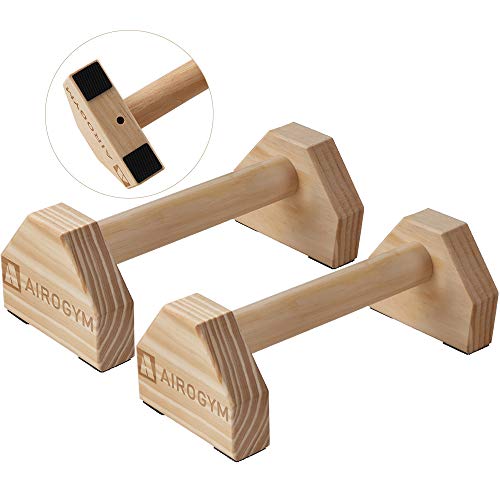
- Wide feet: improve resistance to tipping during L-sits, dips, and planche leans.
- Rubber contact points: reduce sliding and protect hard floors.
- Rigid joints: prevent rocking as weight shifts from one hand to the other.
- Low centre of gravity: is particularly valuable for handstand entries and lateral movements.
Best Parallettes for Home Workouts
The best parallettes for most home workouts are medium-height steel or hardwood bars with a grip diameter of about 35–40 mm, a footprint at least 25 cm wide, and a rated capacity of 200 kg or more; low parallettes are better for hand-balancing practice, while tall parallettes suit dips and deeper pressing exercises.
Parallettes are useful for push-ups, L-sits, planche progressions, handstand work, crow practice, mountain climbers, and elevated mobility drills. The right pair is less about choosing the most expensive option than matching height and stability to the exercises you will actually perform.
Our top picks


As an Amazon Associate we earn from qualifying purchases at no extra cost to you. Ratings are shown as listed on Amazon.
Quick comparison: which parallettes fit your training?
| Parallette type | Typical height | Typical grip diameter | Typical pair weight | Suggested rated capacity | Best use |
|---|---|---|---|---|---|
| Low push-up bars | 7–12 cm | 25–35 mm | 0.8–1.8 kg | 120–180 kg | Push-ups, wrist-neutral pressing, travel |
| Medium parallettes | 15–25 cm | 30–40 mm | 1.5–3.5 kg | 180–250 kg | L-sits, frog stands, handstands, planche drills |
| Tall parallettes | 30–45 cm | 32–42 mm | 3–7 kg | 200–300 kg | Dips, deep push-ups, elevated core work |
| Heavy-duty steel bars | 20–35 cm | 35–45 mm | 4–9 kg | 250 kg or more | Frequent training and heavier users |
Capacity figures are product ratings, not a guarantee that every surface or movement is safe. Dynamic landings and swinging can create forces above your body weight, so leave a substantial margin rather than selecting bars rated only slightly above your weight.
Height matters more than most buyers expect
Choose low parallettes for compact pressing work
Bars under about 12 cm high keep your centre of gravity close to the floor. They are efficient for push-ups, pseudo-planche push-ups, shoulder taps, and wrist-neutral plank variations. They also pack easily into a drawer or suitcase. Their limitation is clearance: they are unsuitable for comfortable L-sits if your legs or hips contact the floor, and they offer little room for deep dips.
Choose medium height for the widest exercise range
A height of roughly 15–25 cm is the most versatile choice for many home users. It gives the feet enough clearance for tuck L-sits and makes frog stands, handstands, and elevated push-ups more comfortable without creating an excessively high fall. Medium bars are usually the best balance of portability, stability, and exercise variety.
Choose tall parallettes for dips and deep range of motion
Bars around 30–45 cm high allow dips, deep deficit push-ups, and hanging-style knee raises when the design is sufficiently stable. They occupy more storage space and can feel less forgiving during balance drills. Tall parallettes should have broad bases, secure joints, and rubber feet; a narrow, lightweight frame may shift when you transition into or out of a dip.
Grip diameter and material: comfort versus control
A 30–35 mm handle usually suits smaller hands and balance exercises. A 35–40 mm handle is a useful all-round size for adults. Handles over 42 mm can reduce forearm fatigue for some users but may feel difficult to hold during long L-sits or handstand practice.
Steel handles are consistent, durable, and easy to clean. Powder coating improves grip compared with polished metal, but a heavily textured finish can abrade skin during high-volume work. Hardwood handles feel warm and can be comfortable for longer holds, although they require more care around moisture and may become slippery if varnished too smoothly.
Look for rounded edges and a continuous, even grip. A handle that changes diameter near the supports can create pressure points during handstands and tuck holds.
Base stability is the deciding factor for balance exercises
For static strength work, the base should be wider than the handle assembly and long enough to resist forward and sideways tipping. As a practical target, look for a footprint of at least 25 cm by 25 cm for medium bars, and closer to 30 cm by 30 cm for tall bars.
- Wide feet: improve resistance to tipping during L-sits, dips, and planche leans.
- Rubber contact points: reduce sliding and protect hard floors.
- Rigid joints: prevent rocking as weight shifts from one hand to the other.
- Low centre of gravity: is particularly valuable for handstand entries and lateral movements.
Test stability with a gradual, unloaded push before placing your full weight on the bars. A pair that feels solid during a push-up may still twist under a one-handed weight shift.
Decision matrix: the best choice by situation
| Your situation | Recommended specification | Why |
|---|---|---|
| Limited budget and occasional use | Low or medium steel bars; 120–180 kg rating | Lower cost and adequate for push-ups, planks, and basic holds |
| Beginner learning support holds | Medium bars, 15–25 cm high, wide rubber feet | Provides clearance without making balance practice unnecessarily high |
| Frequent L-sit or planche training | Medium bars; 35–40 mm grip; at least 180 kg rating | Combines hand comfort, clearance, and a useful stability margin |
| Dips and deep deficit push-ups | Tall bars, 30–45 cm high; 200 kg or higher rating | Allows leg clearance and deeper movement without contacting the floor |
| Small apartment or travel | Low bars under 2 kg per pair, or a folding design with locking hardware | Easy to store, but check that folding joints cannot loosen |
| Heavier user or dynamic transitions | Heavy-duty steel, broad base, 250 kg or higher rating | Provides more resistance to flexing, sliding, and joint stress |
Portability, floor protection, and storage
Lightweight bars are convenient, but weight often contributes to stability. For a permanent home setup, an extra 1–3 kg can be worthwhile if it comes from a rigid steel frame or broader base rather than decorative bulk.
For wood, laminate, and vinyl floors, use thick rubber feet or place the bars on a dense exercise mat. Very soft foam mats can make parallettes wobble, especially during handstand work. Check that every foot contacts the floor evenly; a rocking bar should not be corrected by adding loose cardboard or folded fabric underneath.
Folding parallettes are practical for small spaces, but inspect the locking mechanism before every session. If the bars use removable screws, store the hardware together and periodically check for looseness. A compact design is not a good trade if it develops play at the hinge or joint.
Durability and ownership costs
The parts that usually wear first are rubber feet, foam grip coverings, bolts, and weld or joint areas exposed to repeated twisting. Rubber can harden or split with age, while foam can compress where the hands repeatedly land. Bare steel may develop surface rust if stored damp, and unfinished wood can absorb sweat.
After each workout, wipe handles and feet with a lightly damp cloth and dry them fully. Avoid soaking wooden bars or using harsh solvents on rubber. Once a month, check for:
- loose bolts, rivets, or locking pins;
- cracked welds or visible frame bending;
- flattened or missing rubber feet;
- slippery residue on the handles; and
- movement between a handle and its base.
Replace damaged feet or grips rather than compensating with extra force. Stop using a bar with a cracked weld, bent support, or locking mechanism that does not fully engage.
How to set up parallettes for safer, more useful training
- Choose a firm surface. Use a level floor with enough room to step or roll away from the bars.
- Align the handles. Set both bars parallel and measure the spacing so your hands are symmetrical. A starting distance of shoulder width is suitable for many push-up and support exercises.
- Check contact. Press down gradually on each handle and confirm that the feet do not slide or rock.
- Begin with a supported hold. Try a short top-support position before attempting an L-sit, handstand, or transition.
- Increase difficulty one variable at a time. Add hold duration, range of motion, or leverage rather than changing all three together.
For example, if you train three times weekly for six months, a pair costing $60–$120 works out to approximately $0.77–$1.54 per session over 78 sessions, before replacement parts. That makes stability and comfort more important than saving a small amount at purchase.
Final buying recommendation
For the broadest range of home bodyweight exercises, choose medium parallettes around 15–25 cm high, with a 35–40 mm steel or hardwood grip, a base of at least 25 cm square, non-slip rubber feet, and a rated capacity of at least 200 kg. Choose low bars when storage and push-ups are the priority; choose tall, heavy-duty bars when dips and deep elevated movements are central to your program.
Parallettes can reduce wrist extension compared with floor exercises, but they do not remove strain from the wrists, elbows, shoulders, or hands. Build intensity gradually, use controlled movements, and seek advice from a qualified health or fitness professional if you have pain, an injury, or uncertainty about whether a particular exercise is appropriate.







Write Your Review
No reviews yet. Be the first to share your experience!