

Key takeaways
- Flush the group head after brewing and wipe the steam wand immediately after every use.
- Empty and rinse the drip tray before old coffee residue develops an odor.
- Backflush with cleaner only when the manual allows it; not every machine is designed for the same cleaning routine.
- Descale according to water conditions and manufacturer instructions, not on an arbitrary weekly schedule.
- Do not leave wet coffee in the portafilter or compacted against the shower screen.
- Use a scale to compare dose, yield, and time before changing several variables at once.
Best Espresso Machines Under: Find Your Budget
The best espresso machines under each price limit are different: choose a compact manual machine below $200 for occasional drinks, a thermoblock machine around $300–$600 for convenience, or a prosumer single-boiler model above $700 when temperature control and repairability matter most.
Quick picks by budget and situation
| Typical budget | Best for | Recommended type or example | Main compromise |
|---|---|---|---|
| Under $200 | Infrequent espresso and small kitchens | Entry-level 15-bar pump machine such as the De’Longhi Stilosa | Basic temperature control, lighter construction, limited accessories |
| $200–$400 | Beginners who want easier milk drinks | De’Longhi Dedica Arte or a similar compact thermoblock machine | Small portafilter and limited steam power |
| $400–$700 | Frequent home use and convenience | Breville Bambino or Bambino Plus | Less traditional construction and limited boiler capacity |
| $700–$1,200 | Enthusiasts making several drinks daily | Rancilio Silvia or a comparable single-boiler machine | Requires careful switching between brewing and steaming |
| $1,200–$2,000 | Serious hobbyists and better workflow | Profitec GO or a comparable temperature-controlled single boiler | Still not ideal for brewing and steaming simultaneously |
Best espresso machines under $200: basic espresso on a tight budget
At this level, look for a 15-bar pump, a removable water tank, a stainless-steel or aluminum portafilter, and both pressurized and, if possible, non-pressurized baskets. The pump’s advertised 15 bars is not the pressure your coffee should receive; espresso is generally brewed near 9 bars at the coffee puck. A pressure-regulated design or a correctly sized basket matters more than a large number printed on the box.
Our top picks

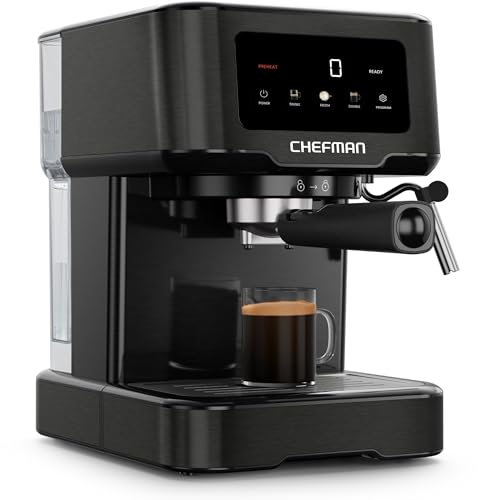
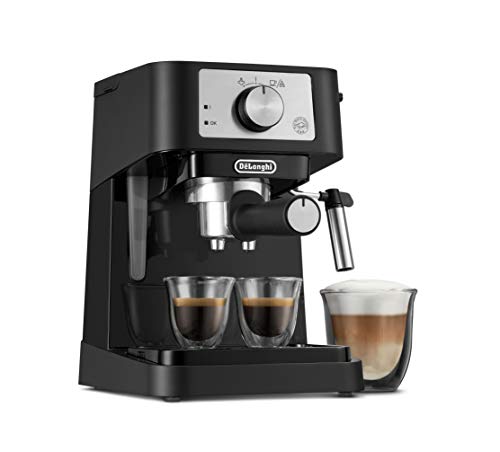
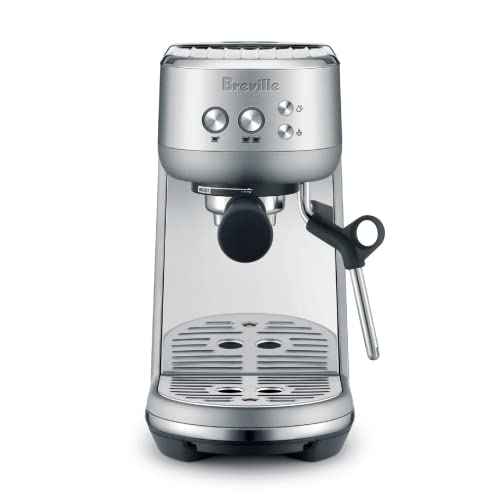
As an Amazon Associate we earn from qualifying purchases at no extra cost to you. Ratings are shown as listed on Amazon.
The De’Longhi Stilosa is a sensible example of this category. It is compact, inexpensive, and capable of producing acceptable espresso with pre-ground coffee or an entry-level grinder. Its compromises are predictable: the thermoblock has modest thermal mass, the included tamper is basic, and the steam wand is slower than those on more expensive machines.
This tier works best if you make one or two drinks at a time and are willing to pause between brewing and steaming. It is less suitable for entertaining, repeated milk drinks, or anyone expecting café-style consistency without upgrading the grinder.
Best espresso machines under $400: compact machines for beginners
Spend more when you want a smaller footprint, faster warm-up, and a more usable milk-steaming setup. The De’Longhi Dedica Arte is representative of this range, with a narrow body, a thermoblock heating system, and a steam wand intended for textured milk rather than merely warming it.
Machines in this bracket often use a 51 mm portafilter rather than the 58 mm size common on commercial equipment. That is not automatically a problem, but it limits the selection of aftermarket baskets and distribution tools. Check the included basket capacity: a typical double basket may hold about 14–16 grams, while many café-style 58 mm baskets hold 18–20 grams.
For a beginner, a machine in this band is a good choice when counter width matters and the household makes no more than three or four drinks in one session. Buy a capable burr grinder before paying extra for decorative controls; an inconsistent grinder can overwhelm the difference between two similarly priced machines.
Best espresso machines under $700: the easiest step up
The Breville Bambino and Bambino Plus are strong choices for people who want espresso and milk drinks without waiting several minutes for a large boiler. Their compact thermoblock systems heat quickly, and the Bambino Plus adds more automated milk-texturing assistance. The standard Bambino is often the better value if you want to learn manual steaming.
The trade-off is capacity and heat management. A compact thermoblock can be fast, but it does not store as much heat as a brass or stainless-steel boiler. After several milk drinks, you may need to refill the tank or allow the system to recover. These machines also depend on electronics, valves, and sensors that can be more difficult to repair than the simple switches and thermostats in traditional machines.
Choose this tier if convenience is more important than the ability to modify every part. It is particularly suitable for a small household making one to six drinks per day.
Best espresso machines under $1,200: traditional single-boiler control
The Rancilio Silvia is a durable, conventional option for someone who values a substantial portafilter, a strong steam wand, and a design with a long history of replacement parts. Its single boiler brews espresso and produces steam at different temperatures, so you must wait between functions. A typical workflow is to brew first, switch to steam mode, wait for temperature rise, steam the milk, and then cool or refill the boiler before brewing again.
This category rewards technique. You control the dose, grind, tamp, extraction time, and milk texture rather than relying on automatic assistance. It can produce excellent results, but it is not the best pick for a family preparing several cappuccinos at once.
Best espresso machines under $2,000: better feedback and ownership value
The Profitec GO illustrates what a higher-priced single-boiler machine adds: a more informative display, adjustable brew temperature, a pressure gauge, a strong steam system, and a build that typically uses more metal and serviceable components. These features do not eliminate the need for a good grinder, but they make it easier to diagnose a shot that runs too quickly or too slowly.
At this price, assess long-term ownership rather than counting buttons. A machine with a pressure gauge, accessible fittings, replaceable seals, and an established parts supply may cost less over a decade than a cheaper appliance that must be discarded after a pump or control failure.
How to choose by your actual routine
| Your situation | Best fit | Why |
|---|---|---|
| One espresso a few times per week | Under-$200 pump machine | Lower upfront cost and adequate capacity |
| Daily latte, limited counter space | $300–$700 compact thermoblock | Quick startup and smaller footprint |
| Several straight espressos daily | $700–$1,200 single boiler | More traditional brewing hardware and stronger serviceability |
| Several milk drinks in succession | Dual-boiler or heat-exchanger machine | Better brewing-and-steaming workflow, usually $1,500 and up |
| Learning espresso as a hobby | Manual single boiler with gauge | More control and clearer feedback |
The grinder changes the real budget
Do not spend the entire budget on the machine. A machine priced at $500 paired with a poor blade grinder can perform worse than a $300 machine paired with a consistent espresso burr grinder. For a realistic purchase plan, reserve roughly 25–40% of the total setup budget for the grinder, and allow another $30–$80 for a scale, dosing funnel, cleaning brush, and better tamper if the supplied accessories are inadequate.
For example, a $600 setup might allocate $400 to the machine, $160 to a capable grinder, and $40 to basic tools. If you already own a suitable grinder, put the saved money toward temperature control, a larger portafilter, or easier access to replacement parts.
Durability, cleaning, and common mistakes
The first wear items are usually group-head gaskets, shower screens, steam-wand seals, pump components, and plastic water-tank fittings. Hard water accelerates scale buildup, which can restrict valves and reduce heating performance. Use water that follows the manufacturer’s hardness guidance rather than assuming bottled water is always appropriate.
- Flush the group head after brewing and wipe the steam wand immediately after every use.
- Empty and rinse the drip tray before old coffee residue develops an odor.
- Backflush with cleaner only when the manual allows it; not every machine is designed for the same cleaning routine.
- Descale according to water conditions and manufacturer instructions, not on an arbitrary weekly schedule.
- Do not leave wet coffee in the portafilter or compacted against the shower screen.
- Use a scale to compare dose, yield, and time before changing several variables at once.
For a typical starting recipe, try 18 grams of coffee yielding about 36 grams of espresso in 25–35 seconds. Treat those numbers as a starting point, not a guarantee: grinder calibration, roast level, basket design, and water all change the result.
Final buying advice
Choose the lowest price band that satisfies your routine, not the highest specification you can afford. Under $200 is adequate for occasional use; $300–$700 is the practical sweet spot for compact daily brewing; $700 and above makes more sense when you value metal construction, steam performance, repairability, and control. Whichever machine you choose, budget for a proper burr grinder and consistent cleaning, because those two decisions usually affect the cup and the machine’s lifespan more than an extra pressure-bar claim.








Write Your Review
No reviews yet. Be the first to share your experience!