

The best dual boiler espresso machines for home are the Rancilio Silvia Pro X for value and compactness, the Lelit Bianca V3 for profiling flexibility, the Profitec Pro 700 for a balanced traditional build, and the ECM Synchronika II for heavy entertaining and plumbed-in use.
Our top picks
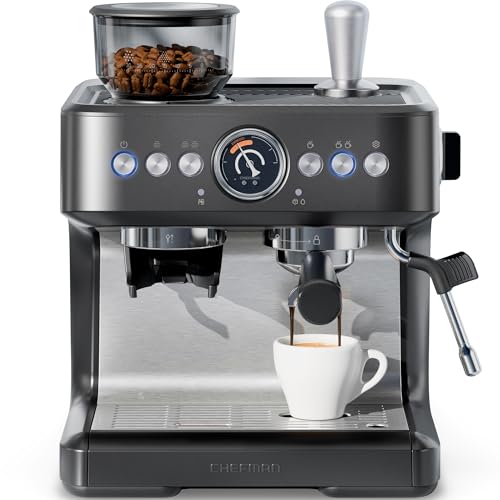 Chefman Crema Deluxe Espresso Machine with Double
- Brew rich, café-quality espresso with a semi-automatic design…
- Froth milk and brew espresso at the same…
- Customize your grind with 30 precision settings
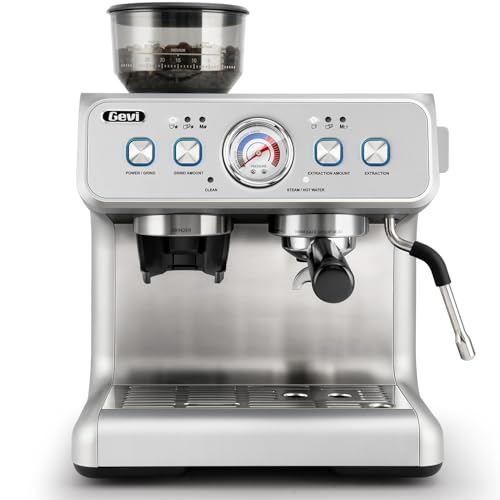 Gevi Dual Boiler Espresso Machine With Built‑In
- 【𝐏𝐫𝐞𝐜𝐢𝐬𝐞 𝐏𝐫𝐞𝐬𝐬𝐮𝐫𝐞,𝐏𝐫𝐨𝐟𝐞𝐬𝐬𝐢𝐨𝐧𝐚𝐥 𝐑𝐞𝐬𝐮𝐥𝐭𝐬】The advanced pressure control system of…
- 【𝐏𝐫𝐨𝐟𝐞𝐬𝐬𝐢𝐨𝐧𝐚𝐥-𝐒𝐭𝐲𝐥𝐞 𝐌𝐢𝐥𝐤 𝐅𝐨𝐚𝐦𝐢𝐧𝐠】The professional steam wand on the…
- 【𝐏𝐫𝐞𝐜𝐢𝐬𝐞 𝐓𝐞𝐦𝐩𝐞𝐫𝐚𝐭𝐮𝐫𝐞 𝐂𝐨𝐧𝐭𝐫𝐨𝐥 𝐰𝐢𝐭𝐡 𝐍𝐓𝐂 & 𝐏𝐈𝐃】The Gevi…
 Breville BES920XL Dual Boiler Espresso Machine
- The powerful steam wand is designed to quickly…
- Coffee espresso machine allows you to achieve consistent…
- Over Pressure Valve limits maximum pump pressure throughout…
| Product | Key specs | |
|---|---|---|
| Chefman Crema Deluxe Espresso Machine with Double | Brew rich, café-quality espresso with a semi-automatic design… Froth milk and brew espresso at the same… Customize your grind with 30 precision settings | Check price |
| Gevi Dual Boiler Espresso Machine With Built‑In | 【𝐏𝐫𝐞𝐜𝐢𝐬𝐞 𝐏𝐫𝐞𝐬𝐬𝐮𝐫𝐞,𝐏𝐫𝐨𝐟𝐞𝐬𝐬𝐢𝐨𝐧𝐚𝐥 𝐑𝐞𝐬𝐮𝐥𝐭𝐬】The advanced pressure control system of… 【𝐏𝐫𝐨𝐟𝐞𝐬𝐬𝐢𝐨𝐧𝐚𝐥-𝐒𝐭𝐲𝐥𝐞 𝐌𝐢𝐥𝐤 𝐅𝐨𝐚𝐦𝐢𝐧𝐠】The professional steam wand on the… 【𝐏𝐫𝐞𝐜𝐢𝐬𝐞 𝐓𝐞𝐦𝐩𝐞𝐫𝐚𝐭𝐮𝐫𝐞 𝐂𝐨𝐧𝐭𝐫𝐨𝐥 𝐰𝐢𝐭𝐡 𝐍𝐓𝐂 & 𝐏𝐈𝐃】The Gevi… | Check price |
| Breville BES920XL Dual Boiler Espresso Machine | The powerful steam wand is designed to quickly… Coffee espresso machine allows you to achieve consistent… Over Pressure Valve limits maximum pump pressure throughout… | Check price |
 Breville Dynamic Duo Espresso Machine Bundle | Experience third wave specialty coffee at home, made… The Dual Boiler heating system delivers simultaneous extraction Auto grind & dose with the precision conical… | Check price |
As an Amazon Associate we earn from qualifying purchases at no extra cost to you.
Quick comparison: the numbers that affect daily use
A dual-boiler machine separates brewing water from steam water. That lets you pull a shot and steam milk at the same time, while each boiler can be controlled at a different temperature. Capacities and dimensions can vary slightly by market configuration, so treat the figures below as practical manufacturer-specification ranges rather than laboratory measurements.
| Machine | Brew boiler | Steam boiler | Temperature control | Water supply | Approx. size and weight | Typical 2026 market range |
|---|---|---|---|---|---|---|
| Rancilio Silvia Pro X | 0.3 L | 1.0 L | Dual PID, digital display | Reservoir | 25 x 42 x 39 cm; about 20 kg | $1,900–$2,300 |
| Lelit Bianca V3 | 0.8 L | 1.5 L | Dual PID, flow-control paddle | Reservoir or plumbed-in | 29 x 48.5 x 40 cm; about 27 kg | $2,900–$3,500 |
| Profitec Pro 700 | 0.75 L | 1.0 L | Dual PID, display and shot timer | Reservoir or plumbed-in | 25 x 47.5 x 42 cm; about 31 kg | $3,000–$3,600 |
| Rocket R Cinquantotto | 0.58 L | 1.8 L | Dual PID, touchscreen controller | Reservoir or plumbed-in | 29 x 51 x 41 cm; about 30 kg | $3,000–$3,800 |
| ECM Synchronika II | 0.75 L | 2.0 L | Dual PID, display and shot timer | Reservoir or plumbed-in | 25 x 58 x 41 cm; about 30 kg | $3,500–$4,300 |
Which machine fits your situation?
| Your priority | Best fit | Why | Trade-off |
|---|---|---|---|
| Lowest cost for frequent milk drinks | Rancilio Silvia Pro X | True dual boilers, dual PID control, and a smaller footprint | Small brew boiler and reservoir-only operation |
| Experimenting with extraction | Lelit Bianca V3 | Manual flow-control paddle enables pressure and flow profiling | More variables to learn and a wide chassis |
| Traditional controls and neat construction | Profitec Pro 700 | Clear display, rotary pump, strong steam performance, and familiar E61 workflow | Heavy and relatively expensive |
| Many cappuccinos in succession | ECM Synchronika II | Its 2 L steam boiler gives the greatest reserve in this group | Deep, heavy, and costly |
| Plumbed-in flexibility with a modern interface | Rocket R Cinquantotto | Reservoir or direct connection and touchscreen control | Touchscreen adds complexity without changing basic espresso physics |
Brew and steam boiler size: what the capacity really changes
The brew boiler mainly supports temperature stability and repeated brewing. A 0.3 L brew boiler, as used by the Silvia Pro X, is sufficient for home shots because each double espresso typically uses about 36–44 g of beverage water. It may recover more quickly after several consecutive shots than a larger boiler because there is less water to heat, but the machine has less thermal reserve if you flush heavily or brew continuously.
A 0.75–0.8 L brew boiler provides more reserve for back-to-back drinks and for users who use longer pre-infusion or frequent cooling and cleaning flushes. It does not automatically make espresso better; grinder adjustment, water quality, dose, and puck preparation matter more.
The steam boiler has a more obvious effect on entertaining. A 1 L boiler is comfortable for one or two milk drinks at a time. A 1.5–2 L boiler maintains steam pressure for a longer stretch, so it is better for a family breakfast or a small dinner party. The larger boiler also takes more energy and can lengthen warm-up time.
Temperature control and recovery
Dual PID machines let you set brew and steam temperatures independently. This is useful when switching between light and dark roasts, but the displayed temperature is not identical to the temperature at the coffee bed. Group-head design, flush routine, idle time, and the temperature of the incoming water all affect the actual extraction.
For home use, expect roughly 15–25 minutes for a large E61 machine to become fully heat-soaked, even if its display indicates readiness sooner. Smaller machines may be usable in about 10–15 minutes. Recovery between ordinary shots is usually short; recovery while steaming depends more on steam-boiler size and how aggressively milk is heated. The fastest workflow is normally to brew first and steam immediately afterward, rather than repeatedly alternating between functions.
The Silvia Pro X uses a compact saturated-style group and digital controls, making it easier to operate in a narrow kitchen. The Bianca, Profitec, Rocket, and ECM use E61-style groups that add thermal mass and a familiar lever operation, but they also contribute to weight, depth, and warm-up time.
Pressure gauges, pumps, and water connections
Most machines in this class show boiler pressure, and many also show pump pressure. A gauge is useful for spotting abnormal behavior, but it is not a substitute for measuring espresso flow at the cup. During brewing, pressure often rises toward about 9 bar, while steam-boiler pressure commonly sits around 1–1.5 bar depending on the PID setting.
A vibration pump is less expensive and can be louder. A rotary pump is quieter and better suited to direct plumbing, although it increases cost and does not guarantee better flavor. Reservoir operation is simpler for renters and avoids modifying cabinetry. Direct connection is convenient for high-volume use, but it requires a shutoff valve, a suitable drain arrangement if the machine has one, and water treatment appropriate to your local hardness.
The Bianca, Pro 700, R Cinquantotto, and Synchronika II can be configured for reservoir or plumbed-in operation. The Silvia Pro X is reservoir-based, which reduces installation choices but makes the machine easier to place and move.
Footprint and counter planning
Measure more than the published width. Leave room above the machine for filling a reservoir, behind it for hoses and ventilation, and in front for the portafilter handle. The Synchronika II is approximately 58 cm deep, while the Silvia Pro X is closer to 42 cm deep. That difference can determine whether the machine fits without occupying the front edge of a counter.
Also account for weight. A 27–31 kg machine can be difficult to slide out for cleaning or water filling. If you choose direct plumbing, check that the counter can support the machine and that the connection will remain accessible. A sturdy pull-out tray can help with reservoir models, but it must support the machine safely and remain level.
Ownership costs and maintenance realities
The purchase price is only part of the cost. A realistic annual consumables budget is about $80–$250 for water filters or treatment, detergent, group gaskets, shower screens, and occasional cleaning supplies. Add more if your water is hard or if you pay a technician for preventive service.
Common wear items include the group gasket, steam-valve seals, portafilter seals, pump, and the anti-vacuum valve. Gaskets and screens are inexpensive; pumps, heating elements, control boards, and labor are not. A machine with a rotary pump may cost more initially but can be attractive for frequent users who value quieter operation and plumbed-in convenience.
Descaling deserves caution. If the machine is used with appropriate low-mineral water, routine descaling may be infrequent. Blindly descaling a complex dual-boiler machine can loosen scale and move debris into valves or restrictors. Follow the manufacturer’s procedure and use water testing or professional service when mineral buildup is suspected.
A practical maintenance schedule
- After every session: purge and wipe the steam wand immediately, then flush the group briefly and dry the portafilter.
- Weekly: backflush with water, wash the basket and portafilter, and inspect the group gasket.
- Every 1–2 weeks: use the manufacturer-approved espresso detergent if your usage is moderate to high.
- Monthly: clean the reservoir, check the water filter, inspect hoses, and verify that the steam tip holes are open.
- Annually or as needed: replace worn seals and have the machine inspected if pressure fluctuates, water leaks, or the boiler repeatedly fails to refill.
Bottom line
Choose the Rancilio Silvia Pro X if space and price matter most. Choose the Lelit Bianca V3 if you want hands-on flow profiling. The Profitec Pro 700 is the balanced traditional choice, while the Rocket R Cinquantotto suits buyers who prefer touchscreen control and plumbing flexibility. For the heaviest home workload, the ECM Synchronika II’s large steam boiler and rotary-pump design justify its size and cost.
Whichever you select, budget for a capable grinder and suitable water. A dual boiler improves workflow and temperature independence, but it cannot correct an inconsistent grind, poor water, or neglected maintenance.
More from Amazon
Programs that pair well with the guide above. Offers and eligibility are set by Amazon and may change.
Set up recurring deliveries of everyday items on eligible products. Terms and savings are set by Amazon.
Explore Subscribe & SaveCollect the home and kitchen items you want in one registry that guests can shop from.
Create a wedding registryFree shipping on eligible items, Prime Video and more. Eligible new members can start with a free trial.
Start a Prime free trialAudiobooks and podcasts to listen to on the go. Eligible new members can start with a free trial.
Try Audible freeAs an Amazon Associate we earn from qualifying purchases.






Write Your Review
No reviews yet. Be the first to share your experience!