

Key takeaways
- Protect the corners first. Glass screens usually fail after a corner impact, not from ordinary tapping. Choose a case with a raised bezel and reinforced corners rather than an ultra-thin shell.
- Budget for the keyboard as a wear item. Detachable keyboard covers collect crumbs, develop shiny keycaps, and can lose hinge stiffness. Avoid carrying the tablet by the keyboard edge.
- Keep charging ports clean and dry. Do not force a cable into a port containing lint. Power off the tablet and use gentle, non-metal cleaning methods; never insert a wet connector.
- Do not fill storage completely. Keep at least 10–15% free for updates, temporary files, and app performance. Move completed video projects and old downloads to approved cloud or external storage.
- Check school rules before buying cellular service. Wi-Fi-only models usually cost less, while cellular models add hardware and potentially recurring service fees. A phone hotspot may be enough for occasional use, but it can drain the phone battery quickly.
- Set controls on the child’s account, not only the device. A supervised Apple, Google, or Microsoft account makes app restrictions and screen-time rules harder to bypass after a reset or device change.
The best tablets for students are the iPad (A16) for most schoolwork, the Samsung Galaxy Tab S10 FE for a lower-cost Android package with an included S Pen, and the Microsoft Surface Pro 11 for students who need a Windows laptop replacement.
The right choice depends less on processor speed than on workload. Reading PDFs and submitting assignments require a different setup from drawing diagrams, editing video, running desktop software, or typing several thousand words each week. The comparison below focuses on screen size, realistic battery expectations, keyboard and stylus support, storage, durability, parental controls, and the total cost of making each tablet school-ready.
Our top picks
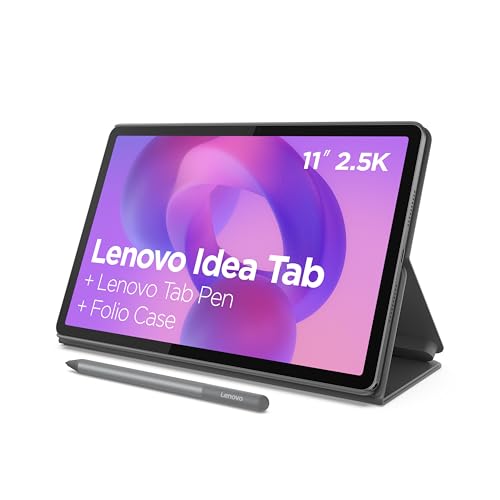


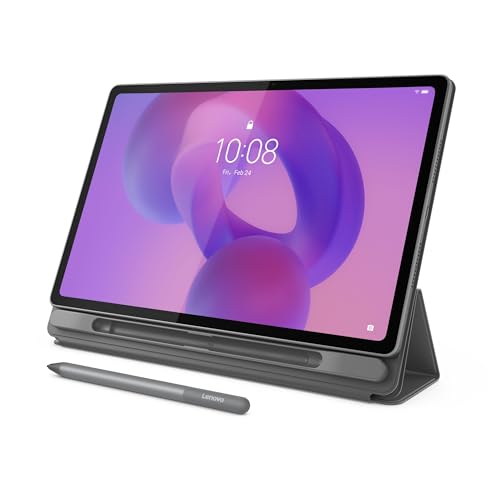
As an Amazon Associate we earn from qualifying purchases at no extra cost to you. Ratings are shown as listed on Amazon.
Quick comparison of the leading student tablets
| Tablet | Screen and weight | Storage options | Battery expectation | Keyboard and stylus | Approximate complete setup |
|---|---|---|---|---|---|
| Apple iPad (A16, 11-inch) | 11-inch, about 1.05 lb | 128GB, 256GB, or 512GB | Up to about 10 hours of web or video use | Apple Pencil USB-C; keyboard cases available | $500–$850 |
| Apple iPad Air (M3, 11-inch) | 11-inch, about 1.02 lb | 128GB to 1TB | Up to about 10 hours | Apple Pencil Pro or USB-C; Magic Keyboard available | $700–$1,300 |
| Samsung Galaxy Tab S10 FE | 10.9-inch, about 1.1 lb | 128GB or 256GB, microSD expansion | Roughly 10–14 hours depending on use | S Pen included; Book Cover Keyboard sold separately | $550–$850 |
| Microsoft Surface Pro 11 | 13-inch, about 1.97 lb before keyboard | 256GB to 1TB removable SSD options | Up to about 10–14 hours, configuration dependent | Surface Pro Keyboard and Surface Slim Pen sold separately | $1,200–$2,000 |
| Lenovo Chromebook Duet 11 | 11-inch, about 1.2 lb tablet-only | Typically 64GB or 128GB | Approximately 8–12 hours | Detachable keyboard commonly bundled; pen support varies | $250–$500 |
Battery figures are manufacturer-style maximums or broad real-world ranges, not guarantees. Video calls, high screen brightness, gaming, external drives, and weak Wi-Fi can reduce runtime substantially. Prices are general 2026 market ranges and vary by storage, cellular connectivity, promotions, and included accessories.
Best overall for most students: iPad (A16)
The standard iPad is the most balanced choice for note-taking, online learning, ebooks, research, video calls, and ordinary document work. Its 11-inch display is large enough for split-screen reading and writing while remaining easy to carry between classes. The 128GB starting capacity is also more practical than the 64GB storage found on older entry-level tablets.
Apple Pencil USB-C support makes handwritten notes and diagrams straightforward, although this pencil lacks some of the pressure-sensitive and wireless-charging features of the Apple Pencil Pro. A basic keyboard case can turn it into a competent typing device, but students who write long essays may prefer a heavier case with a more laptop-like hinge.
Choose the iPad (A16) when the workload is mostly browser-based and the school already uses Google Workspace, Microsoft 365, or iPad apps. Its main weakness is accessory cost: the tablet may look affordable until a pencil, keyboard, protective case, and charger are added.
Best for handwritten notes and Android flexibility: Samsung Galaxy Tab S10 FE
The Galaxy Tab S10 FE is especially appealing when note-taking and media consumption matter more than demanding desktop software. The included S Pen lowers the real purchase price, and the microSD card slot allows inexpensive expansion for downloaded textbooks, lecture recordings, and offline video.
Samsung’s split-screen and multitasking features are useful for keeping a PDF open beside a notes app. Its IP68 dust- and water-resistance rating is an advantage for students who carry the tablet through unpredictable weather, although water resistance does not make it safe to use while charging or immune to impact damage.
The optional keyboard cover is suitable for short assignments and email, but it is not as comfortable as a full-size laptop keyboard for daily essay writing. Android parental controls through Google Family Link and Samsung’s own settings are useful for younger students, with controls for screen time, app installation, content filtering, and bedtime schedules.
Best for demanding coursework: Microsoft Surface Pro 11
The Surface Pro 11 is the strongest option for students who need Windows applications, full desktop browsers, advanced spreadsheets, engineering tools, coding environments, or specialized school software. Its 13-inch screen provides more comfortable workspace than an 11-inch tablet, and the kickstand supports laptop-style positioning, drawing, and presentations.
It is also the most expensive option once the keyboard and Surface Slim Pen are included. At nearly two pounds before the keyboard, it is less convenient to hold for long reading sessions. Battery life varies significantly between Snapdragon X Plus and X Elite configurations, display settings, and application compatibility. Students should confirm that required software runs well on Windows on Arm before buying.
Windows Family Safety provides strong account, web, app, and screen-time controls for younger users. For a university student, the more important advantage is repair and storage flexibility: selected Surface Pro 11 models use a removable solid-state drive, although replacement should be performed carefully or by a qualified technician.
Best budget pick: Lenovo Chromebook Duet 11
A Chromebook tablet is a sensible low-cost choice for Google Classroom, web research, streaming lessons, email, and lightweight documents. The detachable keyboard is often included, which gives it a lower total ownership cost than an entry-level iPad with separate accessories.
The limitations are equally important. Modest storage can fill quickly with downloaded files, Android app support varies, and specialized Windows or macOS software will not run natively. A Chromebook is best when the school’s workflow is cloud-based and assignments are completed in browser applications. ChromeOS parental controls are managed through Google Family Link, making it a practical option for younger children with supervised accounts.
Best premium tablet for creative students: iPad Air (M3)
The iPad Air with the M3 chip is a better fit for students who draw, edit photos, create music, work with large documents, or want more performance headroom than the standard iPad. It supports Apple Pencil Pro, whose squeeze and hover features can be valuable for illustration and detailed annotation.
The 11-inch model is the easier one to carry; a 13-inch iPad Air offers more room for timelines and two-document layouts but costs more and weighs more. Neither size includes a keyboard or pencil, so the complete package can approach laptop pricing. Select 256GB or larger if storing video, design files, or large offline course libraries; 128GB is sufficient for ordinary notes and cloud-first study.
Decision matrix by school workload
| Student situation | Recommended choice | Why | What to avoid |
|---|---|---|---|
| Under $500 total and browser-based assignments | Lenovo Chromebook Duet 11 | Keyboard is commonly included and cloud storage reduces local requirements | Buying it for Windows-only software |
| General middle school or high school work | iPad (A16) or Galaxy Tab S10 FE | Portable screens, long battery life, strong app and parental-control options | 64GB or less for a student who downloads everything |
| Frequent handwritten notes and diagrams | Galaxy Tab S10 FE | S Pen is included and microSD expansion is available | Assuming a cheap capacitive stylus will feel like an active pen |
| Daily essays and research papers | Surface Pro 11 or iPad with a quality keyboard | Better typing environments and larger workspace | Using a narrow, flat keyboard case as a full-time laptop replacement |
| Drawing, design, or media creation | iPad Air (M3) | Strong creative-app performance and Apple Pencil Pro support | Choosing 128GB if large project files stay on the device |
| University software and desktop applications | Surface Pro 11 | Runs Windows programs and provides a larger 13-inch workspace | Skipping a compatibility check for Arm-based Windows software |
Calculate the real purchase cost before choosing
Compare complete setups rather than tablet prices alone. For example, a $350 tablet with a $120 keyboard, $80 stylus, $45 protective case, and $25 charger costs $620 before tax. A $430 tablet with a keyboard included and a $45 case costs $475, even if the second tablet appears more expensive on the shelf.
For a four-year ownership period, that $620 setup works out to about $155 per year, or roughly $0.85 per school day over 180 school days per year. This is not a measure of quality, but it exposes the effect of accessories and helps compare a tablet with a conventional laptop or school-issued device.
Durability and ownership details that matter
- Protect the corners first. Glass screens usually fail after a corner impact, not from ordinary tapping. Choose a case with a raised bezel and reinforced corners rather than an ultra-thin shell.
- Budget for the keyboard as a wear item. Detachable keyboard covers collect crumbs, develop shiny keycaps, and can lose hinge stiffness. Avoid carrying the tablet by the keyboard edge.
- Keep charging ports clean and dry. Do not force a cable into a port containing lint. Power off the tablet and use gentle, non-metal cleaning methods; never insert a wet connector.
- Do not fill storage completely. Keep at least 10–15% free for updates, temporary files, and app performance. Move completed video projects and old downloads to approved cloud or external storage.
- Check school rules before buying cellular service. Wi-Fi-only models usually cost less, while cellular models add hardware and potentially recurring service fees. A phone hotspot may be enough for occasional use, but it can drain the phone battery quickly.
- Set controls on the child’s account, not only the device. A supervised Apple, Google, or Microsoft account makes app restrictions and screen-time rules harder to bypass after a reset or device change.
Bottom line
Buy the iPad (A16) for the safest all-purpose recommendation, the Galaxy Tab S10 FE when included stylus support and expandable storage matter most, the Surface Pro 11 for Windows-heavy coursework, the Lenovo Chromebook Duet 11 for the lowest complete cost, and the iPad Air (M3) for creative work. Before ordering, price the tablet, keyboard, stylus, case, charger, storage, and any cellular plan as one package; that total is the meaningful comparison.







Write Your Review
No reviews yet. Be the first to share your experience!