

Key takeaways
- Compare the best vegetable brushes for scrubbing potatoes, carrots and delicate produce, with bristle types, grips and care tips for skin-on cooking.
- Top Pick: OXO Good Grips Vegetable Brush
- Runner-up: MR.SIGA Fruit and Vegetable Cleaning Brush, Pack of 2
- Also consider: Aodaer Vegetable Brush, 4 Pieces
Steaming, roasting and boiling vegetables with the skin on is one of the simplest habits in a whole-food kitchen, because much of a vegetable’s fiber sits in or just under the skin. The catch is that skin-on cooking only works when the skin is genuinely clean. Field soil clings to potatoes, carrots, beets and ginger, and a quick rinse under the tap rarely shifts it from eyes, grooves and root hairs. A vegetable brush solves that with plain running water and a few seconds of scrubbing, no soaking or produce wash required.
The five brushes below cover the main designs on the market: a flexible palm brush, a dual-bristle handled brush, small silicone-grip scrubbers sold in multipacks, and simple long-handle potato brushes. They differ in bristle stiffness, grip style, pack size and how they are cleaned, and those details decide which one fits the way you cook. If most of your produce heads for a steamer basket or a sheet pan with its skin intact, one of these belongs next to your sink.
As an Amazon Associate, we earn from qualifying purchases.
Quick Answer
For most kitchens, the OXO Good Grips Vegetable Brush is the simplest pick: stiff nylon bristles, a flexible non-slip body and dishwasher-safe cleaning. If you scrub for a family, the two-brush MR.SIGA set adds a softer angled side for mushrooms and a built-in tool for potato eyes. Every pick below suits skin-on cooking with plain running water.
1. OXO Good Grips Vegetable Brush

The OXO brush is the reference design in this category: a palm-sized, flexible body covered in sturdy nylon bristles, with a soft non-slip grip that stays secure in wet hands. The body flexes as you work, which helps the bristles follow the curves of potatoes, carrots, beets and citrus instead of skating over them. It is firm enough to clear soil from potato eyes and carrot grooves, and the same stiffness removes corn silk without tearing the kernels.
Because there is no handle, control comes from your palm, which suits cooks who scrub a few vegetables at a time rather than a whole market haul. When the brush itself gets dirty, it goes in the dishwasher, a practical advantage over natural-fiber brushes that need hand washing and careful drying. If you want one brush that handles everyday root vegetables and asks for almost no upkeep, this is the straightforward choice.
Specs
- Bristles: sturdy nylon
- Body: flexible with a non-slip grip
- Care: dishwasher safe
- Model number: 33781
- Best for: firm produce such as potatoes, carrots and beets
- Size: palm-sized; confirm exact dimensions on the listing
2. MR.SIGA Fruit and Vegetable Cleaning Brush, Pack of 2
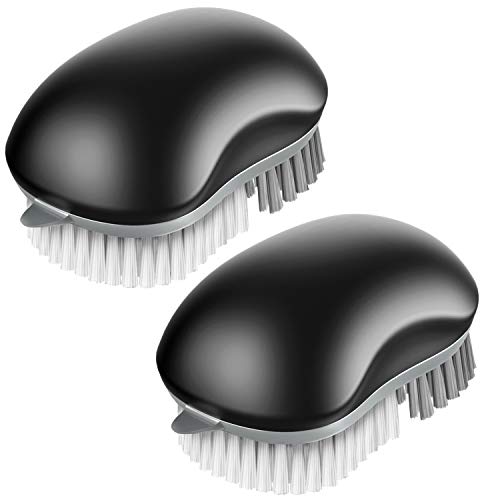
MR.SIGA’s brush takes the opposite approach to bristles: instead of one stiffness everywhere, it combines two. Angled gentle grey bristles handle mushrooms and other delicate produce, while stiff straight white bristles scrub potatoes, radish and cucumbers. A thickened plastic remover is built into the body for digging out potato eyes and the tips of tubers, a small detail that saves reaching for a paring knife during prep.
The TPR-covered surface gives a non-slip grip that sits in the palm, and the pack includes two identical brushes, so one can live at the sink and one in a prep drawer, or one can be kept strictly for produce while the other handles general kitchen scrubbing. For households that wash a wide range of produce, from mushrooms to winter squash, the two-bristle layout covers more ground than a single-stiffness brush.
Specs
- Pack size: 2 brushes
- Bristles: dual-action nylon, angled gentle bristles and stiff straight bristles
- Extra feature: built-in plastic remover for potato eyes and tips
- Grip: TPR non-slip palm surface
- Materials: nylon, polypropylene and thermoplastic elastomer
- Model number: SJ21685
- Weight: 89 grams; confirm whether this is per brush or per pack on the listing
3. Aodaer Vegetable Brush, 4 Pieces

The Aodaer set is built around small, round scrubbers with a silicone grip and nylon bristles, sold as a pack of four in blue, rose red, yellow and green. Each brush has a harder side for tough skins and a softer side for delicate produce, so the same tool moves from potatoes to peaches by flipping it over. A ring on top fits over a finger or hangs on a hook, which keeps the brush from slipping away mid-scrub and gives it a place to air dry.
At roughly 2.3 by 2.3 by 1.1 inches each, these are the smallest brushes in this guide. That compact size suits small sinks, single servings and cooks who like to dedicate one brush to one job, for example one for root vegetables and one for fruit. With four in the pack, replacing a worn or misplaced brush is not a separate shopping trip. The trade-off is leverage: a mini scrubber asks more of your hand on a large, muddy haul than a handled brush does.
Specs
- Pack size: 4 brushes
- Size: about 2.3 x 2.3 x 1.1 inches per brush
- Grip: silicone, non-slip, with a hanging ring on top
- Bristles: nylon, with a hard side and a soft side
- Colors: blue, rose red, yellow and green
- Care: rinse after use; confirm dishwasher guidance on the listing
4. Joie Potato Scrub Brush
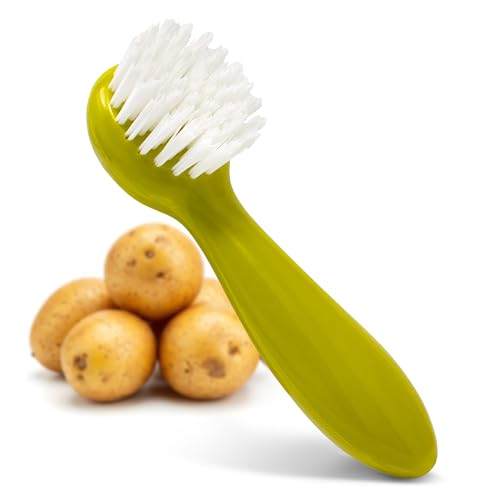
Joie’s brush is the traditional long-handle option. The extended handle gives extra leverage for hard scrubbing, which helps with caked soil on potatoes, yams, parsnips and acorn squash, and it keeps your knuckles clear of rough skins. The ergonomic grip is shaped to stay comfortable through a batch of prep, and the compact head still fits into the curves of smaller vegetables and fruit such as apples.
The body is BPA-free plastic, and the brush is top rack dishwasher safe, so cleanup is simple. This is a single-purpose, inexpensive style of tool: it does not offer a soft side for mushrooms or a multipack’s flexibility, but for cooks whose scrubbing is mostly potatoes and other firm vegetables heading for the steamer or roasting pan, it covers the job with the least fuss.
Specs
- Handle: long ergonomic easy-grip handle
- Bristles: nylon
- Material: BPA-free plastic
- Care: top rack dishwasher safe
- Color: green
- Best for: potatoes and other firm vegetables; confirm exact dimensions on the listing
5. Lumkew Vegetable Brush Scrubber, 2 Pcs

The Lumkew set keeps things minimal: two palm-style scrubber brushes with plastic handles, shaped for washing potatoes, carrots, mushrooms and, per the maker, almost all fruits and vegetables. The two-pack format means a spare is ready when the first brush is in the dishwasher or drying, and the simple shape stores flat in a drawer or stands by the sink without taking counter space.
Listing detail for this set is thinner than for the bigger brands, so treat it as the no-frills option: a basic scrubber shape, a plastic handle and a two-count pack. If you want a backup brush for a second sink, a rental kitchen or a garden wash station and do not need dual bristles or a built-in eye remover, it fills that role. Check the listing for bristle material and care instructions before ordering, since those details are not fully stated in the summary information.
Specs
- Pack size: 2 brushes
- Handle material: plastic
- Intended use: potatoes, carrots, mushrooms and most fruits and vegetables
- Color: listed as Potato Mushroom
- Bristle material: confirm on the listing
- Care: confirm on the listing
How to Choose a Vegetable Brush
Start with bristle stiffness, because it decides what you can safely scrub. Stiff nylon or firm bristles clear soil from potatoes, carrots, beets, parsnips, ginger and turnips, the produce most likely to be steamed or roasted skin-on. Softer bristles suit mushrooms, zucchini and ripe fruit. If your basket holds both kinds every week, a dual-bristle design like the MR.SIGA or the two-sided Aodaer saves you owning two separate brushes.
Next, match the shape to your volume. Palm brushes give close control for a few vegetables at a time. A long handle adds leverage and keeps hands away from rough skins when you are working through a large batch. Small ring-grip scrubbers are easy to store and hang to dry, but they ask more of your hand on big jobs.
Finally, think about hygiene and upkeep. A produce brush should be kept for produce only, rinsed after each use and allowed to dry fully between uses, since a brush that stays wet can harbor odors. Dishwasher-safe synthetic brushes are the lowest-effort option. Whichever style you pick, scrub firm produce under plain running water and skip soap or detergent, which are not made for food.
Who Should Skip a Vegetable Brush
Skip a brush if your produce is mostly berries, grapes, herbs and leafy greens. Those are rinsed gently in water and are too delicate for bristles of any stiffness. Cooks who peel nearly everything before cooking also get little from a brush, since a peeler removes the surface a brush would clean. If you already own a clean, dedicated produce brush in good condition, a second one adds little; brushes are worth replacing when bristles splay, soften or hold an odor, not on a schedule. And if your vegetables arrive pre-washed and bagged from the store and you cook them peeled, your money is better spent on the produce itself.
FAQ
Do I need a brush if I peel my vegetables anyway?
Mostly no. A brush matters most for skin-on cooking and eating, where the surface you scrub is the surface you serve. If a vegetable will be peeled, a rinse is usually enough, although scrubbing a very muddy potato first keeps soil off your board and knife.
Should I use soap or a produce wash when scrubbing vegetables?
Plain running water is the standard recommendation. Soap and detergent are not made for food and can leave residue in skins and grooves. A clean brush plus water and a little friction removes the soil that rinsing alone leaves behind on firm produce.
Which produce should never be scrubbed with a stiff brush?
Soft and delicate items: mushrooms, ripe tomatoes, peaches, berries and leafy greens. Mushrooms are usually brushed dry with a soft brush or wiped, because they absorb water. Save stiff bristles for firm skins like potatoes, carrots, beets and winter squash.
How do I keep a vegetable brush clean?
Rinse it well after each use, shake off the water and let it dry fully in the open air rather than in a closed drawer. Dishwasher-safe models can go through a cycle for a deeper clean. Keep the brush for produce only, and replace it when the bristles flatten, splay or smell.
Final Verdict
For a single all-purpose brush, the OXO Good Grips is the easy default: flexible, firm-bristled and dishwasher safe. The MR.SIGA two-pack is the better fit for mixed produce, thanks to its dual bristles and built-in eye remover. The Aodaer four-pack suits small kitchens and cooks who like a dedicated brush for each job, the Joie brings long-handle leverage to big batches of potatoes, and the Lumkew pair covers the basics as a spare. Match the bristles to your produce, keep the brush clean and dry, and skin-on steaming and roasting get a lot simpler.
More from Amazon
Programs that pair well with the guide above. Offers and eligibility are set by Amazon and may change.
Set up recurring deliveries of everyday items on eligible products. Terms and savings are set by Amazon.
Explore Subscribe & SaveCollect the home and kitchen items you want in one registry that guests can shop from.
Create a wedding registryFree shipping on eligible items, Prime Video and more. Eligible new members can start with a free trial.
Start a Prime free trialAudiobooks and podcasts to listen to on the go. Eligible new members can start with a free trial.
Try Audible freeAs an Amazon Associate we earn from qualifying purchases.



Write Your Review
No reviews yet. Be the first to share your experience!