

Key takeaways
- Pick the delivery type first: top-load (cheapest, you lift the jug), bottom-load (jug sits in the base), or bottleless (plumbed to your water line with filters).
- Any cooler with a hot tap should have a child safety lock. Look for a two-step release, and keep the hot setting off if small children are around.
- A 5-gallon jug holds 640 fluid ounces. A household of four drinking about 64 ounces each per day gets through one jug in roughly 2.5 days.
- Bottleless coolers trade jug lifting for filter changes and a water line, so check the maker’s replacement schedule and the filter certifications on the listing.
- Plan to clean the reservoir on a schedule: self-cleaning models still need periodic attention, and others need a manual sanitising routine every month or so.
The best home water coolers fall into three camps: top-loading units that suit tight budgets, bottom-loading units that spare your back, and bottleless coolers that filter tap water and never run out. For most households that already buy 5-gallon jugs, a bottom-loader such as the Primo Bottom Loading Water Cooler is the easiest upgrade. If you would rather stop buying jugs altogether, a filtered bottleless cooler such as the Avalon B8 countertop model is the better long-term fit. This guide is about drinking-water coolers for kitchens, not liquid coolers for computers.
Key takeaways
- Pick the delivery type first: top-load (cheapest, you lift the jug), bottom-load (jug sits in the base), or bottleless (plumbed to your water line with filters).
- Any cooler with a hot tap should have a child safety lock. Look for a two-step release, and keep the hot setting off if small children are around.
- A 5-gallon jug holds 640 fluid ounces. A household of four drinking about 64 ounces each per day gets through one jug in roughly 2.5 days.
- Bottleless coolers trade jug lifting for filter changes and a water line, so check the maker’s replacement schedule and the filter certifications on the listing.
- Plan to clean the reservoir on a schedule: self-cleaning models still need periodic attention, and others need a manual sanitising routine every month or so.
Quick comparison of the best home water coolers
| Pick | Best for | Type and fit | Key features | Tier |
|---|---|---|---|---|
| Igloo Top Loading Water Cooler | Lowest-cost floor cooler | Top-load, 3 or 5 gallon jugs | Hot and cold, child safety lock, removable tray | Budget |
| Avalon Top Loading Water Cooler | Narrow kitchens | Top-load, 3 or 5 gallon, slim design | Hot and cold, child safety lock, UL listed | Mid-range |
| Euhomy Top Load Water Dispenser | Countertop space | Countertop, 3 or 5 gallon | 3 temperatures, child safety lock | Budget |
| Primo Bottom Loading Water Cooler | No lifting or spills | Bottom-load, 5 gallon | Hot and cold, 2-step child lock, LED night light | Mid-range |
| Avalon B8 Countertop Bottleless | Plumbed tap-water cooler | Countertop, bottleless | 2-stage filters and installation kit included | Mid-range |
| Brio 520 UV Bottleless Cooler | Self-cleaning, filtered water | Bottleless, floor-standing | UV self-clean, 2-stage filtration, 3 temperatures | Premium |
| iSpring DS4S Bottleless Dispenser | Heavier filtration | Bottleless | 4-stage filtration, hot/cold/room, self-cleaning | Premium |
1. Igloo Top Loading Water Cooler: Best budget top-loading cooler
Igloo’s top-loader is the classic water-tower shape: flip a 3- or 5-gallon jug upside down onto the top and it feeds a hot tap and a cold tap from stainless reservoirs. It is the simplest way to get hot and cold water at home without plumbing, and the listing mentions a removable drip tray, energy-saving features and a child safety lock. The catch is that you must lift each full jug to shoulder height, and a 5-gallon jug of water is a heavy lift.
- Top-loading water cooler, hot and cold
- Fits 3- and 5-gallon jugs
- Removable tray, child safety lock, stainless finish
- Marketed with energy-saving features; check the maker page for the rating
Best for: buyers who just want hot and cold water on a budget. Skip if: you cannot lift full jugs comfortably, or you want room-temperature water.
Pros: Low cost; hot and cold; simple parts; removable tray. Cons: Heavy lifting; the jug is on show; spills happen if the bottle seal is bad.
As an Amazon Associate we earn from qualifying purchases at no extra cost to you.
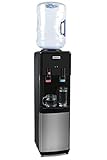
2. Avalon Top Loading Water Cooler: Best slim cooler for small kitchens
Avalon’s top-loader is built around a narrow footprint, so it can fit beside a fridge or in a corner where wider coolers will not. The listing describes a slim design, a child safety lock and UL listing, and it holds 3- or 5-gallon bottles. The small width is the reason to pick it, since the feature set is otherwise close to a standard top-loader. The maker page lists the exact dimensions, which you should measure against your space first.
- Top-loading water cooler dispenser, hot and cold
- Holds 3 or 5 gallon bottles
- Slim design, child safety lock, UL listed
- Check the maker page for width, depth and height
Best for: narrow gaps and small apartments. Skip if: you want a bottom-loader or a third, room-temperature tap.
Pros: Slim; hot and cold; UL listing noted; recognised brand in the category. Cons: You still lift the jug; no mention of a room-temperature tap.

3. Euhomy Top Load Water Dispenser: Best countertop jug cooler
Euhomy’s top-load countertop model sits on a counter or table rather than the floor, takes 3- or 5-gallon bottles and offers three temperature settings. A countertop jug cooler suits offices, dorms and small apartments, though it puts a heavy jug at counter height, so lift carefully or use a 3-gallon bottle. It is the cheapest way here to get hot, room and cold water in one machine.
- Top-load countertop water cooler
- 3 or 5 gallon bottles
- 3 temperatures: hot, cold, room
- Child safety lock
Best for: compact spaces and light daily use. Skip if: you want a self-cleaning feature or ice.
Pros: Three temperatures; low cost; fits on a counter; child lock. Cons: The jug sits at counter height; countertop depth and bottle height must fit under cabinets.

4. Primo Bottom Loading Water Cooler: Best for easy jug changes
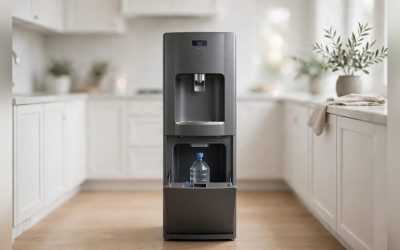
The Primo bottom-loader hides the jug inside the cabinet, so you slide a 5-gallon bottle in at floor level instead of flipping it onto a tower. That removes the heaviest part of owning a cooler. The listing mentions a two-step child safety lock on hot water, stainless reservoirs, an LED night light and a dishwasher-safe drip tray, which are practical touches for a kitchen.
- Bottom-loading water cooler, hot and cold, black
- 5-gallon bottle, no lifting or spills (per the listing)
- 2-step child safety lock on hot water
- Stainless reservoirs, LED night light, dishwasher-safe drip tray
Best for: households with a bad back or kids. Skip if: you are on a budget or need a room-temperature tap.
Pros: No lifting; hidden jug; safer hot tap; easy-clean tray. Cons: Costs more than top-loaders; floor space required; one brand’s bottles may fit differently, so measure before you buy.

5. Avalon B8 Countertop Bottleless Cooler: Best bottleless countertop cooler
A bottleless cooler connects to your cold-water line, filters the water and chills or heats it on demand, so there are no jugs to buy. Avalon’s B8 is a countertop model supplied with 2-stage water filters and an installation kit, and the listing says it is NSF certified and UL listed. Setup takes a plumbing connection and filter installation, so be prepared to follow the manual carefully or hire a plumber if you are not comfortable.
- Countertop bottleless water cooler, white
- 2-stage water filters and installation kit included
- NSF certified (check which parts), UL listed
- Black touchless version also available
Best for: renters or owners who want filtered water without lugging jugs. Skip if: you cannot connect a water line or want a floor-standing unit.
Pros: No jugs; filters supplied; countertop footprint; unlimited supply. Cons: Needs a water line; filter replacements are a recurring cost; check the clearance below the faucet for your glass or bottle.

6. Brio 520 UV Bottleless Cooler: Best self-cleaning bottleless cooler
Brio’s 520 UV pairs two-stage filtration with a UV self-cleaning function, and it dispenses hot, cold and room-temperature water. The listing says it includes two replacement filters and claims it reduces PFAS and microplastics; treat that as a maker claim and check the certification data on the maker page before you rely on it. UV self-cleaning reduces maintenance but does not replace filter changes.
- UV self-cleaning bottleless water cooler, UL certified
- Built-in 2-stage filtration, 2 replacement filters included
- 3 temperature settings
- Floor-standing, plumbed to a water line
Best for: households that want filtered water and less cleaning. Skip if: you do not want a plumbing job or a premium cost.
Pros: Self-cleaning; filters included; hot, cold and room taps; no jugs. Cons: More to install; more expensive; filters need replacement on a schedule.
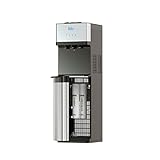
7. iSpring DS4S: Best bottleless dispenser for heavier filtration
iSpring is known for water filtration, and the DS4S brings that to a bottleless cooler with four filtration stages, hot, cold and room-temperature water, self-cleaning and a child safety lock. The listing lists contaminant reductions, including chlorine, lead, mercury and PFAS; check the maker’s data sheet for the exact certification and standard behind each claim. This is the priciest option here, and the case for it is filtration depth rather than convenience.
- Bottleless water dispenser, silver stainless steel
- 4-stage filtration, hot, cold and room-temperature water
- Self-cleaning, child safety lock
- Suited to home or office use
Best for: people who want more than a basic carbon filter. Skip if: you want a cheap or portable cooler.
Pros: Multi-stage filtration; self-cleaning; full set of temperatures; child lock. Cons: Highest cost here; needs a water line; replacement filters add running costs.

Also consider
Frigidaire 3-in-1 Ice and Water Machine (bottom-load)
Frigidaire combines a hot and cold bottom-load cooler for a 5-gallon bottle with a built-in bullet ice maker. It suits households that want ice and water from one machine. Ice makers add noise, need drain or tray emptying and use more power, so check the maker page for the details.
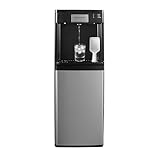
ICEPURE 3-in-1 Water Cooler with Ice Maker (top-load)
This top-loading cooler adds a built-in ice maker, hot and cold water and a child lock, with a listed output of 33 pounds of ice per 24 hours. It is a cheaper way to add ice than a bottom-loader, but you still lift jugs, and the same ice-maker caveats apply.

Housiwill Top-Loading Hot and Cold Cooler (1.2 to 5 gallon)
Housiwill’s small countertop cooler takes bottles from 1.2 to 5 gallons, has three temperature settings and a removable drip tray. It is a good fit for a dorm room or desk where a full-size unit is too much.

How we chose these water coolers
This guide is based on research of listings, specification pages and maker information, not on using the coolers in a home. We compared delivery type, bottle sizes, temperature options, safety locks, filtration claims and certifications as stated on listings, and read published buying guides on coolers and bottom-load dispensers. We included only current products, no more than two from any brand, and described price in tiers. Where a listing makes a filtration or certification claim, we say it is a maker claim and point you to the maker page.
Buying guide: how to choose a home water cooler
Top-load, bottom-load or bottleless
Top-loaders are the cheapest and simplest, but the jug is lifted overhead. Bottom-loaders tuck the jug into the base, which one buying guide describes as simply sliding the jug into the compartment. Bottleless coolers connect to a water line and filter tap water. Countertop versions of each exist for small spaces. Choose by how much lifting you can do, whether you can connect a water line, and how much counter or floor space you have.
Capacity and refill math
A 5-gallon bottle is 640 fluid ounces. If four people each drink about 64 ounces a day, the household uses 256 ounces a day, so one jug lasts about 2.5 days, or roughly three jugs a week. A 3-gallon jug (384 ounces) lasts about a day and a half. Heating and cooling water also takes water, so allow a little extra. If you use fewer than two jugs a week, a bottleless unit may be cheaper over time than delivery, but include filter costs in the sum.
Temperature settings
Most coolers offer hot and cold. A third, room-temperature tap is useful for mixing drinks and instant foods, and you can check the maker’s guidance for what the tap is meant for. Published guides put hot water at around 185 degrees Fahrenheit on bottom-load models, and up to 194 on some, which is hot enough to scald. Cold water sits around 47 degrees.
Child safety
Any cooler with a hot tap should have a child lock; two-step release mechanisms are better than a single button. Place the unit away from the edge of a counter or a path where a child can reach. If children are around, turn the hot setting off at the switch if your model has one.
Energy use
Look for Energy Star or UL information on the maker page. One guide says Energy Star models use about 30 percent less energy than comparable models without the rating, and some coolers let you switch off heating or cooling. If you use the hot tap rarely, turning it off saves power.
Cleaning and hygiene
A published bottom-load guide recommends running a self-cleaning cycle weekly where one is built in, and cleaning manually every four to six weeks on units without one. Always follow the manual. Dispensers with UV or ozone self-cleaning cut routine work, but you still wipe the drip tray and replace filters. Do not leave a jug open for weeks; use water within the time the bottle supplier recommends.
Filtration claims
Bottleless coolers advertise filter stages and contaminant reductions. Look for filter certification to a recognised NSF/ANSI standard for the specific claim, and check the maker’s data sheet for the filter’s capacity and replacement schedule. If you are worried about a particular contaminant in your water, a lab report on your own supply is more helpful than a generic claim; ask a water-quality professional for advice.
Space and placement
One slim bottom-load model is listed at about 12 inches wide, 13 deep and 41 tall, and most floor coolers are in that general range. Leave clearance behind and beside the unit as the manual states, because the cooling system needs airflow. On a counter, measure the height under cabinets before you buy.
Cooler type trade-offs
| Type | Lifting | Upfront cost | Ongoing cost | Upkeep | Best for |
|---|---|---|---|---|---|
| Top-load floor | Overhead lift of a full jug | Lowest | Bottled water | Wipe tray, sanitise reservoir | Budget buyers |
| Top-load countertop | Lift to counter height | Low | Bottled water | Same | Small spaces |
| Bottom-load floor | Floor level | Mid-range | Bottled water | Same, or UV self-clean | Backs and kids |
| Bottleless | None | Mid-range to premium | Filters | Filter changes, UV or self-clean | Long-term savings |
Decision matrix: choose by situation
| Your situation | Best match | Why |
|---|---|---|
| Tight budget, hot and cold water | Igloo Top Loading | Simplest, lowest-cost design |
| Narrow gap beside the fridge | Avalon Top Loading | Slim design |
| Dorm, desk or small counter | Euhomy countertop | Counter-sized, three temperatures |
| Cannot lift jugs | Primo Bottom Loading | Jug loads at floor level |
| Want to stop buying jugs | Avalon B8 Countertop | Bottleless with filters |
| Want minimal cleaning chores | Brio 520 UV | UV self-cleaning |
| Concerned about water quality, large budget | iSpring DS4S | 4-stage filtration |
Worked example: jugs versus filters over a year
Price each option with your own local numbers rather than a generic estimate. For a jug cooler, count jugs per week (three for a family of four in the example above), multiply by 52, then multiply by the price of a refill or exchange. That gives you roughly 156 jugs a year, which is also 156 trips of carrying about 40 pounds each. For a bottleless cooler, take the maker’s filter replacement schedule, count how many sets you need per year, and multiply by the filter set price. Add a plumber’s visit if you need one. Then compare the two yearly figures and add the upfront price of each machine.
The result tends to favour bottleless coolers for households that drink a lot of water and bottled-jug coolers for people who drink little, rent, or move often. If you do not want to run the numbers, a simple rule works: three or more jugs a week points to bottleless, one or two points to a bottom-loader or top-loader.
Setup checklist before the first fill
- Measure the space: width, depth, height and the clearance the manual asks for behind and beside the unit.
- Check the outlet: a dedicated, grounded outlet is better than an extension cord.
- Wipe the reservoir and spouts with the cleaning method given in the manual before the first jug goes on.
- For bottleless units, flush new filters as instructed so loose carbon fines run out before you drink.
- Set the child lock, and decide whether the hot switch stays on.
- Write the filter change date on a sticker or in your phone calendar.
Ownership realities
A water cooler is an appliance that sits in a damp, warm kitchen, so expect a little maintenance. Tanks collect mineral deposits over time, and one guide suggests that using filtered or distilled water can reduce internal buildup. If you live in a hard-water area and run a bottleless unit, plan on a more frequent filter change than the maker’s default. The drip tray is the first thing to get grimy; wash it weekly. Cooling systems can hum, and in a quiet kitchen that hum may be audible, so avoid putting the unit next to a bedroom wall.
Check how the cooler handles power cuts and moves. After transport, many manuals tell you to stand a unit upright for a period before plugging it in, so the cooling system settles. Read your manual for the exact wait. If the cooler will sit unused for weeks, empty it and switch it off at the wall.
Finally, think about the supplier. Top- and bottom-loaders depend on 3- or 5-gallon bottles from a delivery service or store exchange, so make sure a supplier is nearby before you buy. A cooler that cannot get its bottles is an expensive table.
Frequently asked questions
What are the best home water coolers?
For most households, a bottom-loader like the Primo is the easiest to live with, a top-loader like the Igloo is the cheapest, and a bottleless unit like the Avalon B8 or the Brio 520 UV saves buying jugs. Your lifting ability, plumbing and budget decide.
Are bottom-loading water coolers worth it?
If lifting a 40-pound jug overhead is a problem, yes. They cost more than top-loaders, but they remove the heavy lift and hide the bottle.
Do bottleless water coolers need plumbing?
Most connect to a cold-water line and need an installation kit, which the Avalon B8 listing says is included. Follow the manual or ask a plumber if you are unsure.
Is hot water from a cooler safe for children?
The hot tap can scald. Use a model with a child safety lock, keep the unit out of reach, and turn off the hot setting if young children are around. Ask the maker or a pediatric professional for guidance if you have concerns.
How often should I clean a water cooler?
Follow the manual. One bottom-load guide suggests a weekly self-cleaning cycle where fitted and a manual clean every four to six weeks otherwise, with the drip tray washed more often.
How much electricity do water coolers use?
It varies by model and by how often the hot and cold systems run. Look for an Energy Star or UL listing on the maker page, and switch off the heater if you rarely use hot water.
Can a water cooler fit in a small kitchen?
Yes. Slim top-loaders and countertop models are made for small spaces, but measure width, depth, height and rear clearance first.
Which one should you buy?
- Want the cheapest hot and cold water: Igloo Top Loading.
- Short on floor space: Avalon Top Loading or Euhomy countertop.
- Cannot lift jugs: Primo Bottom Loading.
- Tired of jugs and have a water line: Avalon B8 countertop.
- Want self-cleaning: Brio 520 UV.
- Want deeper filtration: iSpring DS4S, with the maker’s data in hand.
Sources
- Bob Vila, “The Best Water Coolers” buying guide
- Fridge Compass, bottom-load water dispenser guide
- Maker and retailer listing text for each product named above
Last updated: November 2026
More from Amazon
Programs that pair well with the guide above. Offers and eligibility are set by Amazon and may change.
Set up recurring deliveries of everyday items on eligible products. Terms and savings are set by Amazon.
Explore Subscribe & SaveCollect the home and kitchen items you want in one registry that guests can shop from.
Create a wedding registryFree shipping on eligible items, Prime Video and more. Eligible new members can start with a free trial.
Start a Prime free trialAudiobooks and podcasts to listen to on the go. Eligible new members can start with a free trial.
Try Audible freeAs an Amazon Associate we earn from qualifying purchases.
Write Your Review
No reviews yet. Be the first to share your experience!