

Key takeaways
- The right kitchen canister keeps food fresh, fits the shelf or counter it lives on and makes cooking faster because ingredients are easy to see and scoop.
The right kitchen canister keeps food fresh, fits the shelf or counter it lives on and makes cooking faster because ingredients are easy to see and scoop. For most kitchens that means an airtight lid, a wide enough opening for a measuring cup, a material suited to what goes inside and a size that matches how quickly the contents get used. Style comes last, because a canister that looks good but lets flour clump or sugar harden is not doing its job.
This guide walks through the main materials, how to match canister types to common pantry staples, what features to check and which mistakes cause the most regret. It does not name brands or models; the aim is to make the decision clear before browsing any product pages.
Start With What Will Be Stored
Dry goods behave very differently from one another. Flour and sugar need a wide mouth and an easy scoop. Coffee beans and ground coffee are sensitive to air, light and moisture. Pasta and rice need tall, narrow containers or space for a long handled scoop. Snacks and cookies call for a lid that opens quickly without breaking a seal. Listing the five or six foods that will go into canisters is the quickest way to decide how many pieces to buy and in what sizes.
A common approach is to choose a small set of matching canisters for the daily staples, usually flour, sugar, brown sugar, coffee and tea, and add a few larger or differently shaped containers for pasta, rice, cereal and baking supplies. Buying a matching set for everything often leaves some pieces too large and others too small.
Materials and Who They Suit
Glass
Glass does not absorb odors or stains, shows exactly how much is left and cleans easily in a dishwasher when the lid design allows. It is heavy and can chip or break, so it suits shelves and countertops that are not frequently bumped. Clear glass also lets light reach the contents, so it works better for pasta and flour in a cabinet than for coffee on a sunny counter.
Stainless steel
Stainless steel is durable, light, blocks light entirely and resists odors. The drawback is that contents are hidden, so labeling matters. It is a good fit for coffee, tea and anything sensitive to light, and for busy households where breakage is a concern.
Ceramic and stoneware
Ceramic canisters bring a decorative look and good light protection. Quality varies, and the seal on the lid is the weak point, since many ceramic lids rely on a silicone ring that wears with time. They suit counters where appearance matters, and they work well for items that are used quickly, such as sugar or tea bags.
Plastic
Modern food-grade plastic canisters are lightweight, shatter-resistant and often stackable, which maximizes pantry space. Look for plastic labeled as food-safe and free of known concerns, and expect that some plastics hold onto strong odors or stain from tomato-based foods and spices. They are a practical choice for families, rental kitchens and bulk storage.
Bamboo and wood lids with glass bodies
Many canisters pair a glass body with a bamboo or wood lid and a silicone gasket. They look warm and natural, but the wood part generally should not soak in water, so cleaning requires a quick wipe rather than a full wash.
Features That Make a Real Difference
- Airtight seal. A silicone gasket and a latching or screw-top lid slow staling and keep out pests and humidity. A lid that merely sits on top is fine for cookies but not for flour or coffee.
- Opening width. A wide mouth lets a measuring cup or scoop fit inside without spilling, which is especially useful for flour, sugar and baking mixes.
- Capacity that matches a typical bag. A canister that holds a full bag of flour or sugar prevents leftover partial bags. Check the stated capacity against the size of the packages usually purchased.
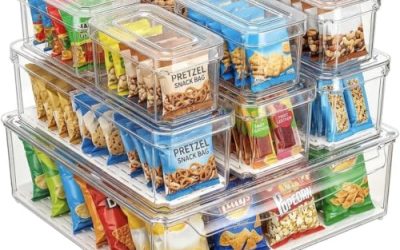
- Stackability and footprint. Square or rectangular canisters waste less shelf space than round ones, and flat lids let pieces stack.
- Cleaning ease. Removable gaskets, smooth interiors and dishwasher-safe parts make long-term use easier. Hard-to-reach corners hold crumbs and attract pests.
- Labeling options. Chalkboard fronts, included labels or a flat surface for stickers help with identifying look-alike powders.
- Weight and handling. A canister that is awkward to lift when full gets used less. Test the handle or grip design if possible.
Matching Canister Types to Staples
Baking supplies
Flour, sugar, baking powder and cocoa do best in airtight containers with wide openings. Brown sugar benefits from a very tight seal, since it hardens quickly when air reaches it; a small piece of terra cotta or a slice of bread in the container can help soften it again.
Coffee and tea
Opaque stainless steel or ceramic with a good seal protects aroma. Avoid placing coffee canisters beside the stove or in direct sun, since heat accelerates flavor loss.
Pasta, rice and grains
Tall canisters with a wide mouth hold long pasta and make pouring easy. Clear glass or plastic lets cooks see levels at a glance. Whole grains and brown rice contain natural oils and are best used within a reasonable time frame, so smaller canisters that get refilled often suit them.
Snacks and treats
Cookies, crackers and cereal stay crisp in canisters with a snug lid. A good gasket matters more here than it appears, since stale snacks are one of the most common complaints.
Budget Tiers Without the Numbers
Entry-level canisters are usually plastic or thin glass with basic lids and are suitable for dry goods used quickly. Mid-range choices bring thicker glass or stainless steel, better gaskets and more consistent sizing across a set. Premium canisters use heavy ceramic or high-grade steel, precise sealing mechanisms and sometimes built-in date dials or integrated scoops. Spending more makes the most sense on the canisters used every day, such as flour and coffee, and less on the ones that hold rarely used items.
Common Mistakes to Avoid
- Buying a decorative set without checking whether the lids actually seal.
- Picking canisters with narrow openings that make scooping messy.
- Placing coffee or spices near the stove, where heat and steam shorten their lifespan.
- Pouring a new bag of flour on top of old flour instead of emptying and washing the container first.
- Putting damp ingredients into a sealed container, which encourages mold.
- Ignoring size and ending up with a mix of containers that do not stack or fit the shelf.
Care, Cleaning and Food Safety
Wash canisters thoroughly and dry them completely before refilling, since trapped moisture is the main cause of clumping and mold. Remove silicone gaskets for cleaning, check them for cracks and replace them when they stop forming a snug seal. Label every canister with the contents and the date it was filled, and use up older stock first. Keep canisters in a cool, dry place away from the stove, dishwasher vent and direct sunlight. Flour and grains can attract pantry pests, so inspect new packages and consider freezing a bag briefly before storing if pests have been a problem in the past.
A Short Buyer Checklist
- List the foods that will be stored and the typical package sizes.
- Choose a material that suits light, odor and breakage concerns.
- Check for a gasket and a closure that clamps or screws tight.
- Measure the shelf or counter space, including height under cabinets.
- Confirm the opening fits a scoop or measuring cup.
- Look for dishwasher-safe or easy-clean parts.
- Plan for labels and a refill routine.
Related guides
- Black Friday And Cyber Monday Kitchen Deals
- All Clad D3 Stainless Steel Cookware Set
- Seeds And Nuts For Healthy Snacking
Frequently Asked Questions
Are glass or plastic canisters better for the kitchen?
Glass resists stains and odors and lets cooks see the contents, while plastic is lighter and more break-resistant. Households with children or frequently bumped shelves often prefer plastic, while those who want a long-lasting, odor-free option lean toward glass.
Do canisters need to be airtight?
For flour, sugar, coffee, cereal and snacks, airtight closures help preserve freshness and block moisture and pests. For items used within a day or two, such as tea bags, a looser lid is usually fine.
How many canisters does a kitchen need?
Most kitchens do well with four to six for the daily staples, with extra containers added for pasta, rice or baking supplies as needed. Buying in stages helps prevent a set that does not fit actual habits.
Where should canisters be kept?
A cool, dry spot away from the stove, sun and dishwasher steam is best. Pantry shelves and lower cabinets protect contents better than open counters near heat sources.
More from Amazon
Programs that pair well with the guide above. Offers and eligibility are set by Amazon and may change.
Set up recurring deliveries of everyday items on eligible products. Terms and savings are set by Amazon.
Explore Subscribe & SaveCollect the home and kitchen items you want in one registry that guests can shop from.
Create a wedding registryFree shipping on eligible items, Prime Video and more. Eligible new members can start with a free trial.
Start a Prime free trialAudiobooks and podcasts to listen to on the go. Eligible new members can start with a free trial.
Try Audible freeAs an Amazon Associate we earn from qualifying purchases.


Write Your Review
No reviews yet. Be the first to share your experience!